Does Gerrymandering Undermine Elected Officials Legitimacy?
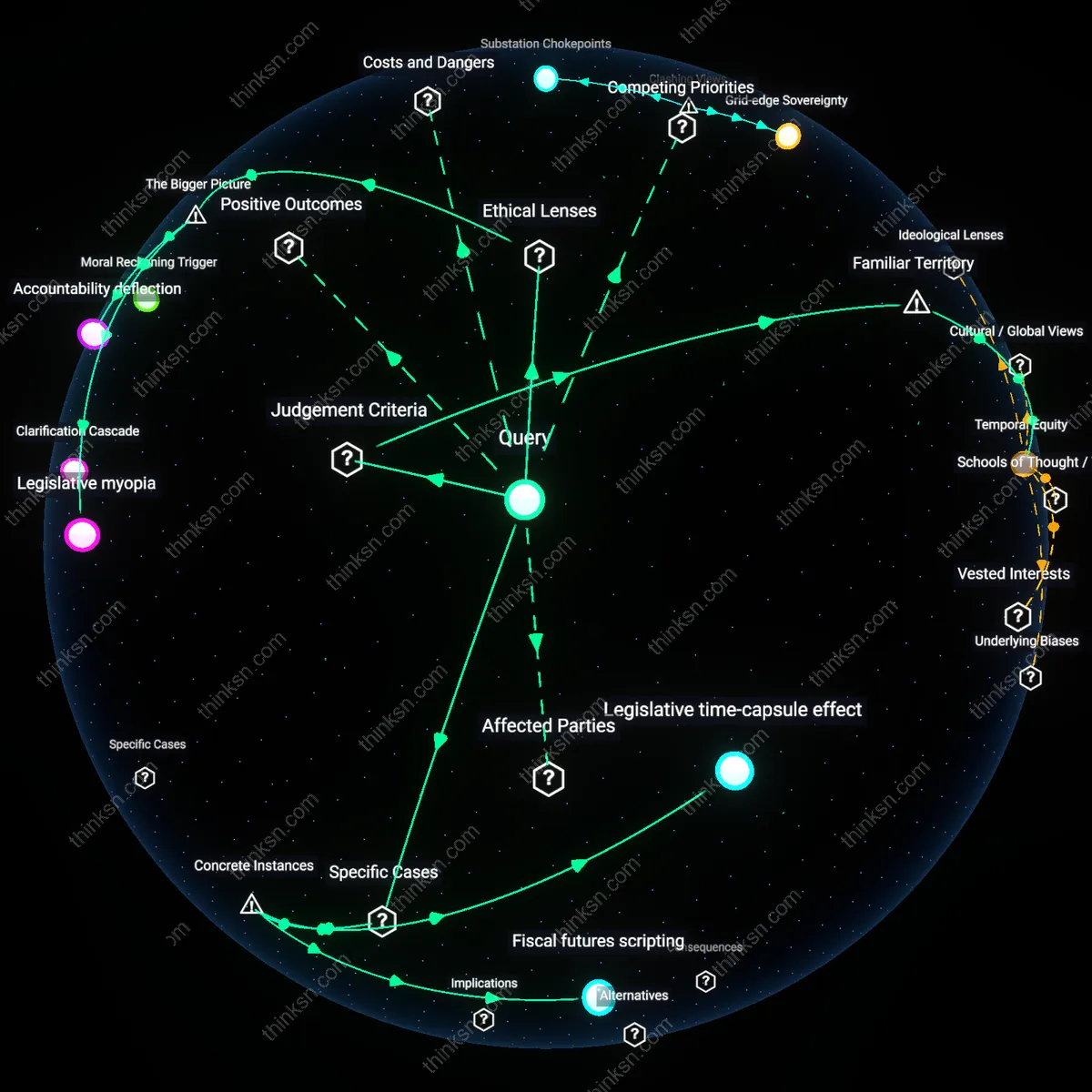
Analysis reveals 8 key thematic connections.
Key Findings
Representation drift
Gerrymandering systematically misaligns electoral outcomes from demographic realities, as seen in North Carolina’s 2016 congressional map, where Republicans won 10 of 13 seats with only 54% of the statewide vote, revealing that manipulated district boundaries convert voter distribution inefficiencies into durable political control, a mechanism that distorts proportionality not through voter choice but cartographic design, exposing how representational adequacy is actively degraded rather than passively flawed.
Institutional rigidity
The persistence of single-member districts in Ohio’s legislature, despite repeated citizen mandates for reform through ballot initiatives like Issue 1 in 2015, demonstrates that gerrymandering reflects not just partisan manipulation but an inflexible legislative structure resistant to feedback, where redistricting commissions remain subordinate to partisan majorities, revealing that the deeper failure lies in the inability of the system to adapt even when legitimacy is contested, a condition more indicative of structural design failure than representational error.
Partisan feedback loop
In Maryland’s 2011 redrawing of the 6th congressional district, Democrats diluted Republican strongholds by restructuring the district to connect distant urban centers through narrow corridors, illustrating how gerrymandering functions as a self-reinforcing mechanism where elected officials exploit redistricting power to preempt electoral accountability, transforming representational inadequacy into a recursively maintained advantage, which reveals that the core issue is not poor representation per se but the institutionalization of partisan survival over democratic responsiveness.
Representation sabotage
Gerrymandering actively sabotages representational adequacy by design, not as a side effect. It is a precise tool used by incumbent parties—such as Republicans in Wisconsin or Democrats in Maryland—to bind voter behavior into noncompetitive districts through mechanisms like packing and cracking, which manipulate electorate density to neutralize opposition influence; this operates through cartographic precision enabled by big-data analytics and GIS mapping, making it a calibrated assault on responsiveness rather than a passive flaw. This reveals that the damage is not an emergent failure of structure but an intentional degradation of democratic accountability, a feature weaponized within the system.
Strategic voter suppression
Gerrymandering functions less as a distortion of representation and more as a form of spatialized voter suppression that systematically demobilizes opposition constituencies by rendering their votes functionally inert, as seen in North Carolina’s 9th district where Black-majority populations are fragmented across three districts to dilute influence. This operates not through overt disenfranchisement but through predictive modeling that anticipates turnout and preference to engineer durable minority rule, particularly targeting urban and minority voters; the mechanism is embedded in redistricting software like Campaign Mapping. The overlooked danger is that this shifts suppression from ballot access to outcome irrelevance—making voting feel futile without legally denying the right.
Institutional lag
Gerrymandering reveals a structural design flaw rooted in the decoupling of legislative districts from evolving demographic realities, a defect exposed by the shift from rural-dominated legislatures in the pre-1960 Baker v. Carr era to modern computational precision in boundary manipulation. As urbanization accelerated in the mid-20th century, state legislatures delayed redistricting for decades, creating massive malapportionment that courts then corrected—yet the remedy preserved legislative control over redistricting, enabling partisan exploitation as GIS technology emerged in the 1990s–2000s. The underappreciated dynamic is that the legal system’s adherence to political question doctrine between the 1940s and 1960s fossilized representational structures, producing an enduring misalignment between institutional rules and social distribution that gerrymandering now hyper-exploits.
Partisan entrenchment
Gerrymandering functions as a self-reinforcing mechanism of partisan power preservation, a transformation cemented after the 1990s when both major U.S. parties adopted aggressive redistricting as a normative strategy, shifting from ad hoc advantage-seeking to institutionalized control maintenance. This evolution—visible in Texas’s mid-2000s intercensal redistricting under Tom DeLay—marks a break from historical redistricting cycles where changes followed demographic shifts, toward proactive manipulation to neutralize electoral competition itself. The ethically salient shift is from democracy as a contest of ideas to a managed administrative outcome, where representational inadequacy is not a byproduct but the intended function, reflecting a broader neoliberal administrative logic in which procedural fairness masks operational capture.
Judicial Arbitrage
Gerrymandering persists not because courts fail to act, but because litigants strategically time challenges to exploit jurisdictional forum sequencing, turning judicial review into a manipulatable phase of the redistricting lifecycle. In Alabama, the 2022 congressional map was initially struck down by a three-judge federal panel under Section 2 of the Voting Rights Act, yet state officials delayed appeal to the Supreme Court until after the 2022 midterms, effectively securing a term of legitimate office from an illegal map—what plaintiffs called ‘judicial misalignment’. This reveals that representational distortion is buffered by temporal gaps between rulings and enforcement, allowing illegitimate mandates to function as de facto legitimacy. The overlooked mechanism is the weaponization of appeal timing, which treats court schedules as a variable in partisan strategy, transforming the rule of law into a procedural corridor that can be gamed for electoral yield.