Do De-Escalation Training Programs Offer a Cost-Effective Solution?
Analysis reveals 8 key thematic connections.
Key Findings
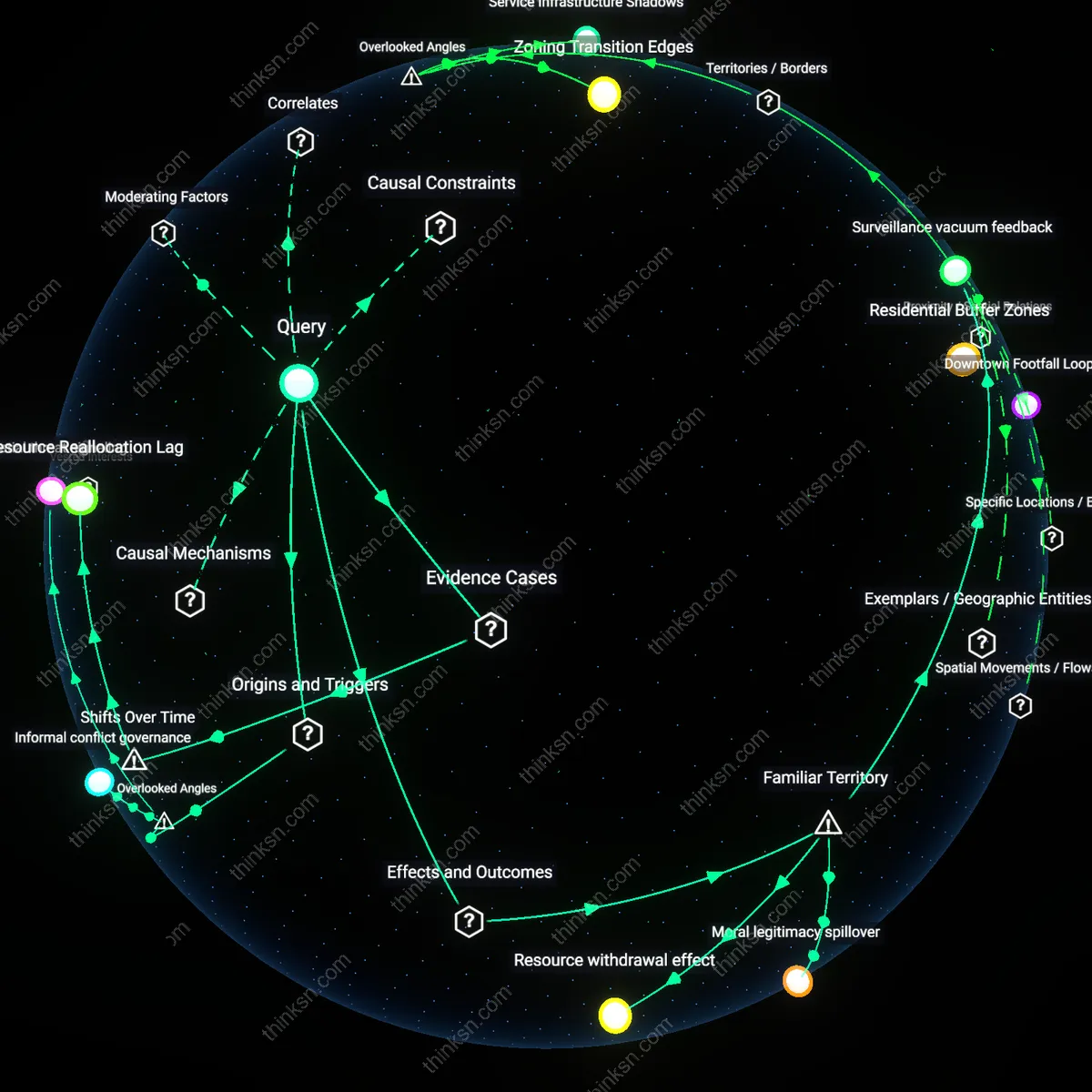
Public Trust Dividend
De-escalation training reduces use-of-force incidents, which strengthens community confidence in police. When officers avoid physical confrontations through verbal tactics and behavioral adjustment, civilian perceptions of law enforcement shift from coercive to service-oriented, particularly in historically over-policed neighborhoods like those in Chicago or Oakland where body-camera data and civilian complaint logs show measurable drops post-training. This effect operates through the visibility of nonviolent outcomes, which become public narratives that reshape expectations of officer conduct—highlighting that cost-effectiveness isn’t just fiscal but reputational, sustaining long-term legitimacy even when training expenses are high. The non-obvious insight is that the financial value of avoided protests, lawsuits, and consent decrees often exceeds the direct savings from fewer injuries.
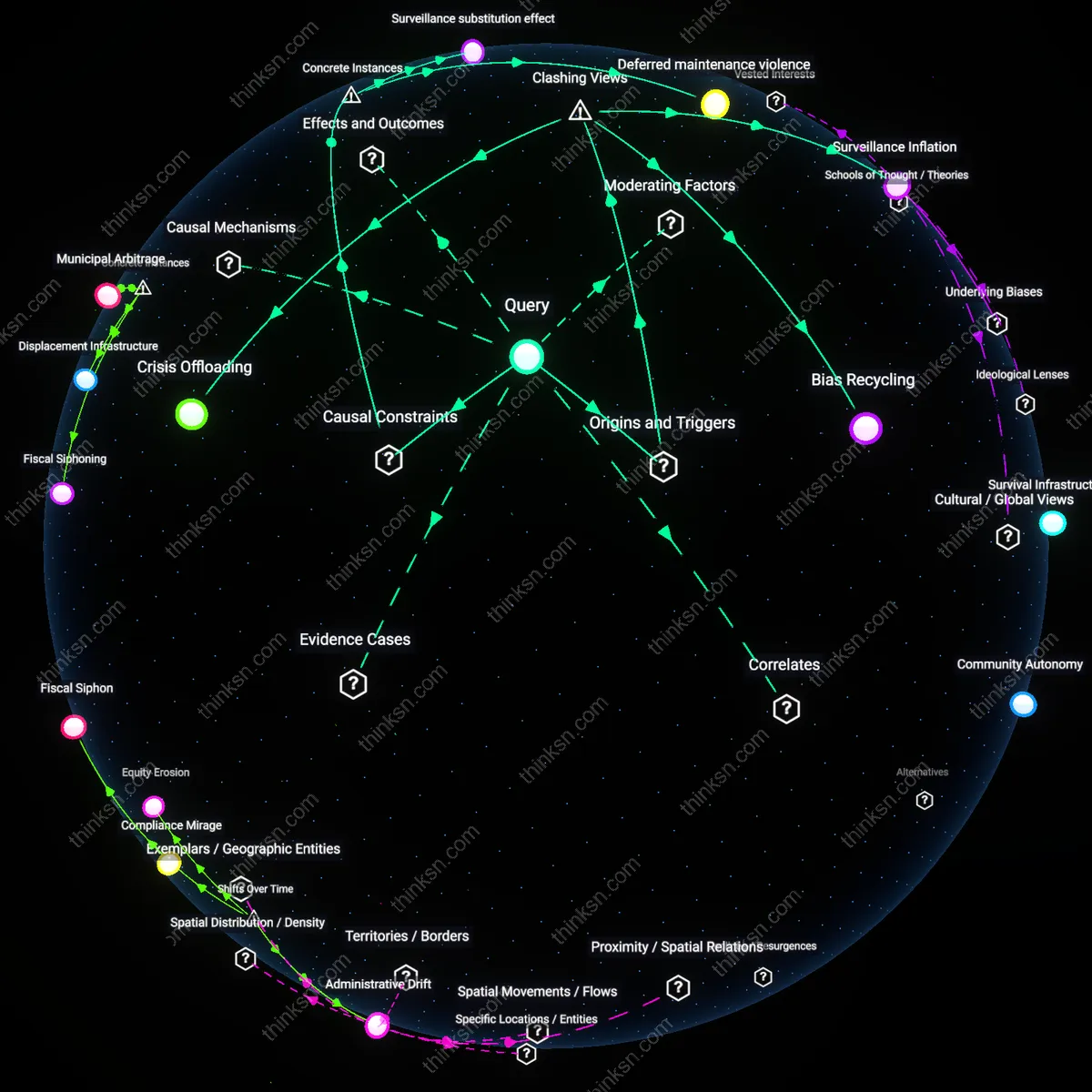
Institutional signaling cost
De-escalation training reduces use-of-force incidents primarily by altering organizational culture rather than individual behavior, as seen in the Los Angeles Police Department’s post-2001 reform under Chief William Bratton, where mandated training coincided with public accountability metrics and leadership messaging. The mechanism was not skill acquisition alone but the alignment of officer incentives with departmental legitimacy, revealing that the cost-effectiveness of such programs depends more on their function as institutional signals than on direct behavioral outcomes. This shifts the evaluation from tactical efficiency to symbolic investment in reform, a dimension often omitted in cost-benefit analyses focused solely on incident reduction.
Threshold displacement effect
The observed correlation between de-escalation training and reduced use-of-force in the Camden County Police Department after 2013 fails to account for the near-total dissolution and rebuild of the force, which eliminated legacy personnel and reset engagement norms. The reduction in force incidents emerged not from training per se but from the lowered threshold for permissible conduct in a newly constituted department under federal oversight, meaning the training acted as a procedural placeholder rather than an independent causal factor. This reveals that cost-effectiveness assessments often conflate structural reboot effects with program efficacy, mistaking context-dependent outcomes for scalable interventions.
Training Institutionalization
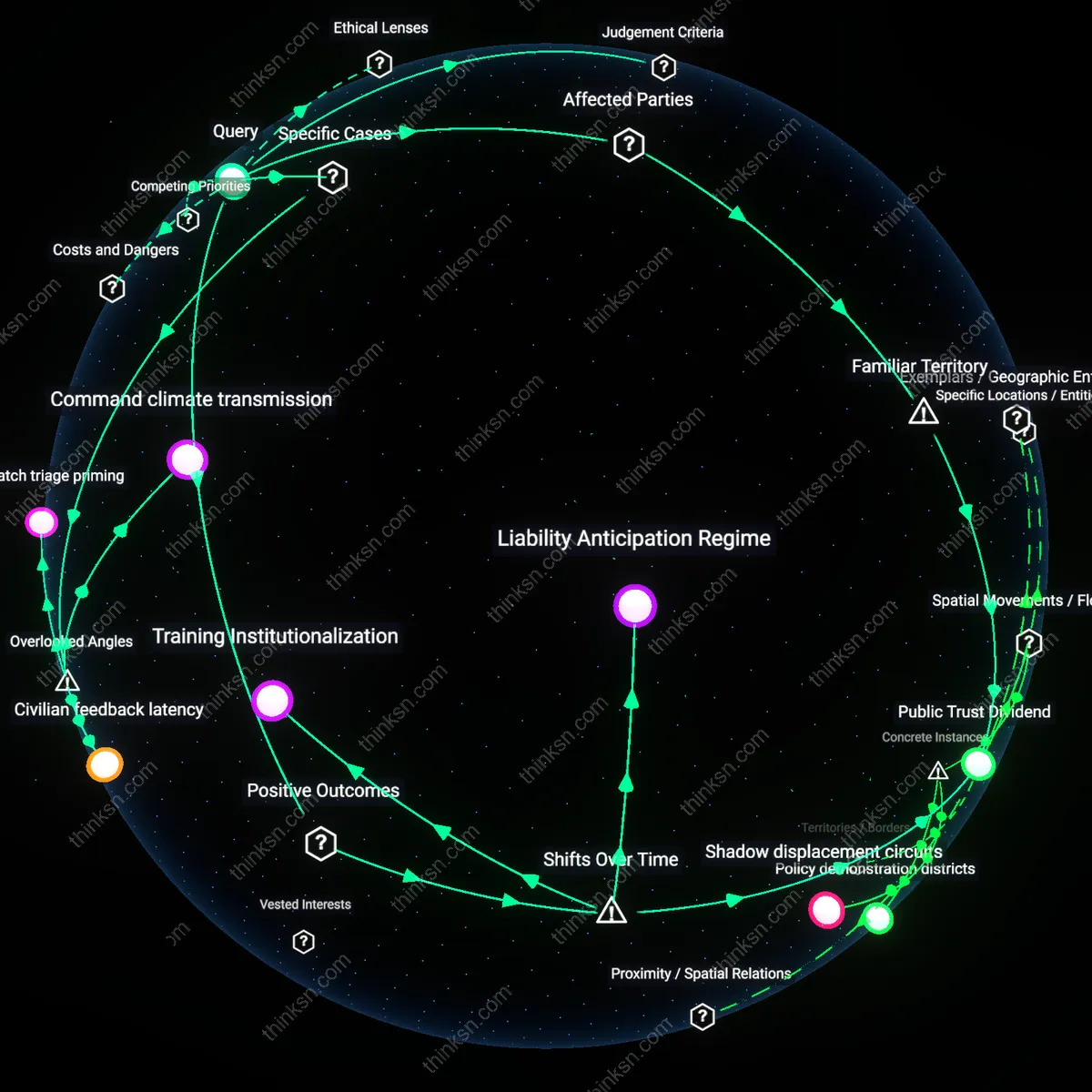
De-escalation training became a measurable cost-control mechanism in municipal policing after the 2014 Ferguson uprising, when federal consent decrees mandated training reforms in exchange for continued Justice Department funding. This shift transformed voluntary, ad hoc programs into standardized, audited components of police department budgets, allowing cities like Seattle and Baltimore to demonstrate long-term reductions in use-of-force incidents—and associated liabilities—by treating training as infrastructure rather than an expendable tactic. The non-obvious insight is that the financial logic of risk mitigation, not ethical imperatives, drove the entrenchment of these programs within bureaucratic norms.
Liability Anticipation Regime
Beginning in the mid-2000s, insurance pools for municipalities—such as the Nebraska Association of County Officials Risk Management Pool—started requiring de-escalation certification as a condition for coverage renewal, linking training directly to actuarial calculations of risk. This created a feedback loop where reduced use-of-force incidents were no longer just operational outcomes but data points that lowered premiums and freed up municipal capital, making training a preemptive financial instrument. The underappreciated shift is that cost-effectiveness emerged not from immediate savings but from a restructured relationship between local governance and risk finance.
Command climate transmission
De-escalation training reduces use-of-force incidents most effectively when frontline supervisors actively model and reinforce new behaviors, as seen in the Los Angeles Police Department’s post-2000 reform efforts, where reductions in force incidents closely tracked precinct-level variations in sergeant engagement—not just training completion rates. The critical mechanism is not the training itself but its daily reinforcement through supervision routines, roll-call discussions, and performance feedback, which embed new norms into routine practice; this dynamic is typically overlooked because evaluations focus on officer-level outcomes rather than the command climate that sustains behavior change, obscuring the real leverage point for institutionalizing de-escalation.
Civilian feedback latency
The cost-effectiveness of de-escaltion training in cities like Camden, New Jersey, after its 2013 police restructuring is inflated by the delayed visibility of civilian harm reduction, because use-of-force metrics improve quickly while community trust and reduced litigation costs take years to materialize. Most cost-benefit analyses fail to account for this temporal misalignment, treating early force reductions as immediate financial wins when the real savings emerge indirectly through slower-burning channels like diminished public payouts and recruitment efficiency; this time lag in civilian feedback loops distorts return-on-investment calculations, making some programs appear cost-effective prematurely while masking the sustained investment needed to realize full value.
Dispatch triage priming
In Seattle Police Department’s pilot zones, de-escalation training’s impact on use-of-force incidents was significantly amplified when dispatchers were included in scenario design and call categorization reforms, revealing that pre-arrival information shapes officer posture more than training alone. The overlooked dependency is dispatch triage as a cognitive primer—when call-takers flag mental health or domestic components with specific behavioral cues, officers approach with altered threat assessments, reducing escalation before contact; this upstream communication layer is rarely treated as part of the training ecosystem, yet it determines whether de-escalation skills are even activated in the field, reframing training as only one node in a perceptual supply chain.