Ban or Report? Fixing Revolving Door in Energy
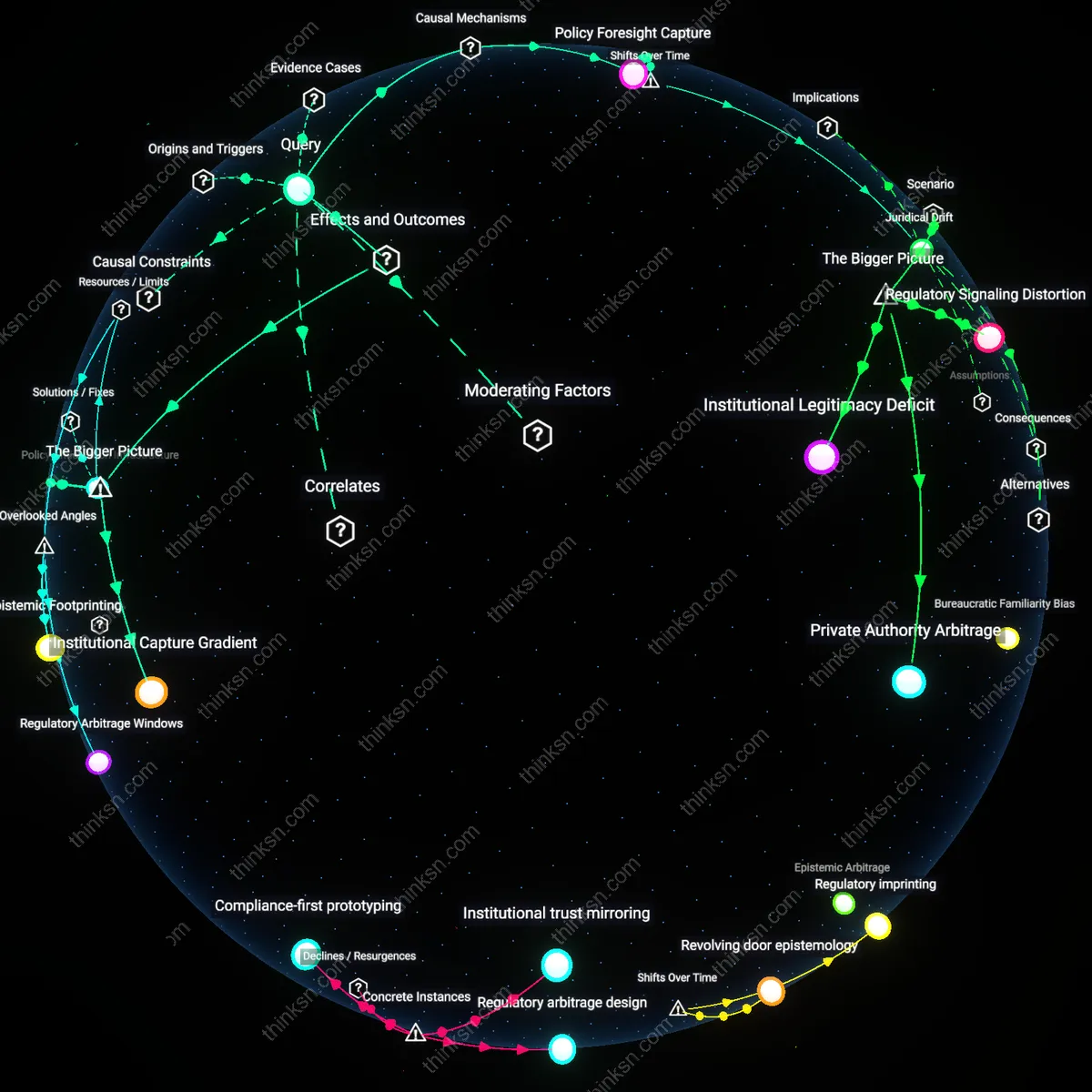
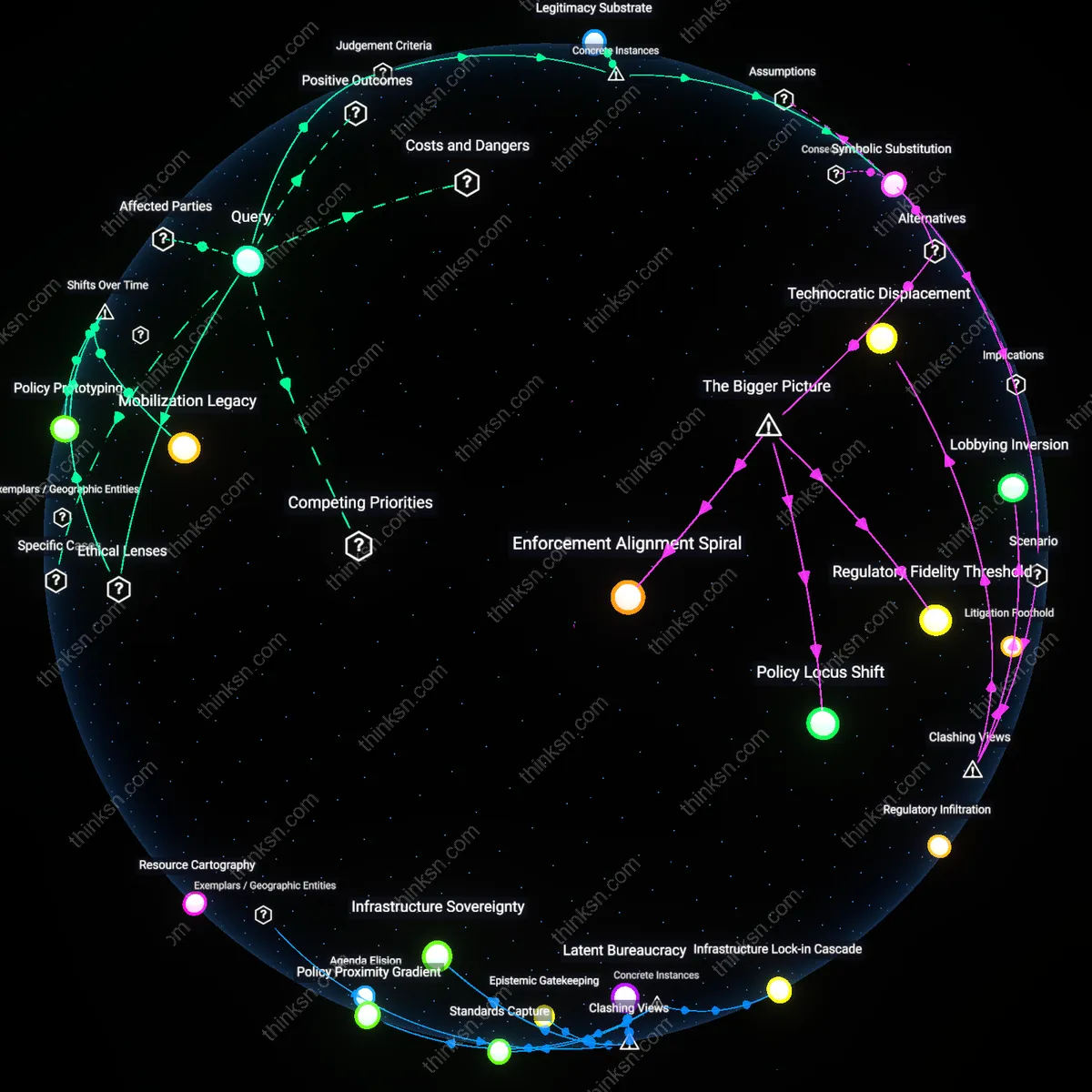
Analysis reveals 8 key thematic connections.
Key Findings
Regulatory Theater
Mandating transparent post-employment reporting is more effectively undermining revolving-door practices than bans, because disclosure requirements create persistent public records that energy lobbyists, congressional aides, and Office of Government Ethics officials must navigate, activating media and watchdog scrutiny that constrains decision-making in real time. This system operates through anticipatory self-censorship among ex-regulators, who modify lobbying tactics knowing their moves will be logged and searchable—making transparency not just informational but behavioral. The non-obvious insight is that visibility, not prohibition, recalibrates incentives among repeat players in the D.C. energy policy circuit, revealing that symbolic compliance can morph into operational constraint.
Meritocratic Alibi
Banning revolving-door hires increases the risk of regulatory incompetence in the energy sector, as career civil servants in agencies like FERC and the Department of Energy lose access to industry-specific expertise necessary for crafting feasible grid modernization policies. The rule fails to distinguish between predatory influence-peddling and legitimate technical transitions, thus discrediting the reform in the eyes of engineers and project managers who rely on ex-utility executives for implementation knowledge. The friction here lies in exposing how anti-corruption measures can inadvertently delegitimize necessary cross-sector learning, turning reform into a barrier against adaptive governance.
Influence Arbitrage
Energy sector lobbying firms now strategically time post-employment moves just after regulatory decisions to exploit gaps in reporting regimes, rendering transparency mandates ineffective unless tied to enforceable cooling-off periods—meaning disclosure alone becomes a tool for laundering legitimacy rather than inhibiting undue influence. This dynamic benefits firms like those in the Edison Electric Institute network, who rotate executives between the Federal Energy Regulatory Commission and regional transmission organizations, using public reports to stage 'compliance' while shifting influence into regulatory blind spots. The non-obvious mechanism is that transparency creates a performative record that satisfies oversight institutions without disrupting the actual flow of privileged access—revealing reporting as a ritual of deflection.
Enforcement Asymmetry
Mandating transparent post-employment reporting is more effective than banning hires when regulatory oversight bodies like the U.S. Office of Government Ethics lack capacity to verify compliance with outright bans, as seen in the Federal Energy Regulatory Commission (FERC) after the 2005 Energy Policy Act, where lax enforcement of revolving-door prohibitions rendered bans symbolic while disclosure requirements enabled watchdog groups to identify conflicts, revealing that the efficacy of regulation depends not on stringency but on the imbalance between rule-making and monitoring resources.
Reputational Exposure
Banning revolving-door hires is less effective than transparent reporting because formal prohibitions can be circumvented through informal advisory roles, as demonstrated by the European Commission’s 2014 revamp of its cooling-off period rules for energy-sector lobbyists, where former commissioners like Loyola de Palacio moved into consultancy roles at companies such as Repsol, but only after public databases revealed their post-employment ties did media scrutiny alter hiring norms, indicating that sustained reputational risk from disclosure can shape behavior more durably than unenforceable bans.
Regulatory Signaling
Transparent reporting outperforms hiring bans in shaping long-term industry conduct because public disclosure alters expectations about legitimacy, as in California’s Public Utilities Commission's 2017 mandate requiring staff to file post-employment reports, which led energy firms like PG&E to self-restrain hiring former regulators—not from legal barrier but to avoid signaling regulatory capture, showing that transparency functions not merely as oversight but as a normative signal that recalibrates organizational incentives.
Accountability Theater
Mandating transparent post-employment reporting is more effective than bans because it preserves institutional expertise flows while subjecting them to public scrutiny, particularly in national energy agencies like the U.S. Department of Energy where former executives routinely advise on regulations. The mechanism—disclosure logs published by ethics offices—enables watchdog groups and journalists to detect undue influence without eliminating the pragmatic exchange between public service and private innovation. What’s underappreciated in public discourse, where bans are seen as morally clean solutions, is that transparency systems create a performative accountability that often substitutes for actual enforcement, turning disclosure into ritual rather than constraint.
Visibility-Compliance Gap
Transparent post-employment reporting fails to constrain power where regulatory bodies lack enforcement autonomy, as seen in U.S. Federal Energy Regulatory Commission (FERC) disclosures that are public but rarely investigated. The mechanism—mandatory filing of post-government employment forms—produces an archive of potential conflicts, but without active oversight by entities like the Office of Government Ethics, these records remain inert. The public associates transparency with accountability, but the unspoken reality is that visibility alone cannot close the gap between legal compliance and behavioral integrity, especially when political appointees cycle back into energy lobbying with impunity.