Are ADR Clauses in Employment Really About Cost or Control?
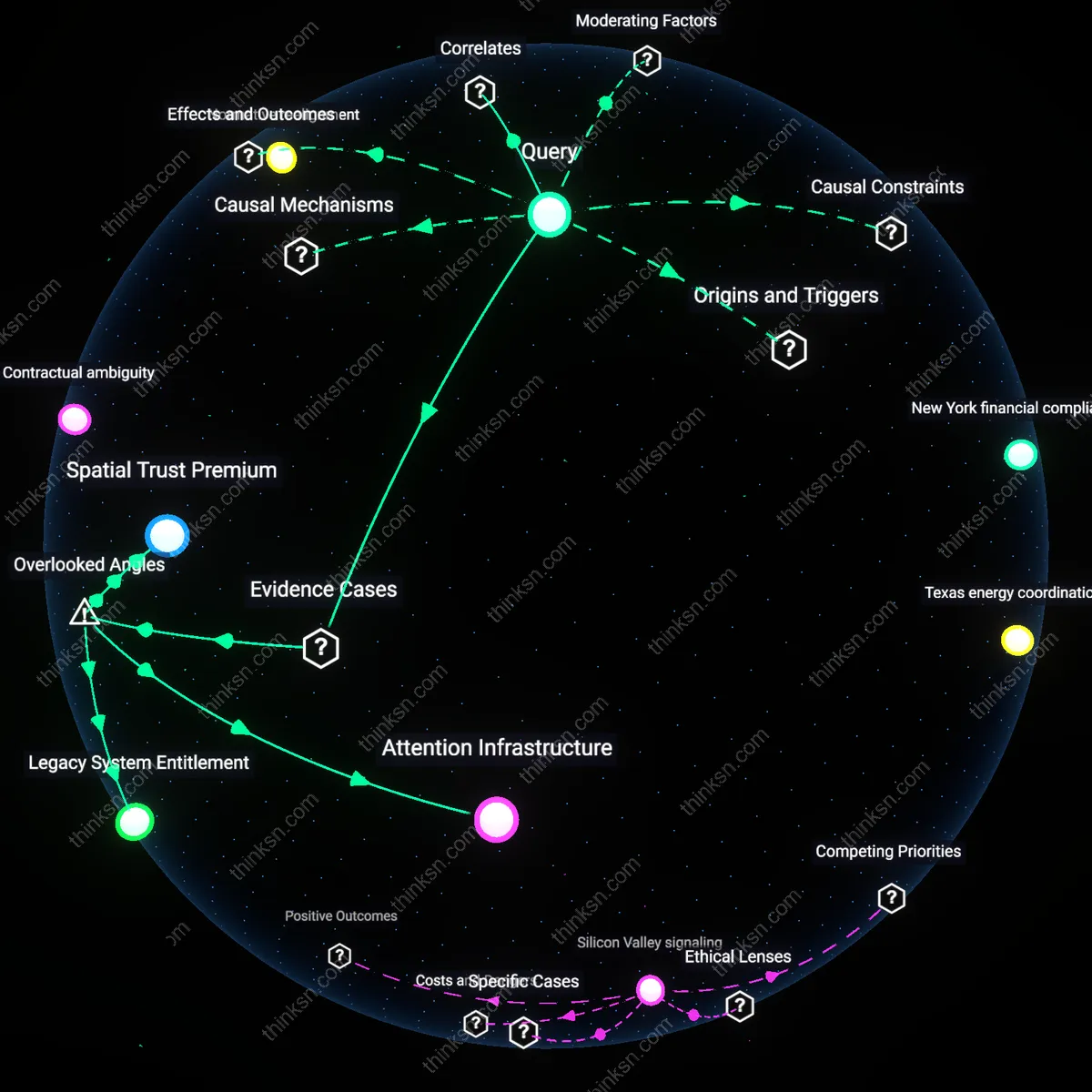
Analysis reveals 6 key thematic connections.
Key Findings
Procedural Asphyxiation
Alternative dispute resolution in employment contracts primarily functions not as a cost-saving mechanism but as a structural barrier that starves workers of cumulative legal visibility, because repeat employer use of private arbitration allows firms to isolate disputes, preventing pattern recognition across cases and suppressing systemic accountability; this dynamic operates through the fragmentation of claims in venues like the AAA or JAMS, where outcomes are sealed and unreviewable, making it analytically significant that the efficiency gains lauded in economic models are realized at the expense of democratic legal development—a hidden tradeoff that reveals how privatized justice erodes the epistemic foundation of labor rights.
Shadow Precedent Economy
Mandatory arbitration in employment agreements does reduce litigation costs, but not in the way conventional legal economics assumes—instead, corporations internalize cost reduction by creating a parallel, unreported adjudication system where employers learn from anonymized rulings while workers do not, because data from closed arbitration forums is captured and analyzed by employer-side law firms and HR systems, generating a proprietary knowledge advantage; this asymmetric learning loop, operating through repeat-player strategies in sectors like tech and retail, reveals that cost efficiency is not mutually achieved but strategically monopolized, challenging the assumption that lower transaction costs imply fairer or more accessible justice.
Consent Illusion
The premise that ADR clauses in employment contracts reflect voluntary trade-offs between cost and access is falsified by the coercive structure of at-will employment, where workers accept arbitration as a condition of hiring under duress of economic necessity, because in markets with high unemployment or skill-specific job lock—such as warehouse logistics or hospital staffing—employees have no meaningful bargaining power; this mechanism transforms purported consent into systemic compliance, exposing how the legal recognition of ‘agreement’ in contract law masks an underlying power asymmetry that redefines autonomy as enforced submission.
Procedural Asymmetry
Alternative dispute resolution in employment contracts primarily entrenches procedural asymmetry by standardizing arbitration processes that favor repeat-player employers over individual workers, thus reducing litigation costs not through efficiency but through systemic imbalance. Employers configure ADR clauses with institutional support from legal departments and third-party arbitration providers, while workers confront unfamiliar, privatized forums without precedent transparency or appeal pathways, making 'cost reduction' a proxy for diminished contestability. This dynamic is overlooked because cost analyses focus on court fees and time, not on how procedural standardization in private systems tilts the interpretive field against episodic litigants—what appears as efficiency is actually risk centralization. The non-obvious insight is that cost savings derive from compressing worker agency, not from resolving disputes better.
Precedent Erosion
Mandatory arbitration in employment contracts systematically erodes the generative capacity of public legal precedent by sequestering disputes in closed administrative systems where rulings lack doctrinal continuity or visibility, thereby weakening future workers’ ability to assert rights even when not directly bound by ADR. Unlike courts, private arbiters produce fragmented, non-binding decisions that deprive attorneys, unions, and legal advocates of the raw material needed to develop strategic litigation or refine constitutional interpretations over time. This dimension is typically ignored because cost-benefit analyses treat legal precedent as a background condition, not a depletable commons sustained by public adjudication. The unseen consequence is that privatization doesn’t just shift forums—it starves the evolution of employment law itself.
Institutional Memory Drain
The shift to alternative dispute resolution drains institutional memory from labor governance by preventing regulatory agencies and worker advocacy networks from accessing patterns of violation embedded in individual cases, thereby compromising systemic enforcement capacity. When grievances are resolved in sealed arbitration, data on wage theft, retaliation, or discrimination never feeds into OSHA, EEOC, or union bargaining intelligence, blinding oversight bodies to emergent trends and normalizing repeat offenses. Analysts overlook this feedback degradation because they assess ADR through individual case cost metrics rather than organizational learning cycles, missing how privatized resolution fractures collective knowledge infrastructures essential to deterring employer misconduct at scale. The real cost isn’t just legal access—it’s the attenuation of regulatory epistemology.