Should You Accept Partial Settlement on a Denied Disability Claim?
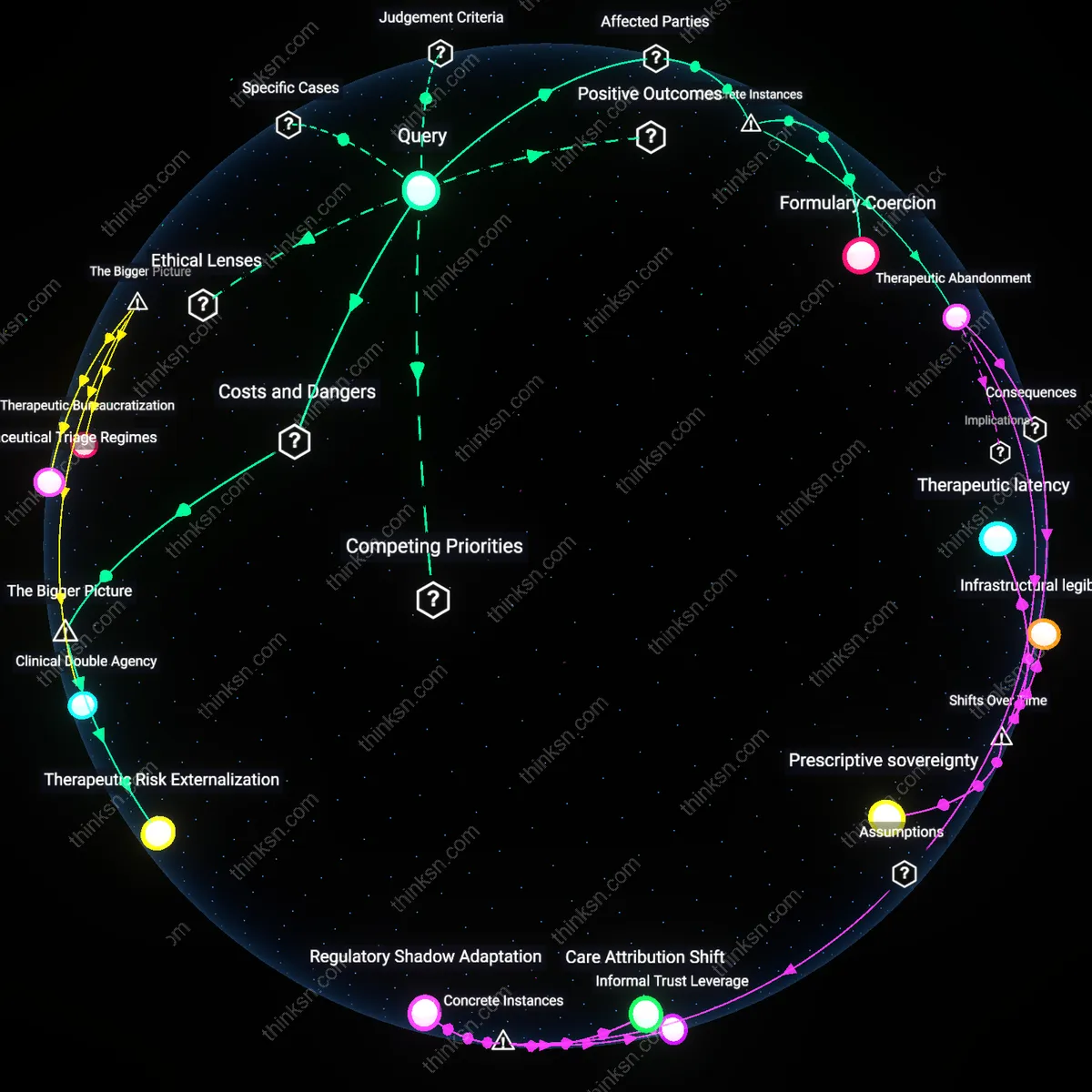
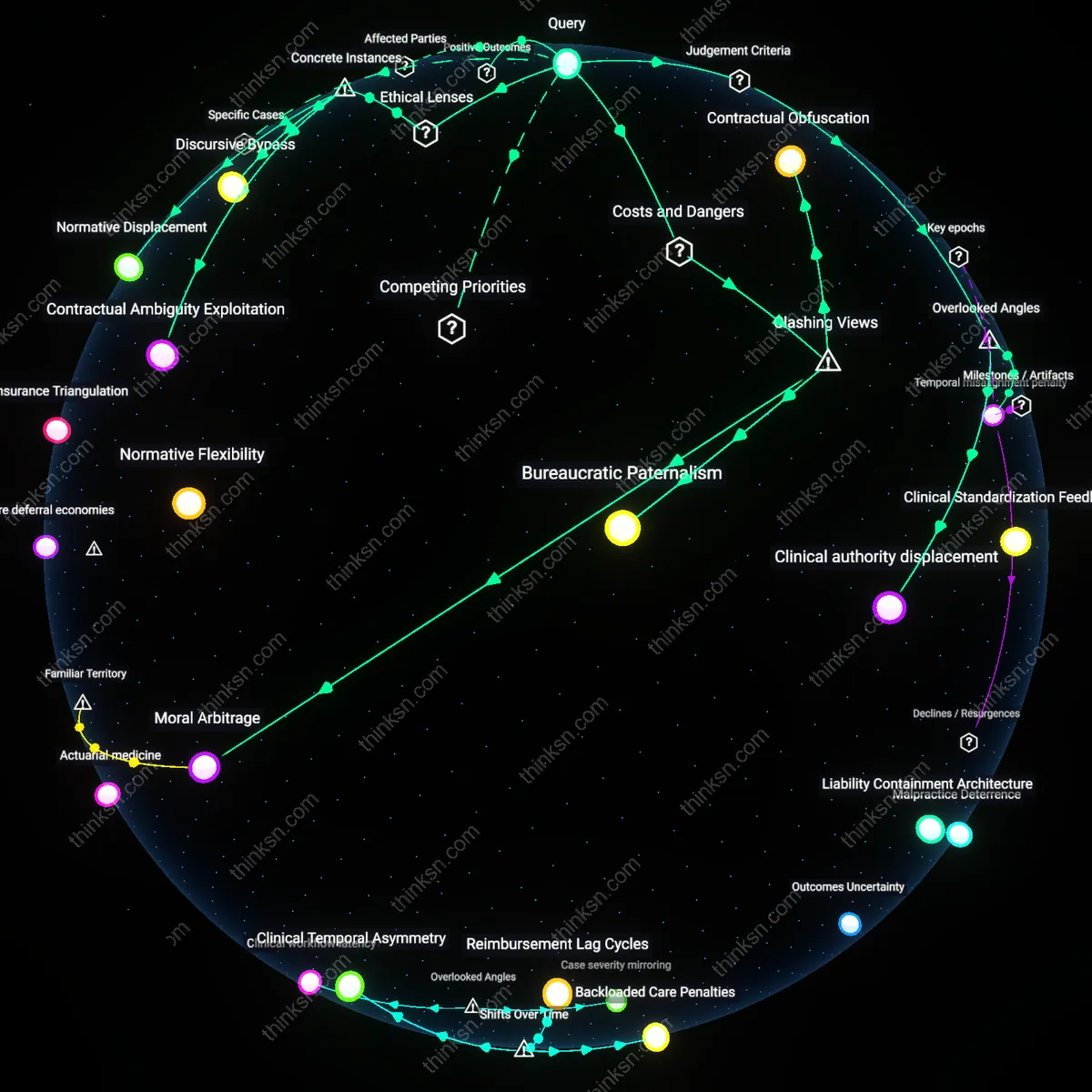
Analysis reveals 12 key thematic connections.
Key Findings
Settlement leverage asymmetry
Accept the partial settlement because the disability adjudication system institutionalizes delay through procedural bottlenecks, forcing claimants—who are medically fragile and often destitute—to accept financial compromises that appear voluntary but are structurally coerced by Social Security Administration backlogs and under-resourced administrative law judge dockets. This dynamic entrenches a power imbalance where insurers and federal agencies exploit time as a weapon, making the rational choice for survival appear indistinguishable from capitulation; the non-obvious reality is that the 'partial' settlement functions less as a negotiated resolution and more as a toll paid to exit an administratively violent system.
Caregiver dependency risk
Reject the partial settlement if doing so preserves eligibility for future Medicaid wraparound services, because families and unpaid caregivers—particularly in low-income, rural, or Black and Indigenous communities—are the de facto long-term care infrastructure and absorb catastrophic financial risk when cash settlements disqualify claimants from means-tested programs. The dominant view frames settlement as immediate relief, but fails to see that liquid assets from settlements can collapse household care ecologies by triggering benefit cliffs, revealing that the disabled individual’s fiscal decision is not personal but generational and collective.
Actuarial disadvantage framing
Accept the partial settlement only when the offer exceeds the statistically discounted value of future benefits under realistic appeal success rates and life expectancy, because private disability insurers employ forensic actuaries to model claimant mortality and legal persistence, enabling them to set settlement offers that appear generous but are calibrated to extract surplus from optimism bias. The counterintuitive mechanism is that claimants who reject settlements due to hope in full recovery misunderstand that their perceived edge—belief in medical validation—is already priced into the insurer's risk model, turning emotional resilience into financial vulnerability.
Administrative exhaustion premium
Accept the partial settlement when the cost of prolonged administrative appeals exceeds the expected marginal gain from full benefits, because disability claimants face steep temporal and procedural barriers in federal or state review boards that systematically delay outcomes, such as backlogged Social Security Administration hearings in regional offices like those in Philadelphia or Cleveland; this mechanism reflects an efficiency calculation where individuals rationally exit protracted systems that impose high time-discount penalties, revealing the underappreciated reality that the U.S. disability determination apparatus is designed to extract concessions through attrition rather than deliver timely justice.
Health trajectory inflection
Decline the partial settlement if irreversible medical deterioration is imminent and poorly captured by current functional assessments, because progressive conditions like ALS or advanced lupus often trigger underestimation in residual functional capacity (RFC) evaluations conducted early in disease progression; this blind spot arises from clinical-actuarial models that prioritize stable impairment metrics over dynamic decline, exposing a systemic failure in adjudicative timelines to account for non-linear health collapse—what makes this critical is that settlement acceptance locks in a static health narrative even as biological reality evolves beyond administrative comprehension.
Disability income floor calculus
Accept the partial settlement when it meets or exceeds the household’s subsistence threshold and alternative support systems (e.g., Medicaid, SNAP, or family aid) are accessible, because in regions with means-tested social safety nets like rural Tennessee or upstate New York, even limited lump-sum payments can offset gaps in care coordination while preserving eligibility for supplemental programs; this calculation turns on the reality that for low-income claimants, the moral principle of autonomy is constrained by survival logistics, making the settlement not a compromise of justice but a tactical assertion of agency within a fragmented welfare architecture that punishes pursuit of full benefits through coverage loss.
Settlement Pragmatism
One should accept a partial settlement when the administrative burden of pursuing full benefits outweighs probable gains, because the U.S. Social Security Disability Insurance (SSDI) appeals process became markedly slower and more complex after the 1984 Disability Amendments Act, increasing average wait times from months to years; this shift institutionalized a de facto triage system where claimants—especially those with fluctuating conditions like mental health diagnoses—must weigh economic survival against procedural perseverance, revealing how delayed justice reshapes decision-making into a practical calculus rather than a rights-based pursuit.
Actuarial Compromise
One should accept a partial settlement when insurers apply post-2008 actuarial models that price disability claims based on long-term workforce reintegration probabilities, as seen in private long-term disability (LTD) insurers like Unum adopting data-driven risk adjustment after the Great Recession; this shift from binary eligibility to probabilistic recovery forecasting means partial settlements now reflect not moral entitlement but actuarial reality, exposing how financial rationality has replaced rehabilitative idealism in determining claim outcomes.
Medical-Administrative Drift
One should accept a partial settlement when the evidentiary standard for disability diverges from clinical practice, as occurred after the 2017 implementation of the VA’s Benefits Delivery at Discharge program, which accelerated claims processing but disconnected medical documentation timelines from bureaucratic decision windows; this misalignment created a gap where clinical severity no longer reliably predicts award likelihood, revealing how administrative efficiency reforms have unintentionally decoupled medical truth from compensation eligibility over time.
Procedural Justice Debt
Accept the partial settlement when administrative delays systematically disadvantage claimants, as seen in the 2018 Social Security Disability backlogs in Louisiana, where chronic underfunding of the Administrative Law Judge (ALJ) system created waits exceeding 18 months; this procedural asymmetry transforms timely compensation into an ethical imperative, revealing that justice delayed functions as justice denied when institutions fail their fiduciary duty under Rawlsian fairness principles.
Medical Futility Threshold
Decline the settlement if incremental medical evidence cannot satisfy the SSA’s Listings of Impairments, exemplified by the 2012 case of Deborah N. v. Astrue in New York, where repeated reevaluations failed to demonstrate progression of degenerative disc disease to Listing-level severity; this illustrates that continued litigation becomes ethically impermissible under utilitarianism when resource expenditure on negligible recovery odds undermines collective access to advocacy resources.
Political Vulnerability Tax
Accept partial compensation when claimants operate within states that actively undermine federal disability access, such as Texas after the 2017 closure of 39 SSA field offices under Governor Abbott’s austerity mandate, which disproportionately impacted rural applicants; this structural sabotage reveals a coercive default under libertarian paternalism, where the state shifts risk onto individuals, making settlements not concessions but survival mechanisms under conditions of engineered disenfranchisement.