Are Local Elections Losing Legitimacy to Partisan Control?
Analysis reveals 7 key thematic connections.
Key Findings
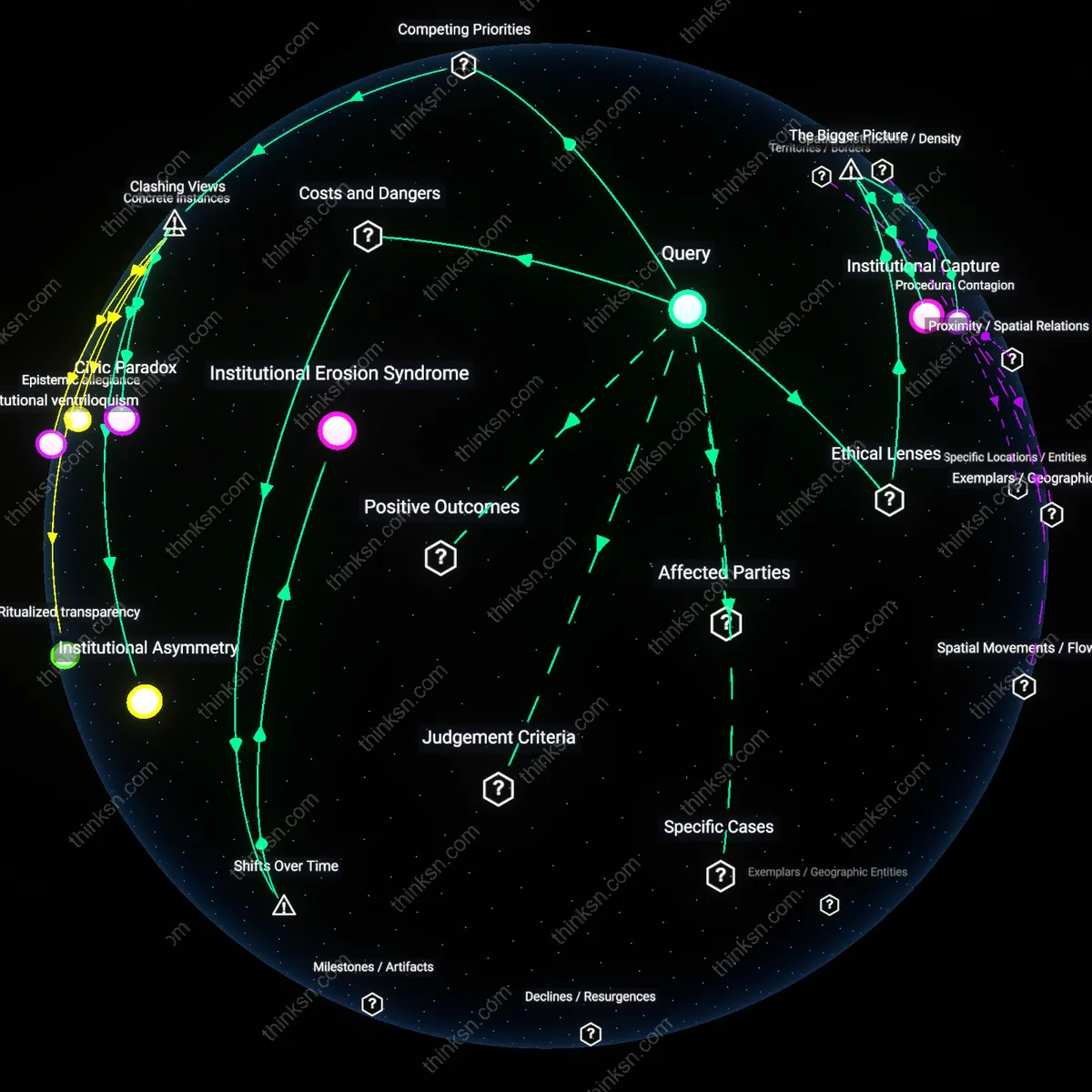
Institutional Erosion Syndrome
Partisan capture of local election boards since the 2010s has systematically degraded public trust by transforming administrative neutrality into visible political performance, particularly after contested elections like 2020; this shift replaced a post-Civil Rights era norm of procedural impartiality, where legitimacy was maintained through bureaucratic insulation, with one where electoral oversight is perceived as a reward for party loyalty—activating voter skepticism not just about outcomes but about the very capacity of local institutions to function independently. The danger lies not in isolated incidents of misconduct but in the normalization of appointments based on ideological conformity, which redefines competence as partisan reliability and erodes the symbolic separation between governance and contestation.
Procedural Grievance Economy
Beginning in the 2010s, the weaponization of local election boards in swing states like Arizona, Georgia, and Michigan transformed procedural disputes into a sustained political commodity, marking a departure from prior eras when irregularities were treated as correctable administrative failures rather than evidence of systemic illegitimacy; as partisan actors exploited decentralized control to stage high-profile audits or delay certification, they institutionalized grievance as a driver of electoral perception—where the cost is not just diminished faith in results but the inversion of democratic norms, in which transparency measures are deployed not to reassure but to fuel suspicion. This trajectory reveals how proceduralism, once a stabilizing principle, has been repurposed into a mechanism of subversion, rewarding performative doubt over actual accountability.
Legitimacy Arbitrage
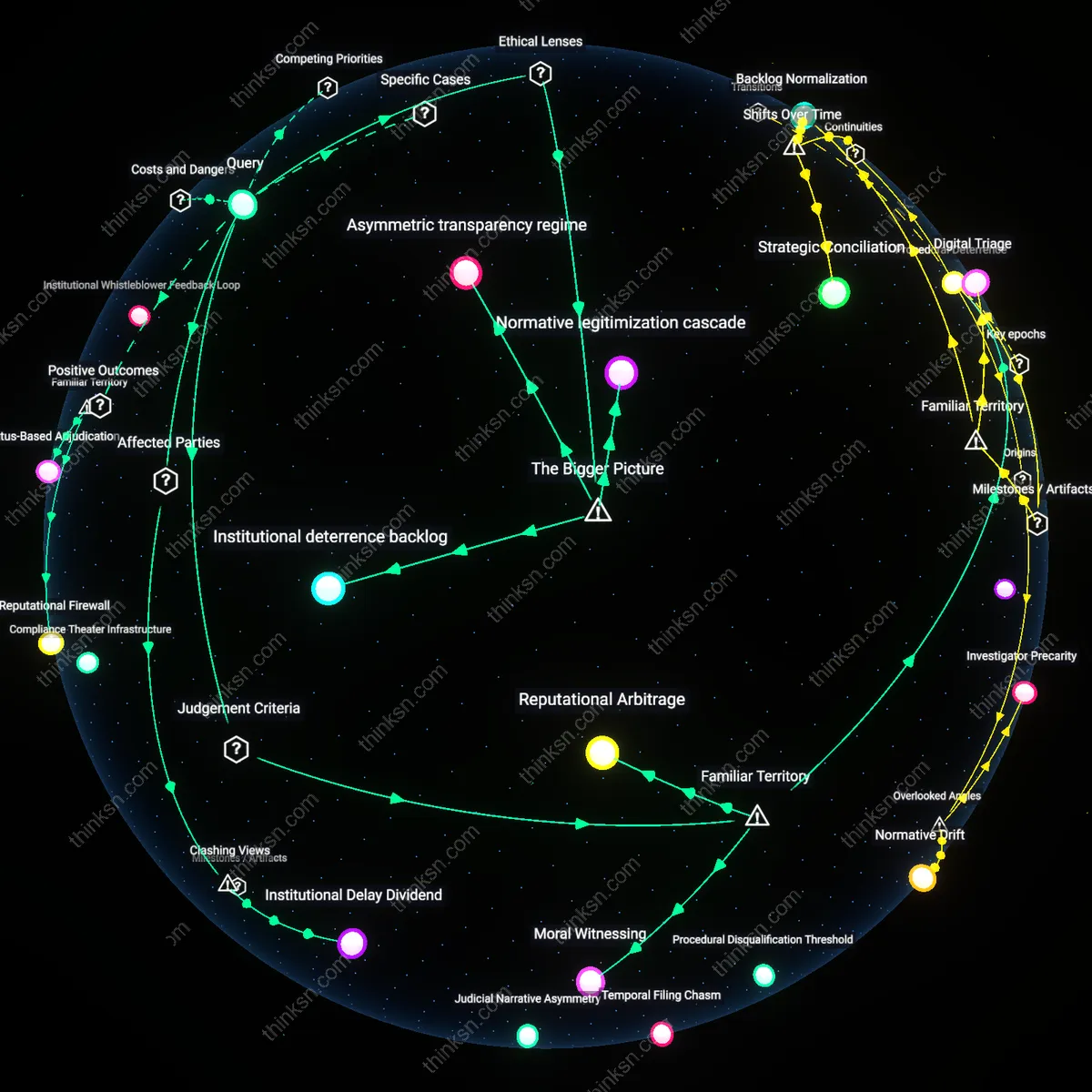
Partisan restructuring of local election boards erodes electoral legitimacy not by altering vote outcomes but by enabling legal manipulation of procedural trust, where actors such as Republican-appointed county clerks in Georgia or Arizona selectively audit processes under the guise of transparency, exploiting jurisdictional fragmentation in the U.S. electoral system to create asymmetric challenges to oversight; this mechanism reveals that partisan actors can weaponize procedural fidelity—a foundational democratic principle—to undermine systemic legitimacy, exposing the non-obvious reality that adherence to legal form can be a vehicle for delegitimization, not its safeguard.
Institutional Asymmetry
Perceptions of electoral legitimacy decline most sharply not in deeply polarized states but in swing jurisdictions like Wisconsin’s Waukesha County, where partisan capture of nonpartisan roles—such as election inspector appointments—produces visible disparities in ballot processing speed and voter roll purges because state-level actors exploit decentralized control to create localized standards that mimic due process while systematically disadvantaging one party; this reveals that the dominant narrative of broad-based distrust obscures a more precise mechanism—geographic manipulation of institutional norms—which allows partisans to erode legitimacy incrementally without triggering national intervention.
Civic Paradox
Heightened public scrutiny of local election boards, driven by grassroots monitoring groups in Pennsylvania and Michigan, paradoxically reinforces perceptions of illegitimacy when citizen auditors with partisan affiliations are granted formal access under 'transparency mandates,' transforming civic engagement into a tool of subversion by embedding non-expert actors within technical processes where their interventions introduce delays and symbolic disruptions that mimic corruption without necessitating fraud; this exposes the underappreciated risk that democratic participation, when deputized within contested institutions, becomes indistinguishable from sabotage.
Institutional Capture
Partisan manipulation of local election boards undermines electoral legitimacy by subordinating nonpartisan administrative functions to party advantage, thereby eroding the Weberian principle of bureaucratic neutrality essential to procedural liberalism. State legislatures and partisan actors exploit decentralized election administration—particularly in U.S. states like Arizona and Wisconsin—to appoint loyalists who reframe electoral integrity as partisan vindication, redefining the mission of election officials from accuracy to allegiance. This transformation is systemically enabled by the American federalist structure, which delegates election oversight to locally controlled bodies while lacking uniform accountability standards, allowing partisan capture to masquerade as reform. The non-obvious consequence is not mere distrust, but the institutionalization of bias under the legitimacy of lawful appointment, converting administrative bodies into instruments of democratic backsliding.
Procedural Contagion
Partisan interference in local election administration normalizes manipulative practices by creating precedent and permissive ambiguity that spread across jurisdictions, weakening the normative constraints that Habermasian discourse ethics relies on for legitimate political will formation. For instance, the use of partisan observers to challenge voter rolls in Michigan precincts after 2020 establishes a template replicated in Nevada and Pennsylvania, where the mere permissibility of such actions—regardless of legal merit—alters the behavioral expectations of all actors in the system. This contagion operates through professional networks of election officials, conservative legal foundations, and inter-jurisdictional policy diffusion mechanisms like the American Legislative Exchange Council (ALEC), which codify exceptional measures into standard practice. The systemic danger lies not in isolated incidents, but in the incremental recalibration of 'acceptable' electoral conduct, where legitimacy is degraded cumulatively through normalization rather than through singular crises.