Is Hybrid Commuting Worth It When Career Visibility Costs Too Much?
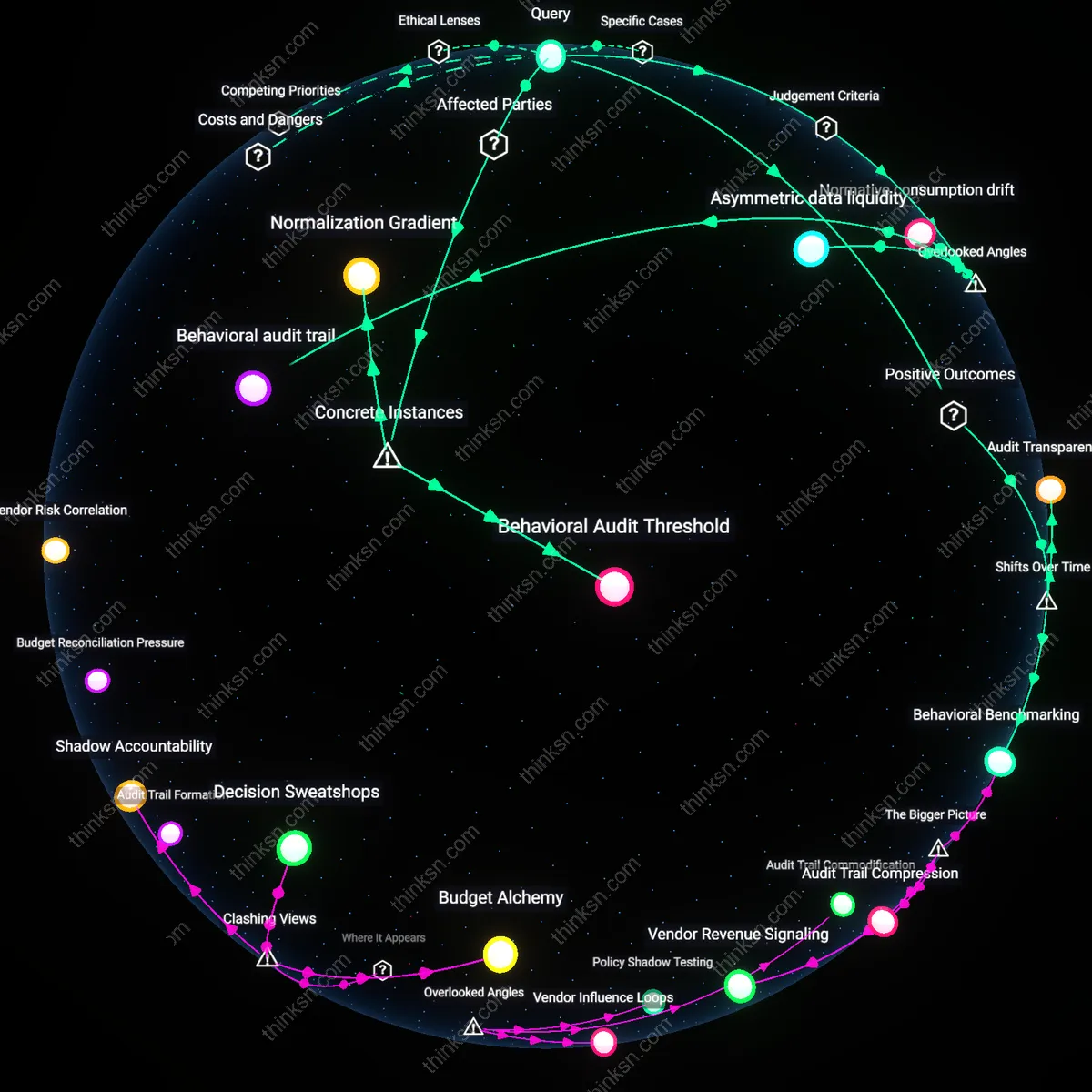
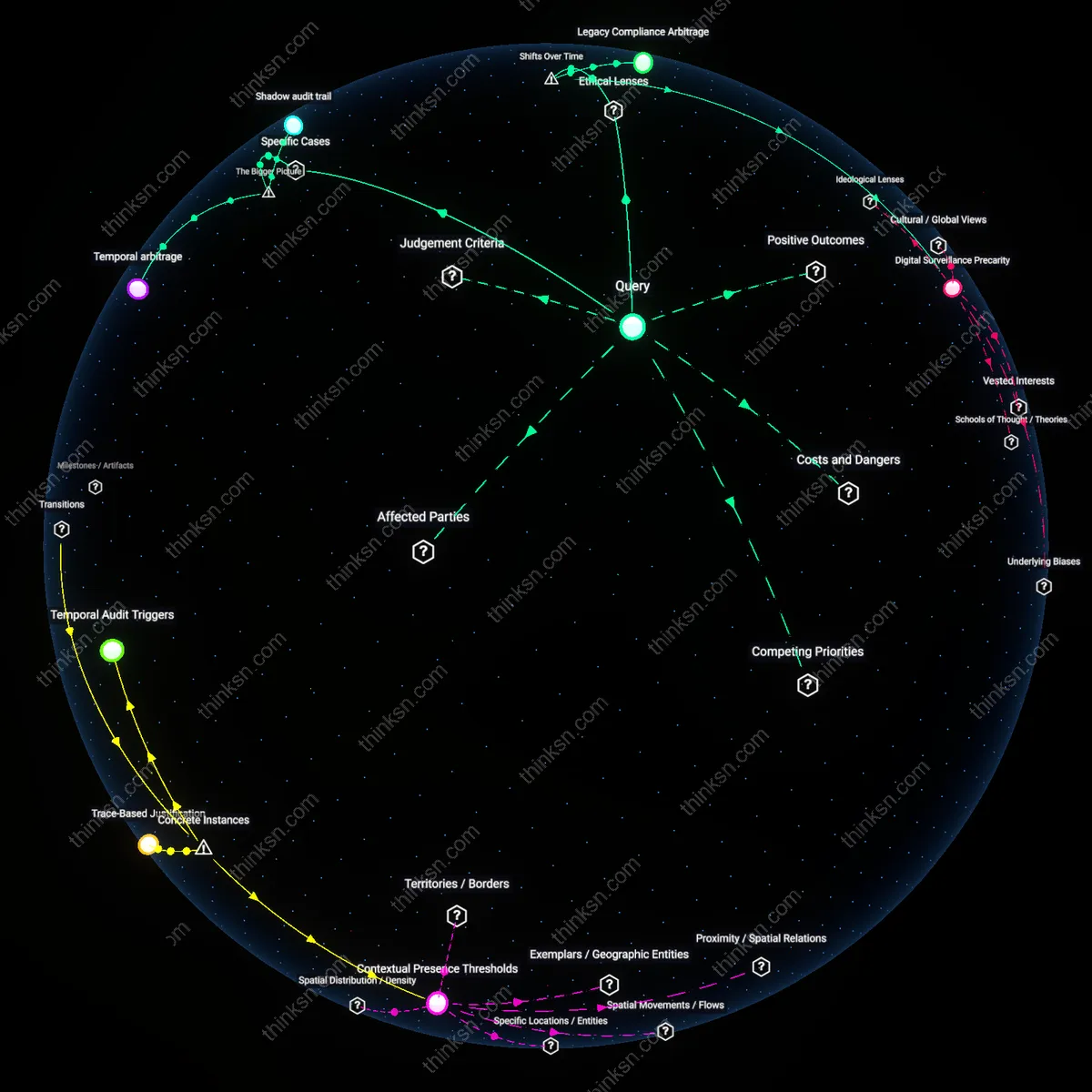
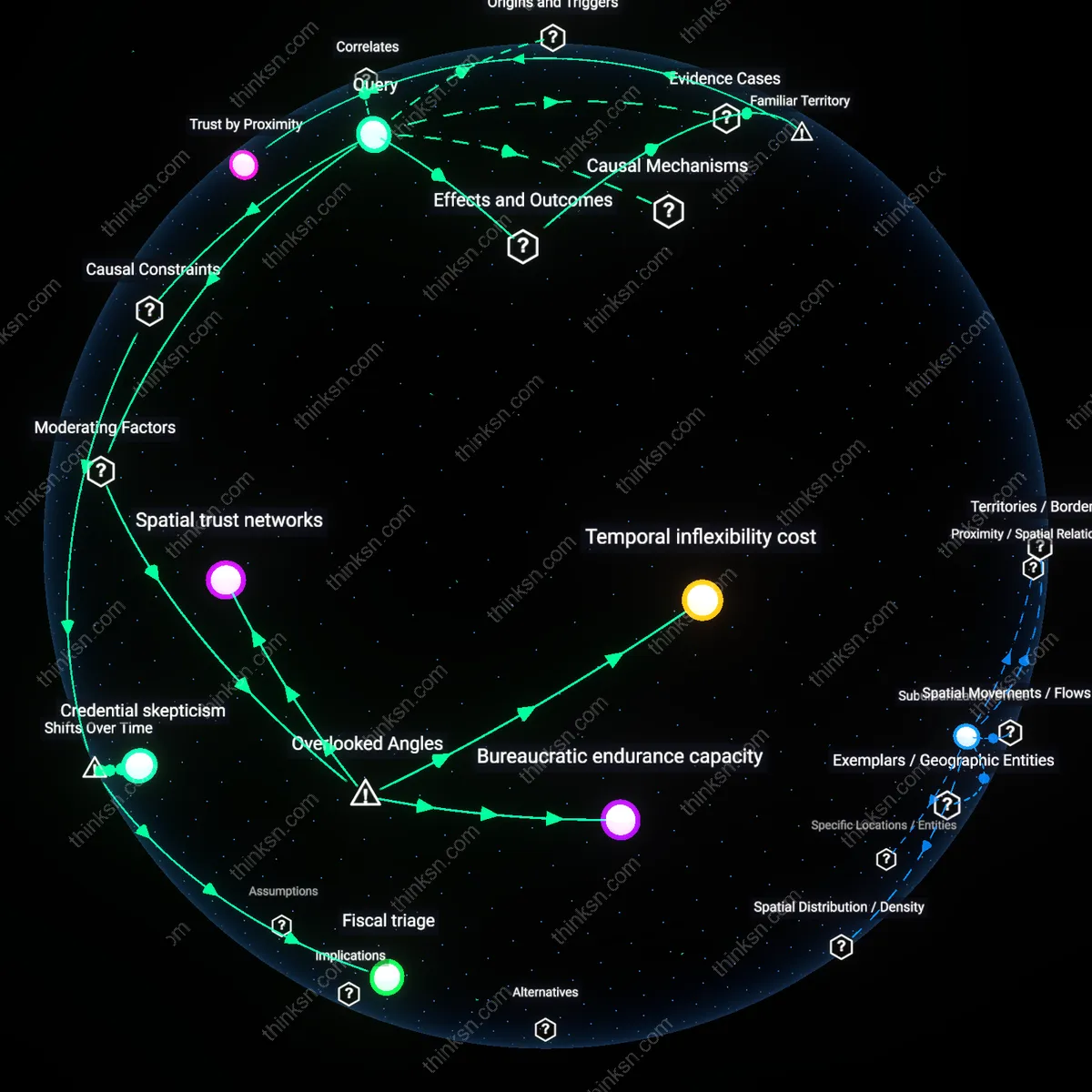
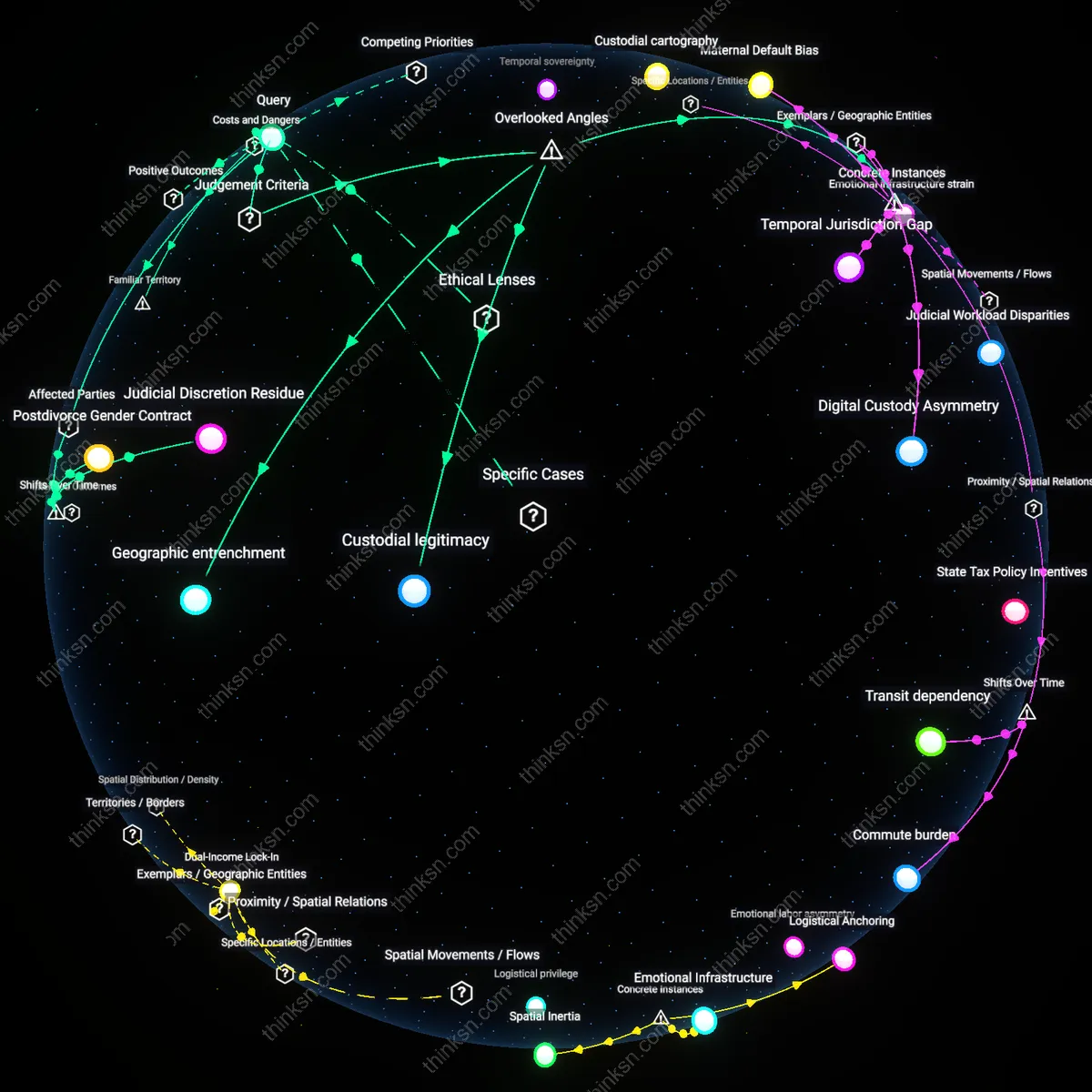
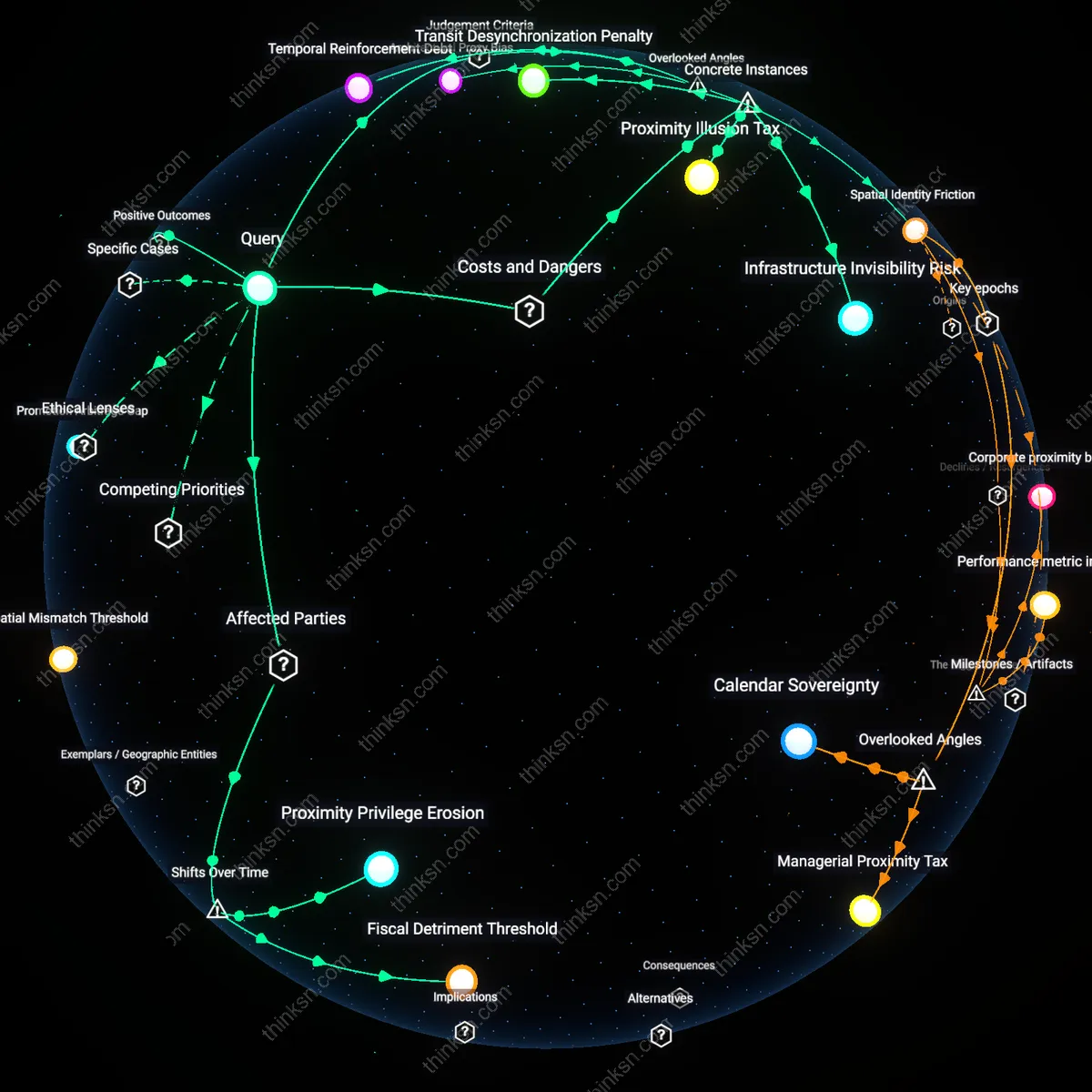
Analysis reveals 12 key thematic connections.
Key Findings
Fiscal Detriment Threshold
Commuting costs for hybrid employees exceed career advantages when urban transit inflation outpaces wage growth for mid-tier tech workers in post-2020 American cities. After the 2020 shift to hybrid schedules, employers retained downtown office leases while public transit fares rose faster than salaries in cities like San Francisco and Chicago, making each in-office day disproportionately costly for employees earning median software industry wages between $90,000–$120,000; this reversed the prior post-2010 trend where in-office presence reliably accelerated promotions. The non-obvious outcome is that physical presence no longer guarantees advancement as performance metrics shift to remote-capable KPIs, rendering daily commutes a net fiscal loss rather than career investment.
Proximity Privilege Erosion
The career benefits of in-office presence declined for hybrid employees after 2021 when multinational consultancies began auditing promotion rates by location mode, revealing no performance gap between remote and hybrid staff. At firms like Accenture and Deloitte, internal data showed hybrid employees were promoted at equal or slightly higher rates than fully in-office peers, undermining the long-held assumption that visibility equaled advancement; this transition dismantled a mid-20th-century corporate hierarchy where proximity to executives determined career mobility. The underappreciated result is that commuting now mainly burdens lower-support roles—such as administrative or facilities staff—who lack schedule autonomy, shifting the cost burden onto those with least career leverage.
Dual-Location Burden Shift
Commuting costs exceed career gains for hybrid employees when dual-residence requirements emerge among dual-income families following pandemic-era relocation patterns. After 2020, educated couples in cities like Austin and Seattle increasingly split households between urban cores and suburban satellites to satisfy both partners’ hybrid work policies, a trend visible among two-earner households earning over $175,000; however, time lost to biweekly commutes and the implicit expectation of in-office 'face time' diluted marginal career returns, especially for secondary earners whose trajectories plateaued despite physical presence. The overlooked dynamic is that spatial flexibility became a co-opted tool of labor extraction, where the freedom to work hybrid expanded expectations of availability without concomitant rewards, normalizing presence as standard rather than strategic.
Spatial Identity Friction
Commuting costs for hybrid employees exceed career advantages when an employee’s residential identity becomes socially stigmatized within the office hierarchy due to geographic origin, such as living in a politically or culturally marked rural area that is unconsciously devalued by urban-based leadership. This occurs not through overt discrimination but through subtle mismatches in cultural schema, communication style, and implicit bias in visibility-based promotion systems, where centrality equates to competence. The overlooked dynamic is that career advancement in hybrid settings still depends on 'proximity signaling'—the unconscious attribution of commitment based on physical nearness—which penalizes those whose commutes are long not by choice but because their home locations carry symbolic distance. This changes the standard economic calculus by introducing moral distortions of fairness, where autonomy in location clashes with unacknowledged spatial hierarchies embedded in corporate culture.
Temporal Reinforcement Debt
Commuting costs outweigh career benefits when the irregular office schedule disrupts circadian job-crafting, eroding long-term cognitive capital through misaligned energy peaks and mandatory presence during low-productivity hours. High-performing hybrid employees often optimize deep work during non-traditional hours, but required in-office days force synchronization with arbitrary group rhythms, degrading the quality and authenticity of contributions. The overlooked variable is the compounding loss of 'temporal sovereignty'—the worker’s ability to align effort with personal performance cycles—which undermines the practical efficiency of face time and distorts measured 'visibility' into a proxy for presence rather than impact. This reframes the tradeoff not as cost versus proximity, but as a hidden tax on neurodiverse or chronotype-mismatched talent whose contributions are structurally discounted.
Architectural Proxy Bias
Commuting costs exceed career gains when office layouts functionally allocate influence by seating topology rather than role, such that hybrid employees on infrequent days are systemically seated in peripheral zones with diminished access to spontaneous decision-making nodes like kitchen clusters or stairwell corridors near executive floors. These architectural arrangements—often justified by cost or flexibility—create a hidden spatial algorithm where proximity to power is mediated not by intent or rank but by fixed desk locations assigned to full-timers, privileging accidental encounters over deliberate engagement. The overlooked dynamic is that career-advancing 'weak ties' form less through scheduled meetings than through predictable spatial overlap, making commutes during random office days statistically futile for influence accrual. This reveals a practical inefficiency masked as neutrality, where infrastructure silently enforces hierarchies resistant to hybrid logic.
Spatial Mismatch Threshold
Commuting costs for hybrid employees exceed career advantages when proximity-dependent mentorship opportunities in central business districts fail to compensate for rising transit expenses and time poverty among mid-income workers. This occurs because senior leadership roles are disproportionately allocated through informal, in-office networks concentrated in high-rent urban cores, yet only deliver tangible advancement if access is sustained—making occasional presence insufficient to justify regular cost burdens. The non-obvious insight is that geographic proximity must cross a minimum interaction frequency to trigger sponsorship, turning sporadic attendance into a sunk cost rather than career leverage. The threshold at which physical presence yields diminishing social returns defines the tipping point where logistics outweigh advancement.
Promotion Arbitrage Gap
Career benefits of office presence evaporate when hybrid employees’ performance visibility is algorithmically discounted in promotion committees due to perceived lower organizational citizenship, even when output metrics match in-office peers. This happens because evaluation systems in firms like Fortune 500 corporations still implicitly weight face time as a proxy for commitment, creating an artificial advantage for full-time office attendees—yet this bias only matters when promotion criteria lack quantifiable benchmarks. The underappreciated dynamic is that hybrid workers absorb commuting costs to close a legitimacy gap engineered by legacy management heuristics, not measurable productivity deficits. When the arbitrage between symbolic presence and actual reward ceases to yield upward mobility, the financial and temporal investment becomes systemically unjustified.
Infrastructure Drag Load
Hybrid commuting becomes a net career liability when regional transportation systems impose asymmetric burdens on peripheral residents due to underinvestment in suburban transit nodes, forcing employees to spend disposable income and recuperative time on multi-modal journeys for limited office engagement. In metropolitan areas like Atlanta or Los Angeles, where rail coverage favors downtown access but not lateral connectivity, workers from lower-density zones face longer, costlier trips for two or three office days weekly—eroding the wage premium associated with office-based visibility. The overlooked mechanism is that infrastructural bottlenecks convert episodic presence into chronic strain, such that the career escalator accessible through in-person interaction is effectively toll-gated by structural underdevelopment, weakening the return on physical attendance.
Transit Desynchronization Penalty
In London in 2019, hybrid employees at Barclays found that partial office attendance amplified transport costs without securing career advancement, because off-peak travel incentives failed to align with management’s unspoken expectation of visible morning presence, exposing a hidden synchronization tax where partial commuting incurs financial and reputational losses without full integration into office rhythms.
Proximity Illusion Tax
At Google’s Mountain View campus between 2021–2022, engineers who commuted two days weekly experienced diminished project leadership opportunities compared to fully remote peers who strategically engaged in high-visibility virtual forums, revealing that sporadic presence creates an illusion of access while excluding hybrid workers from both spontaneous decision-making and formal remote influence channels.
Infrastructure Invisibility Risk
In 2023, municipal workers in Austin, Texas, who split time between city offices and field operations faced unreimbursed vehicle depreciation and toll costs under a hybrid policy that counted their work as ‘low-commute,’ destabilizing retention in mid-tier roles where perceived office affiliation offered no promotion leverage despite measurable increases in operational wear and personal financial risk.