Is Antitrust Enough to Tame Search Engine Data Dominance?
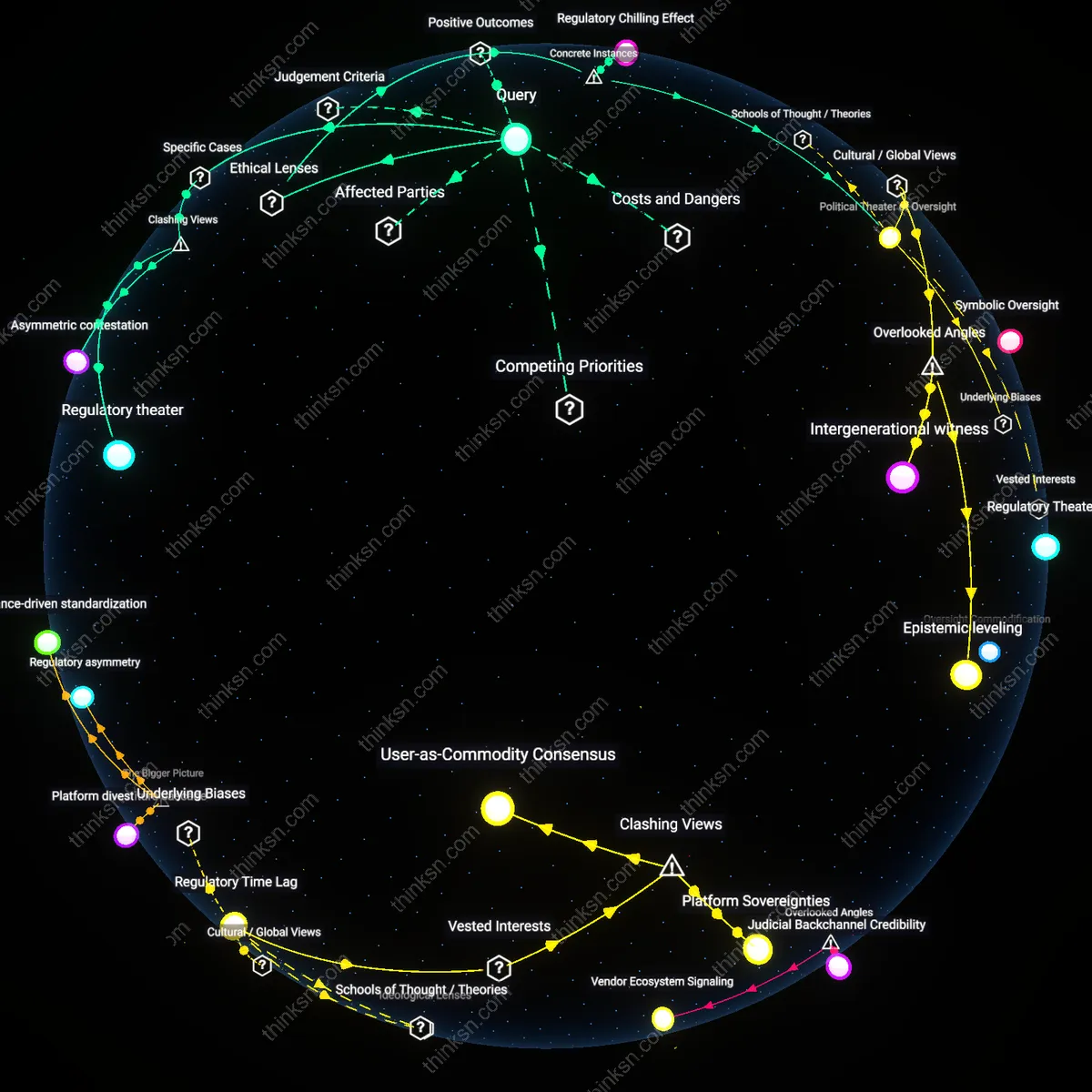
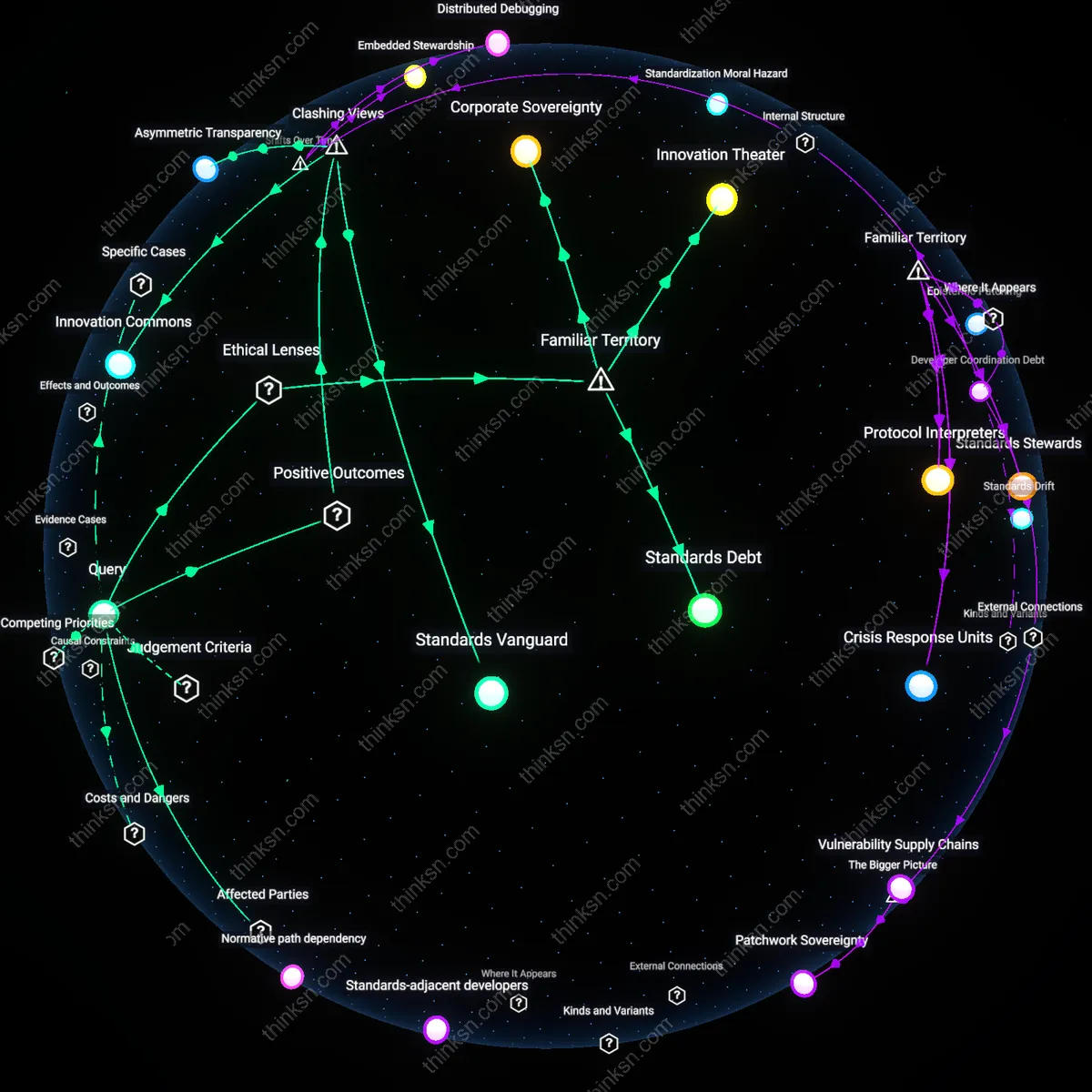
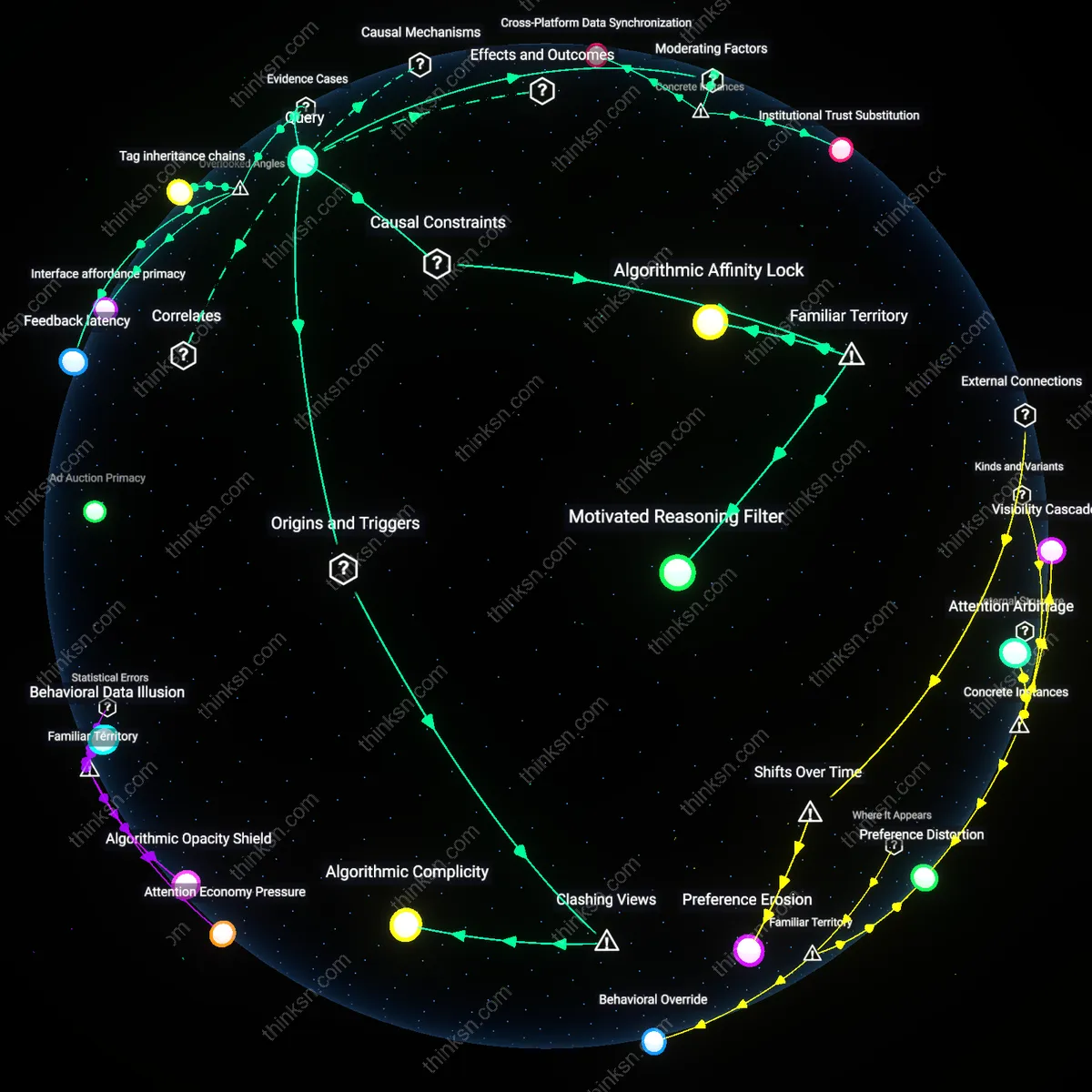
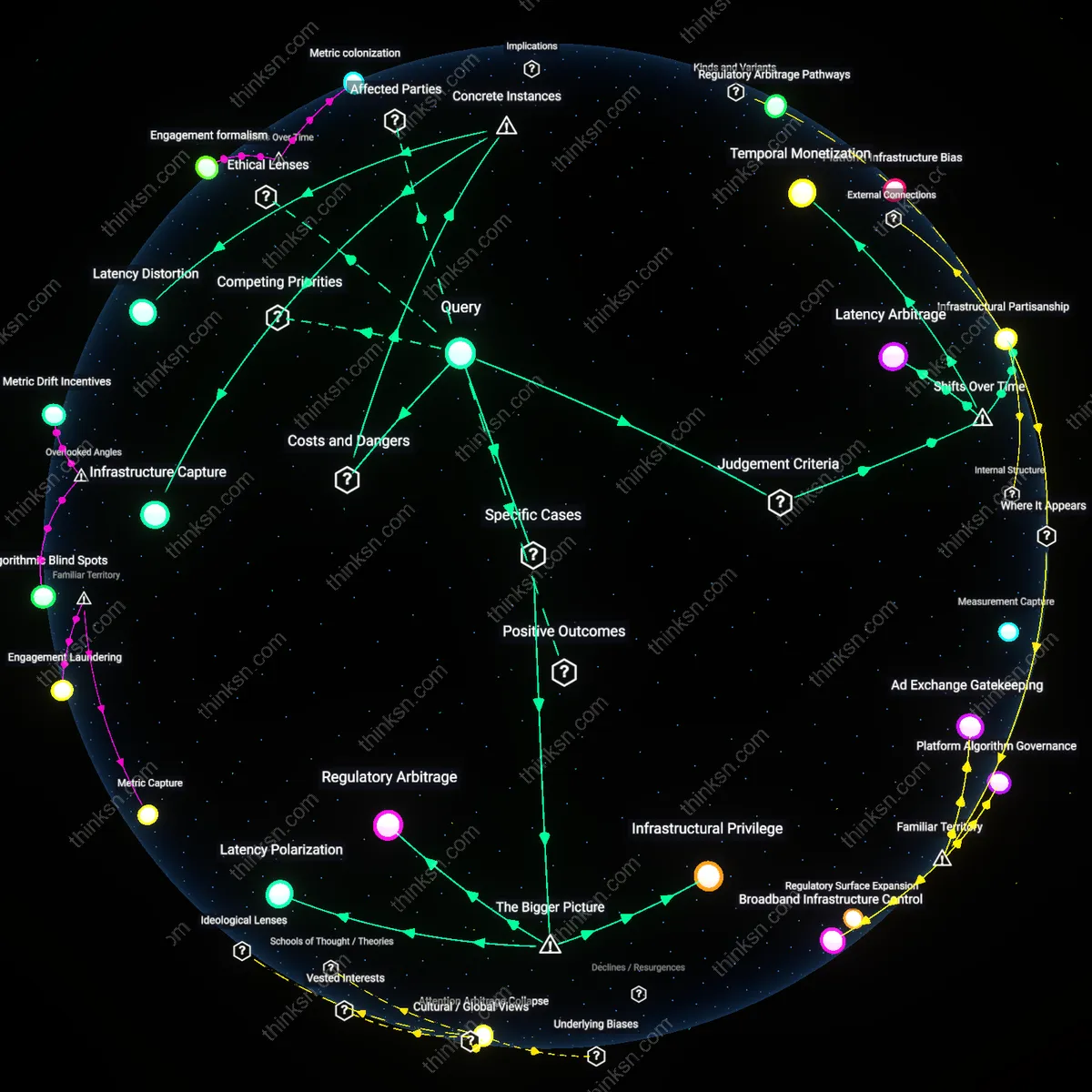
Analysis reveals 10 key thematic connections.
Key Findings
Search-as-Utility
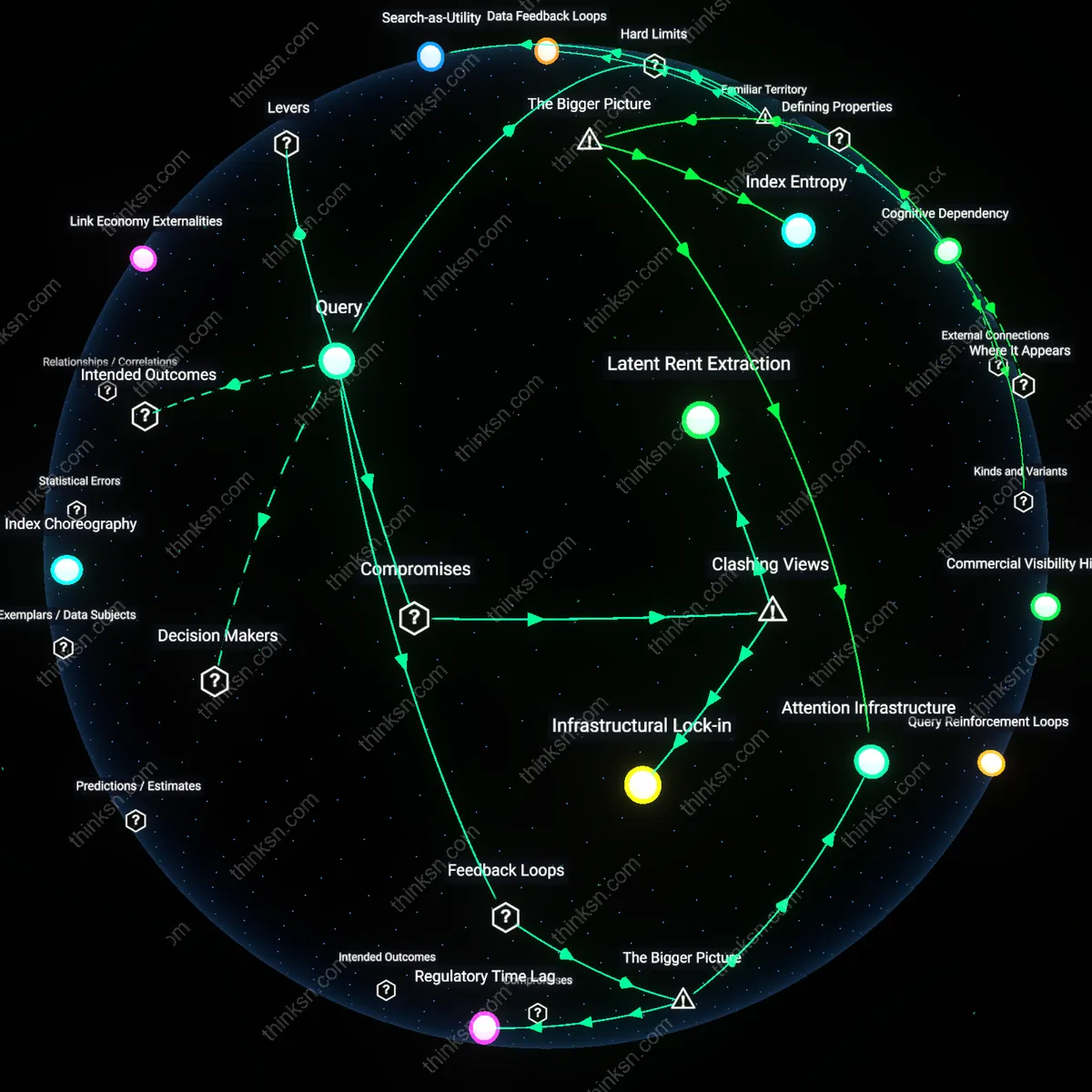
The current US antitrust framework must be replaced because it cannot address the systemic entrenchment of search engines as essential infrastructure for public and economic life. Antitrust law treats competition as a function of price and output, but dominant search engines like Google control access to information flows, shape user intent, and extract behavioral data without monetary exchange—conditions under which traditional market definitions collapse. The non-obvious insight is that search engines function not as products competing in a market but as utilities mediating non-market informational exchanges, rendering antitrust’s consumer welfare standard blind to dominance that harms cognition, not just competition.
Data Feedback Loops
Existing antitrust enforcement fails because it ignores the self-reinforcing cycle by which search engines use data dominance to improve their algorithms, which in turn deepens user dependency and further concentrates data control. Unlike conventional monopolies that rely on price manipulation or exclusive contracts, Google’s position in search is secured by an informational moat built from trillions of queries, clicks, and behavioral traces—inputs that refine relevance and retention beyond reach of rivals. The underappreciated reality is that competition is not just distorted but algorithmically preempted, as new entrants lack both the scale of training data and the feedback velocity needed to challenge incumbent performance.
Cognitive Dependency
The law must shift from market-based regulation to safeguarding cognitive autonomy because users increasingly outsource decision-making, memory, and belief-formation to search engines, making informational competition a condition of mental freedom rather than economic fairness. This dependency is invisible to antitrust, which presumes rational, cost-sensitive actors navigating transparent choices, but in reality, search rankings, autocomplete, and snippet design shape perception before users even perceive alternatives. The overlooked mechanism is that dominance now operates by colonizing attention and structuring choice architecture—power not over markets, but over the mind’s access to reality.
Index Choreography
Antitrust should target the design of search engine indexing schedules, because the timing and frequency with which web pages are crawled and updated in an index create asymmetric access to real-time information that favors dominant platforms. This mechanism operates through the backend infrastructure of search engines—specifically, how often Googlebot revisits and reindexes content from different domains—impacting the freshness and visibility of competitors’ information without any visible exclusionary act. Most antitrust analyses focus on ranking or API access, overlooking how index update cadence functions as an invisible gatekeeping lever that entrenches information latency for rivals, allowing incumbents to control not just what is found, but when it becomes findable.
Query Fecundity
Regulatory intervention should mandate transparency around query expansion algorithms, as the way search engines rephrase, redirect, or suppress user queries shapes the landscape of informational competition more fundamentally than results ranking. This operates through the query interpretation layer—where Google reformulates 'best running shoes' into specific brand-heavy long-tail terms—steering users toward proprietary or affiliated content before results even load. The overlooked dynamic is that query rewriting, not just result ordering, determines what concepts or alternatives enter the competitive field, making the search engine the unseen author of the marketplace of ideas, where informational suppression occurs pre-emptively through semantic narrowing.
Link Economy Externalities
Antitrust enforcement must account for how search engines internalize the reputational value of third-party hyperlinks while systematically devaluing their economic utility to publishers, turning the link—a foundational unit of web competition—into a one-way resource extraction mechanism. This operates through the asymmetry between Google’s reliance on inbound links as ranking signals and its refusal to return equivalent referral traffic or monetization share to linking sites, especially as click-tracking and referral obfuscation (e.g., Google’s link stripping in SERPs) disrupt referral analytics. The underappreciated reality is that the health of the link ecosystem—central to both competition and content discovery—is degraded not through market foreclosure but through quiet erosion of network reciprocity, which current antitrust frameworks fail to recognize as a competitive harm.
Attention Infrastructure
The current US antitrust framework fails to stabilize competition in search ecosystems because it cannot constrain the self-reinforcing loop where dominant search engines convert user data into better personalization, which increases user engagement, which in turn harvests more data, deepening their market entrenchment. This dynamic is sustained by platform-side algorithms that optimize for engagement duration, enabling search incumbents like Google to treat user attention as an extractive resource that fuels further data accumulation—bypassing traditional price-based competition. The underappreciated systemic risk is that search engines function not merely as intermediaries but as cognitive gatekeepers whose data feedback loops structurally erode potential entrants’ ability to achieve parity, regardless of legal remedies targeting conduct or structure. What persists is a systemically opaque infrastructure of attention, maintained by continuous behavioral monitoring and algorithmic refinement that antitrust’s static market-share analysis cannot detect or correct.
Regulatory Time Lag
US antitrust law is destabilized by a reinforcing feedback loop in which the pace of algorithmic data aggregation outstrips the investigative and adjudicative timelines of regulatory agencies, allowing dominant search platforms to entrench power faster than legal interventions can unfold. The Federal Trade Commission and Department of Justice are procedurally bound to ex post harm assessments, while search engines like Google and Microsoft Bing deploy real-time data assimilation to refine ranking outputs, creating a systemic advantage that evolves faster than evidentiary thresholds for antitrust violations can be met. The non-obvious consequence is that legality becomes a moving target—practices that appear legal at the time of deployment may produce anticompetitive effects only in aggregate over time, by which point the market has already tipped. This temporal misalignment transforms regulatory oversight into a lagging indicator, reinforcing rather than balancing the dominance of incumbent data systems.
Latent Rent Extraction
The current U.S. antitrust framework fails to constrain search engines' data-control power because it treats exclusionary conduct as harmful only when prices rise or output falls, ignoring how dominant platforms extract value through non-price mechanisms like attention monopolization and behavioral surplus capture. This misfire occurs because enforcement relies on consumer welfare standards rooted in 20th-century industrial economics, which cannot detect rents extracted from future innovation or user autonomy—such as Google’s preferencing of proprietary services in search results at the expense of emergent competitors that lack data scale. The non-obvious reality is that antitrust’s price-centric model inadvertently sanctions systemic control over informational pathways, legitimizing dominance not through overt coercion but through sustained opacity in data aggregation and algorithmic ranking, revealing that the framework protects competition only in form, not function.
Infrastructural Lock-in
Regulating search engines requires moving beyond antitrust because the core problem is not monopolistic behavior per se but the entrenchment of a data-intensive digital infrastructure that makes competition itself structurally impossible without state-led interoperability mandates. This dynamic is exemplified by Google’s integration of search, tracking, and ad tech into a vertically concentrated stack, where exclusion arises not from predatory pricing but from the sheer impossibility of replicating data-based network effects at scale. The overlooked truth is that competition law assumes replicable market entry, but search engines operate as de facto public utilities whose data advantages are compounded over decades—making corrective action only feasible through ex ante regulation that deliberately sacrifices private efficiency to restore systemic contestability, a compromise the current legal regime refuses to entertain.