Telemedicine Trade-offs for Chronic Care Depth and Convenience?
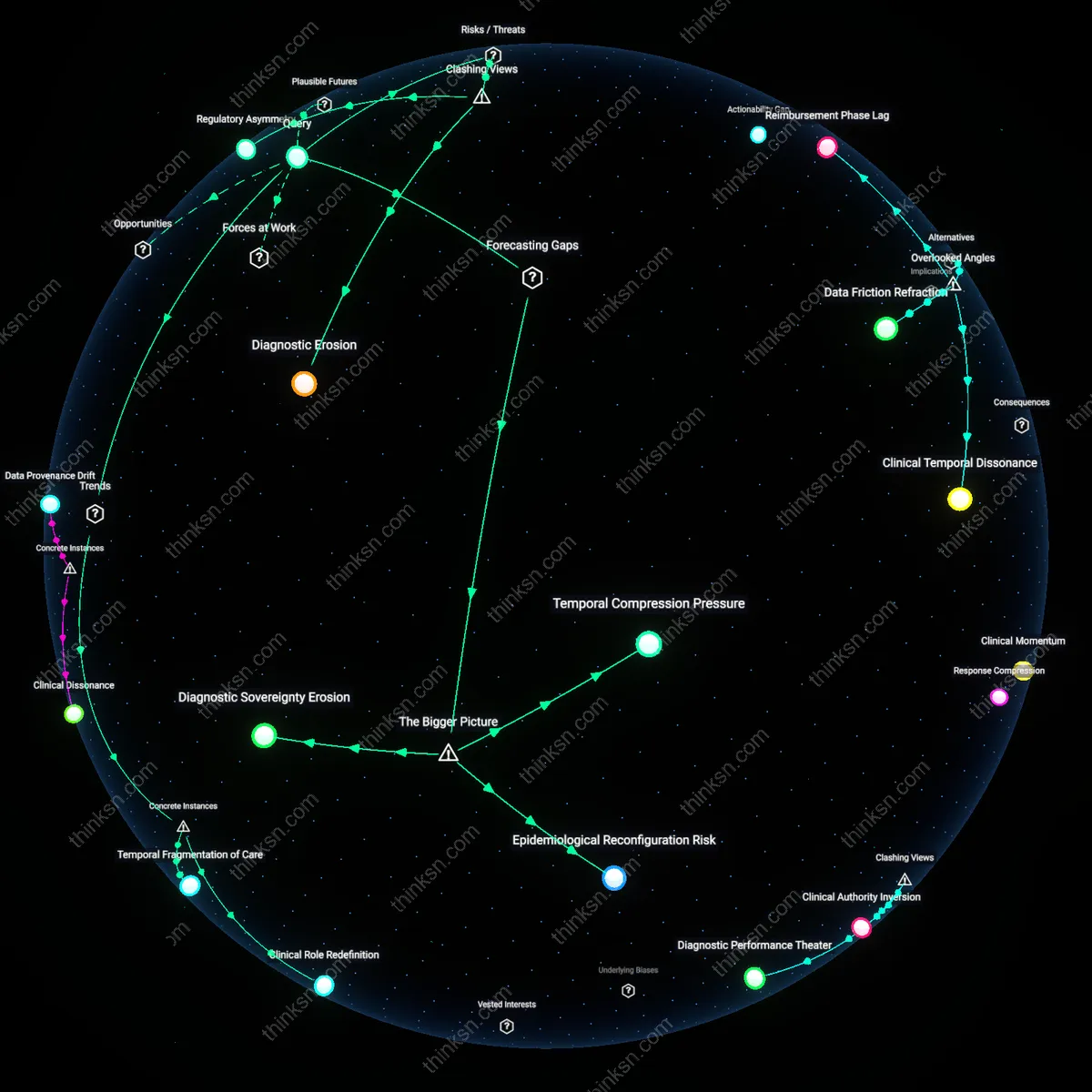
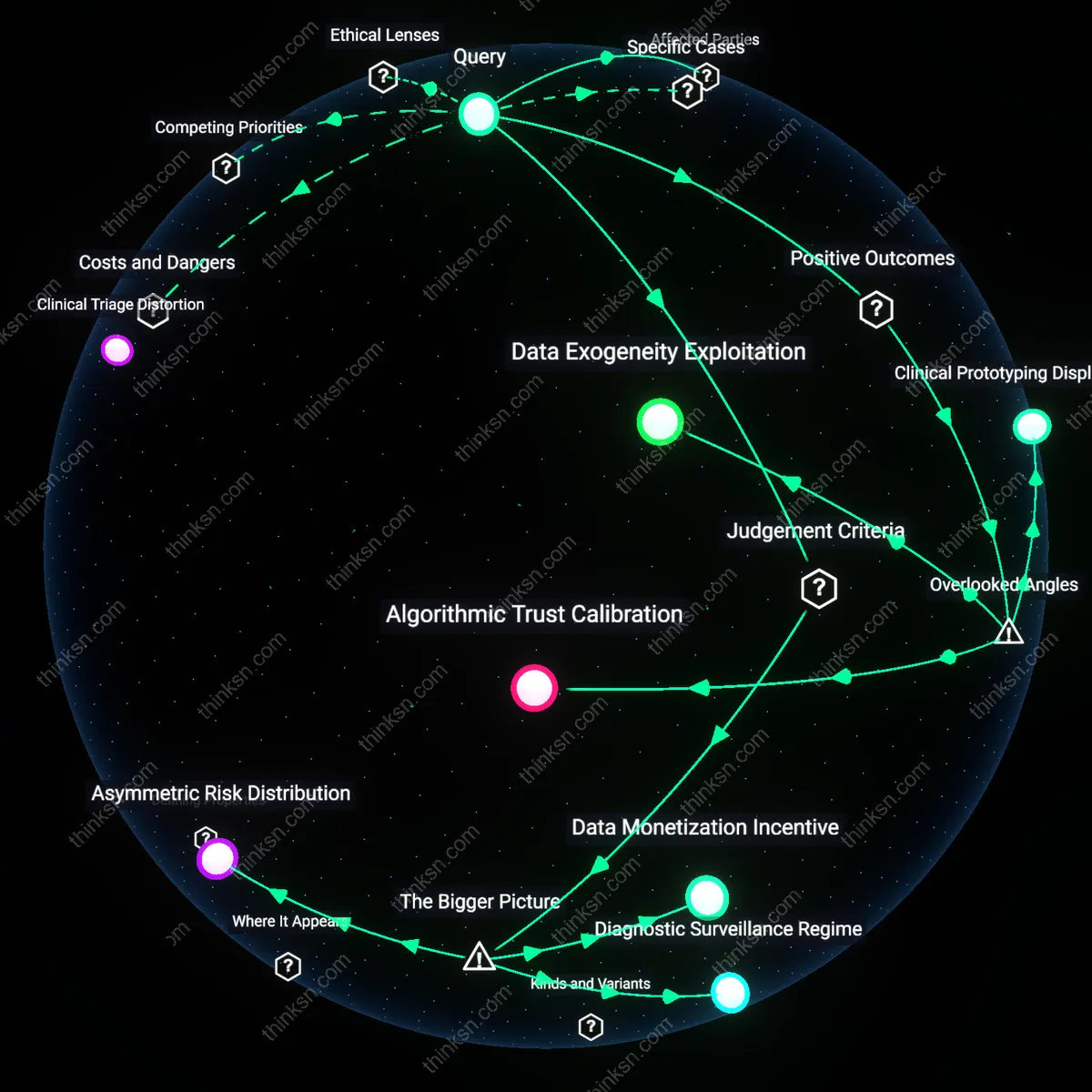
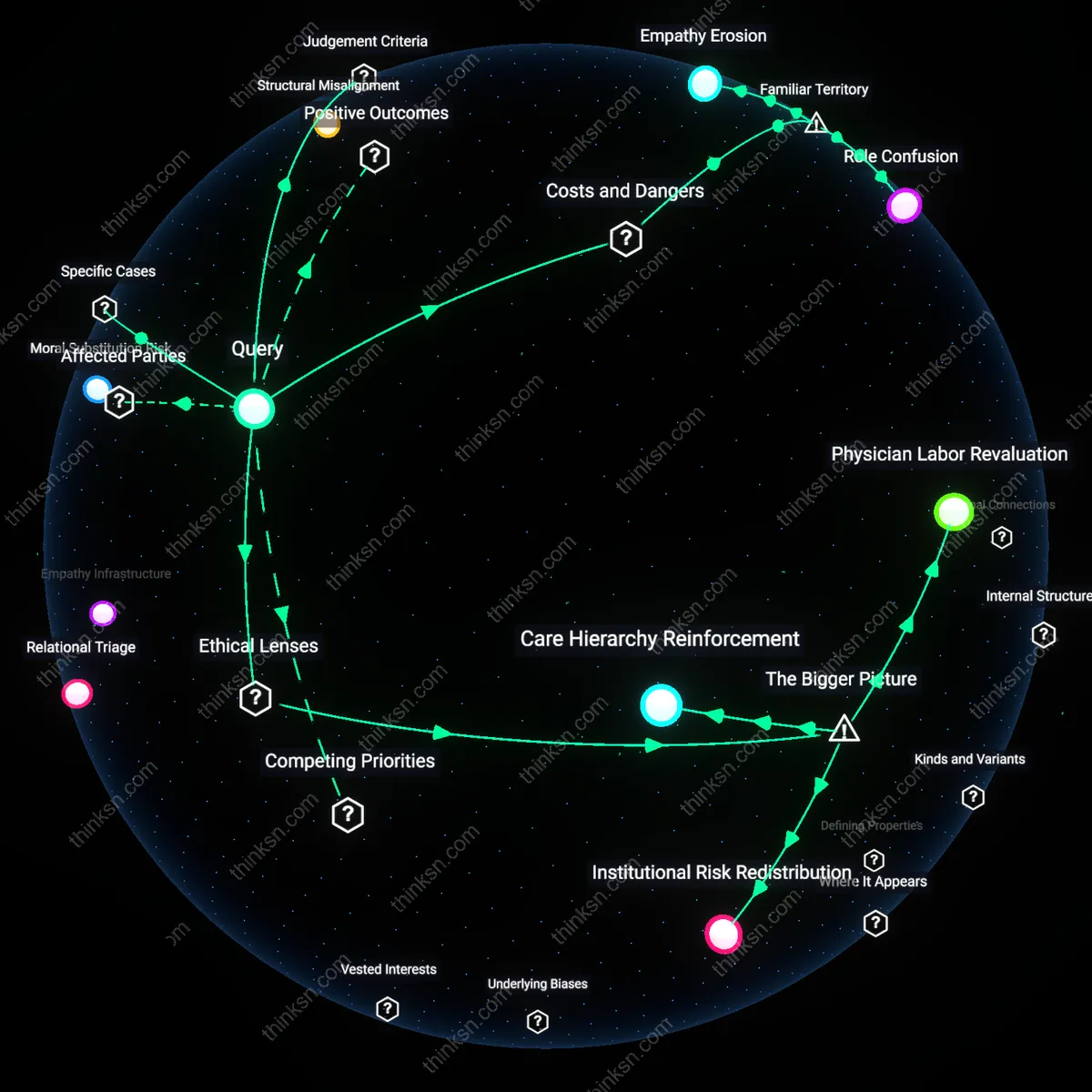
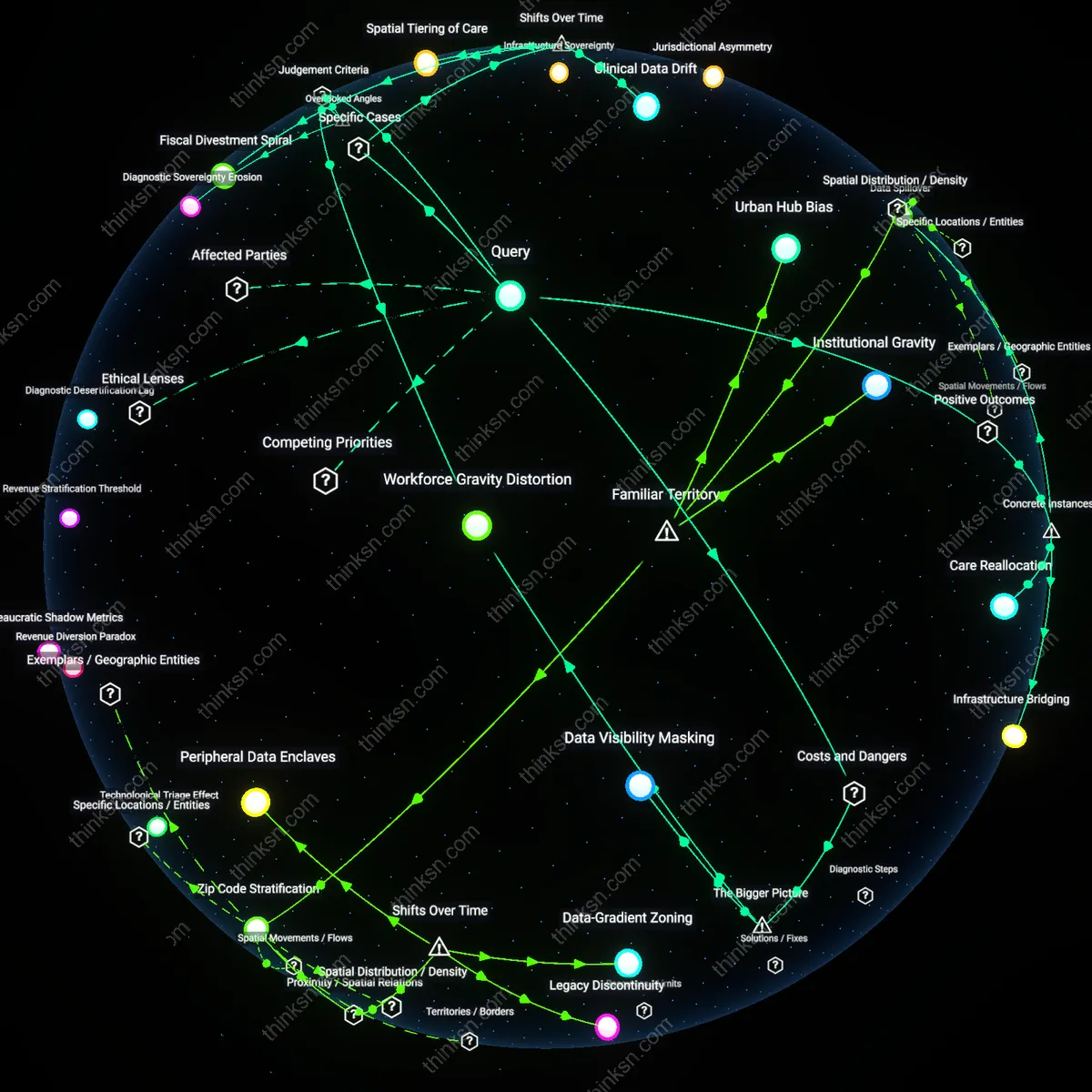
Analysis reveals 9 key thematic connections.
Key Findings
Clinical Dilution
Telemedicine reduces the frequency and sensitivity of physical diagnostic maneuvers in chronic disease management, directly compromising the detection of subtle somatic changes. Primary care providers and specialists rely on palpation, auscultation, and inspection to monitor conditions like heart failure or diabetes, but virtual visits exclude these tools, shifting reliance to patient self-reporting and sporadic lab work. This trade-off favors accessibility for rural or mobility-limited patients but silently degrades clinical vigilance over time. The loss is rarely visible until a preventable complication requires hospitalization, making clinical dilution an invisible tax on convenience.
Data-Driven Displacement
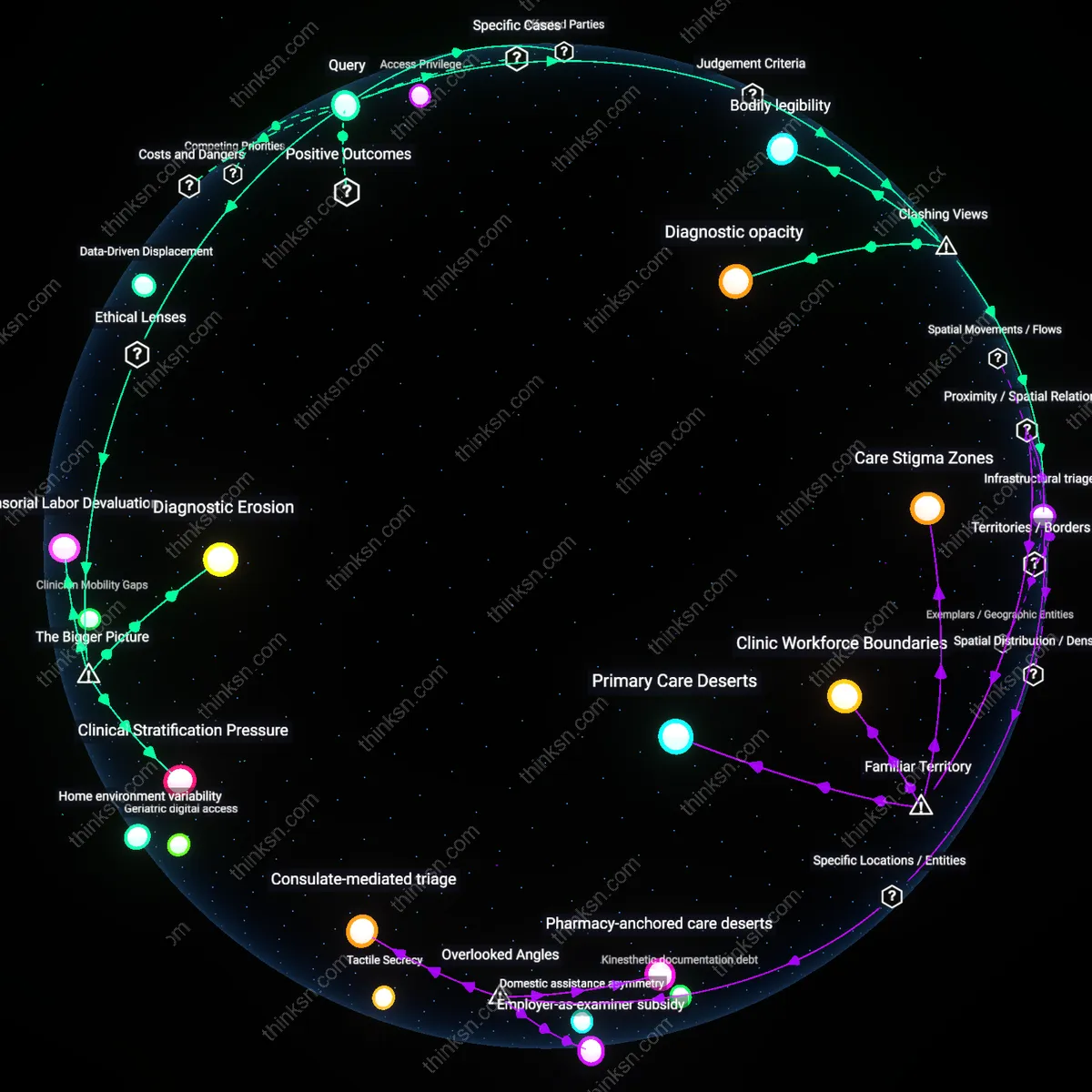
Remote monitoring devices and patient-entered data are substituted for in-person exams in telemedicine follow-ups, giving insurers and health systems the impression of equivalent oversight. Chronic disease patients—especially older adults with hypertension or COPD—become responsible for operating monitors and interpreting cues, often without training, while clinicians make decisions based on fragmented digital inputs. The convenience of continuous data creates a false sense of comprehensiveness, displacing hands-on validation with algorithmic proxies. This shift benefits scalable care models but obscures the contextual judgment only physical presence enables.
Access Privilege
Urban, tech-literate patients with stable housing and broadband gain disproportionate benefits from telemedicine, widening the gap in chronic disease outcomes relative to rural, elderly, or low-income populations. Health systems incentivized to reduce overhead promote virtual visits as equal in value, but marginalized patients often lack devices, connectivity, or confidence to engage effectively. The convenience of virtual access assumes uniform capacity, masking a structural bias that rewards those already well-resourced. This trade-off elevates efficiency for some while deepening inequity for others, normalizing convenience as a default standard of care.
Diagnostic opacity
Telemedicine privileges patient autonomy and continuity of care over the diagnostic precision enabled by physical examination, thereby normalizing a tiered system of clinical inference where socioeconomic access to hybrid (in-person and virtual) follow-up determines diagnostic reliability. This shift entrenches a form of diagnostic opacity in which physiological anomalies—such as peripheral edema in heart failure or subtle joint effusions in rheumatoid arthritis—remain unobserved not due to clinical negligence but by design of the virtual encounter, privileging efficiency and access over sensory breadth. The non-obvious consequence is that diagnostic uncertainty becomes unevenly distributed, with patients lacking transportation or broadband tolerating higher diagnostic risk, not as outliers but as structural beneficiaries of a care model that treats missing data as acceptable noise.
Bodily legibility
The adoption of telemedicine for chronic disease management reduces the clinician's reliance on tactile and spatial cues—like abdominal rigidity or skin turgor—shifting diagnostic authority toward patient-reported outcomes and digital biomarkers, thus redefining what counts as a clinically visible body. This transition favors patients who are linguistically fluent, cognitively able, and technologically equipped to translate bodily experience into data, rendering conditions like diabetic neuropathy or early congestive heart failure less legible when patients cannot articulate or instrument them. The friction lies in the fact that bodily legibility, once a function of physician skill and patient presence, now depends on a patient’s capacity to perform their symptoms within a narrow telecommunicative frame, privileging expressive competence over physiological urgency.
Infrastructural triage
The expansion of telemedicine in chronic care functions not as a neutral substitution for in-person visits but as a covert mechanism of infrastructural triage, wherein health systems under financial pressure outsource the costs of diagnostic thoroughness to patients through deferral or cancellation of physical exams deemed 'non-essential' in virtual workflows. Clinicians in safety-net hospitals, for instance, increasingly rely on telemedicine not because it is superior but because reimbursement models and staffing shortages make in-person visits unsustainable, turning convenience into a compulsory default. This reveals that convenience operates not as a patient-centered benefit but as a fiscal displacement tactic, where the erosion of physical assessment is rationalized by systemic under-resourcing rather than clinical choice.
Diagnostic Erosion
Telemedicine prioritizes accessibility and continuity for chronic disease management under utilitarian healthcare frameworks, thereby accepting a reduction in tactile diagnostic precision, which becomes ethically permissible when population-level outcomes improve despite individual diagnostic trade-offs. This shift is systemically enabled by value-based care models in the U.S. insurance structure, which reward reduced hospitalizations over comprehensive physical exams, pressuring providers to prioritize efficiency over sensory depth; the underappreciated consequence is a gradual normalization of partial physical assessment as clinically sufficient, altering diagnostic standards over time. What makes this connection hold is the alignment of provider incentives, payer policies, and patient demand under managed care regimes that treat time and touch as expendable inputs when outcomes are statistically maintained.
Clinical Stratification Pressure
The expansion of telemedicine in chronic care reproduces a Rawlsian 'least advantaged' dilemma by improving access for rural or mobility-limited patients while simultaneously creating a two-tiered examination standard that disadvantages those with complex comorbidities requiring hands-on assessment. This divergence is systemically sustained by federal broadband subsidies and EMTALA-driven tele-expansion policies that incentivize virtual visits without mandating parity in diagnostic depth, causing providers to triage physical exams reactively rather than proactively; the non-obvious outcome is that structural equity investments inadvertently legitimize diagnostic compromise for vulnerable populations under the banner of inclusion. The dynamic hinges on policymakers and health systems treating convenience as a standalone metric of equity, decoupled from clinical fidelity.
Sensorial Labor Devaluation
The substitution of physical examination with remote monitoring in telemedicine reflects a neoliberal reallocation of clinical labor, where tactile diagnostic skills—historically central to medical authority—are displaced by patient self-reporting and digital biometrics, altering the epistemic foundation of clinical judgment. This transformation is systemically enabled by FDA-cleared wearable devices and CMS reimbursement codes that certify data from patient-operated tools as equivalent to clinician-performed exams, effectively outsourcing sensory labor to patients under the ideology of consumer autonomy; what is underrecognized is that this shift not only reduces examination depth but redefines professional responsibility, making physicians accountable for interpretations of data they did not generate. The mechanism linking convenience to diagnostic thinning is thus not technological limitation alone, but a political economy that monetizes patient self-surveillance while eroding embodied clinical expertise.