Wage Theft Claims: Troublemaker or Justified Action?
Analysis reveals 10 key thematic connections.
Key Findings
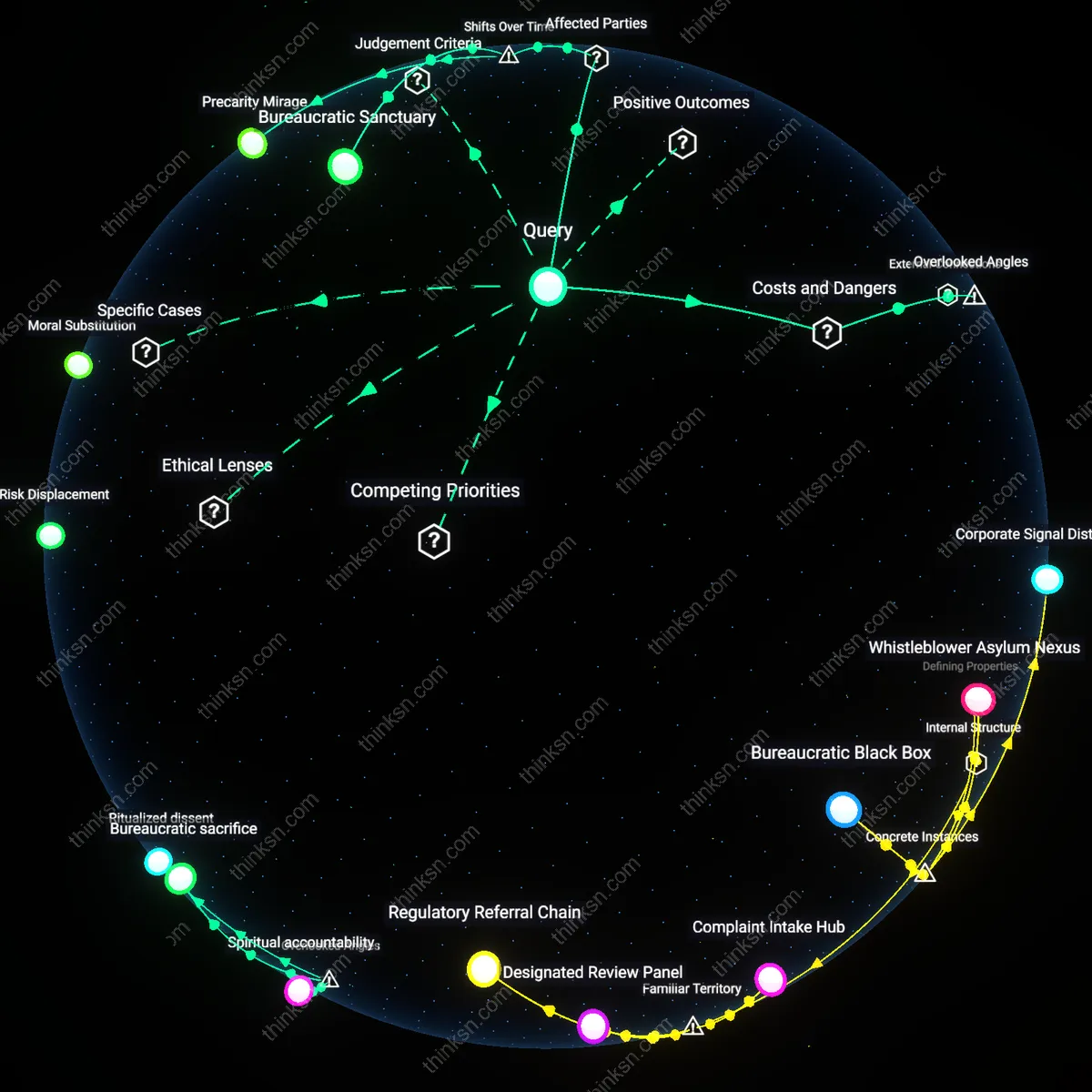
Audit Culture Residue
The belief that filing wage-theft claims leads to being labeled a troublemaker in the finance sector intensified after the 2008 financial crisis due to the rise of compliance-driven employment systems that privilege procedural surveillance over ethical accountability. Post-crisis regulatory reforms like Dodd-Frank incentivized firms to adopt internal monitoring frameworks that categorize employee disputes as reputational risks, shifting the meaning of wage complaints from labor rights assertions to operational red flags. This reclassification, embedded in HR risk matrices and legal avoidance protocols, disproportionately associates claim-filing with behavioral deviation in high-compliance environments like investment banks in New York and London. The non-obvious implication is not that stigma has always existed, but that its institutionalization emerged from post-crisis governance logics that equate transparency with vulnerability.
Precarity Inheritance
The perception that wage-theft complainants are troublemakers persists most strongly in mid-tier financial service firms from the late 1990s transition to performance-contingent labor models, where downsizing and contractor integration eroded collective bargaining norms. As back-office operations in firms like regional brokerages and asset management divisions shifted to at-will employment structures during the dot-com era, wage disputes became individualized and decoupled from union-backed redress, making claims appear as personal grievances rather than systemic corrections. This created a tacit hierarchy in which loyalty to team productivity is informally rewarded while legal claims—regardless of validity—are quietly penalized through missed promotions or marginalization, especially in cities like Chicago and Charlotte with weaker labor enforcement. The underappreciated shift is not increased retaliation, but the replacement of structural protections with informal social sanctions that mimic deterrence without violating labor law.
Compliance Theater Legacy
The stigma around wage-theft claims in elite financial institutions has diminished since 2020 due to ESG (Environmental, Social, and Governance) scoring pressures that reframe labor compliance as brand equity, yet the myth endures in middle management layers trained in pre-2015 risk-avoidance cultures. Global banks like JPMorgan and Goldman Sachs now mandate anti-retaliation training and publish diversity-in-wage audits to meet investor ESG benchmarks, altering incentive structures at the executive level to suppress overt labeling of complainants. However, frontline supervisors promoted during the pre-ESG era often retain discretionary power over project assignments and performance reviews, allowing subtle reputational penalties to persist despite formal policy changes. The key transition is not cultural continuity but bureaucratic misalignment—where progressive policies outrun behavioral enforcement, producing a dissonant regime in which official doctrine denies what operational habit still enacts.
Silent Retaliation Infrastructure
Filing a wage-theft claim in the finance sector does not generate overt disciplinary action but activates informal networks of professional exclusion that function through unreferenced blacklisting by compliance officers and HR intermediaries who recode ethical dissent as reputational risk. This mechanism operates through inter-firm talent surveillance systems in New York and London financial hubs, where unprosecuted claims are quietly documented in internal personnel risk profiles, thereby shaping future hiring and promotion eligibility without formal sanction. The non-obviousness lies in how compliance with labor laws is weaponized to uphold extra-legal norms of loyalty, revealing that the retaliation is not cultural rumor but embedded in administrative practice.
Meritocratic Guilt Displacement
The perception that wage-theft claimants are labeled troublemakers persists not because of employer retaliation but because peer professionals in finance internalize performance anxiety and repress solidarity, reframing systemic exploitation as individual failure to negotiate. This dynamic manifests in mid-tier investment banks and asset management firms where junior employees distance themselves from claimants to reaffirm their own market discipline and avoid cognitive dissonance about meritocracy. The contradiction reveals that the myth is sustained from below—not imposed from above—exposing a collective psychological defense that masks structural precarity as personal inadequacy.
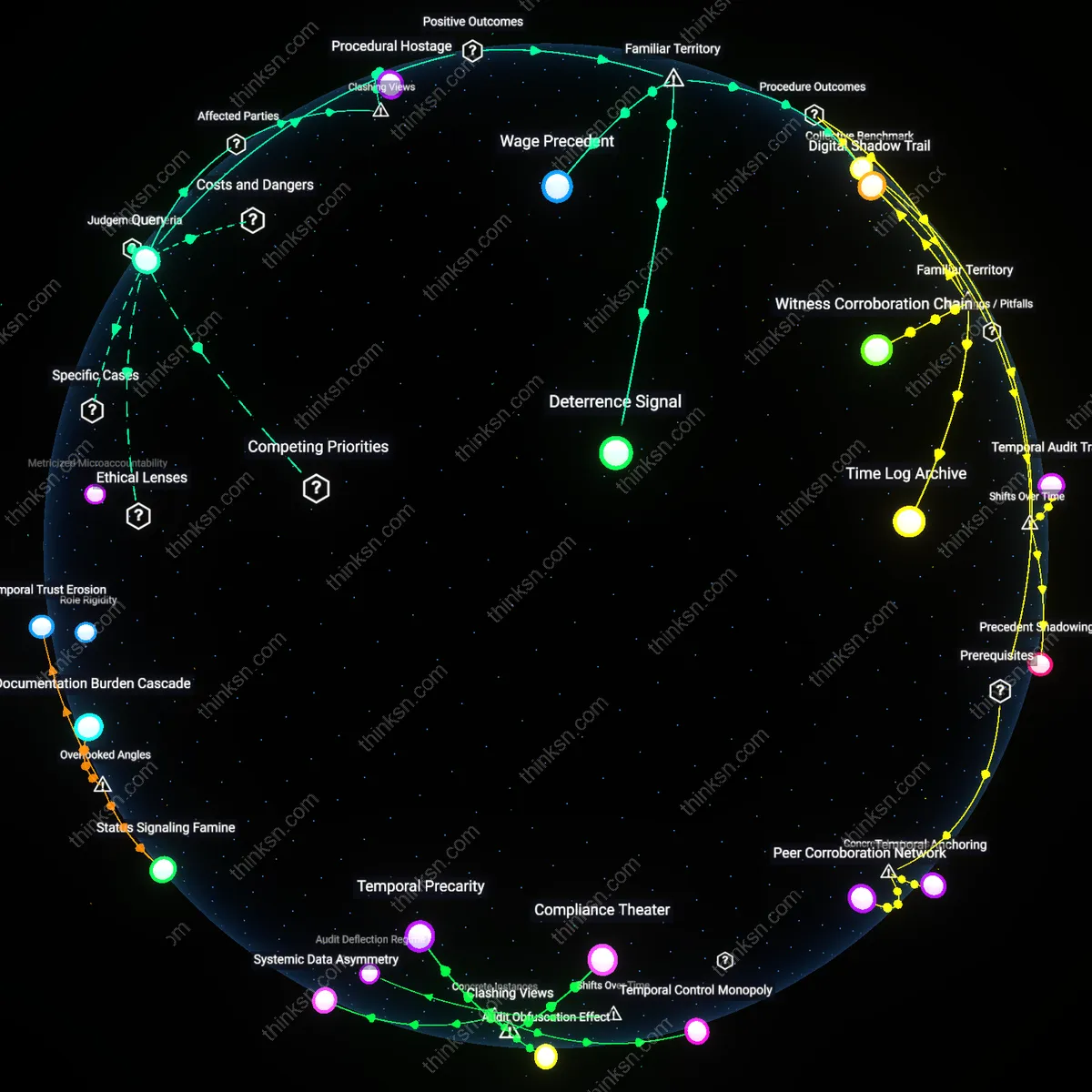
Promotion Arbitrage
Filing a wage-theft claim in the finance sector does not lead to being labeled a troublemaker when the employee is embedded in a team where promotion timing is decoupled from managerial discretion and tied instead to centralized, algorithmic career ladders. In asset management divisions of firms like Vanguard or BlackRock, compensation adjustments and rank progression are governed by HR-calibrated benchmarks and tenure-based triggers, which limit managers’ ability to retaliate implicitly through stalled advancement—this structural insulation disrupts the assumed causal link between reporting misconduct and reputational penalty. The overlooked mechanism is that retaliation requires discretion, and when promotion becomes a formulaic arbitration rather than a social judgment, the label of ‘troublemaker’ loses its operational force, exposing ‘Promotion Arbitrage’ as the hidden enabler of safe whistleblowing in algorithmically governed hierarchies.
Compensation Theater
The belief that filing a wage-theft claim triggers ‘troublemaker’ labeling persists primarily in finance subsectors where visible compensation disparities are managed through ritualized displays of loyalty rather than transparent accounting, such as bulge-bracket investment banks’ front offices. Here, bonuses function not just as pay but as public affirmations of belonging, and any employee who challenges wage accuracy risks exposing the fiction that pay reflects merit rather than politics—thus invoking social sanction not for the claim itself, but for threatening the narrative cohesion of the team. The overlooked dynamic is that wage-theft reporting becomes dangerous not because of HR policy or managerial malice per se, but because it punctures ‘Compensation Theater,’ the unspoken dependency of group stability on maintaining the appearance of equitable reward distribution, which transforms wage accuracy into a taboo.
Audit Shadowing
Employees who file wage-theft claims avoid the ‘troublemaker’ label when their roles are already situated within operational units subject to routine, third-party financial audits, such as compliance-backed middle-office functions in global banks like HSBC or Citigroup. In these environments, discrepancies in recorded labor payments immediately register as red flags for external regulators, making suppression of wage claims legally riskier than tolerating them—and compelling managers to treat such reports as technical corrections rather than personal challenges. The neglected reality is that the causal path from claim-filing to reputational damage is blocked not by ethics or culture, but by the procedural inevitability of audit exposure, revealing ‘Audit Shadowing’ as the invisible structural safeguard that neutralizes stigma in tightly monitored financial roles.
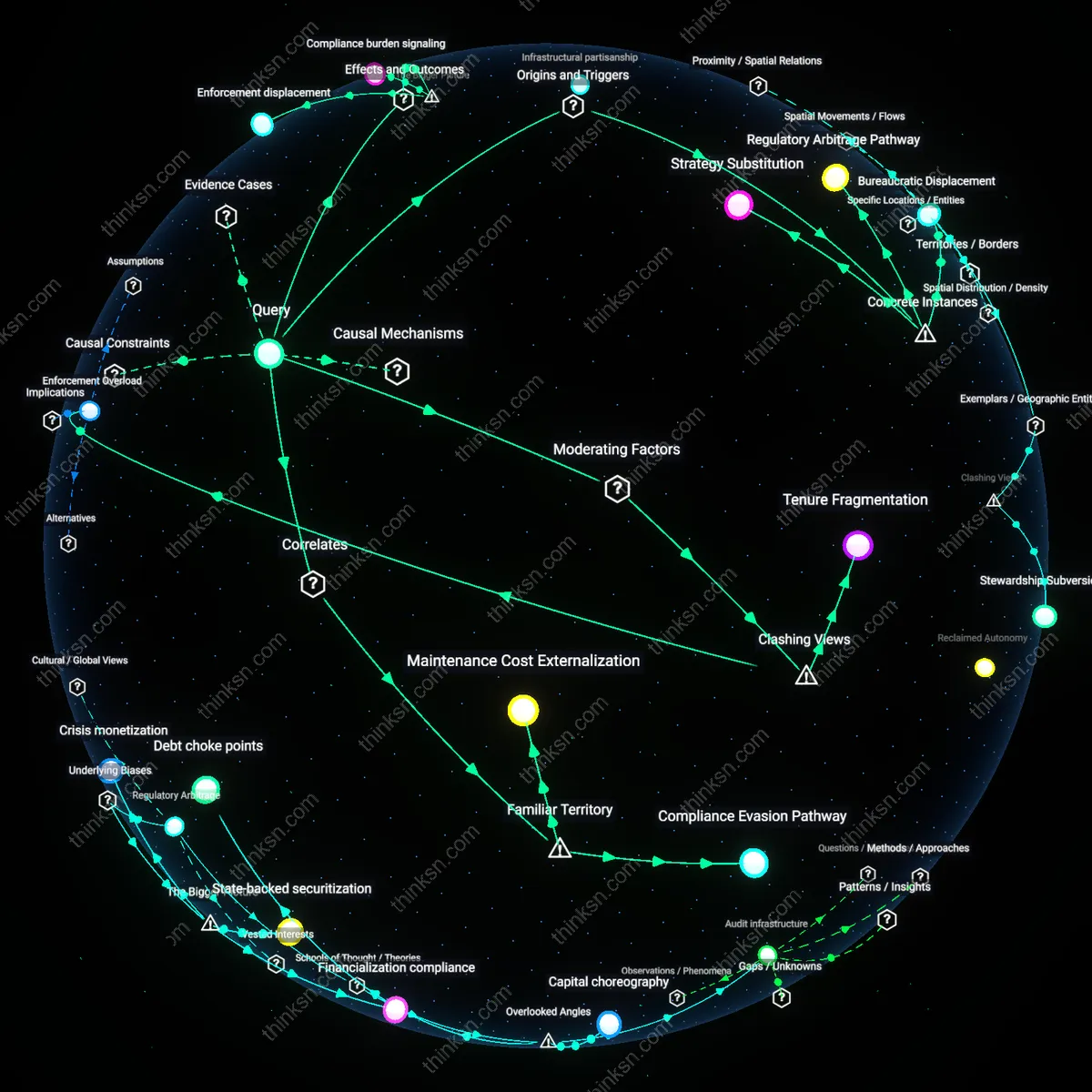
Wall Street reputation economy
Filing a wage-theft claim in the finance sector leads to being labeled a troublemaker because elite investment banks like Goldman Sachs and JPMorgan operate within a tightly networked reputation economy where any deviation from loyalty norms—such as legal challenges to employment practices—is quietly penalized through exclusion from promotions or high-profile assignments. This mechanism functions not through formal retaliation but through opaque performance evaluations influenced by team dynamics and partner discretion, making it difficult to prove discrimination while reinforcing self-censorship. The non-obvious truth, despite widespread awareness of Wall Street's punitive culture, is that the system relies less on explicit blacklisting and more on subtle social recalibration—a silent downgrade in standing among peers and superiors.
Finance-sector solidarity script
The belief that filing a wage-theft claim brands someone a troublemaker persists because senior executives at firms such as BlackRock publicly promote narratives of collective endurance and long-term equity, framing departure from this norm as individual failure rather than systemic critique. This script operates through recurring all-hands meetings and internal comms that emphasize resilience and team loyalty, effectively recasting legal self-advocacy as disloyalty to the 'greater mission' of firm stability. The underappreciated reality is that this cultural performance mimics fraternity initiation logic—where enduring hardship legitimizes membership—thus naturalizing exploitation as a rite of passage rather than a violation.