Are At-Will Clauses Shifting Power in Gig Economy?
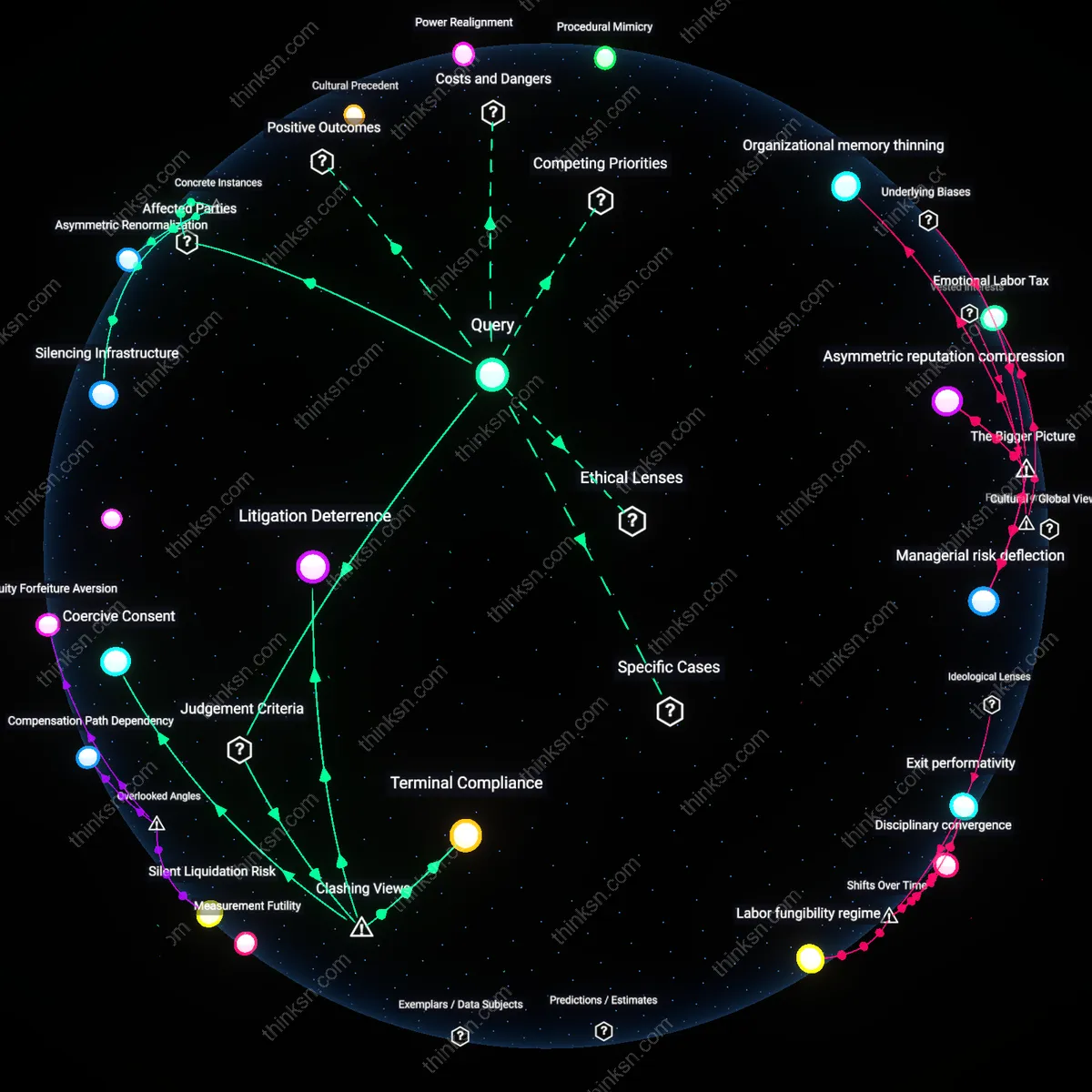
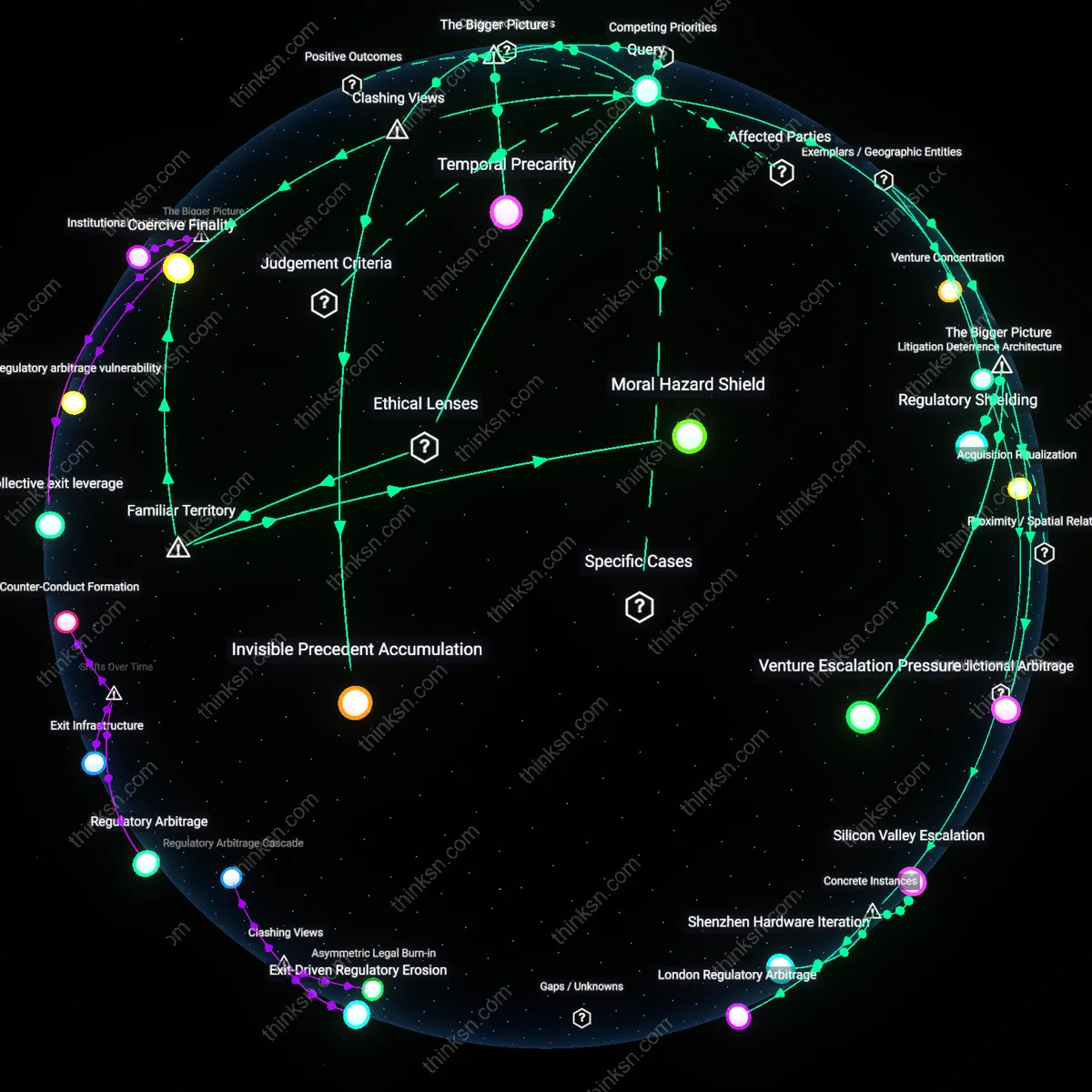
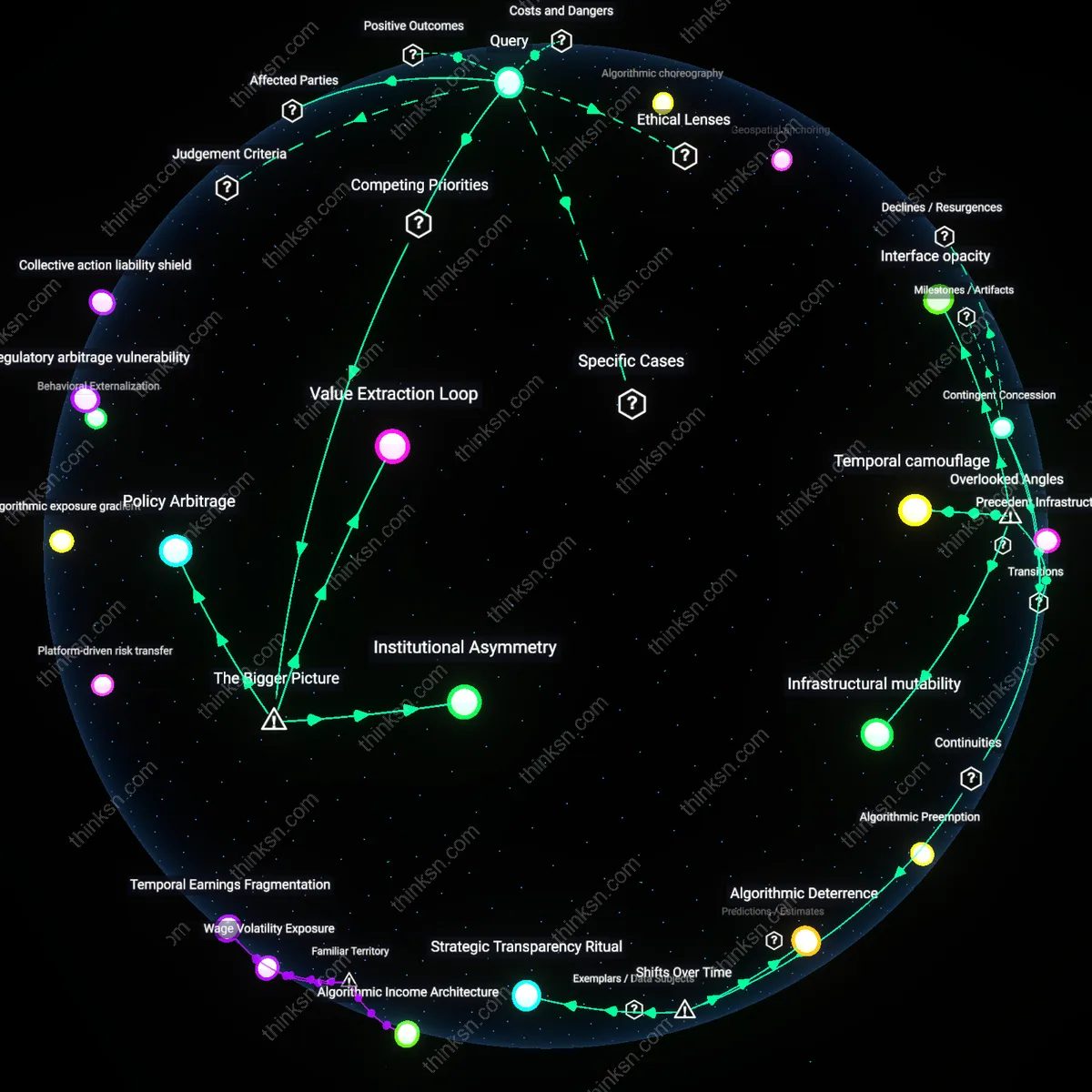
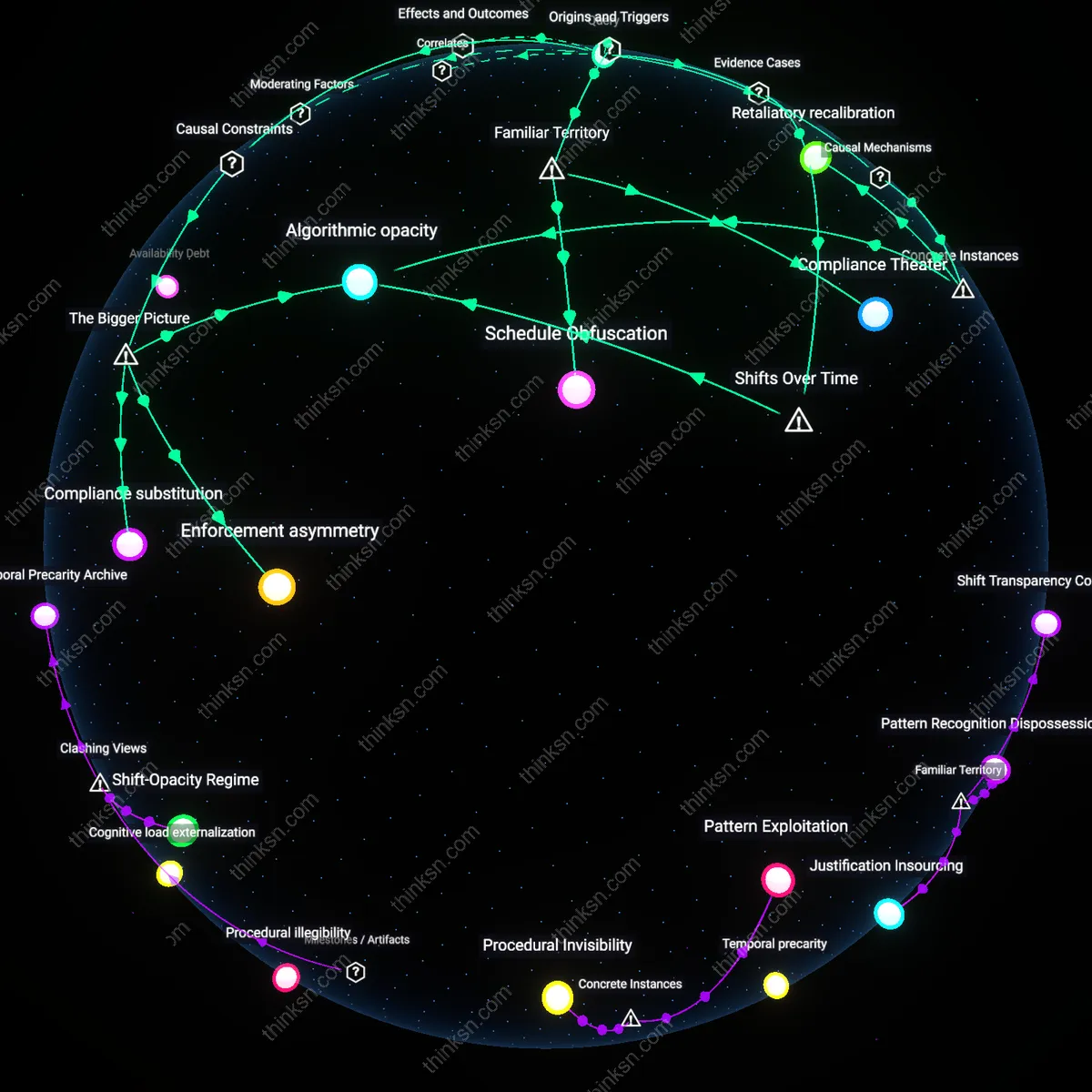
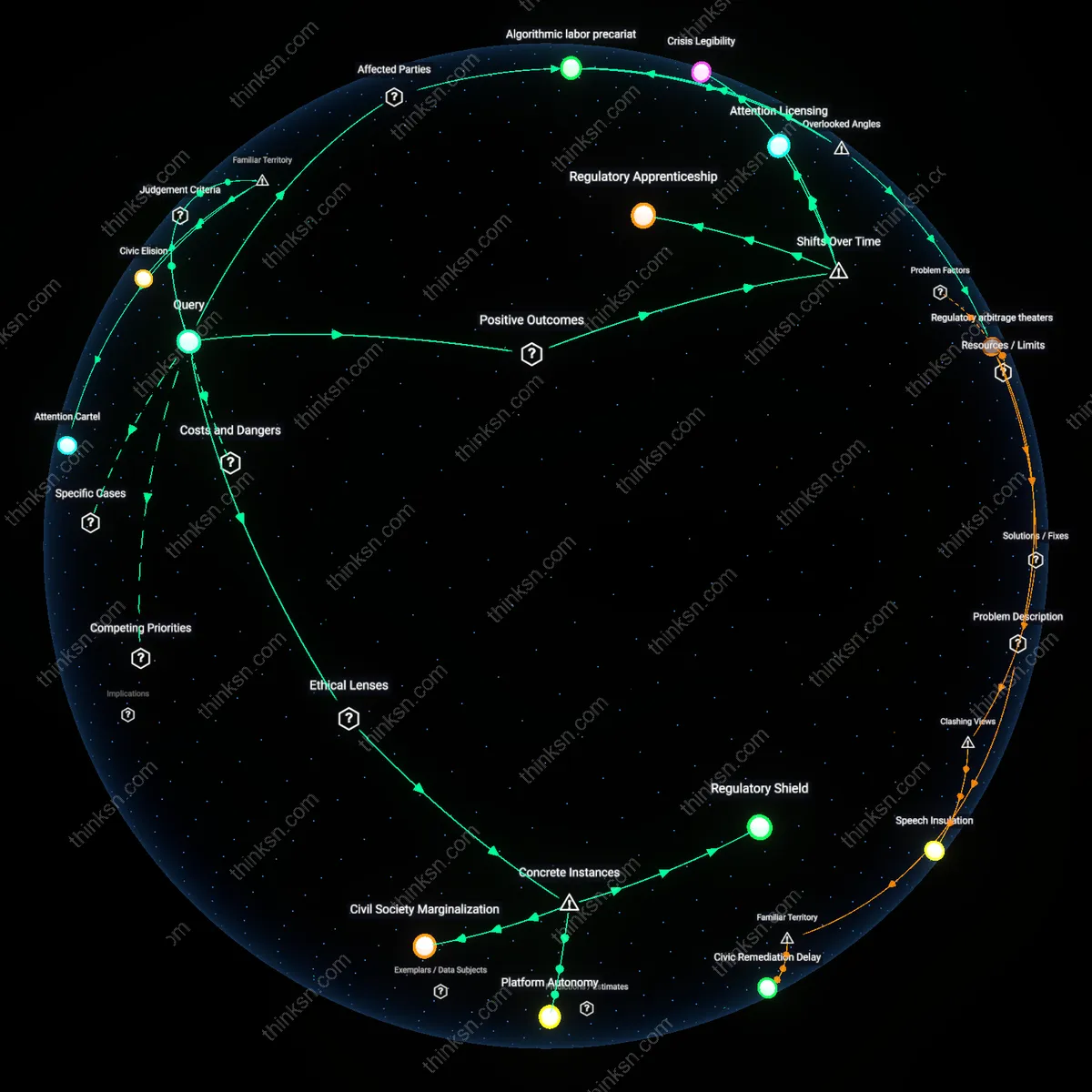
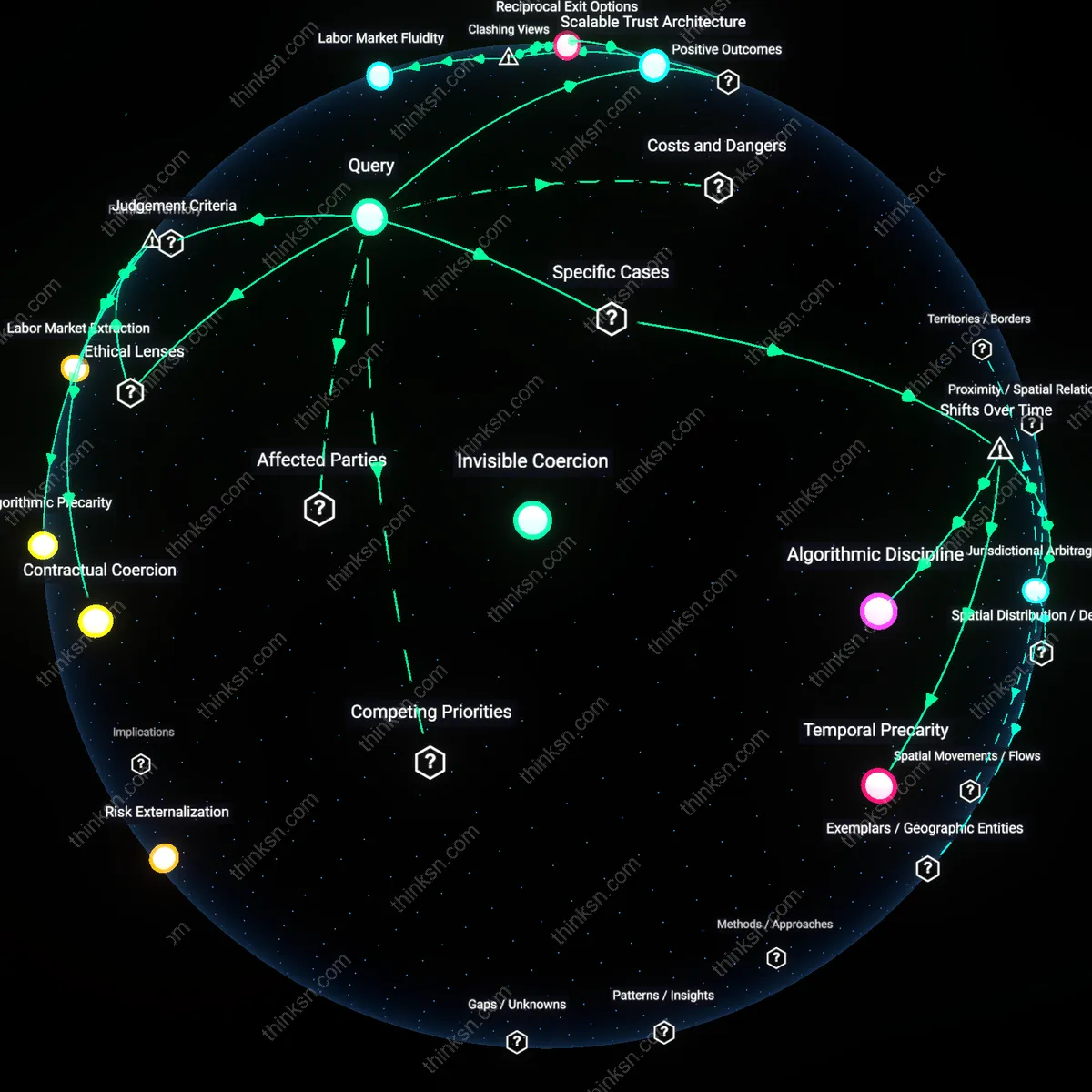
Analysis reveals 12 key thematic connections.
Key Findings
Disciplinary Flexibility
At-will termination clauses in Uber’s driver contracts reveal that platform employers weaponize contractual flexibility to disable collective resistance. Uber classifies drivers as independent contractors, then uses the threat of instant deactivation—without due process or appeal—to suppress wage protests and organizing efforts in cities like Los Angeles and Chicago. This mechanism turns ostensibly neutral contract terms into a managerial tool for disciplining labor, masking power asymmetries under the façade of mutual autonomy. The non-obvious insight is that flexibility functions not as a benefit to workers but as a structural lever to preempt labor solidification.
Invisible Coercion
Amazon Mechanical Turk’s use of requester-driven account terminations without explanation demonstrates how at-will clauses enable invisible coercion in digital piecework. Workers can be blacklisted from future microtasks by anonymous requesters—often for minor or subjective infractions—creating a climate of self-censorship and overcompliance. This system operates through distributed, opaque decision-making that evades oversight while consolidating platform and requester control. The underappreciated dynamic is that power here is exercised not through visible hierarchy but through silence, uncertainty, and algorithmic erasure.
Risk Externalization
DoorDash’s contractual reliance on at-will termination shifts economic risk entirely onto gig workers, as seen in their 2020 policy updates during the pandemic that allowed immediate deactivation for ‘service issues’ linked to health-related absences. Dashers with perfect records were deactivated without warning for reasons like delayed deliveries caused by lockdowns, eliminating income without recourse. This reflects a systemic design where platforms optimize financial resilience by making workers absorb volatility. The overlooked reality is that at-will clauses function less as performance tools than as legal shock absorbers for corporate risk management.
Labor Market Fluidity
At-will termination clauses enhance labor market fluidity by enabling rapid reallocation of human capital in response to shifting demand, particularly in digital platform ecosystems where performance data allows for immediate feedback loops between worker output and platform satisfaction. This mechanism allows gig platforms like Uber or DoorDash to maintain service quality at scale by swiftly deselecting underperforming contractors, which in turn strengthens consumer trust and expands market participation. The non-obvious insight is that these clauses function not as pure tools of dominance but as systemic stabilizers that distribute risk more efficiently across a decentralized workforce, challenging the narrative that they exist solely to erode worker security.
Reciprocal Exit Options
Workers’ ability to instantaneously disengage from gig platforms at any time transforms at-will termination into a structurally symmetrical condition rather than a unidirectional power imposition, as seen in the mass opt-outs during wage disputes on apps like Instacart or Lyft. This dynamic reveals that the clause serves as a mutual release valve maintained by algorithmic visibility—both parties operate under conditions of transparent, immediate exit—thereby inverting the assumption that asymmetry dominates gig relationships. The underappreciated reality is that the same clause used by firms to disclaim obligations also empowers workers to bypass collective organizing costs by voting with their participation.
Scalable Trust Architecture
At-will termination clauses form the backbone of a scalable trust architecture in gig economies, where reputation systems and user ratings replace long-term contractual bonds with modulated, event-based legitimacy, as demonstrated by Airbnb’s host-guest matching logic or Amazon Mechanical Turk’s task-level permissions. The clause functions as a procedural assurance to all users—especially customers and high-performing workers—that underperformance or misconduct will be met with swift exclusion, thus preserving ecosystem integrity. This reframes the clause not as a symptom of precarity but as a governance innovation that enables trustless collaboration at scale, directly challenging the intuitive view that it reflects unilateral employer coercion.
Contractual Coercion
At-will termination clauses reveal that gig economy employers enforce unilateral control through asymmetrical contractual design. These clauses are embedded in platform user agreements drafted by corporate legal teams in Silicon Valley, binding independent contractors who lack bargaining power, thereby normalizing the removal of job security as a standard condition of work. The mechanism operates through standardized digital assent—workers must click-agree to terms hosted on corporate servers—to access income, making refusal functionally equivalent to exclusion from labor markets. The non-obvious insight under the Familiar Territory lens is that what appears as neutral contract law functions as a systemic enforcement device, not mutual agreement, revealing how legal form legitimizes economic subordination.
Algorithmic Precarity
The use of at-will termination clauses signals that power in the gig economy is exercised through automated exclusion rather than managerial oversight. Platforms like Uber or DoorDash deploy real-time performance algorithms—tracking ratings, response times, and cancellations—to trigger deactivation without human review, outsourcing power from supervisors to opaque code maintained by engineers in centralized data centers. This system replaces visible disciplinary authority with silent, continuous evaluation, making job loss unpredictable and uncontestable. The underappreciated reality, familiar to gig workers but obscured in public discourse, is that termination is not a discrete event but a constant ambient threat sustained by algorithmic governance.
Labor Market Extraction
At-will termination enables gig platforms to externalize labor risk onto workers while maximizing operational flexibility, revealing a power structure optimized for value extraction. Companies such as Instacart or Lyft treat worker supply as a variable input, adjusting availability through surge pricing and deactivation to meet demand without assuming long-term obligations, all facilitated by clauses stored in corporate cloud infrastructure. This system leverages libertarian legal doctrines that classify gig workers as independent contractors, aligning with free-market ideologies that prioritize employer autonomy over worker security. The overlooked dimension is that at-will termination isn't merely a hiring policy but a core financial mechanism that turns human labor into on-demand inventory.
Temporal Precarity
At-will termination clauses in Uber’s driver contracts after 2019 reveal a shift from informal flexibility to institutionalized instability, where drivers in cities like Los Angeles and Chicago lost even the implicit assurances of continued platform access once common in early gig work. This formalization of dismissal power, codified during Uber’s pre-IPO restructuring, replaced ad hoc deactivations with systematic legal enforceability, transforming what was once a practical reality into a contractual condition—exposing how financialization pressures converted operational informality into a calculable, time-bound risk for workers. Unlike earlier periods when platform reliance on labor supply created de facto job continuity, the post-2019 era weaponizes temporal uncertainty as a governance mechanism, making precarity not a byproduct but a design feature.
Jurisdictional Arbitrage
The use of at-will termination by Deliveroo in the UK between 2016 and 2020 exploited evolving labor law gaps during the transition from national employment frameworks to platform-mediated regulation, allowing the company to position riders as independent contractors while unilaterally enforcing dismissal clauses from Ireland-based contracts. As British courts began recognizing worker status post-Dewhurst v. Uber, Deliveroo responded by tightening contract language and centralizing legal jurisdiction abroad, turning termination rights into a tool to preempt collective claims—demonstrating how platforms used regulatory lag and geographic dislocation to lock in asymmetrical power. This shift did not merely reflect existing imbalances but actively reshaped them by decoupling labor performance from legal accountability across borders.
Algorithmic Discipline
Lyft’s integration of automated deactivation systems between 2014 and 2018 transformed at-will termination from a managerial act into a real-time behavioral enforcement regime, where drivers in major U.S. markets like Atlanta and Seattle were ejected based on rating thresholds and route deviations without human review. This mechanization during the platform scaling phase replaced discretionary oversight with opaque algorithmic triggers, embedding dismissal power directly into the app’s operational logic and eroding worker expectations of due process that persisted even in informal economies. The shift marks a transition from employer-driven control to system-built deterrence, where the threat of instant, unexplained termination became a normalized engine of compliance—revealing how algorithmic governance internalizes power asymmetry below the level of contract.