Does Public Reporting Curb Corporate Capture or Shift Influence Underground?
Analysis reveals 5 key thematic connections.
Key Findings
Shadow coordination infrastructure
Mandatory public reporting of corporate-regulatory meetings would trigger regulatory actors and corporate lobbyists to adopt encrypted messaging platforms and informal social venues—such as private clubs or family-linked nonprofit boards—to maintain access and exchange preferences outside documented channels. This shift is driven by the institutional persistence of power asymmetry, where regulators depend on industry for technical expertise and future employment, and firms require favorable rulings to protect capital investments, creating mutual incentive to preserve implicit accommodation. The systemic consequence is not reduced influence but its relocation into environments less susceptible to transparency mechanisms, revealing how formal accountability measures can amplify covert coordination when asymmetric dependencies remain unaddressed.
Compliance theater economy
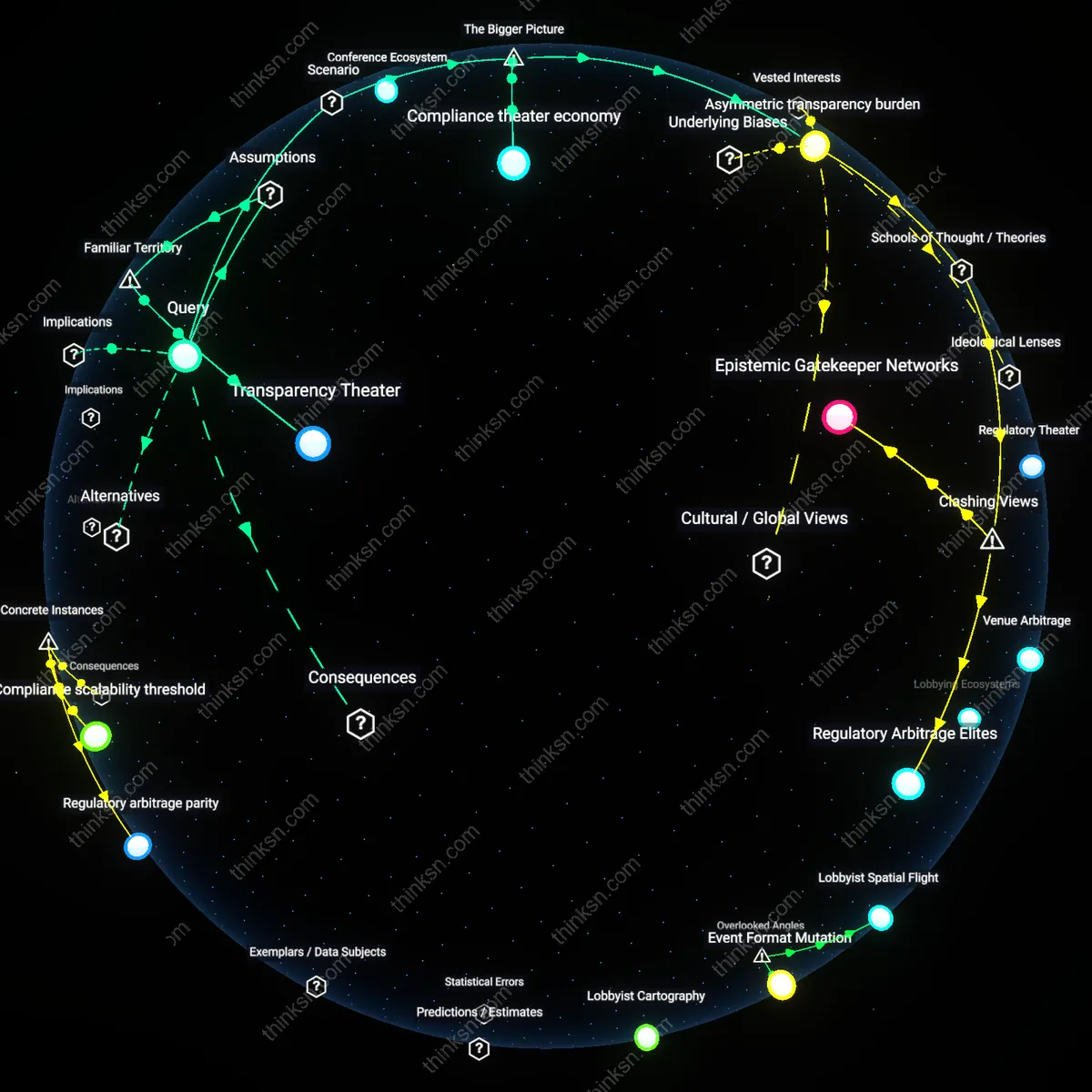
Public reporting mandates would generate a new niche of compliance-focused intermediaries—legal consultants, PR firms, and sanitized transcript editors—who specialize in crafting misleadingly bland meeting records that conceal substantive influence while satisfying disclosure rules. This emerges because regulatory legitimacy now depends on visible adherence to transparency norms, even as actual decision-shaping migrates to pre-meeting briefings and post-meeting follow-ups that are technically reportable but narratively neutralized in official summaries. The phenomenon reflects a broader institutional dynamic where symbolic compliance substitutes for functional accountability, feeding a growing industry dedicated to manufacturing appearances of integrity without altering power flows.
Asymmetric transparency burden
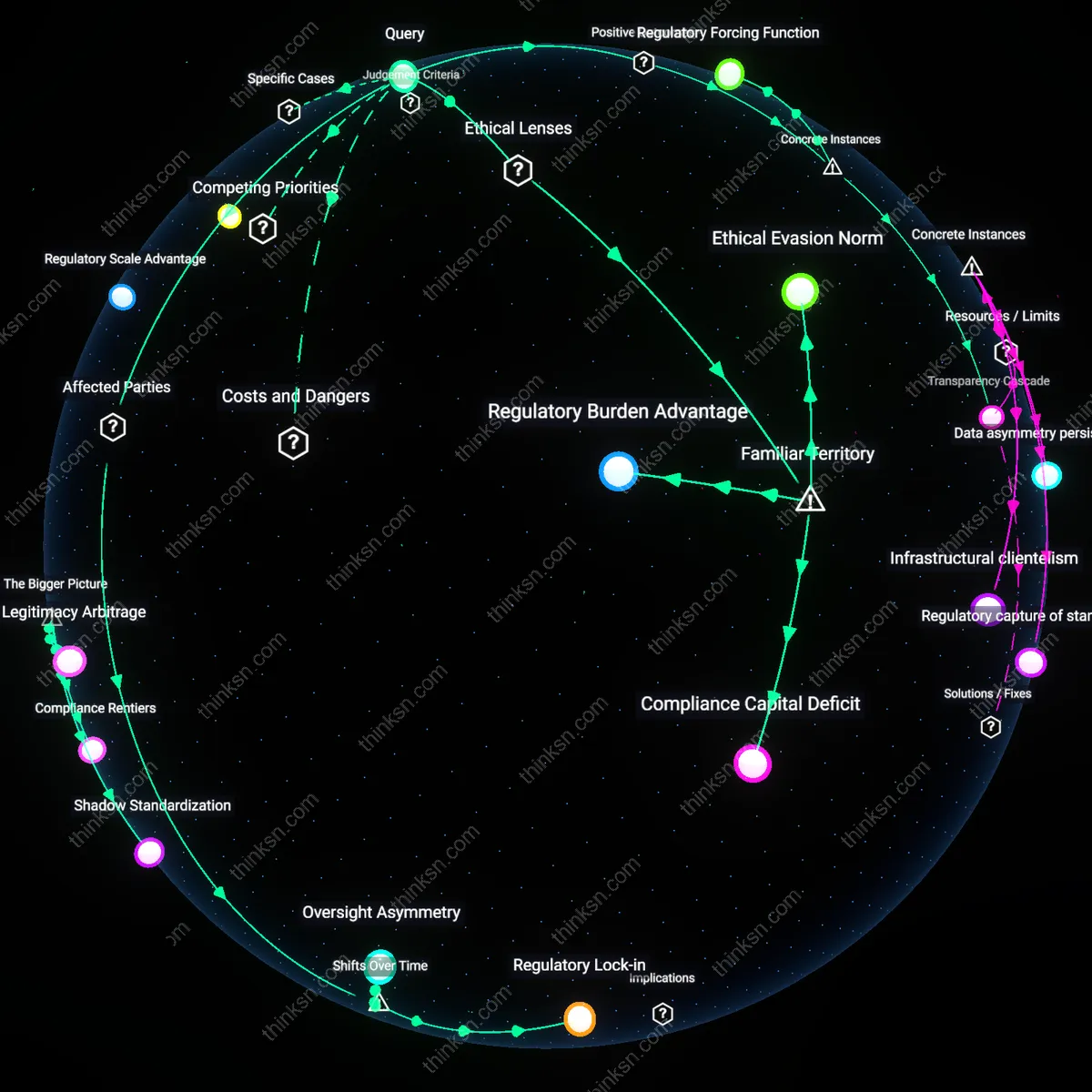
Mandatory disclosure places disproportionate operational and reputational costs on public interest groups and smaller firms, who lack the resources to continuously monitor, analyze, and respond to a flood of formal meeting records, while dominant corporations treat the same data as routine intelligence to refine lobbying strategies. This imbalance reinforces existing hierarchies because regulatory decisions hinge on timely, context-rich input—which better-resourced actors can supply under the guise of 'public participation'—turning transparency into a weapon of influence consolidation rather than democratization. The result is a systemic skew where open access amplifies advantage, not equity, exposing how neutral rules can deepen capture when embedded in unequal capability landscapes.
Transparency Theater
Mandatory public reporting of corporate-regulatory meetings creates an illusion of accountability without reducing behind-the-scenes influence. Regulatory staff and corporate lobbyists shift substantive negotiations to informal channels like industry conferences, personal phone calls, or third-party intermediaries such as trade associations, rendering the official logs performative. This dynamic is most damaging when oversight bodies and the public mistake procedural compliance for actual transparency, allowing power to operate undisturbed under the cover of documented formality. The non-obvious consequence is that ritualized disclosure can harden capture by legitimizing the system it appears to challenge.
Influence Arbitrage
Mandatory reporting enables corporations to exploit differential access to regulatory attention by escalating visible engagement while offloading sensitive negotiation to moments outside the record. Firms with legal and lobbying infrastructure can parse which issues to elevate publicly and which to delay for unofficial discussion, thereby controlling both narratives and outcomes. This operates through asymmetries in bandwidth and bureaucratic fluency, where well-resourced actors turn transparency into a tactical lever. The non-obvious insight is that disclosure regimes can widen influence gaps when compliance itself becomes a resource-intensive strategy.