Buy Condo or Rent and Invest in Bubble Markets?
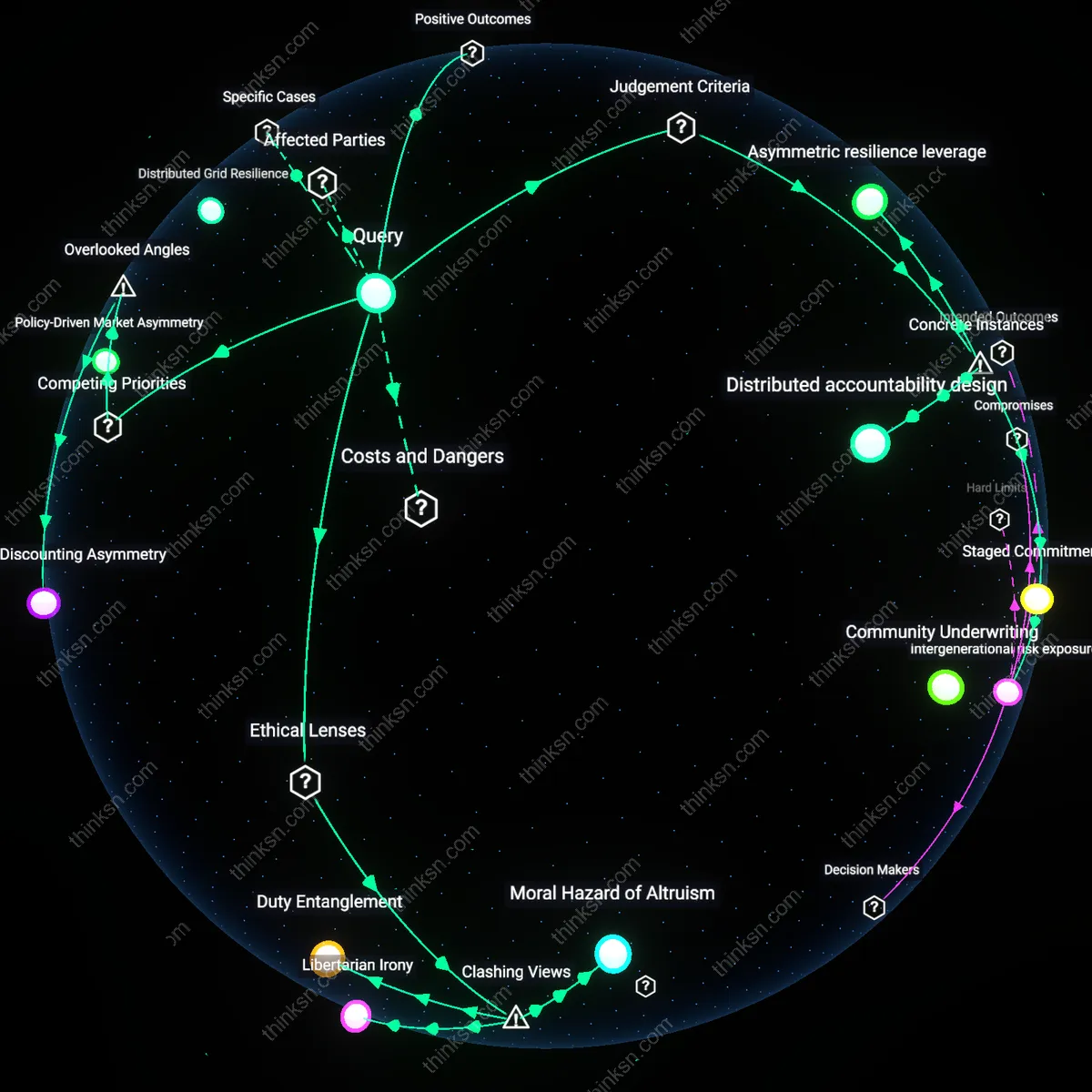
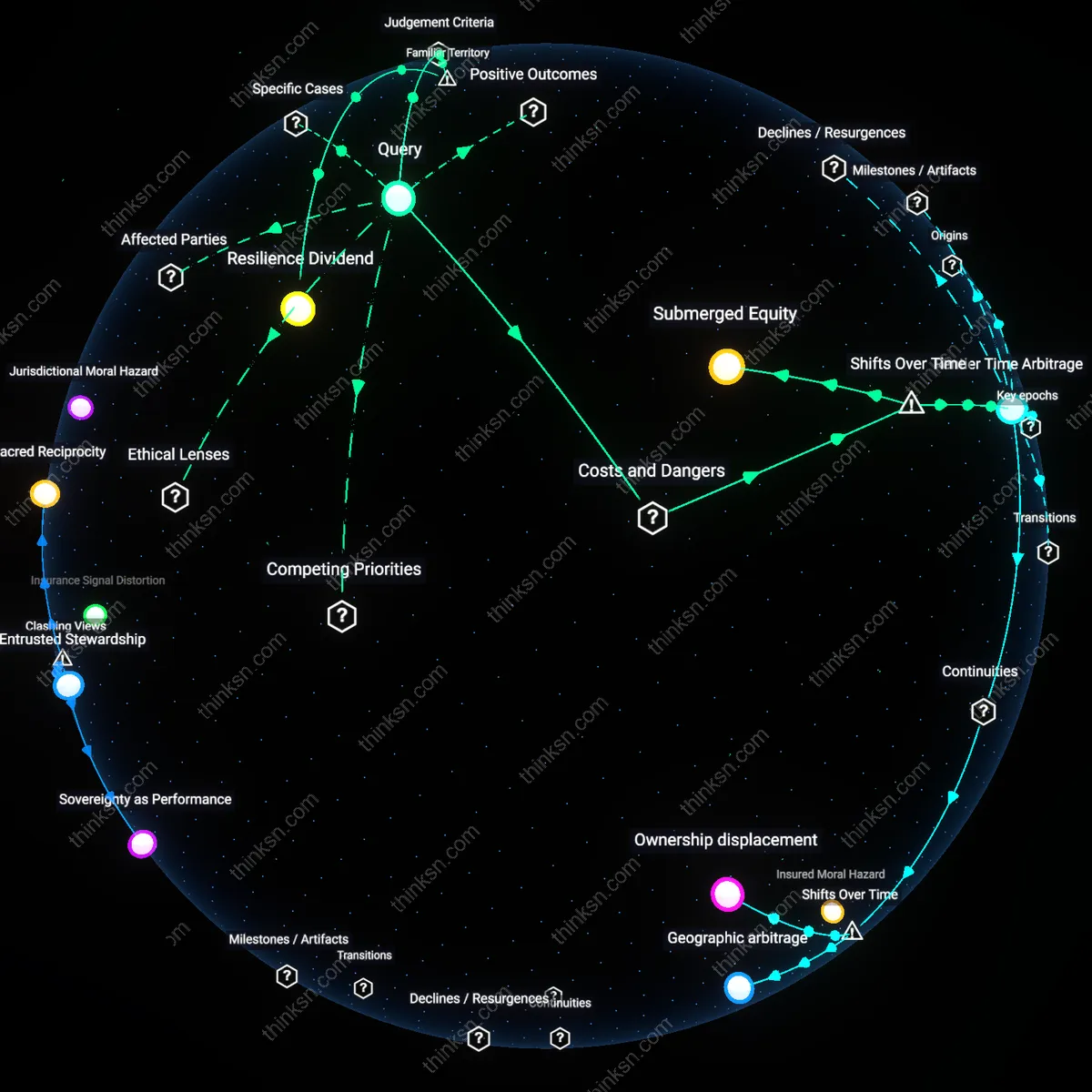
Analysis reveals 4 key thematic connections.
Key Findings
Flood Risk Premium
Renting while investing the savings is optimal because exposure to uninsurable climate-related property devaluation outweighs long-term equity accumulation in barrier-island communities like Miami Beach or Norfolk. Municipal adaptation budgets are already strained by recurrent tidal flooding, forcing asset depreciation as insurers retreat and capital markets price in 30-year habitability risk—making illiquid real estate increasingly toxic in high-elevation-vulnerability zones. This reframes real estate not as shelter but as a speculative bet on state-subsidized resilience, revealing a hidden tax on ownership masked as market choice.
Resilience Dividend
Buying the condo is optimal because place-based social networks and physical retrofitting—such as elevated foundations in Charleston’s historic district—generate shared adaptive capacity that financial markets undervalue. Municipal resilience bonds and FEMA hazard mitigation grants disproportionately benefit established property owners who can coordinate neighborhood-scale adaptations, turning regulated investment in storm hardening into a public-private risk-sharing mechanism. This reveals ownership not as liability but as access to subsidized collective adaptation, a hidden yield invisible to purely private return calculations.
Submerged Equity
Purchasing a condo in a high-risk coastal market today locks owners into a trajectory of declining asset viability due to post-2010 accelerations in sea-level rise and flood insurance restructuring, where property values are increasingly decoupled from market fundamentals and tied to federal risk subsidization. Coastal real estate markets, particularly in Florida and Louisiana, now operate through a feedback loop of local zoning leniency and Federal Emergency Management Agency (FEMA) flood map delays, which temporarily mask long-term uninsurability but systematically transfer future loss exposure to individual owners. This creates a condition where apparent home equity is structurally phantom—insurable only through politically maintained loopholes and actuarial deferrals that cannot withstand coming NOAA sea-level projections. The non-obvious danger is not market volatility but the temporal mispricing of risk, where ownership today captures a final phase of public risk absorption before private collapse.
Rentier Time Arbitrage
Renting and investing the differential capital after the 2008 financial crisis exploits a structural shift in asset class divergence, where housing ceased to be a uniformly superior long-term investment and instead became a site of localized price inflation unmoored from income growth. Financialization of rental housing by institutional investors—evidenced by the rise of single-family rental (SFR) portfolios in Sun Belt metros—transformed renting from transitional tenancy into a permanent, extractive equity stream, allowing individual renters who invest savings to participate indirectly in housing wealth without balance sheet exposure to physical or regulatory decay. The mechanism operates through index funds that capture broad real estate appreciation while avoiding title-specific liabilities like repetitive loss premiums or adaptation retrofit mandates. The overlooked reality is that post-crisis monetary policy has made liquidity itself an asset class, privileging optionality over ownership in markets now exposed to climate repricing.