Fiscal Mirage
Dual-earning families are not financially excluded from private elder care due to income limits but are deterred by illiquid asset thresholds that disqualify them from public support while failing to generate usable cash flow. This occurs because state programs like Medicaid in the U.S. assess home equity and retirement accounts as assets, which inflates perceived wealth despite low annual income; families in high-cost urban areas often own modest homes that exceed asset caps but cannot sell or leverage them quickly to cover caregiving costs. The mechanism reveals a misalignment between income-based eligibility and wealth liquidity, exposing a design flaw where static asset tests punish long-term stability over immediate spendable income.
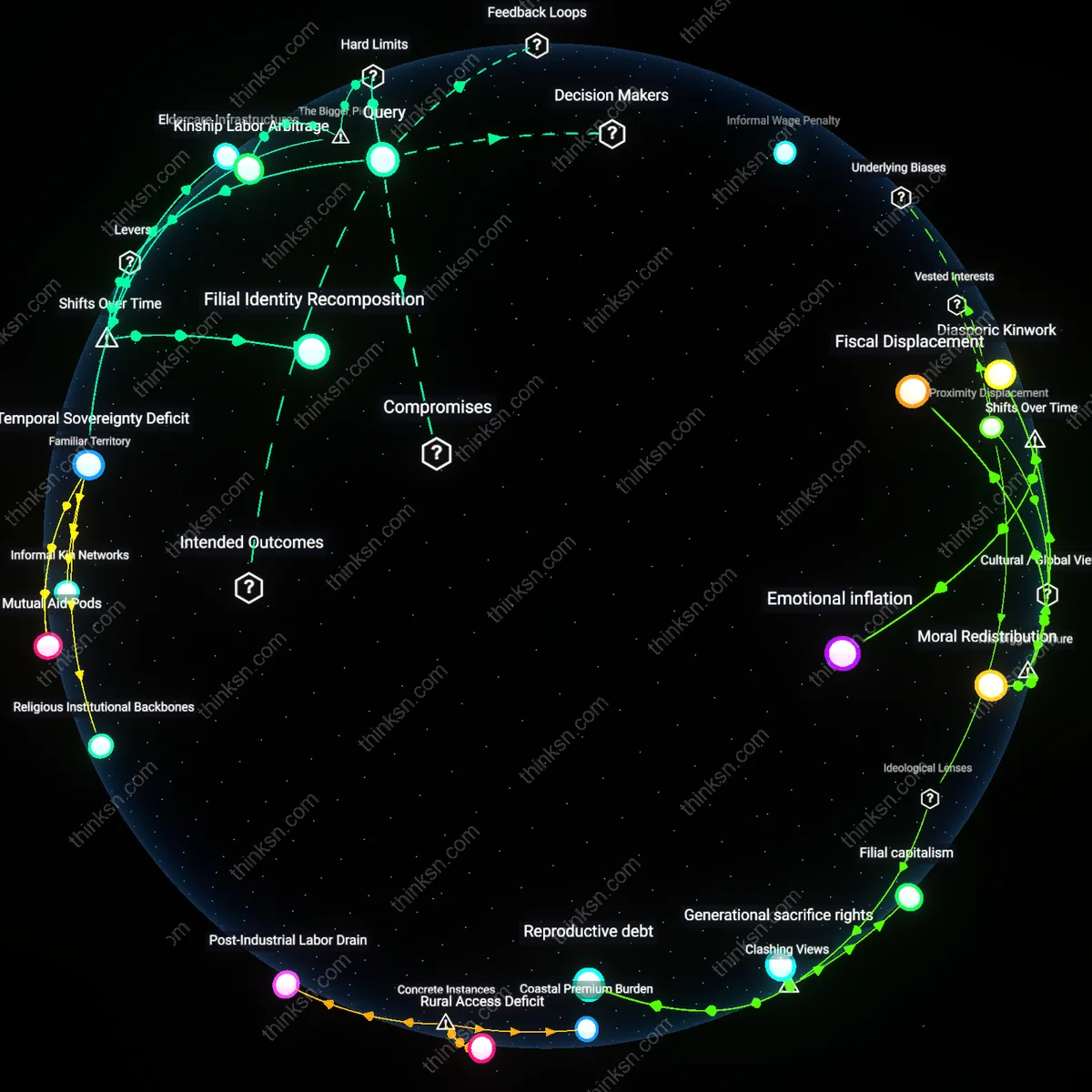
Informal Wage Penalty
The perceived affordability gap for private elder care is exaggerated because dual-earning households are already offsetting costs through unpaid familial labor, primarily provided by women over 55 who reduce market labor to deliver informal care. These women sacrifice pension accruals and career progression, effectively subsidizing the care system without appearing in economic productivity metrics; this hidden transfer shifts the cost from the state and private market onto intergenerational female labor, particularly in countries without subsidized elder care like the U.S. or South Korea. This reframes the ‘gap’ not as a shortfall in financial resources but as a gendered reallocation of labor, challenging the assumption that income deficits alone determine care access.
Proximity Displacement
Dual-earning families do not uniformly face affordability issues because spatial access to aging parents determines whether private care must be purchased at all—those living in proximity absorb care through time, not money, while geographically dispersed families face full market rates despite similar incomes. In metropolitan corridors like the Northeast U.S. or Southern England, rising housing costs force adult children and aging parents apart, eliminating co-residence as a buffer; this creates a spatially concentrated cohort of dual earners who earn above Medicaid thresholds but cannot afford daily private aides costing $30–$50/hour. The cost crisis is therefore not income-defined but proximity-contingent, exposing how housing markets, not just wage or benefit structures, shape elder care vulnerability.
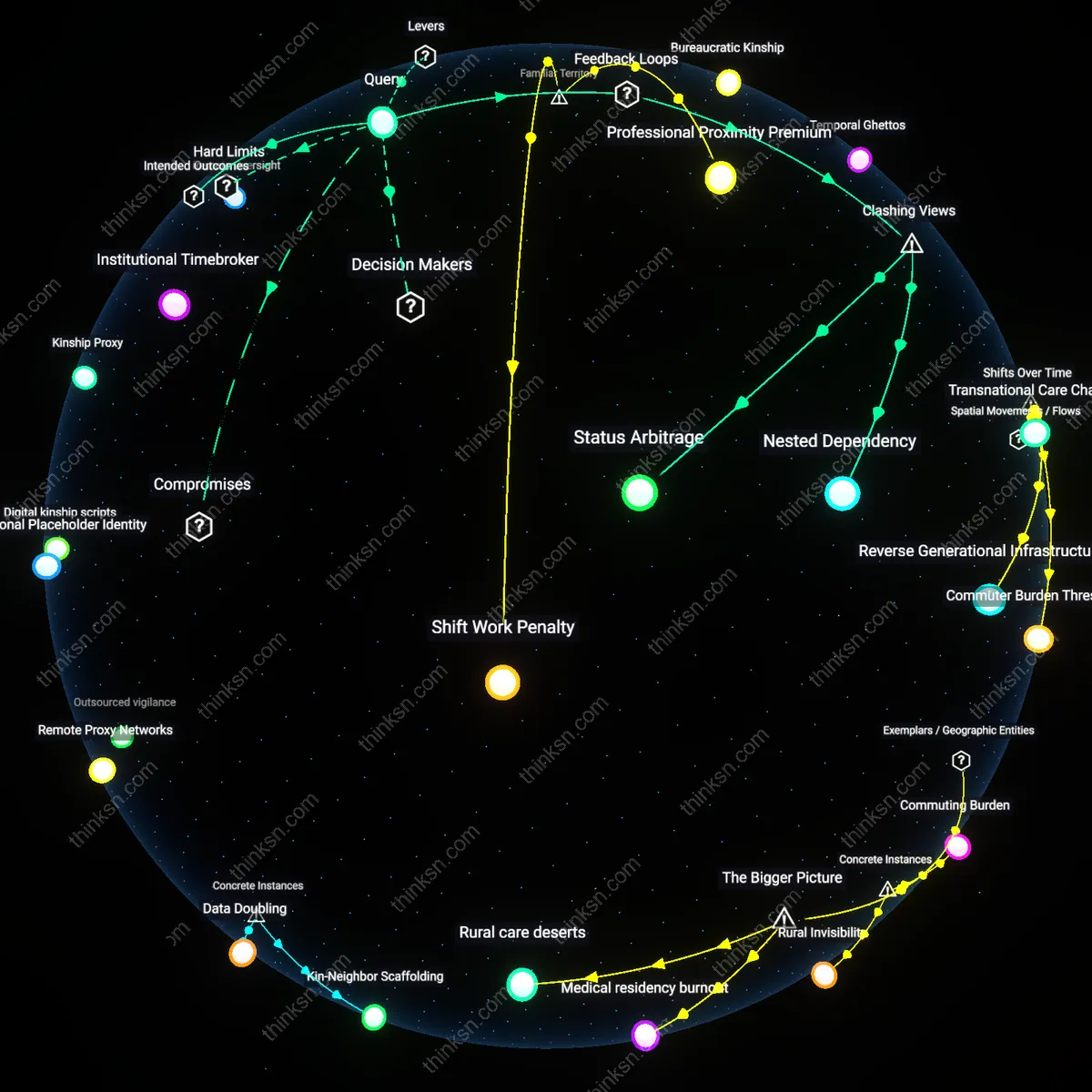
Threshold Exclusion Zone
A significant cluster of dual-earning families occupies a skewed income distribution just above public assistance eligibility thresholds, making them statistically invisible to safety net programs while remaining below the cost curve for private elder care. This gap is structurally created by discrete welfare cliffs in programs like Medicaid and SNAP, which cut off abruptly at fixed income limits rather than tapering, while private care markets operate on price floors far above what these households can sustain. The non-obvious insight is that this exclusion is not accidental but emerges from the misalignment between binary qualification rules in public policy and the continuous rise in care costs—an artificial scarcity produced by administrative thresholds rather than actual resource limits.
Care Cost Inflation Spiral
Dual-earning families are increasingly priced out of private elder care not because of stagnant wages alone, but because the elder care sector operates under a cost-inflation dynamic where regulatory compliance, insurance overhead, and real estate expenses compound faster than general inflation—particularly in metropolitan zones like the Boston-Washington corridor. This dynamic is amplified by third-party payers such as long-term care insurers, which cover only certified facilities, concentrating demand in high-overhead providers and pricing out middle-tier consumers. The overlooked mechanism is that public policy indirectly fuels this inflation by restricting subsidies to institutional settings, thus distorting market signals and preventing leaner, community-based models from achieving scale.
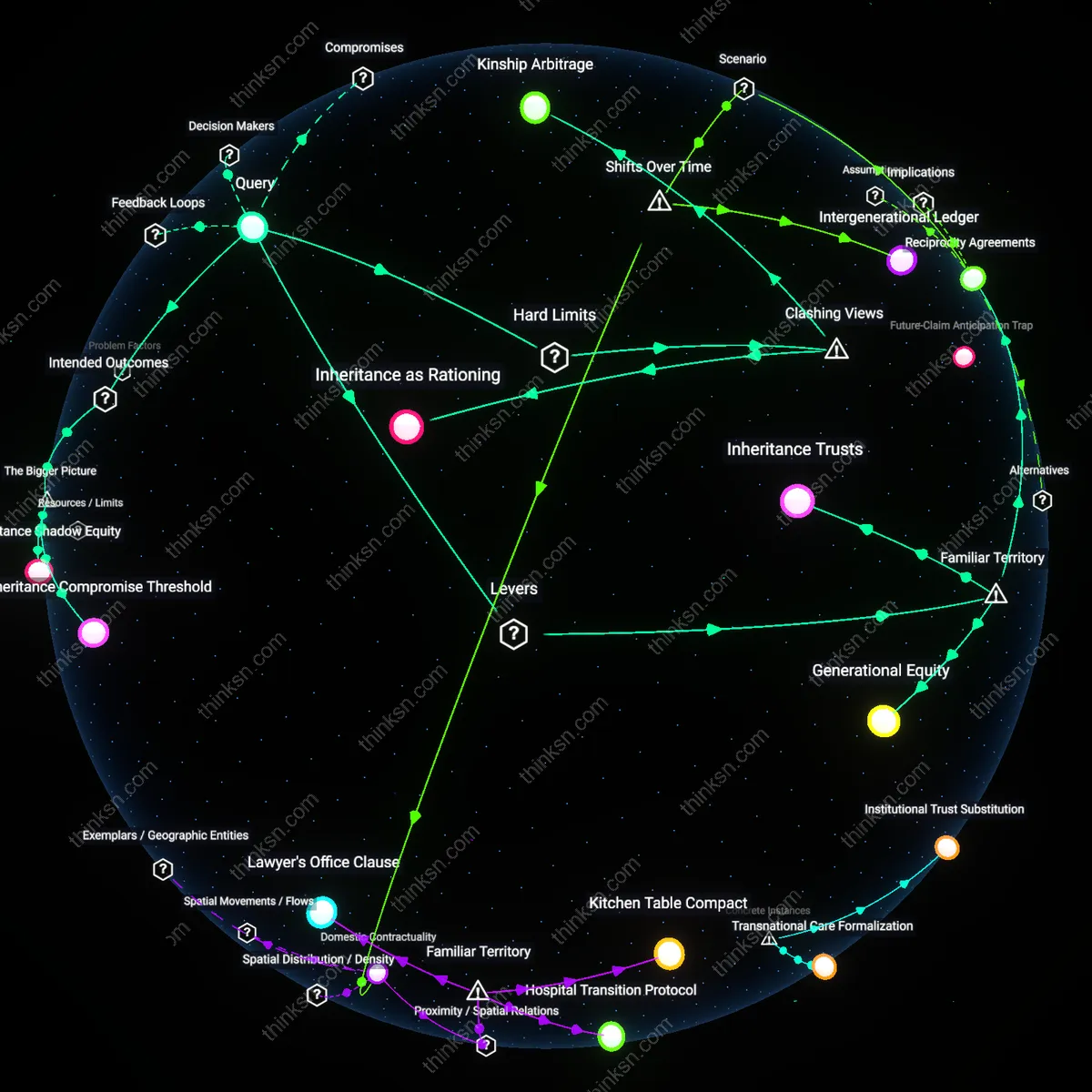
Benefit Cliff Effect
A significant number of dual-earning families fall into a financial gap where earnings disqualify them from state-supported elder care subsidies but remain insufficient to cover private care costs in urban centers like Chicago or Seattle, due to rigid income thresholds in Medicaid and state waiver programs that do not account for regional cost-of-living differences. This mechanism—where incremental wage gains trigger sudden loss of benefits without compensating increases in purchasing power—creates a quantifiable disincentive to seek higher earnings, and it disproportionately affects middle-tier service workers such as radiology technicians and community college instructors. What remains underappreciated is how statistical reporting often aggregates these families into broader income brackets, thereby obscuring the cliff’s nonlinear impact and masking the true margin of error in eligibility forecasts.
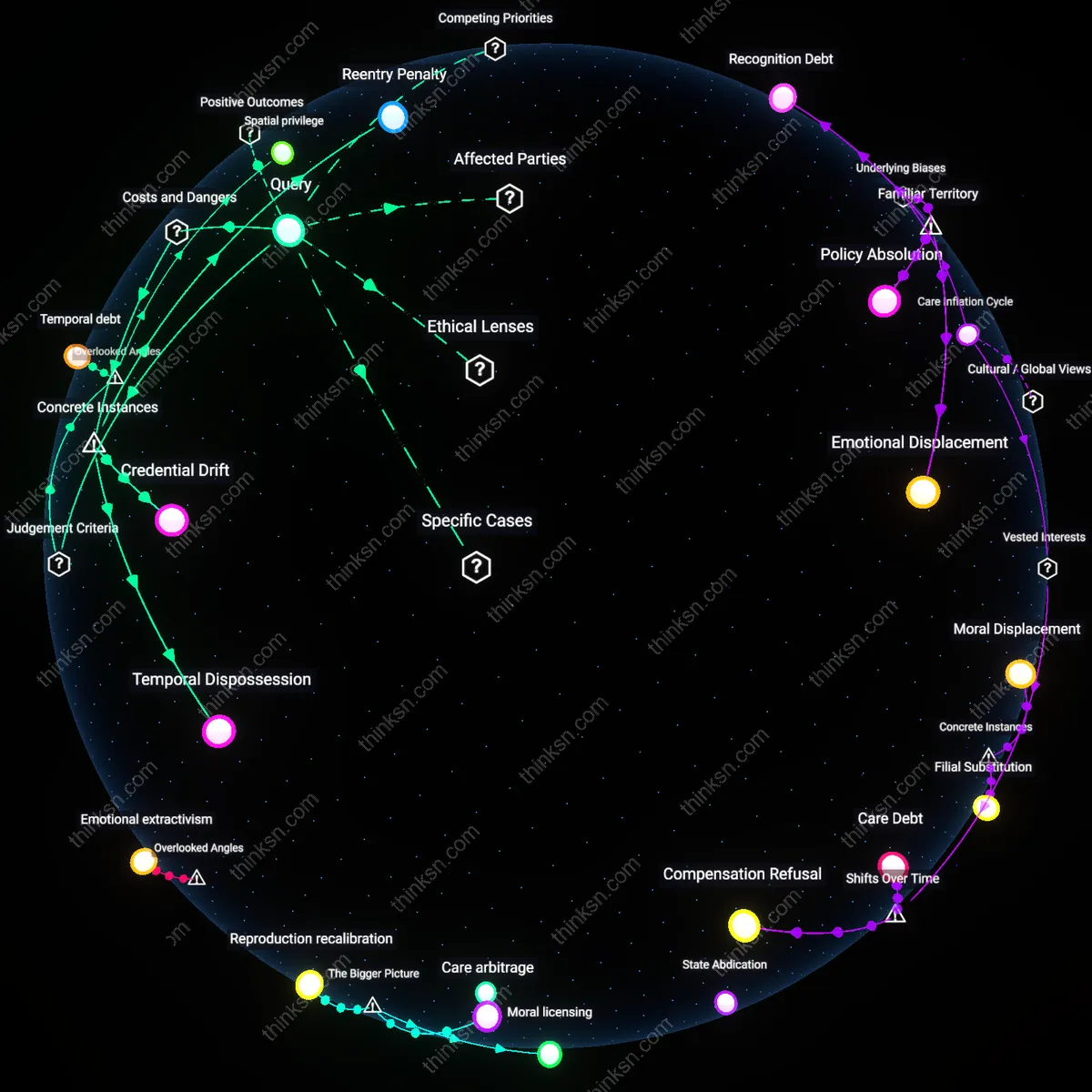
Informal Care Penalty
Millions of dual-earning households rely on unpaid familial caregiving—typically provided by women over 55—because state support vanishes just below median income levels while private care exceeds 70% of disposable income in metro areas like Atlanta or Denver, creating a de facto economic dependency on gendered, unmeasured labor. The mechanism operates through the interaction of IRS gross income testing and long-term care market pricing, which excludes time-cost externalities from official unemployment and poverty metrics, thus introducing a systematic downward bias in the measured size of the care gap. The non-obvious insight, despite public familiarity with ‘family stepping in,’ is that statistical models rarely treat unpaid care as a hidden tax, making the margin of doubt in national estimates structurally blind to gendered opportunity costs.
Zip Code Disparity
Dual-earning families in counties with stagnant wage growth but rapidly inflating elder care markets—such as Maricopa County, AZ or Mecklenburg County, NC—face a growing affordability gap that standard federal poverty measures fail to capture due to their national averaging and infrequent recalibration. The mechanism lies in the mismatch between static federal eligibility benchmarks and hyperlocal cost trajectories, where assisted living can surge by 8–12% annually while median household income climbs less than 3%, introducing wide confidence intervals in need projections. The underappreciated point, though geospatial inequality is commonly invoked, is that most studies report point estimates without error bands tied to regional variance, rendering the statistical ‘margin of doubt’ itself unevenly distributed and politically invisible.
Care-Tech Debt Spiral
Middle-income dual-earner households in metropolitan Phoenix and Charlotte who purchase remote monitoring smart home systems—motion sensors, fall-detecting wearables, AI-powered cameras—intend to delay or replace private in-home elder care, but frequently face compounded service fees, subscription renewals, and mandatory technician visits that increase the effective cost beyond what the same care would have been in regulated institutions; because these devices are classified as 'consumer electronics' rather than 'medical equipment,' they are ineligible for health savings account (HSA) reimbursement or tax deductions, forcing families into indirect medicalization of consumer debt that mimics elder care costs without delivering human care. The overlooked mechanism is that technological substitution itself becomes a regressive tax when regulatory categories fail to recognize data-driven care systems as medically necessary, positioning dual-earners in a false market choice between visible services and invisible, unregulated expenditures.