Natural Remedies vs Biologic Therapy: Cultural Conflict in Medicine?
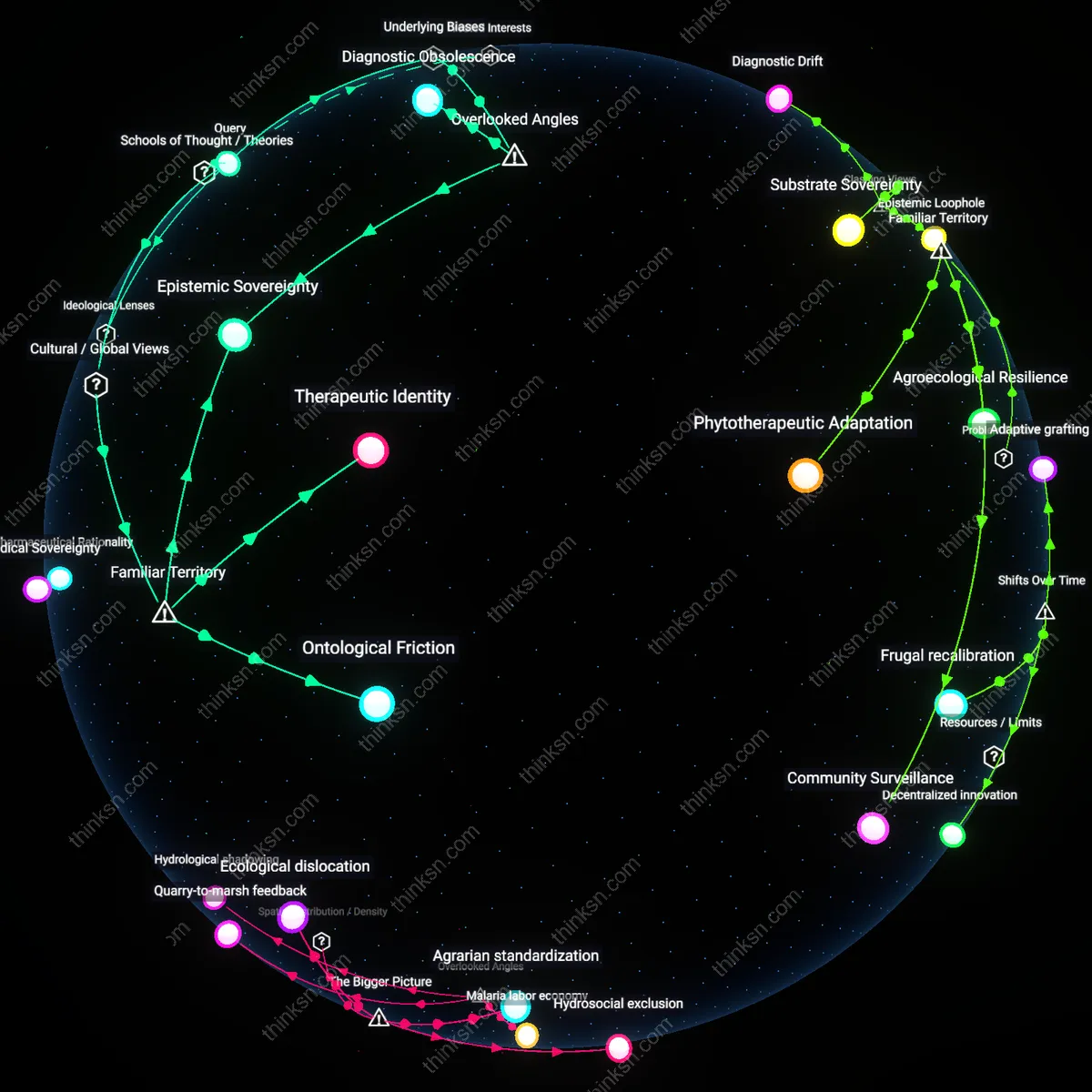
Analysis reveals 7 key thematic connections.
Key Findings
Medical Sovereignty
Cultural preferences for natural remedies persist because neoliberal governance since the 1980s has shifted responsibility for health onto individuals, reducing public trust in centralized medical institutions and elevating personal choice as a moral and political ideal. As state-backed health systems withdrew during structural adjustment programs and austerity reforms—particularly in the Global North from the 1980s onward—private wellness markets expanded to fill care gaps; this reframed biologic therapies as technocratic and alienating, while natural remedies became symbols of self-determination. The mechanism—market liberalization intersecting with deregulated health consumerism—reveals that resistance to biologic therapies is not ignorance but a response to decades of eroded state medical legitimacy. What is non-obvious is that this clash is less about efficacy than about who holds authority to define what counts as healing.
Therapeutic Resistance
Colonial medicine's imposition of standardized biologic therapies during the 19th century fractured indigenous medical ontologies, generating enduring skepticism that manifests today as cultural adherence to natural remedies as acts of epistemic defiance. In regions like British India or French West Africa, colonial regimes systematically devalued local healing practices while enforcing European models through state clinics and missionary hospitals, creating a durable association between biologic intervention and cultural erasure. The shift from colonial to postcolonial health governance did not dismantle this hierarchy but institutionalized it within national medical boards and pharmaceutical regulations, rendering natural remedies structurally marginal. The non-obvious insight is that contemporary preference for natural remedies often expresses not anti-scientism but a historical memory of medical imperialism.
Pharmaceutical Rationality
The postwar rise of evidence-based medicine redefined therapeutic legitimacy around clinical trial data and molecular specificity, excluding natural remedies from formal approval pipelines and recasting them as 'alternative' rather than coequal systems. This transition, consolidated in U.S. FDA regulatory frameworks by the 1960s and adopted globally through WHO standardization, privileged reproducible outcomes over holistic or experiential health narratives, making biologic therapies the only state-sanctioned form of disease-modifying treatment. As a result, medical recommendations became procedurally blind to cultural logics of balance, prevention, or spiritual integration that underpin natural remedy use. The non-obvious outcome is that the epistemological rift is not between 'science' and 'tradition' but between two temporally divergent regimes of legitimacy—one rooted in longitudinal community knowledge, the other in mid-20th-century biomedical governance.
Epistemic Sovereignty
Cultural traditions often reject biologic therapies because they prioritize locally validated healing systems over externally imposed scientific frameworks. In many Indigenous and non-Western communities, health is understood through ecological and spiritual balance, maintained by ancestral knowledge systems such as Ayurveda, Traditional Chinese Medicine, or curanderismo, which depend on intergenerational practice rather than clinical trials. These systems are not simply alternative medicine but constitute distinct epistemologies where disease and cure are interpreted through cosmology and relational harmony rather than molecular biology. The resistance to biologic therapies thus reflects a claim to epistemic sovereignty—the right of communities to maintain their own criteria for truth, legitimacy, and efficacy in healing, an assertion often obscured by public discourse that labels such preferences 'anti-science' without recognizing their deeper philosophical foundations.
Therapeutic Identity
People often choose natural remedies because these treatments are symbols of personal and cultural integrity, especially where Western medicine is associated with colonial or corporate dominance. In regions like Latin America or Sub-Saharan Africa, the preference for plant-based or home-prepared treatments over biologics is not merely about accessibility but reflects a distrust of institutions that historically exploited or neglected local populations, such as during aggressive pharmaceutical testing or forced sterilization campaigns. Choosing natural remedies becomes an act of maintaining therapeutic identity—where medical decisions are inseparable from self-definition and historical memory—making compliance with biologic therapies feel like capitulation to a hostile system, a dimension rarely acknowledged in public health messaging that assumes rational choice occurs in a neutral informational space.
Ontological Friction
Biologic therapies presuppose a materialist model of disease that identifies pathology at the cellular or genetic level, while many cultural traditions operate on a holistic ontology in which illness stems from moral, emotional, or environmental disharmony. For example, in West African Yoruba cosmology, certain chronic conditions are interpreted as spiritual debts or ancestral calls, making the idea of treating them with lab-engineered monoclonal antibodies ontologically incongruent—not ineffective, but categorically misplaced. This mismatch generates ontological friction, where the clash isn’t over effectiveness but over what kind of reality the illness inhabits, a distinction seldom surfaced in clinical settings despite shaping patients’ core assumptions about what kind of intervention belongs to what kind of problem.
Diagnostic Obsolescence
Cultural reliance on natural remedies intensifies when official diagnostic categories fail to recognize syndromes prevalent in specific populations, rendering biologic therapies irrelevant even if accessible. For instance, in communities where medically unexplained physical symptoms are culturally interpreted through spiritual or environmental imbalance frameworks, biologics targeting narrowly defined disease markers appear misaligned with lived experience. The overlooked mechanism is that treatment conflict arises not from irrationality or misinformation but from a prior failure of diagnostic epistemology to validate certain embodied realities—making remedies that address experiential coherence, rather than molecular targets, rationally preferred.