Why Do Life Insurers Charge Different Surrender Fees Offline vs Online?
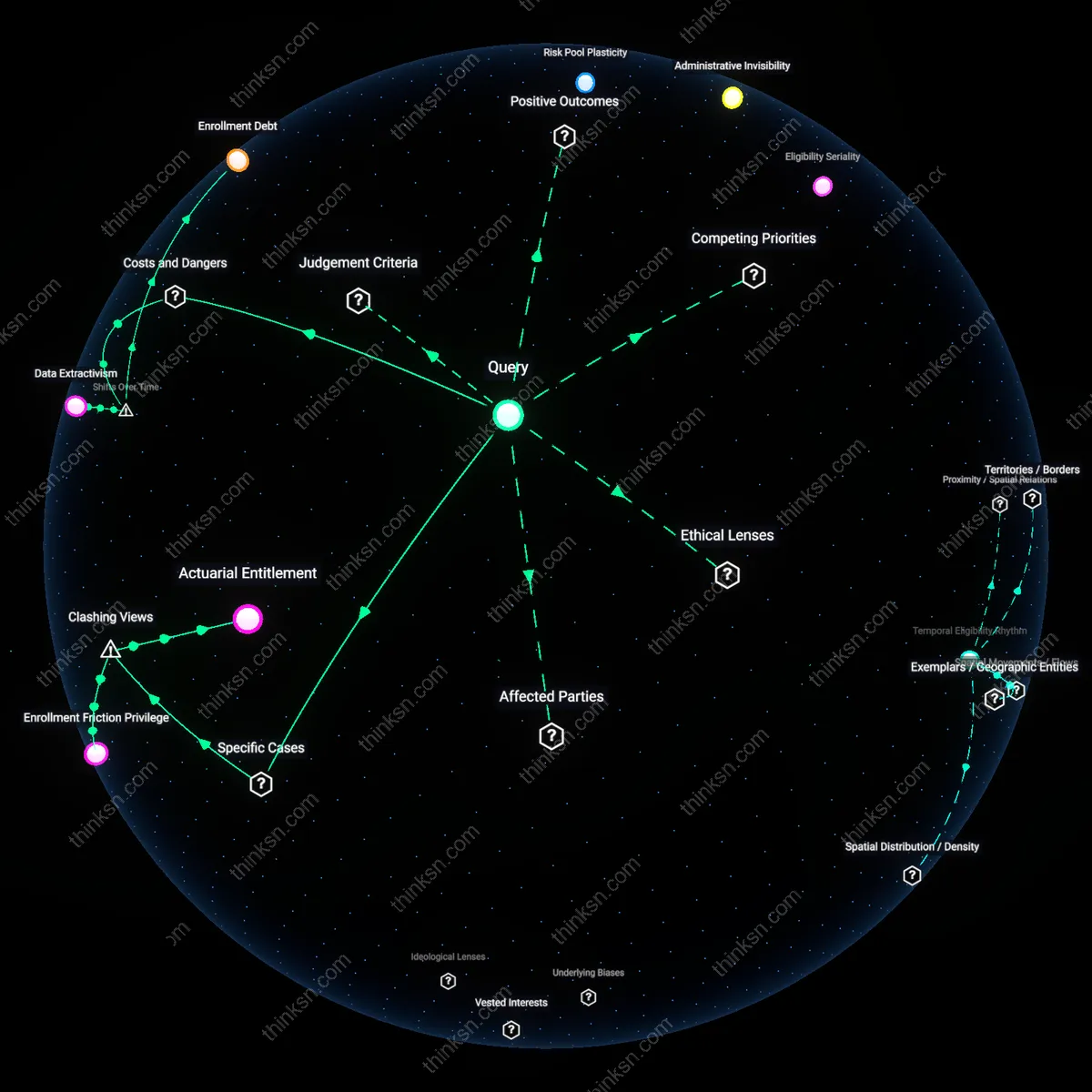
Analysis reveals 7 key thematic connections.
Key Findings
Channel-Specific Pricing Autonomy
Insurance carriers impose higher surrender charges through independent brokers because carriers grant distribution partners discretion to set fee structures that reflect client acquisition costs, enabling channels to recoup up-front commissions through back-end penalties; this asymmetry is sustained by contractual misalignment between carrier retention goals and broker monetization timelines. The dynamic reveals how decentralized pricing authority in life insurance creates divergent incentives within the same product class, privileging distribution efficiency over consumer consistency—a systemic feature, not a flaw, embedded in commission-driven financial intermediation.
Brokerage Channel Rent Extraction
Carriers allow third-party brokerages to impose elevated surrender charges because those channels function as price-setting intermediaries with access to niche consumer segments, enabling brokers to capture surplus by bundling product access with fee tolerance. This power stems from asymmetric information and limited substitution options in complex insurance markets, where brokers influence both product design and cost structure through negotiated reinsurance or white-label agreements. The resulting charge disparity reflects rent extraction enabled by structural gatekeeping, not cost variation—exposing how distribution oligopsony distorts retail pricing even for identical underlying policies.
Channelized Risk Extraction
Identical life insurance carriers impose higher surrender charges through independent broker channels because insurers shift distribution cost volatility onto policyholders via back-end fees, recouping unpredictable commission payouts that vary by channel. Insurers maintain pricing parity on premiums but embed channel-specific risk recovery in surrender structures, effectively externalizing distribution inefficiencies onto customers who lapse policies early. This reveals that apparent product uniformity masks a hidden cost-repricing mechanism tied to go-to-market strategy rather than underwriting risk—undermining the standard view that surrender charges primarily protect against actuarial disruption.
Brokerage Rent Recycling
Surrender charge disparities across distribution channels reflect a covert reinvestment of broker-generated commission surplus into carrier-controlled financial buffers, where high-commission channels face elevated penalties to create behavioral lock-in and reduce policyholder mobility. Carriers exploit the misaligned incentives of third-party distributors by designing exit costs that indirectly subsidize future broker compensation without transparent accounting. This inverts the conventional narrative that surrender charges are defensive instruments, instead positioning them as dynamic rent-capturing tools that reinforce intermediary dependency.
Latent Channel Arbitrage
Variation in surrender charges by distribution channel persists because central actuarial teams design fee schedules with deliberate imprecision, enabling regional and channel-level managers to exploit regulatory tolerances and customer inattention as arbitrage opportunities. These variances are not anomalies but structured margins that allow front-line units to absorb channel-specific competitive pressures while maintaining consolidated profitability. This undermines the assumption that uniform products imply consistent economic treatment, exposing a distributed pricing logic where policyholders in high-friction channels unknowingly cross-subsidize market experimentation.
Commission Arbitrage Pressure
Life insurers structure higher surrender charges in captive channels to offset implicit revenue leakage from guaranteed commission schedules. At Northwestern Mutual, agents are compensated through fixed draw systems that require persistency to recoup corporate advances, which amplifies backend penalties when policies lapse—this dynamic is invisible in third-party brokerage pricing where commissions are upfront and non-recoupable. The overlooked mechanism is not distribution cost but the insurer’s need to internally balance sheet the risk of unearned agent compensation, reframing surrender charges as a tool for workforce financial engineering rather than product economics.
Behavioral Channel Lock-in
MassMutual imposes steeper early surrender penalties on policies sold through workplace enrollment platforms—such as payroll-deducted insurance offered via employer partnerships—because behavioral data shows these policyholders exhibit lower price sensitivity and higher inertia, even when external options are cheaper. The carrier exploits the tacit 'default effect' of automatic deductions, turning surrender charges into a behavioral tax on inattention rather than a reflection of capital risk. What’s missed in standard analysis is that distribution channels don’t just deliver products—they shape customer cognition, making the psychological infrastructure of enrollment a silent pricing variable.