Do Good-Cause Statements Tip Tenant Power Against Greedy Landlords?
Analysis reveals 4 key thematic connections.
Key Findings
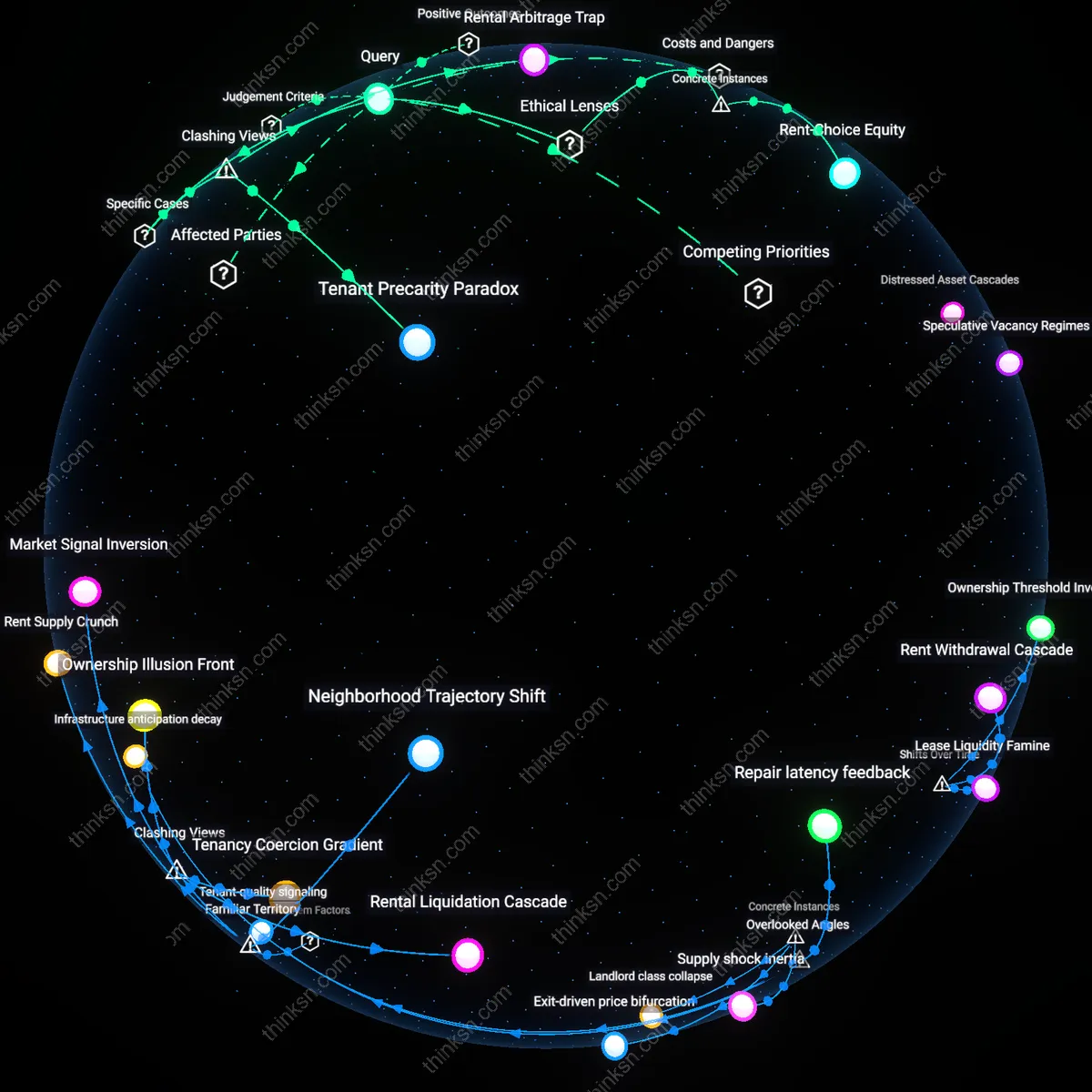
Temporal Asymmetry
The requirement to state good cause reshapes conflict in time, not power, favoring landlords who operate on long investment horizons against tenants in immediate survival mode. A tenant facing a 40% rent increase must marshal evidence, attend hearings, and navigate appeals within weeks, while landlords treat disputes as systemic overhead—absorbing delays across portfolios as trivial. In cities like Boston or Seattle, corporate landlords exploit this Temporal Asymmetry by dragging out proceedings, betting tenants will yield under time pressure. The rule appears reciprocal but deepens imbalance by embedding the landlord’s strategic patience into legal process itself.
Regulatory Feedback Loop
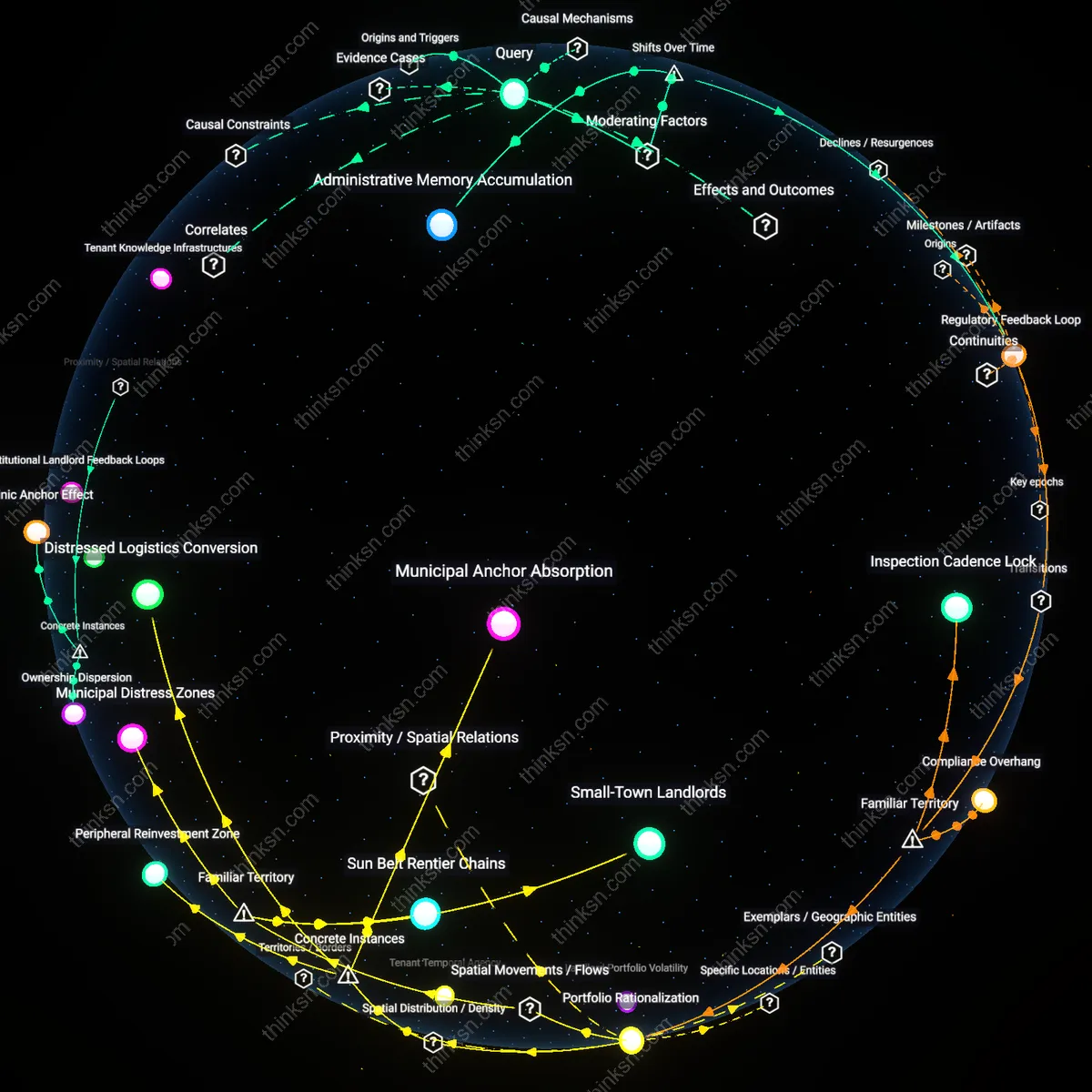
Mandating good-cause justifications in rent hikes intensified tenant leverage during the early 2010s when housing shortages met rising tenant organizing, transforming rent regulation from a passive legal backstop into an active enforcement arena where documentation requirements shifted evidentiary burdens onto institutional landlords. This reversal—where compliance costs began to accumulate asymmetrically against large ownership portfolios dependent on predictable yield increases—emerged decisively after cities like New York and Oakland began pairing just-cause provisions with inspector general oversight and tenant retaliation safeguards, revealing a phase transition in regulatory enforcement where the mere existence of rules became secondary to their iterative activation over time. The underappreciated mechanism is that repeat compliance demands across thousands of units aggregate into systemic friction, a dynamic invisible when viewing rental regulation as episodic dispute resolution rather than a cumulative process of institutional wear.
Litigation Asymmetry Inversion
Following the 2008 financial crisis and subsequent private equity consolidation of rental housing, the insertion of good-cause requirements began to reverse the temporal advantage large landlords once held in eviction and rent-approval timelines, as automated filing systems and legal aid networks leveraged standardized cause challenges to delay and escalate enforcement costs across portfolio holdings. Where once landlords could absorb sporadic legal friction due to economies of scale, the shift after 2015 toward coordinated tenant screenings of rent notices—supported by public databases and pro bono litigation pipelines—meant that systemic rule use transformed procedural delays into a weaponizable resource, fundamentally altering the power calculus in jurisdictions like Portland and Washington, D.C. This inversion—where speed was once a landlord monopoly—exposes how the temporal structure of legal compliance can pivot from favoring capital to constraining it when institutionalized over time through repeated invocation.
Administrative Memory Accumulation
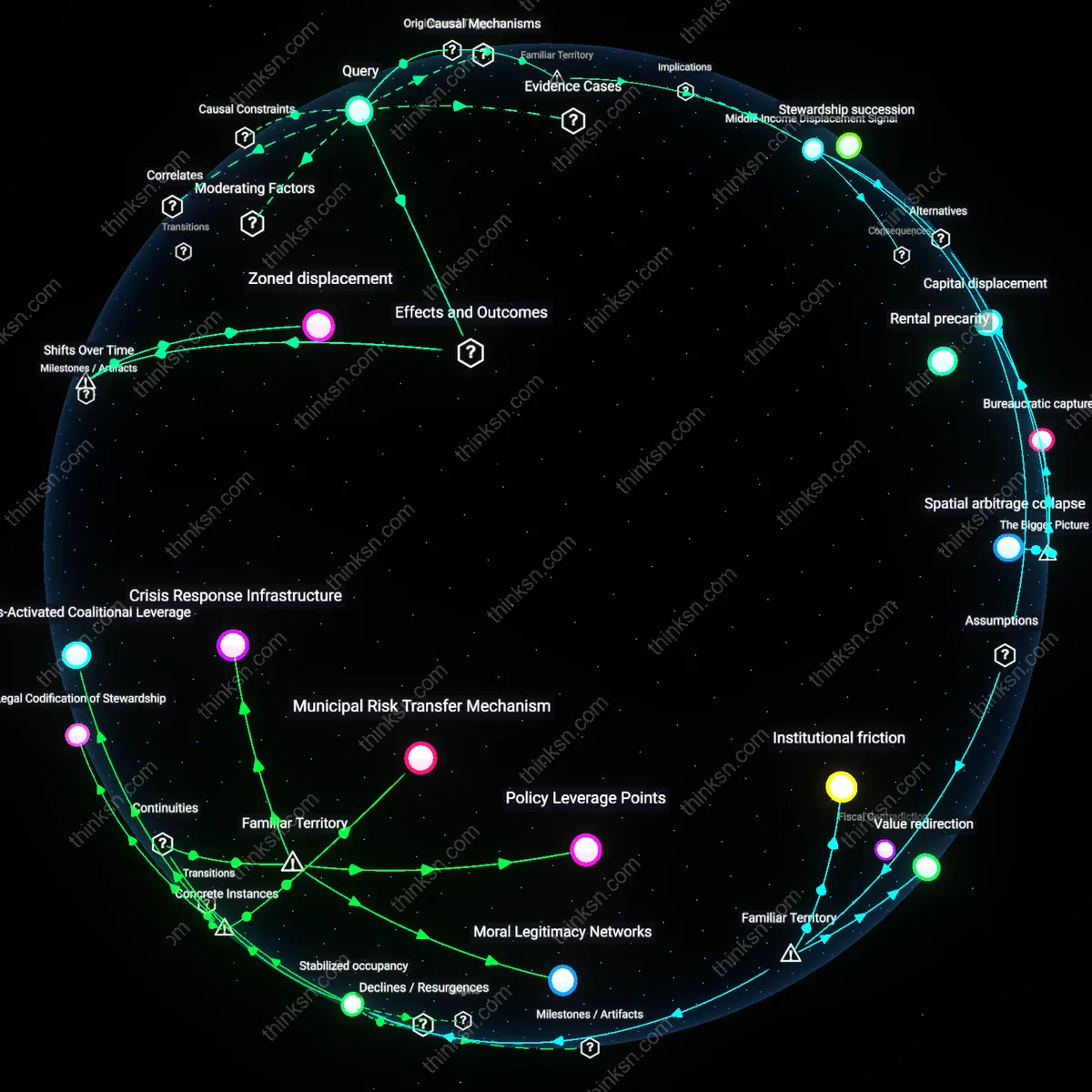
The requirement to furnish good-cause statements since the late 2010s has enabled municipal housing agencies to compile longitudinal records of landlord rationales, creating an administrative memory that weakens the episodic framing of individual disputes and instead reveals patterns of rent extraction across market cycles, particularly in gentrifying neighborhoods where 'renovation' or 'market adjustment' claims recur with statistical regularity. This archive—built incrementally through mandatory justification—has allowed tenant advocates and city auditors to reframe isolated rent increases as components of broader displacement strategies, shifting the burden of proof toward landlords through precedent-based scrutiny that did not exist when rent control operated reactively. The non-obvious shift is that the power imbalance erodes not through one-time interventions, but through the slow accretion of institutional memory that reconfigures regulatory perception over time.