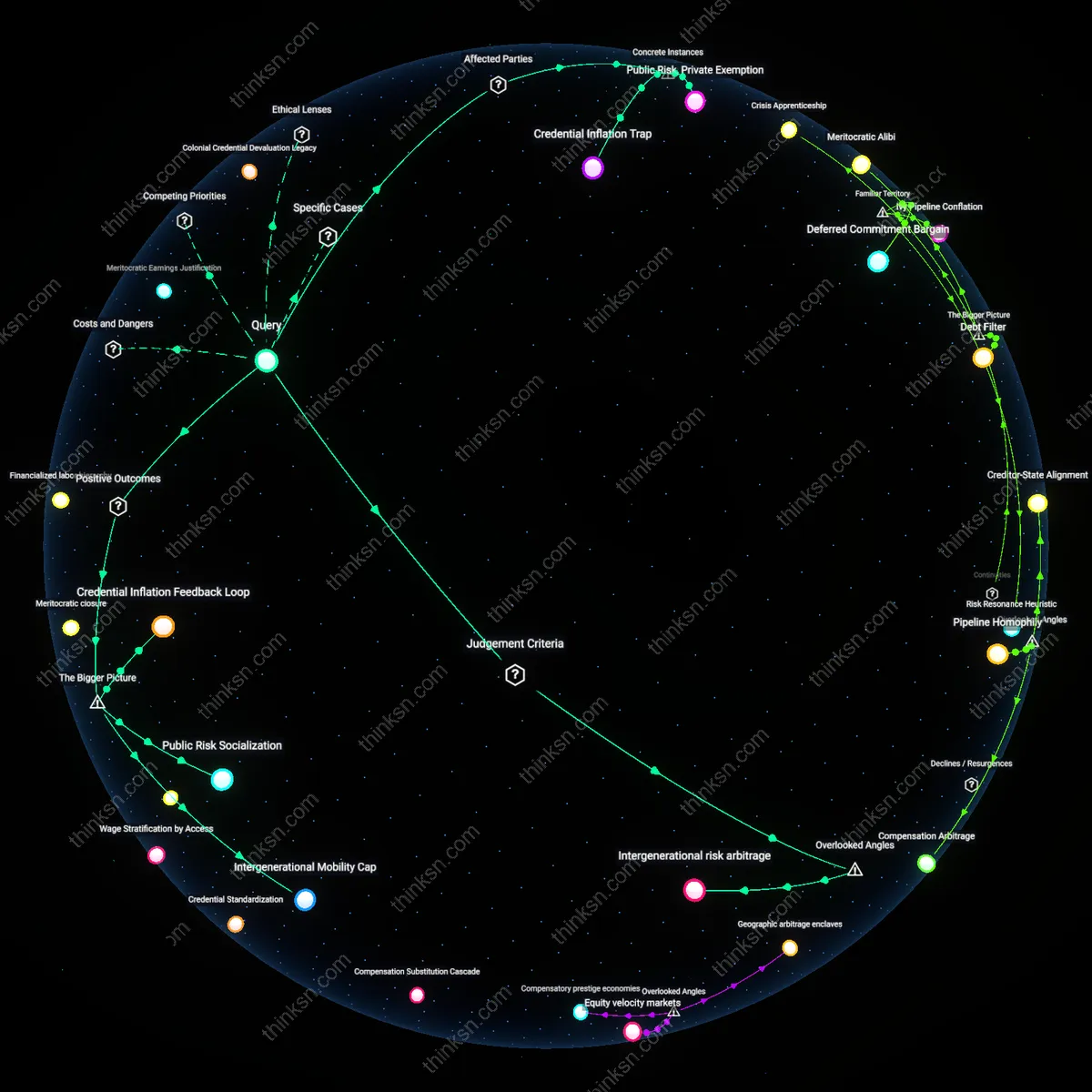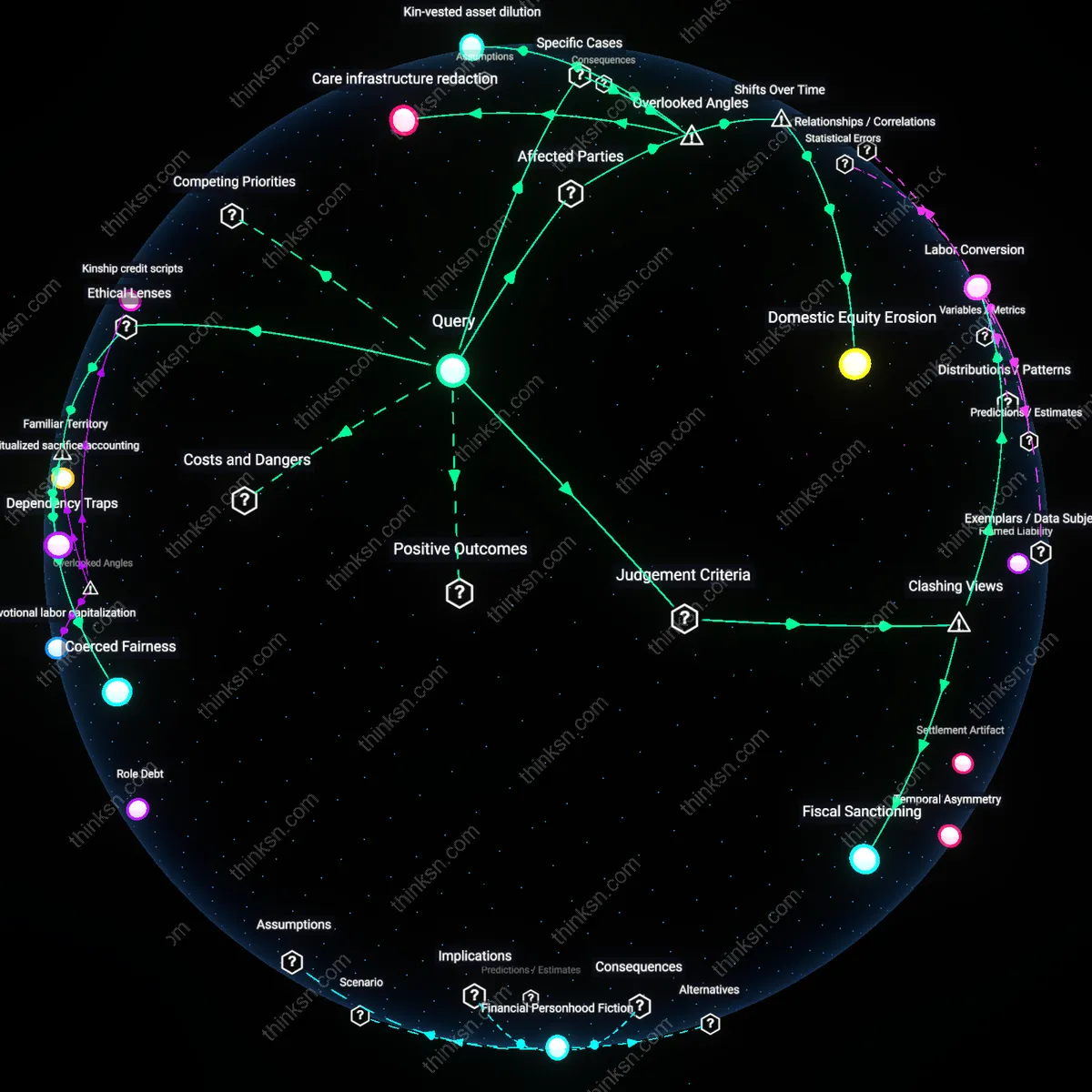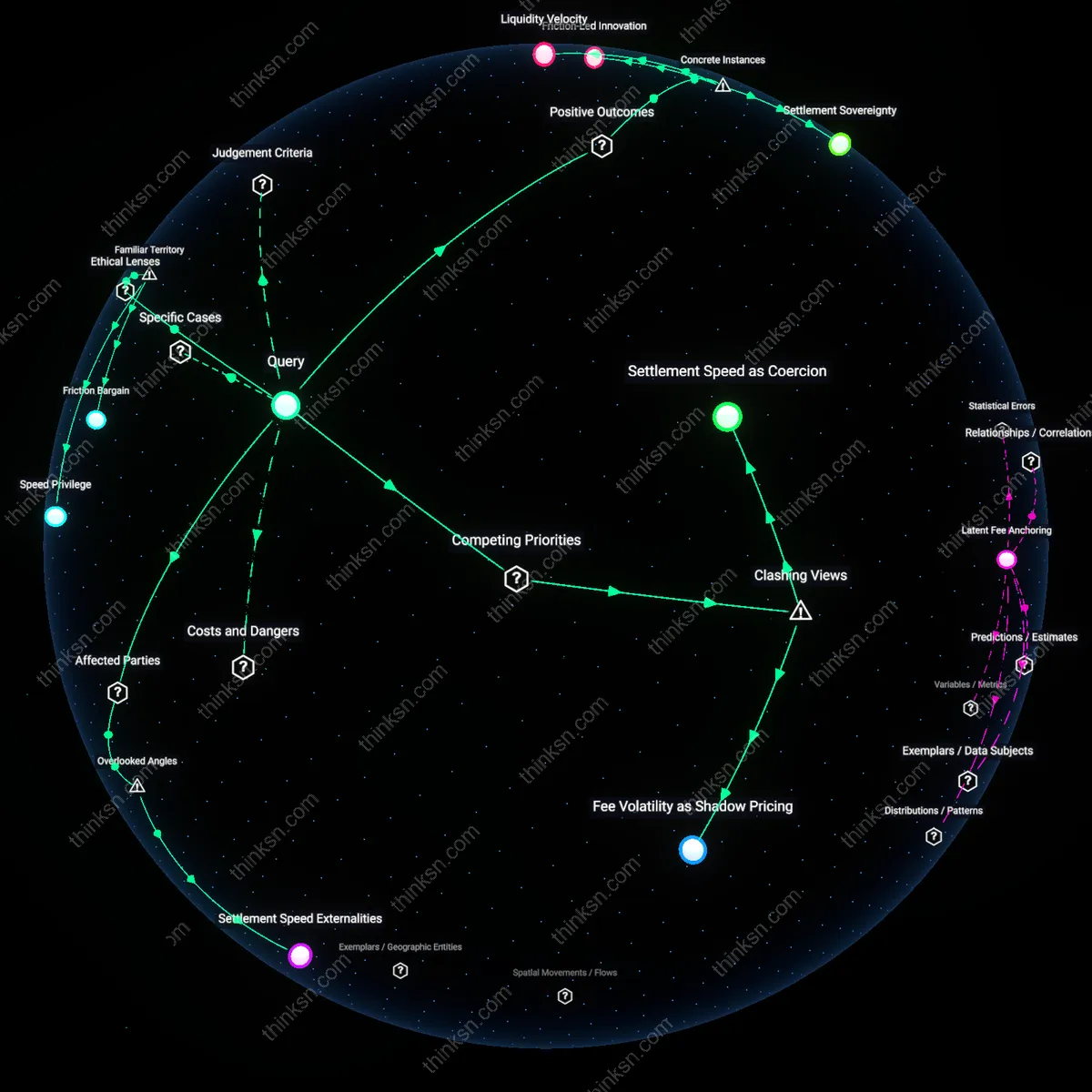
When Debt Fuels Loss, Not Gain: Margin Loan Risk Threshold?
Analysis reveals 5 key thematic connections.
Key Findings
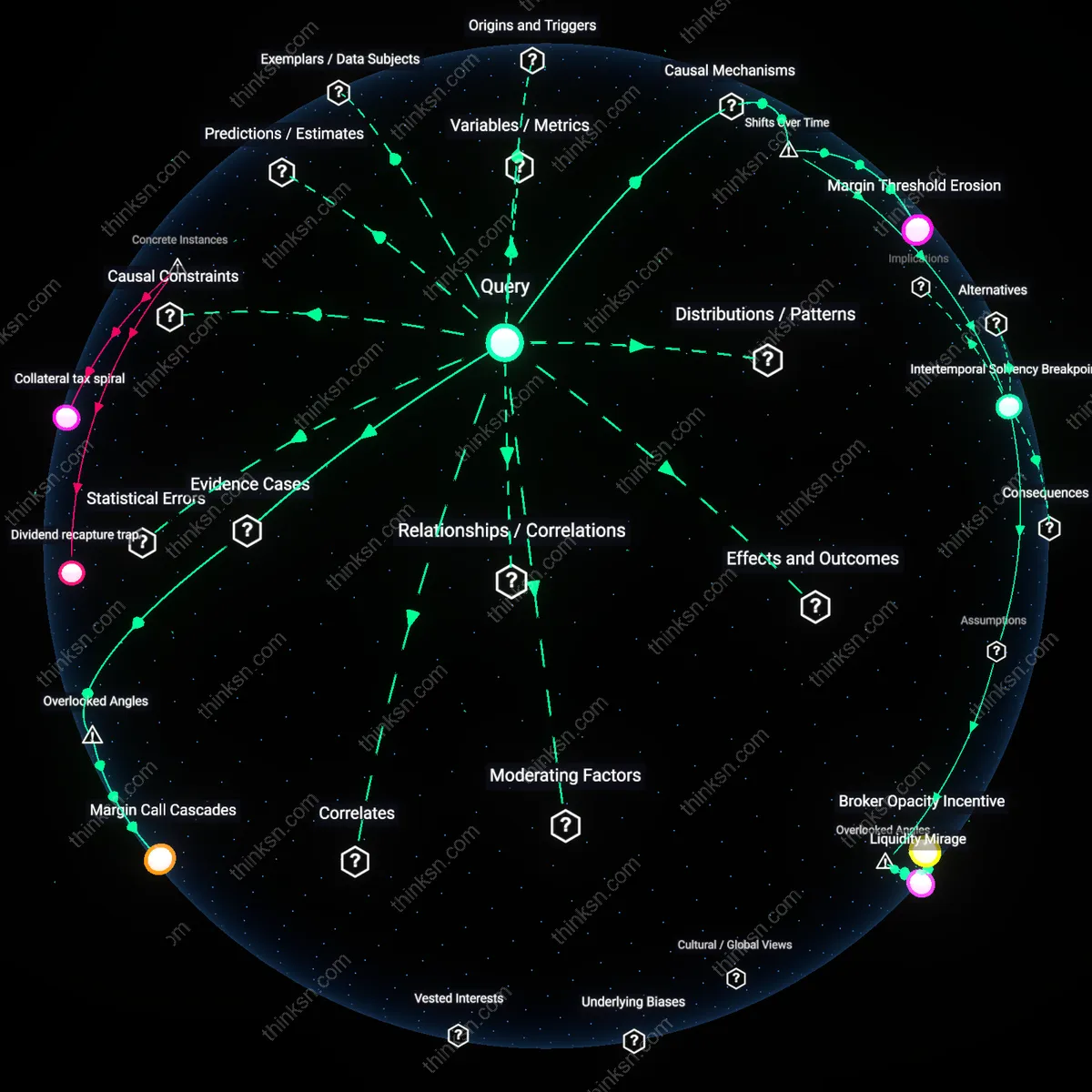
Margin Threshold Erosion
A debt-to-equity ratio above 50% in margin loans for stock purchases makes net worth reduction more likely because, after the 1974 SEC deregulation of fixed commissions and the 1980s shift toward leveraged trading, brokers began optimizing for turnover and leverage utilization rather than capital stability, transforming margin requirements from conservative buffers into growth levers; this systemic redesign of broker-dealer incentives means that at moderate debt levels once considered safe, price volatility now transmits more efficiently into forced liquidations, revealing how post-New Deal financial liberalization eroded structural safeguards that previously absorbed shocks before they destroyed equity.
Valuation Recursion Trap
When debt-to-equity ratios exceed 75%, margin lending enters a historically emergent regime where asset valuations are no longer just collateral inputs but recursively shaped by the borrowing capacity they enable—a dynamic solidified in the 2000s as prime brokers adopted risk models that used market-to-market equity levels to dynamically adjust credit lines, meaning rising prices generate more loan capacity, which fuels further price gains, but during downturns after 1987 and especially post-2008, this feedback loop inverted, turning equity cushions into accelerants of net worth collapse because the same mechanism that amplified gains now magnifies drawdowns through automated de-leveraging routines embedded in modern risk engines.
Intertemporal Solvency Breakpoint
A debt-to-equity ratio beyond 60% creates a solvency inflection point where the time cost of recovery exceeds the horizon of margin calls, a threshold that only emerged as a critical vulnerability after T+1 settlement acceleration in 2024 shortened the gap between price drop and collateral demand, compressing the period over which loss-absorbing mechanisms like dividend reinvestment or portfolio rebalancing could restore equity levels, thus transforming what was once a buffer of days into hours, exposing how decades of incremental market speed increases have redefined technical insolvency from a financial condition into a real-time operational failure.
Margin Call Cascades
Brokers at major clearing firms like DTCC accelerate collateral rehypothecation cycles during volatility spikes, triggering simultaneous margin calls across leveraged retail portfolios even when individual debt-to-equity ratios are below 50%, because system-wide liquidity hoarding amplifies sell pressure beyond any single investor’s risk calculus. This mechanism overrides isolated balance sheet metrics by embedding individual margin exposure within a networked collateral grid, where the speed of margin notice distribution—often algorithmically synchronized across platforms like Robinhood or Webull—forces asset liquidation before price recovery can occur. Most analyses focus on static leverage thresholds, overlooking how the operational tempo of margin enforcement in a concentrated clearing system turns moderate leverage into systemic net worth erosion.
Dividend Recalculation Lag
Investors holding high-dividend equities such as Energy Transfer LP on margin experience delayed net worth declines not from price drops but from IRS Schedule K-1 tax adjustments that reclassify distributions as return of capital, reducing tax basis and inflating taxable gains when shares are sold to meet margin requirements. At debt-to-equity ratios above 60%, this fiscal time lag—where accounting profits diverge from cash flow due to partnership structures—creates a hidden liability that erodes after-tax equity just as margin calls peak. Standard risk models ignore the temporal mismatch between financial leverage and tax-driven equity depletion, particularly in master limited partnerships held in margin accounts.