Asthma Biologics: Worth Sticking With or Switching to Cheaper Options?
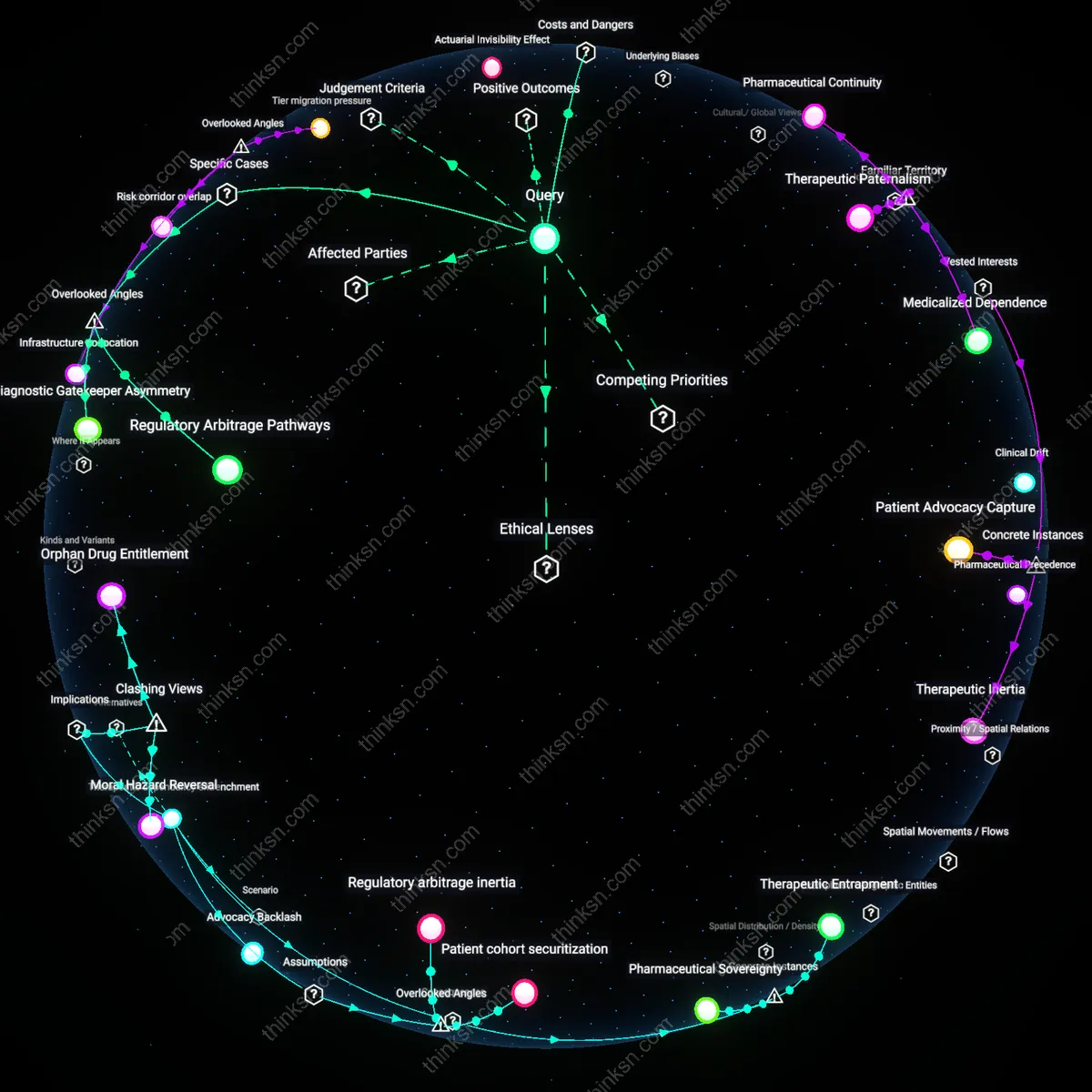
Analysis reveals 11 key thematic connections.
Key Findings
Treatment Continuity Security
Maintaining a high-cost asthma biologic through patient-assistance programs ensures uninterrupted control of severe asthma for patients who would otherwise face deterioration. This continuity prevents emergency department visits and hospitalizations, which are both traumatic for individuals and costly for public health systems, especially in urban safety-net hospitals where asthma admissions remain a recurrent burden. The underappreciated reality is that these programs function as de facto public health infrastructure, even though they are industry-funded and not universally accessible, revealing a dependency on pharmaceutical goodwill rather than systemic guarantees.
Therapeutic Trust Anchoring
Staying on a proven biologic reinforces patient trust in the medical system by honoring the clinician’s original treatment rationale and preserving regimen predictability. When patients see their doctors resisting therapy downgrades despite financial hurdles, it strengthens long-term adherence and disclosure of symptoms, which primary care providers in chronic disease clinics observe as a stabilizing force in management. What gets overlooked is how switching therapies—framed as practical cost containment—can silently erode perceived commitment, making patients skeptical of future high-intensity recommendations even when medically justified.
Clinical Momentum Preservation
Continuing biologics maintains hard-won improvements in lung function and exacerbation frequency, which are especially critical in allergy-driven asthma phenotypes tracked at academic pulmonary centers. These therapies often took months to demonstrate full effect, and restarting less effective inhaled corticosteroids risks reactivating a cycle of step-up treatment and systemic steroid exposure that undermines long-term lung health. The unspoken assumption in routine cost-benefit calculations is that asthma severity is static, when in fact chronic inflammation can reset thresholds for future reactivity if control is lost.
Therapeutic Abandonment
Continuing high-cost biologics via patient-assistance programs after insurance loss traps patients in a tiered access system that collapses when programs retract, forcing abrupt discontinuation more harmful than starting with less effective inhaled therapies. Pharmaceutical-sponsored assistance programs function as temporary lifelines that defer—not solve—access inequities, creating a dependency loop where patients are medically destabilized once support ends; this dynamic is exacerbated by manufacturers' control over program eligibility, which operates independently of clinical need and is subject to sudden withdrawal. The non-obvious consequence is that delayed therapeutic degradation increases systemic risk—the illusion of continuity masks an impending cliff, making the transition not merely to less effective treatment, but to none at all.
Subsidized Inequity
Patient-assistance programs for biologics perpetuate a two-tiered treatment economy where therapeutic access depends on enrollment capacity rather than clinical severity, privileging patients with health-literate advocates over those in under-resourced settings. These programs function as privately funded safety valves that relieve pharmaceutical companies of responsibility for pricing while maintaining market exclusivity, enabling list prices to remain artificially high; this sustains a system in which only the most persistent or well-connected patients navigate the bureaucratic burden of assistance applications. The residual harm is not merely differential access, but the normalization of charity as infrastructure—whereby the systemic failure to regulate pricing is masked by individualized aid, making structural reform politically inert.
Therapeutic Debt
Continuing high-cost asthma biologics through patient-assistance programs after insurance loss shifts financial risk from insurers to manufacturers and creates therapeutic dependency that locks patients into long-term regimens not because of clinical progression but due to path-dependent access structures that emerged in the post-2010 biologics market, when pharmaceutical companies reorganized their payer strategies around temporary cost deflection rather than curative pathways; this reveals how patient-assistance programs, originally designed as safety nets, now function as market-stabilizing mechanisms that preserve revenue streams by deferring the reckoning with unsustainable pricing, making discontinuation clinically and psychologically harder over time.
Managed Forgetting
Switching from biologics to inhaled therapies after insurance lapses reflects a recalibration of clinical priorities under austerity conditions in the post-Affordable Care Act era, where coverage gaps became normalized and clinicians increasingly rely on therapeutic de-escalation not based on disease evolution but on anticipated insurance volatility, thereby institutionalizing a form of selective disengagement with cutting-edge care that treats knowledge of biologic efficacy as disposable; this shift reveals a hidden logic of managed forgetting—whereby the health system actively suppresses access to advanced therapies not through overt denial but through structural attrition, enabling payers to maintain actuarial control while absolving themselves of continuity obligations.
Chronic Triage
The decision to remain on biologics via assistance programs or revert to inhaled corticosteroids after coverage ends epitomizes a new phase in post-industrial healthcare governance—rooted in the 2010s opioid-driven collapse of primary care capacity—where clinicians, patients, and pharmacy benefit managers operate in perpetual triage mode, balancing disease stability against enrollment labor, with trade-offs increasingly determined by administrative endurance rather than physiological thresholds; this condition produces chronic triage, a state in which treatment continuity is not disrupted by crisis but continuously modulated by bureaucratic friction, turning adherence into a function of paperwork stamina rather than therapeutic need.
Pharmaceutical stewardship
Patient-assistance programs administered by biologic manufacturers create long-term dependency on proprietary medications by structuring access to high-cost asthma biologics through charity-like mechanisms that bypass payer formularies, exemplified by Genentech’s Xolair patient support system in the U.S., which insulates prescription volume from insurance cycles. This arrangement shifts stewardship of therapeutic continuity from public or clinical governance to corporate access programs, thereby distorting treatment escalation pathways and rendering cheaper, guideline-endorsed alternatives second-order considerations despite comparable population-level outcomes. The overlooked mechanism is that drug developers assume quasi-regulatory influence over chronic care standards through financial intermediation — a role neither formally acknowledged nor clinically overseen, yet which systematically downgrades de-escalation as a viable option.
Regimen cadence disruption
Discontinuing asthma biologics like benralizumab at the end of insurance coverage—even when substituted with inhaled corticosteroids—induces physiological instability not fully captured by lung function metrics, as seen in patients transitioning off Nucala through specialty infusion centers in Medicaid expansion gap states such as Texas. The non-obvious consequence is that the monthly or biweekly ritual of subcutaneous administration becomes embedded in patients’ self-management identity, and its termination disrupts illness pacing, leading to heightened symptom perception independent of eosinophil levels. This temporal structuring of care—what is lost upon switching—is rarely factored into cost-effectiveness models, which treat adherence as a static variable rather than a rhythm co-constructed by clinical scheduling and patient agency.
Biosimilar invisibility
Switching away from high-cost biologics after insurance lapses reinforces a self-perpetuating absence of price competition by suppressing demand signals for emerging biosimilars, as occurred in the anti-IL5 therapy market following restricted Medicare Part D coverage in 2021, which pushed eligible patients toward generic inhalers instead of lower-cost follow-on biologics. The unacknowledged effect is that patient-assistance programs, while preserving access for individuals, inadvertently protect originator drugs from market erosion by disconnecting patient use from reimbursement-driven procurement, thus starving biosimilar developers of the utilization data and formulary momentum needed to scale. This creates a feedback loop where underutilization sustains biosimilar 'invisibility', preserving monopolistic pricing and weakening downstream competition.