Leaving Charities in Will: Shaping Family Values or Creating Tension?
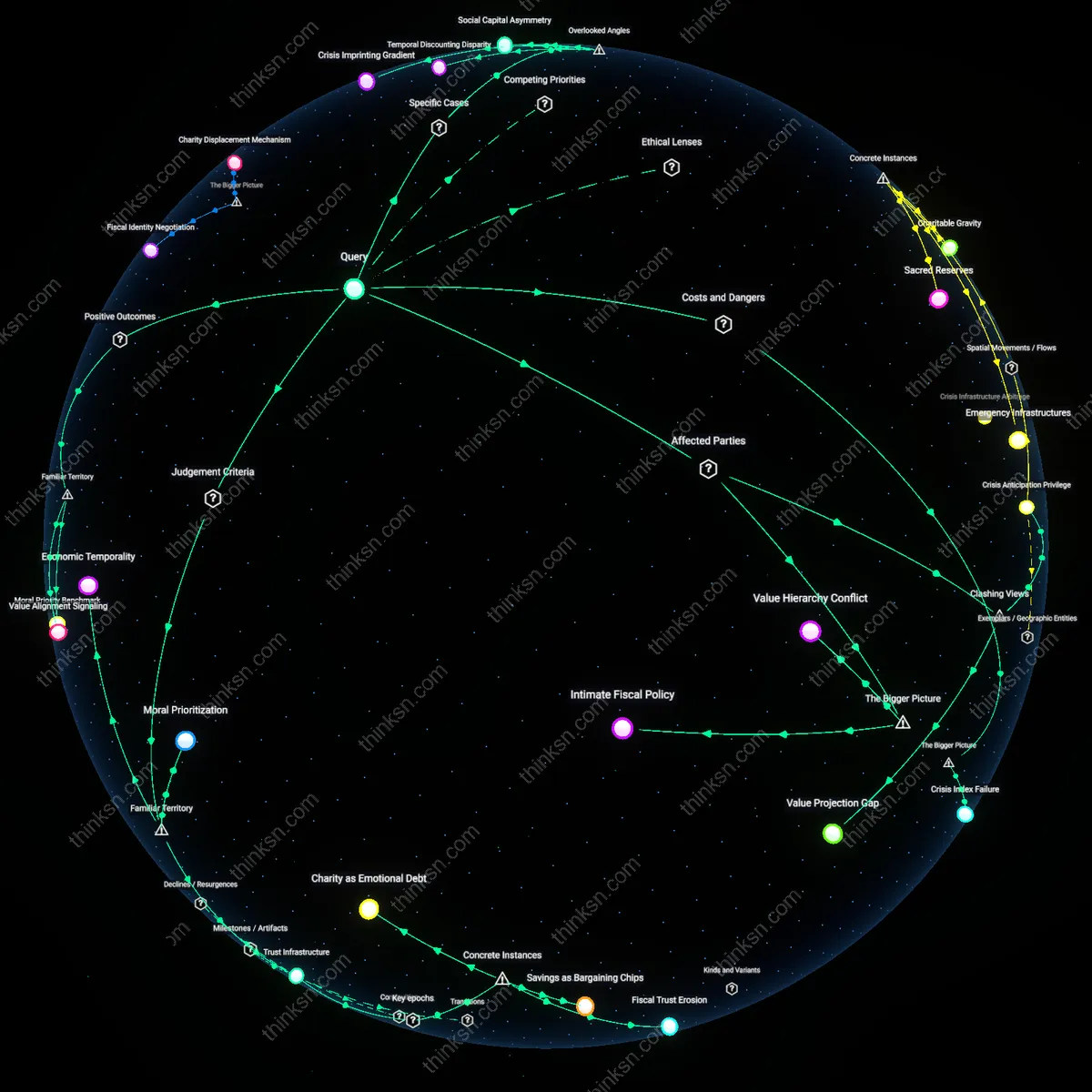
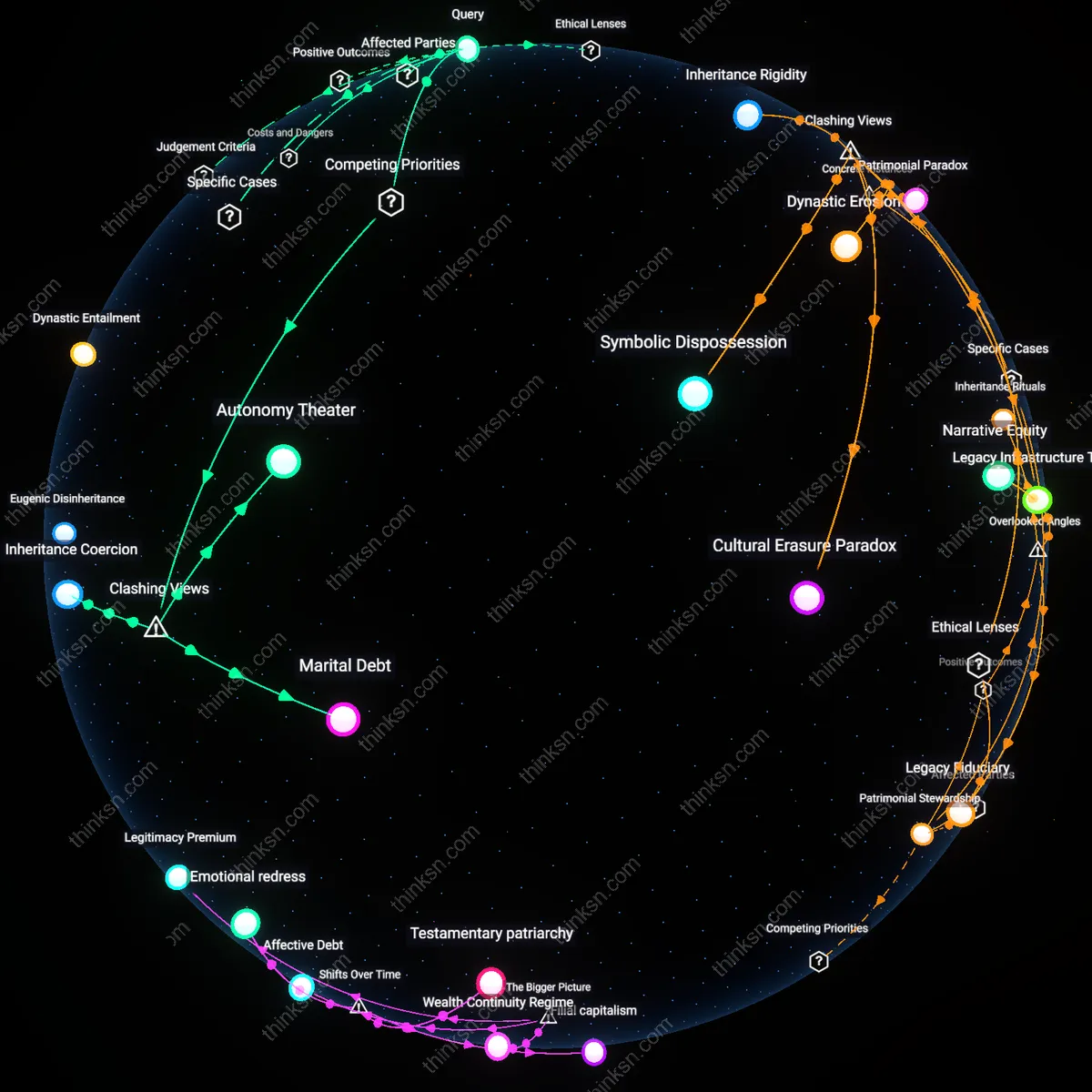
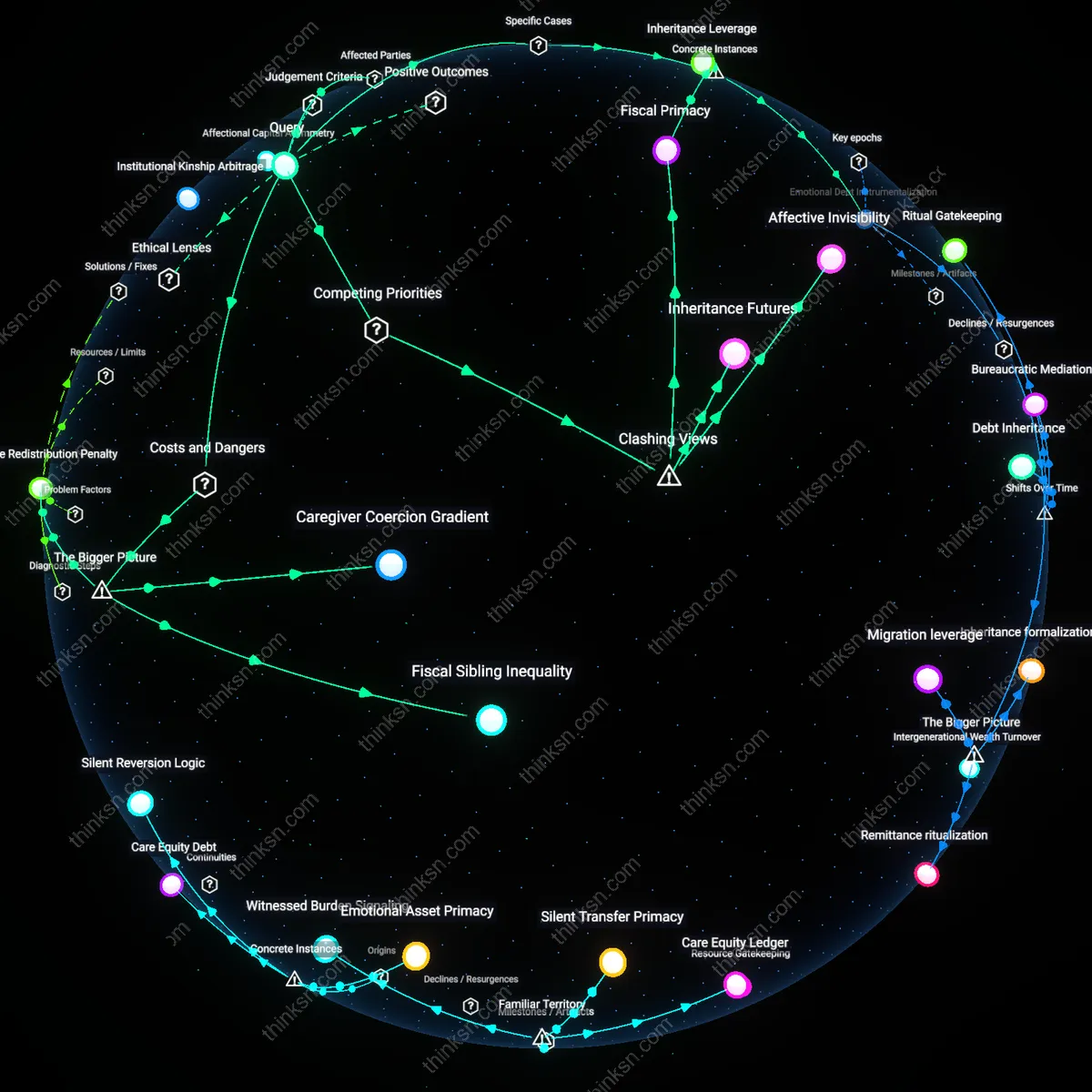
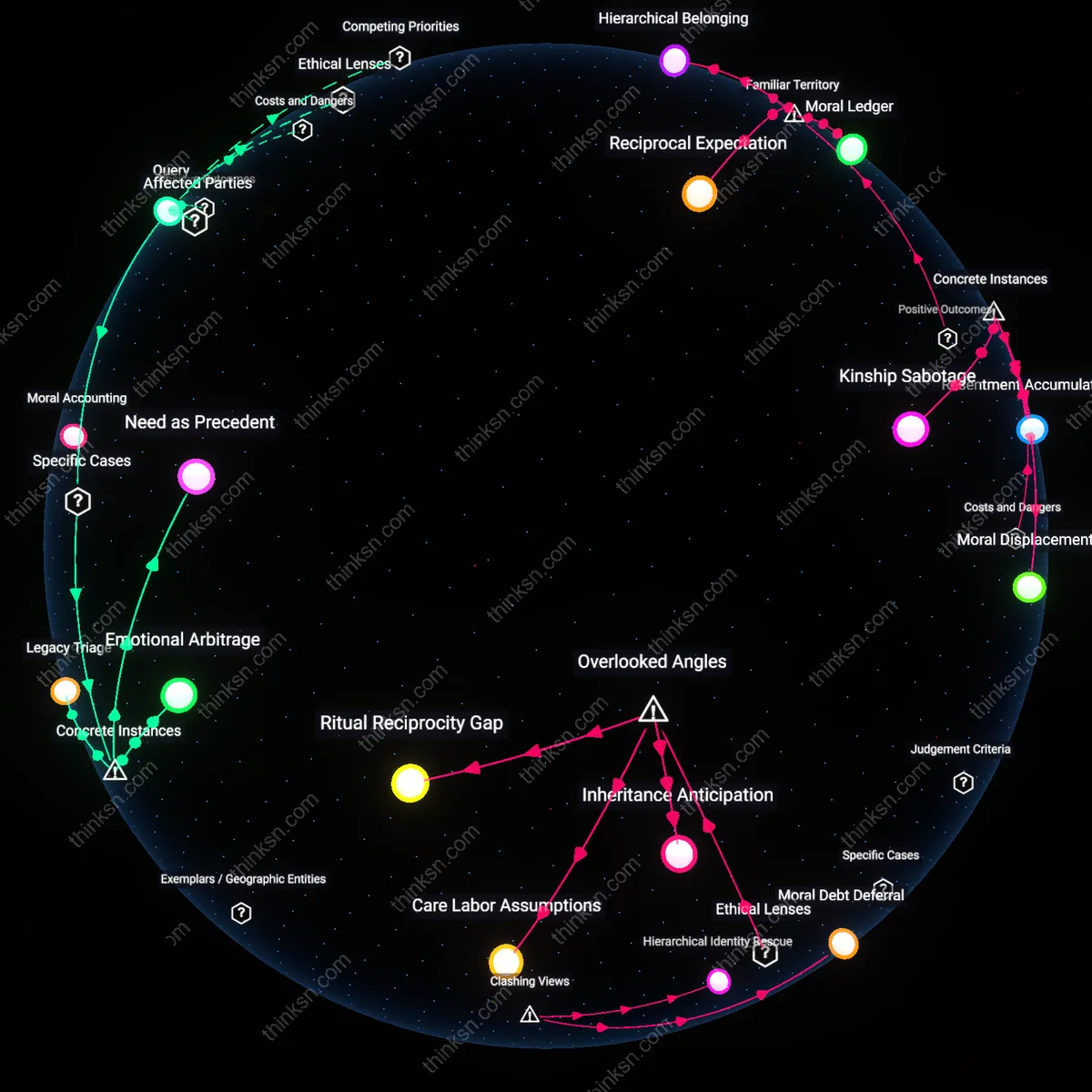
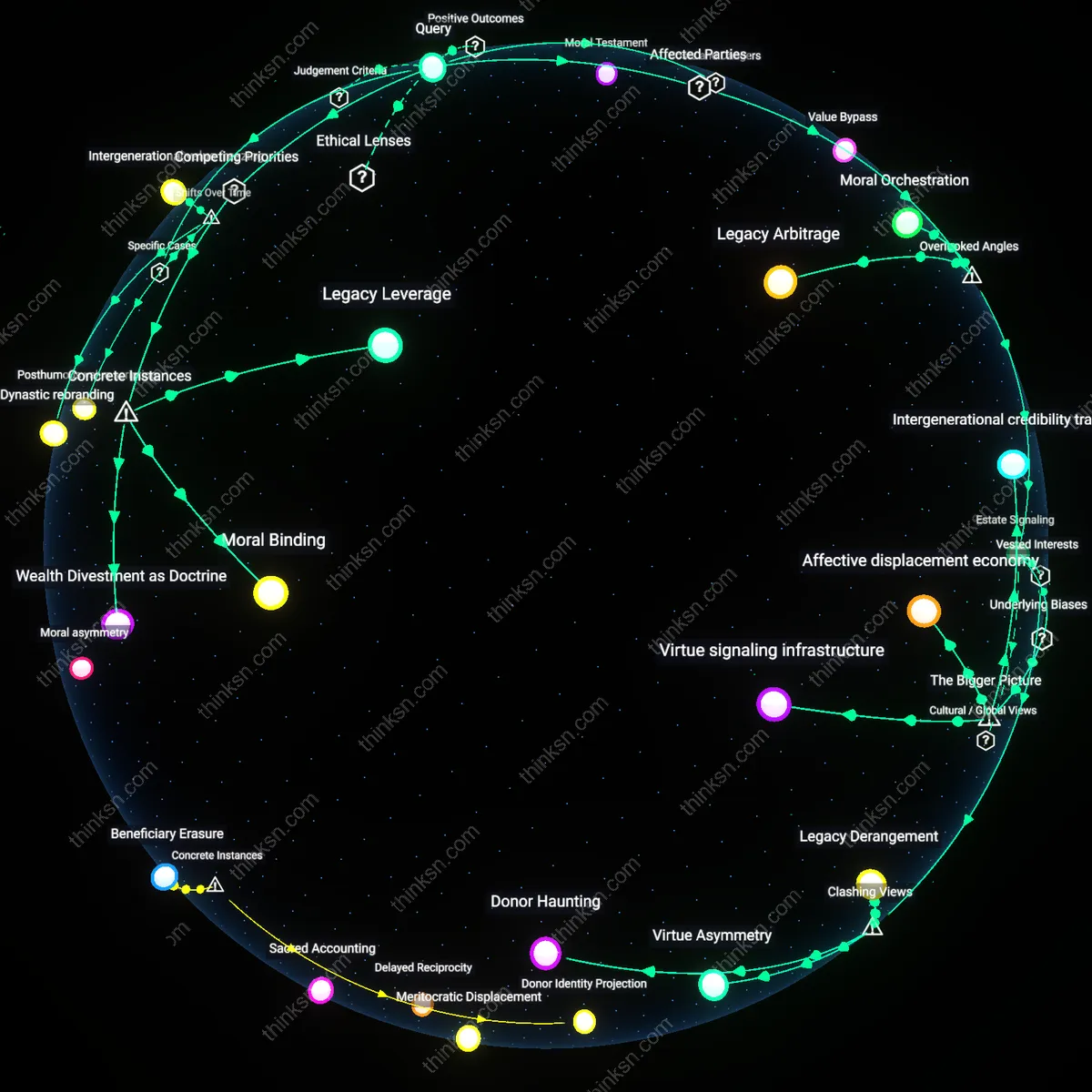
Analysis reveals 12 key thematic connections.
Key Findings
Moral Orchestration
A parent's bequest to a charitable foundation functions as a posthumous directive that reassigns family identity around service-oriented institutions, not personal inheritance. By legally binding assets to a cause beyond kin, the parent alters the distribution of narrative authority—who gets to define the family’s legacy—and pressures descendants to align with the values embedded in the foundation’s mission to access social capital. This mechanism operates through estate structures that elevate public benefit over private accumulation, making moral legitimacy contingent on participation in the designated cause, which is rarely discussed in inheritance debates centered on fairness or tax strategy. The overlooked dynamic is how wills can serve as tools of values-based choreography, shifting familial cohesion from bloodline continuity to shared ethical performance, thereby privileging the foundation as a co-parent in shaping identity.
Legacy Arbitrage
Parents use charitable bequests to preempt intergenerational conflict by redistributing moral capital away from sibling rivalry and toward collective identification with an external institution. The foundation becomes a neutral third party that absorbs tension over unequal distributions, as judgments about fairness are reframed around the parent’s ‘higher purpose’ rather than material equity among heirs. This operates through the psychology of post-mortem legitimacy, where dissenting family members risk appearing selfish if they challenge a gift framed as altruistic. The underappreciated factor is that philanthropy can act as a conflict-dissipating financial instrument—not just an ethical choice—allowing the deceased to manipulate family dynamics by making disapproval socially isolating, a dimension absent in conventional views of charity as mere generosity.
Estate Signaling
A charitable bequest signals to external institutions—such as universities, religious groups, or elite networks—that the family prioritizes reputation over wealth retention, thereby shaping how those entities engage future generations. Grandchildren may gain preferential access to social platforms that reward lineage-associated virtue, not just wealth, because the foundation’s existence certifies a pedigree of public commitment. This works through relational databases of donor status and legacy tracking systems used by selective organizations, which rarely acknowledge how posthumous giving recalibrates the social valence of bloodlines. The unobserved dependency is that bequests function as intergenerational credit scores in closed-status circuits, transforming charity into a stealth mechanism for maintaining class influence without direct wealth transfer.
Moral Testament
A parent’s bequest to a charitable foundation functions as a posthumous directive on ethical priorities, implying that true family legacy is measured by social contribution rather than private accumulation. This act installs the foundation as a moral executor, structuring how surviving family members interpret their responsibilities through the donor’s final act. Because most people equate inheritance with material transfer, the subversion of wealth into public good reroutes intergenerational memory toward duty rather than entitlement, making visible the risk that familial identity becomes subordinate to the donor’s idealized virtue. The underappreciated consequence is that the bequest does not guide values gently but displaces lived family ethics with a curated public morality, potentially alienating descendants who do not identify with the cause.
Legacy Coercion
When a parent diverts significant assets to a charitable foundation, they effectively wield financial leverage over family dynamics beyond the grave, using exclusion from wealth as a tool to enforce alignment with stated values. This operates through the trust and estate system, where distributions are conditioned on compliance with the donor’s philanthropic vision, often formalized in foundation bylaws or donor intent agreements. Since most heirs anticipate inheritance as both economic and symbolic recognition, its redirection penalizes dissent and reshapes family identity around sanctioned narratives, risking emotional estrangement. The non-obvious danger lies in how this mimicry of ethical instruction functions as quiet control, where moral rhetoric masks intergenerational power assertion.
Value Bypass
A charitable bequest circumvents direct familial dialogue about values by embedding them in an institutional proxy, signaling that trust in family transmission has failed. This mechanism replaces upbringing and conversation with structural design, where the foundation becomes the official interpreter of the parent’s ethics, accessible only through formal engagement. Most people assume that values are passed through interaction, yet this act assumes institutions are more reliable stewards than blood, exposing a deep distrust in organic family continuity. The overlooked cost is the tacit admission that influence requires third-party mediation, turning intimacy into a transactional relationship with legacy.
Legacy Leverage
The Ford family’s establishment of the Ford Foundation in 1936, with its vast endowment directed toward public welfare and education, actively constrained later generations’ ability to redistribute wealth privately, thereby institutionalizing progressive social values over familial autonomy. By legally binding capital to non-family purposes, the founders preempted descendants’ claims to that wealth, turning philanthropy into a binding value statement that prioritized societal impact over dynastic cohesion. This mechanism reveals how bequests can function not as generosity alone but as governance tools that enforce ideological continuity through financial forfeiture, a non-obvious use of estate planning to settle intergenerational value conflicts.
Moral Binding
Eli Broad’s $200 million pledge to fund charter schools via the Broad Foundation, structured as a limited-term trust terminating in 2098, forces his heirs to oversee an educational mission that may diverge from their personal beliefs, thereby embedding market-driven reform ideals into the family’s public identity. The time-bound nature of the foundation intensifies pressure on descendants to actively manage—and thus perpetuate—a specific ideological project, illustrating how finite philanthropy can exert infinite normative influence. This demonstrates that conditional bequests can weaponize temporality, making loyalty to a cause a prerequisite for familial legitimacy.
Wealth Divestment as Doctrine
When Doris Buffett founded the Sunshine Lady Foundation with a $250 million endowment—explicitly bypassing her children in favor of single mothers and veterans—she severed traditional expectations of inheritance, casting renunciation of familial wealth as a moral imperative. Her public narrative framed capital retention within the family as ethically suspect, thereby redefining filial duty around social justice rather than lineage. This case exposes how philanthropy can serve as a performative act of disinheritance, where the redistribution of assets becomes synonymous with the transmission of values, elevating altruism to a core family trait despite absence of material continuity.
Posthumous value scripting
A parent's bequest to a charitable foundation can function as a directive on how surviving family members should morally reason about wealth, as seen in the Ford family’s endowment of the Ford Foundation in 1936, where Edsel Ford’s will redirected dynastic accumulation toward public welfare, institutionalizing a shift from familial enrichment to social stewardship; this mechanism operates through legally binding philanthropic structures that outlive the donor, embedding a normative framework that shapes descendants' identities by aligning family legacy with progressive reform—what was once a tool of wealth preservation became, in the postwar era, a script for ethical conduct, revealing how mid-20th century anxieties about plutocracy transformed private inheritance into a vehicle for democratized values.
Dynastic rebranding
The donation of family wealth to a charitable foundation after death can serve to redefine the family’s public identity across generations, evident in the shift of the Rockefeller family from Gilded Age industrial dominance to 20th-century philanthropy, where John D. Rockefeller’s posthumous funding of the Rockefeller Foundation in 1913 recast extraction-based capitalism as socially responsible stewardship; this transition, catalyzed by Progressive Era reforms and public backlash against monopolies, used foundation endowments not merely to distribute wealth but to re-anchor family legitimacy in moral progress, exposing how reputational rehabilitation becomes a durable inheritance strategy when economic power faces historical scrutiny.
Intergenerational value freezing
By legally binding family assets to a charitable foundation at death, a parent can halt the future adaptation of family values, as seen in the Walton Family Foundation’s creation in 1987, which locked Sam Walton’s specific vision of education and environmental conservatism into perpetual operation; unlike informal value transmission, which evolves with context, this mechanism exploits the permanence of trusts to project a static moral ideal across time, a shift intensified after the 1980s with tax code changes that incentivized donor-advised funds, revealing how late-capitalist estate planning enables ideological preservation that resists generational reinterpretation.