Do Abortion Funds Reveal Hidden Costs of Socioeconomic Status?
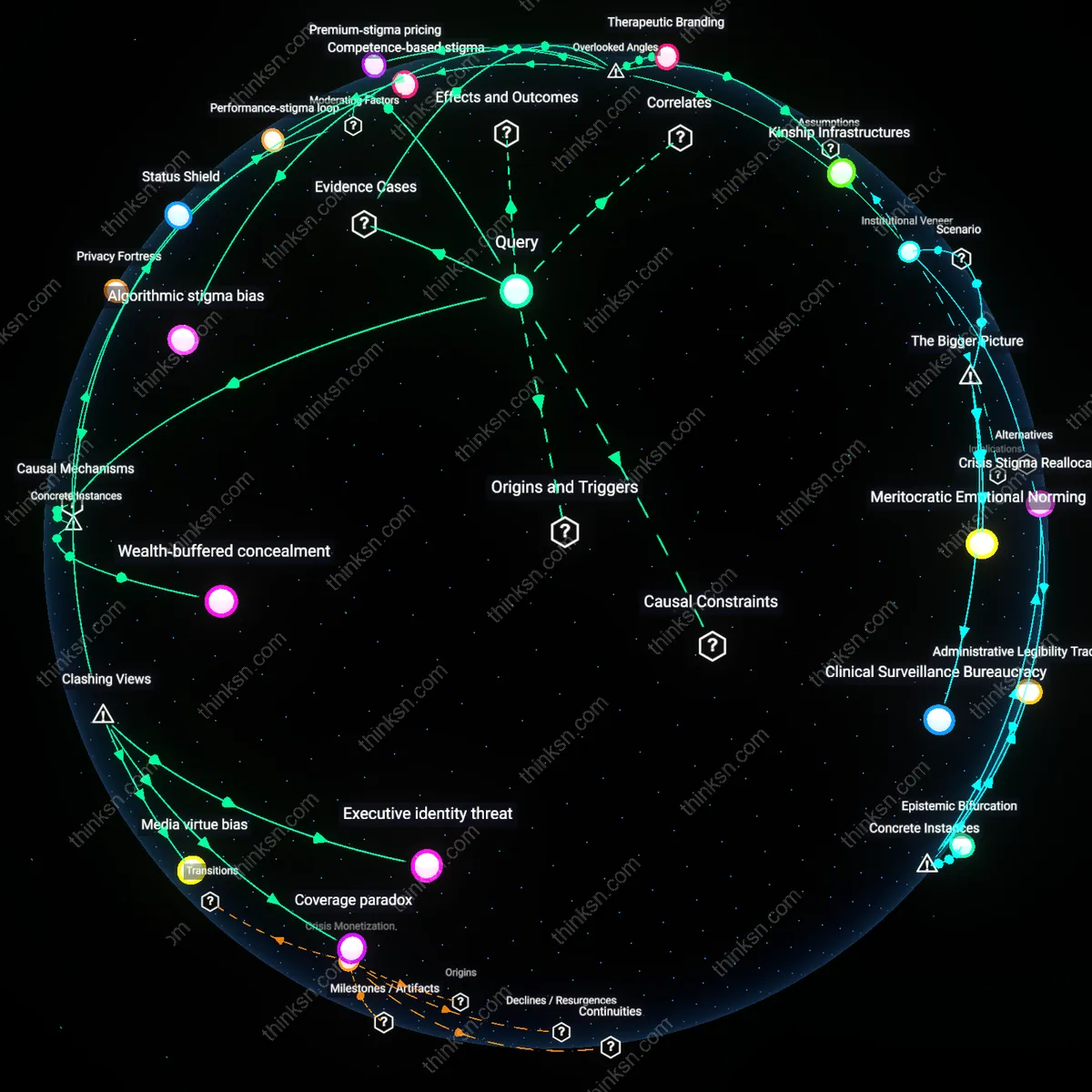
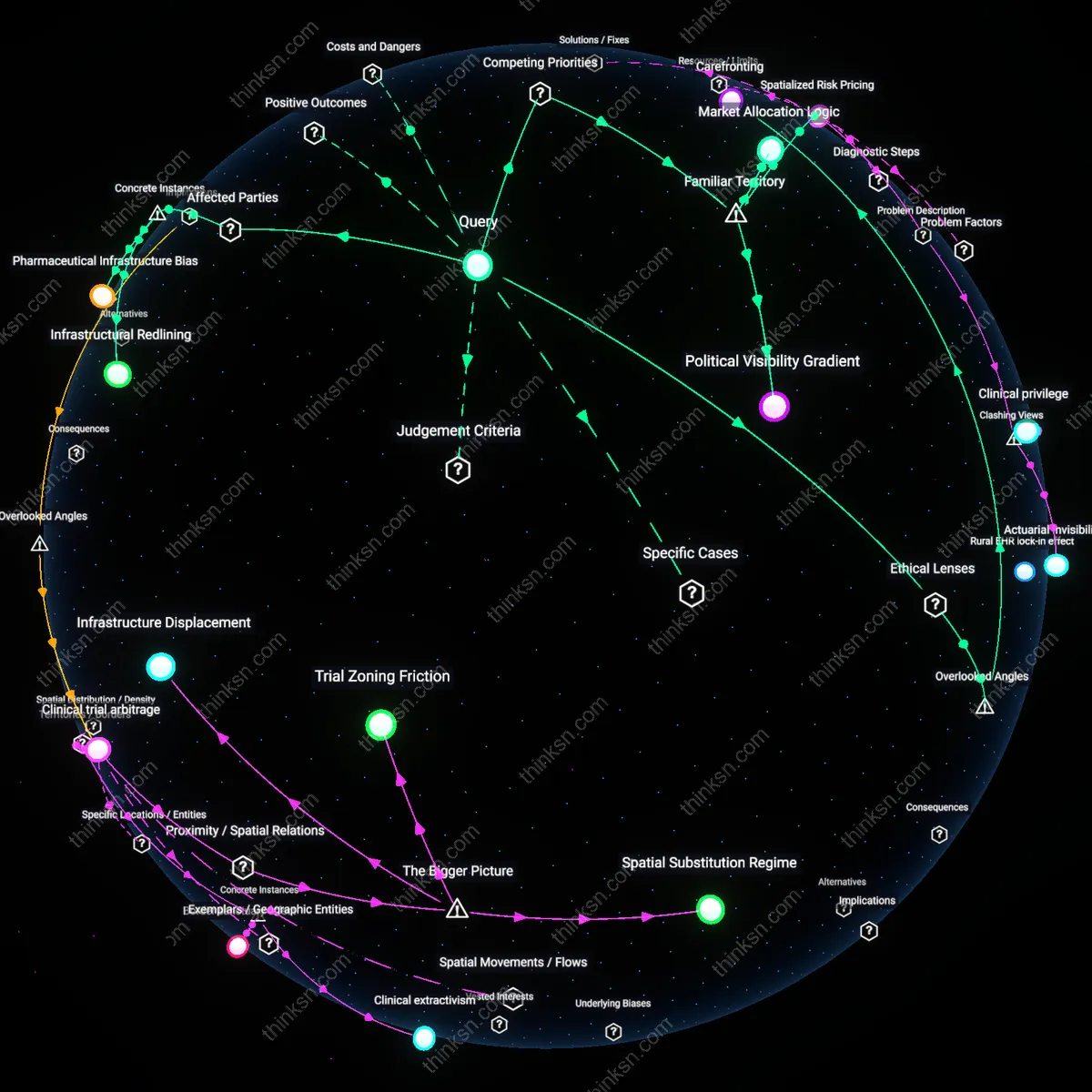
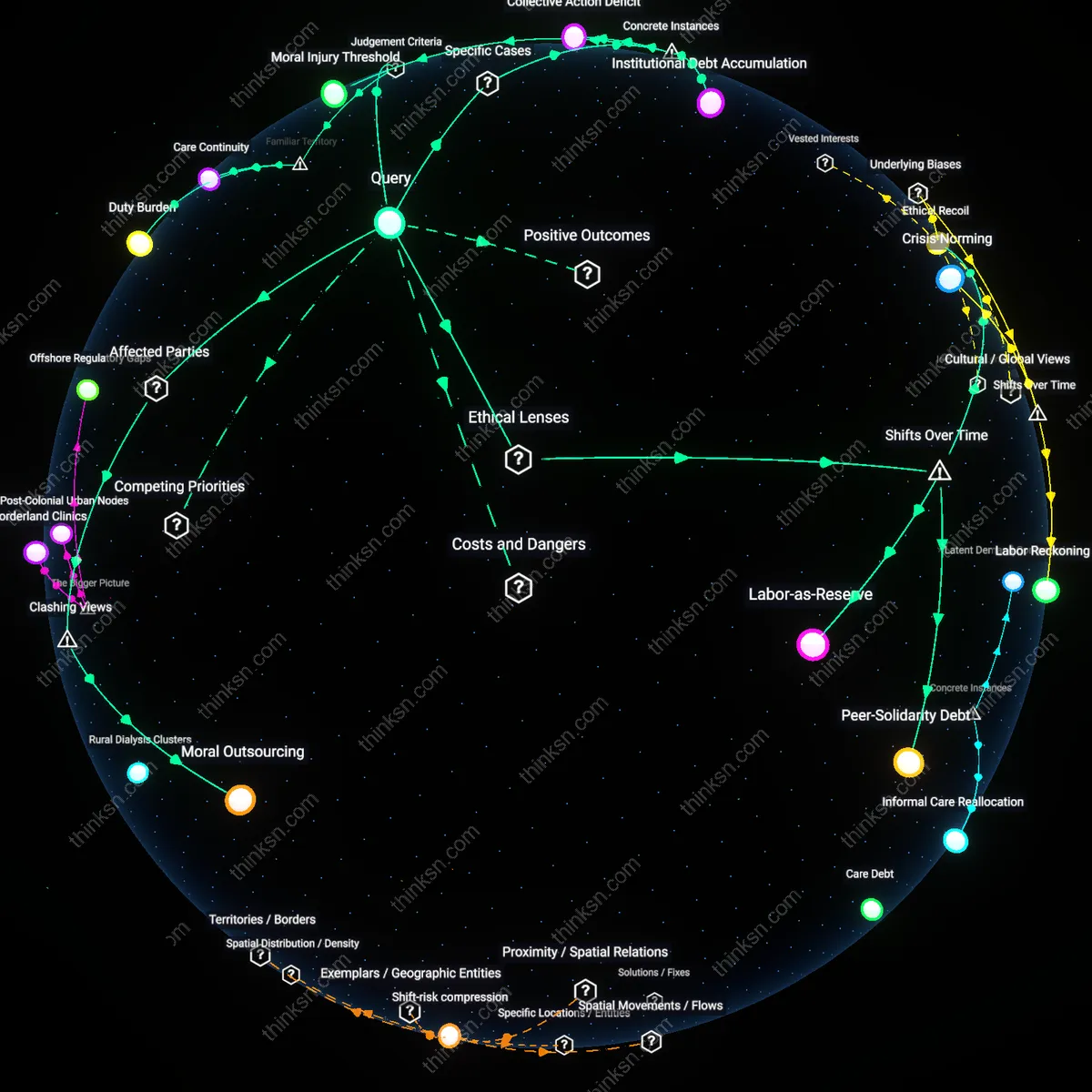
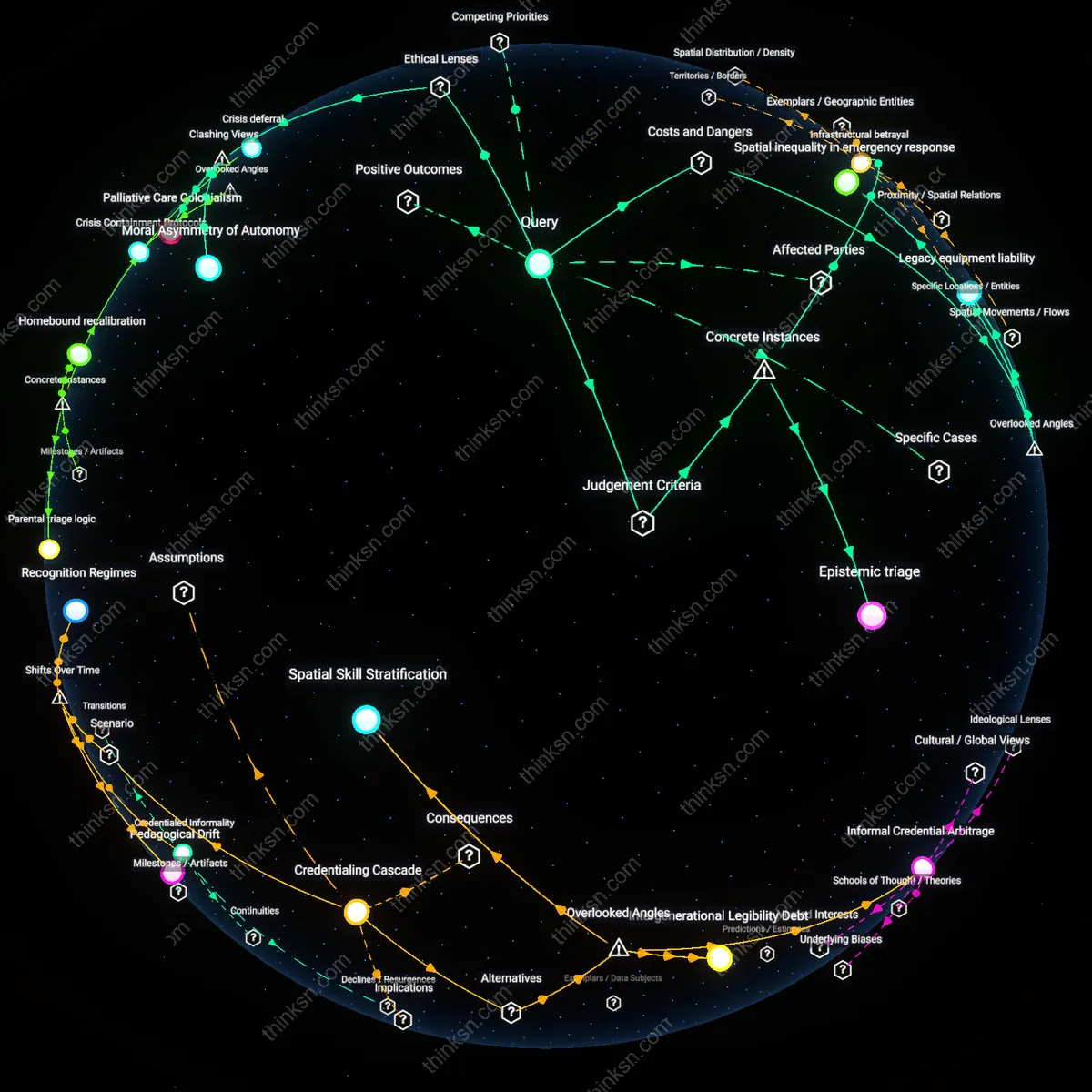
Analysis reveals 11 key thematic connections.
Key Findings
Care Infrastructure Sabotage
The growth of private abortion funds in restrictive states reveals that wealthy individuals strategically underwrite care for the poor not to bridge inequity but to legitimize state withdrawal from reproductive welfare, thereby transforming moral responsibility into a privatized crisis management system. These funds depend on patchwork philanthropy rather than systemic entitlements, enabling policymakers in states like Texas and Mississippi to dismantle public reproductive health infrastructure with reduced political cost, as private aid absorbs public accountability. This mechanism is non-obvious because it contradicts the heroic narrative of mutual aid, instead showing how well-resourced actors become complicit in normalizing the absence of universal rights by filling gaps the state refuses to close.
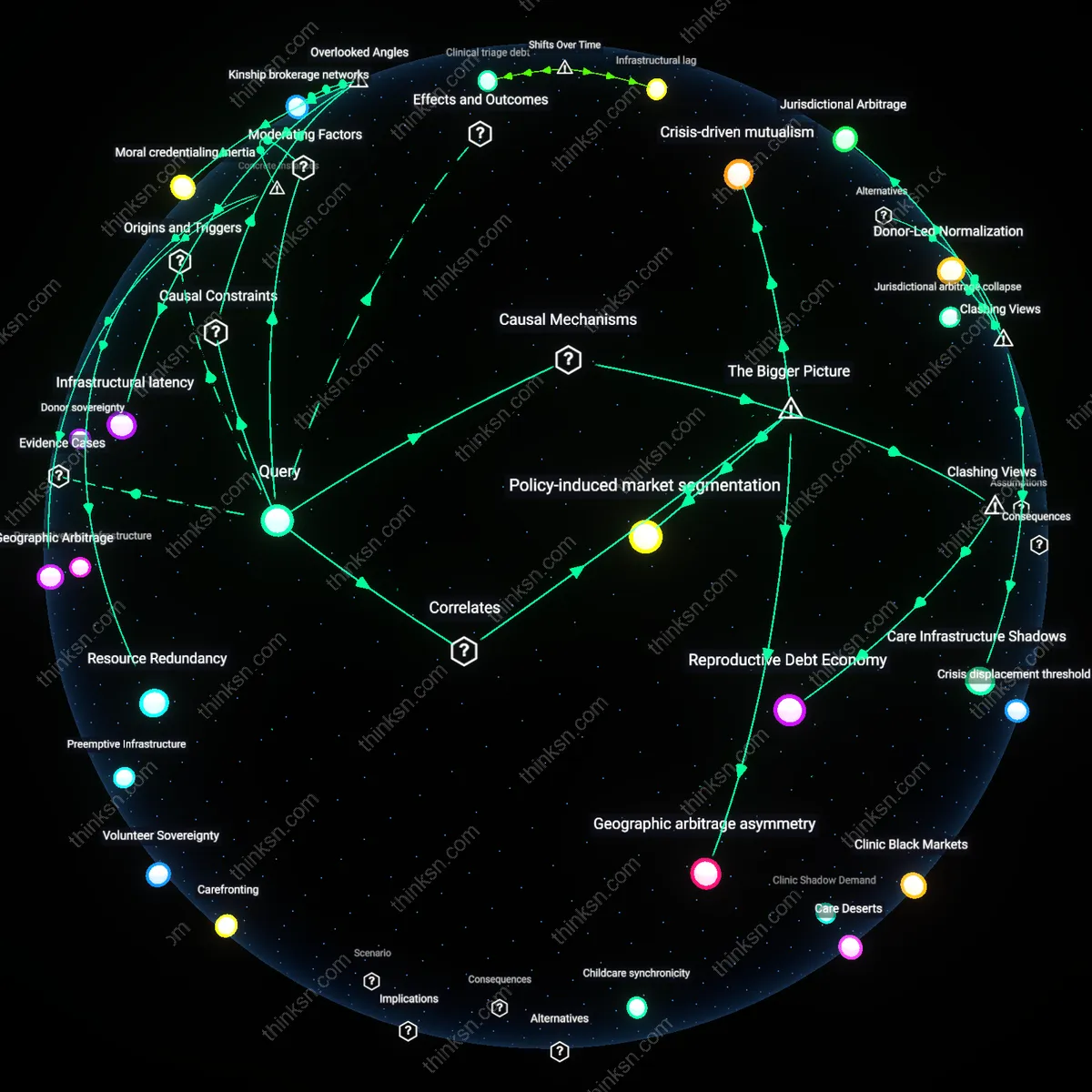
Reproductive Debt Economy
The reliance on private abortion funds illustrates how reproductive care for low-income people is being restructured as a form of deferred, socially mediated debt rather than an immediate right, where aid recipients incur obligations to advocacy networks, donation circles, or emotional labor in exchange for support. In states like Oklahoma and Georgia, fund applicants often undergo screening for 'deservingness,' detailing personal trauma or financial hardship, which transforms medical decisions into performances of vulnerability to access scarce resources. This mechanism challenges the view of funds as purely liberatory, revealing instead a shadow economy where socioeconomic disadvantage is compounded by the requirement to narrate and legitimize one’s suffering to extract care from privatized safety nets.
Resource Redundancy
The proliferation of private abortion funds like the Brigid Alliance in Texas demonstrates that high-income patients can bypass state restrictions through concierge logistics networks, revealing that financial privilege activates parallel care infrastructures. The Brigid Alliance coordinates cross-state travel, lodging, and abortion appointments for clients who can pay upfront, using a model akin to medical tourism—this system operates outside public health channels and remains invisible in policy debates about access. What is underappreciated is that private funds in restrictive states do not merely fill gaps but replicate stratified access by income, reinforcing care tiers rather than democratizing them.
Geographic Arbitrage
The Mississippi Reproductive Freedom Fund’s shift from in-state referrals to funding out-of-state abortions in Illinois and North Carolina shows that socioeconomic status determines the capacity to exploit geographic disparities in abortion legality. Patients with stable housing, flexible jobs, and transportation access can navigate long-distance care, while low-wage workers cannot—this creates a de facto migration-based reproductive system mediated by personal capital. The non-obvious insight is that private funds do not neutralize geographic restriction; they expose how mobility, not just financial cost, is a class-determined variable in reproductive access.
Temporal Privilege
The Alabama Abortion Support Network’s experience of declining effectiveness after the 2022 trigger law reveals that time delay penalizes low-income patients more severely, as wealthier individuals use private funds to secure appointments within days while others face weeks-long waits. This bottleneck emerges because private clinics in neighboring states prioritize faster-paying patients, and logistical coordination favors those with paid time off and childcare options. The overlooked mechanism is that private funding does not eliminate time-based inequity—it redistributes it, making timely care a function of socioeconomic buffer rather than medical need.
Crisis-driven mutualism
The growth of private abortion funds in restrictive states reveals that socioeconomic status shapes access to reproductive care by determining who can navigate increasingly fragmented cross-state care networks, as wealthier individuals bypass delays and logistical barriers through private resources while lower-income individuals depend on underfunded, volunteer-run aid systems. This dynamic persists because abortion funds operate as crisis-response mutual aid rather than sustainable infrastructure, relying on unpredictable donations and volunteer coordination that mirror broader trends of privatized social support in the U.S. health system. The non-obvious implication is that these funds do not close access gaps so much as reconstitute them along lines of geographic mobility, digital literacy, and social capital—revealing how emergency philanthropy becomes a structural substitute for universal care.
Policy-induced market segmentation
The expansion of private abortion funds reflects how reproductive access is being reorganized into a tiered marketplace where socioeconomic status determines whether care is sourced through time-intensive grant applications or immediate out-of-pocket payment, with funds acting as gatekeepers to out-of-state services. This segmentation is enabled by state-level abortion bans that deliberately shift the burden of access onto individual initiative and private charity, creating a system where funds must ration limited resources based on criteria like urgency, distance, and income—effectively allocating care like a proxy insurer. The underappreciated mechanism is that these funds do not merely respond to restrictions but become institutional actors within a shadow insurance market, normalizing the idea that reproductive care is a merit-based benefit rather than a right.
Geographic arbitrage asymmetry
The proliferation of abortion funds in restrictive states exposes how socioeconomic status mediates access through the unequal ability to exploit geographic disparities in reproductive policy, as wealthier individuals travel quickly to accessible states while lower-income patients await fundraising cycles that may delay care past legal or medical thresholds. This asymmetry is sustained by a decentralized, donation-dependent funding model that cannot scale predictably, making timely access contingent on the alignment of donor interest, volunteer capacity, and clinic availability across state lines. The overlooked reality is that abortion funds do not neutralize geographic restriction but reproduce it internally—prioritizing those already closer to borders, less visible in stigma-prone communities, or better able to secure matching funds—thus embedding spatial inequality into the aid process itself.
Infrastructural latency
The expansion of private abortion funds in states like Texas and Mississippi reveals that socioeconomic status gates access not primarily through direct funding but by determining who can navigate labyrinthine appointment logistics before clinic capacity fills — a mechanism hinging on flexible work hours, digital literacy, and proximity to urban hubs. These funds only help those already positioned to secure time off, arrange transportation, and respond rapidly to openings, which means the bottleneck is not financial support per se but the speed and coordination required to use it. This exposes infrastructural latency — the delay between resource availability and actionable access — as the hidden constraint shaping outcomes, shifting the focus from generosity of funding to the temporal and logistical architecture of care delivery.
Moral credentialing inertia
The growth of private abortion funds enables wealthier donors and advocacy groups to signal solidarity with reproductive justice without pressuring political systems to expand public entitlements, creating a dependency on charity that stabilizes inequitable policy regimes. Because these funds absorb crisis demand, they inadvertently function as political shock absorbers, reducing pressure on legislators in restrictive states to reform laws. This dynamic reveals moral credentialing inertia — where the performance of private benevolence substitutes for structural change — thereby preserving the very conditions that necessitate the funds, a paradox rarely acknowledged in access discourses.
Kinship brokerage networks
In rural Alabama and Louisiana, access to abortion via private funds often depends on informal networks of trusted individuals—teachers, church deacons, beauty salon workers—who identify at-risk youth and transmit information discreetly, as formal outreach risks surveillance or backlash. These brokers decide not only who learns about available funds but also who is deemed credible enough to receive assistance, embedding socioeconomic access within social reputation rather than income alone. This surfaces kinship brokerage networks as the hidden conduit of reproductive access, where social capital mediates financial aid in ways that formal policy analyses consistently overlook.