When 200 Kids Wait for After-School Programs, Who Wins?
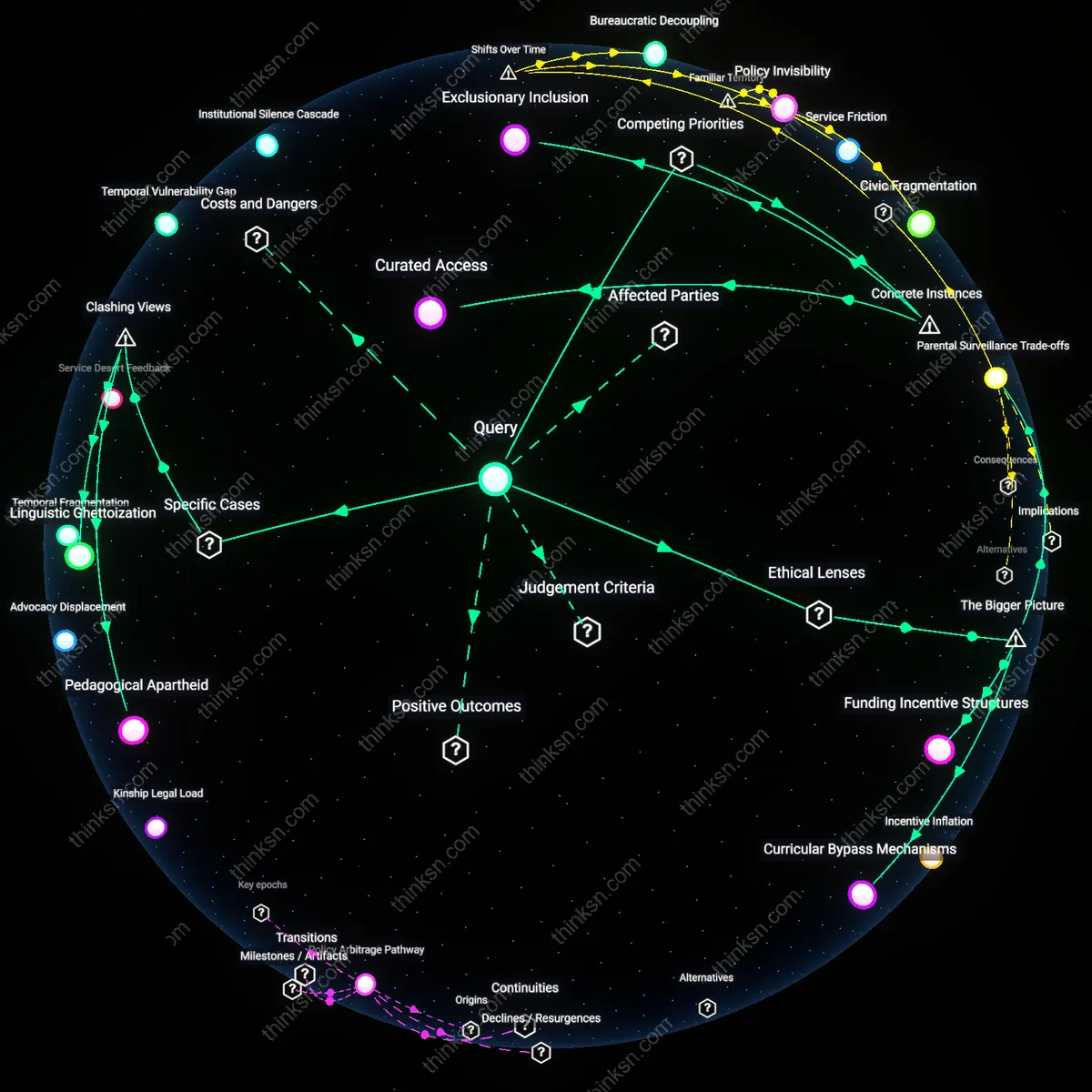
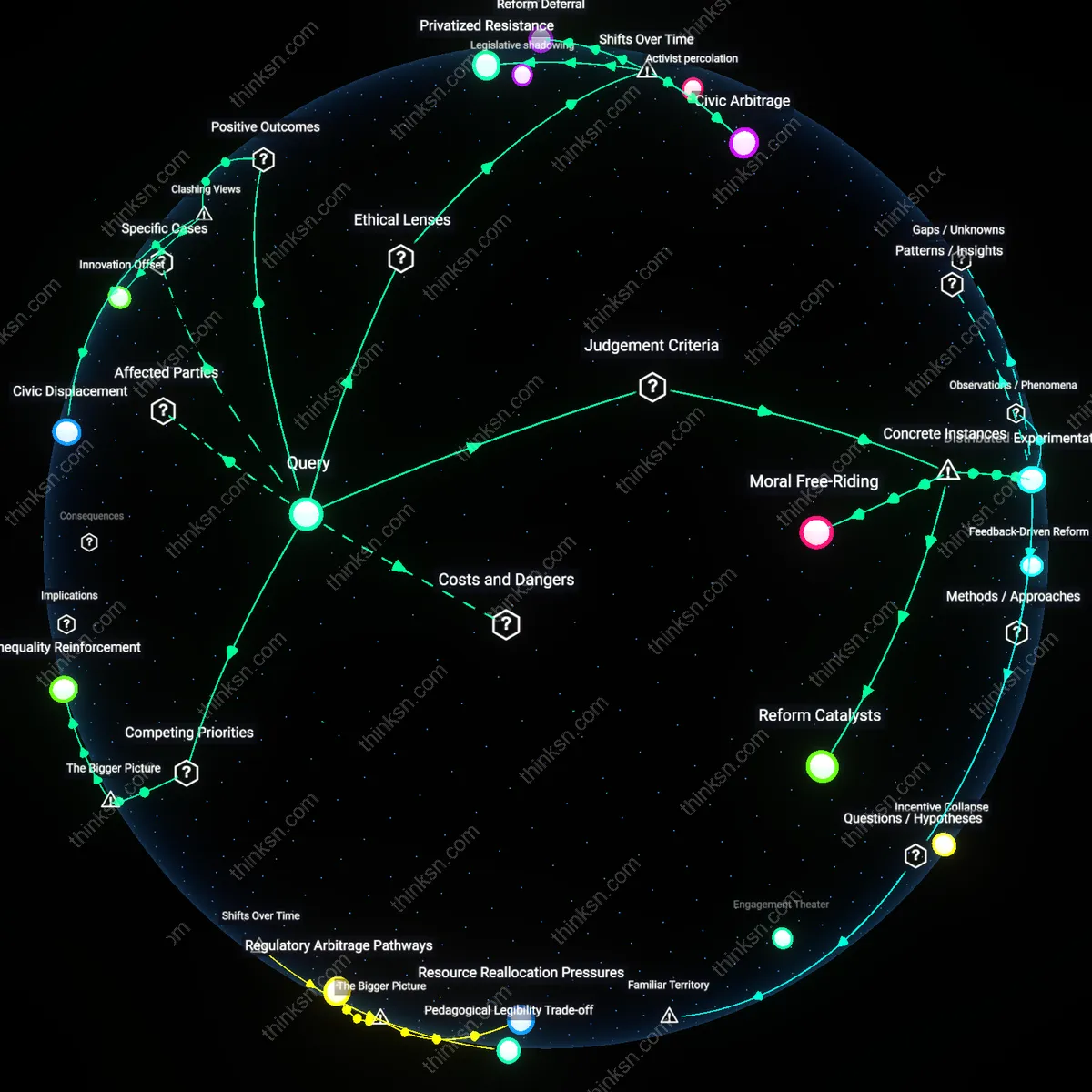
Analysis reveals 7 key thematic connections.
Key Findings
Demand Surplus Regime
A waitlist exceeding 200 children indicates that public after-school provision has transitioned from supply-driven to demand-surplus conditions, a shift crystallizing in the post-2010 era when municipal budget constraints halted program expansion despite rising dual-income households. This mechanism operates through strained public sector capacity failing to match demographic and labor-market shifts, revealing that sustained underfunding has normalized unmet need as structural rather than temporary. The non-obvious implication is that the waitlist is not a sign of program failure but of its perceived success within a cost-contained system, exposing a quiet recalibration of public expectations around guaranteed access.
Privatization Feedback Loop
The waitlist reflects a historical pivot beginning in the 1990s when municipal disinvestment in youth services incentivized private operators to fill gaps, creating a self-reinforcing cycle where limited public supply validates market solutions. This dynamic functions through policy normalization of mixed-service delivery, wherein city funding becomes a subsidy baseline rather than primary engine, and private providers gain influence over program design. The underappreciated consequence is that public scarcity now structurally enables private growth, turning waitlists into a legitimizing metric for expanding fee-based alternatives.
Equity Deferral Logic
Such a waitlist emerged as a byproduct of the 2008 austerity turn, when cities shifted from universal service goals to tiered access models, accepting queues as a rationing mechanism instead of expanding capacity. This operates through administrative acceptance of waitlists as neutral triage tools, masking how delayed access disproportionately affects low-income families lacking private alternatives. The overlooked transformation is that deferral—once seen as a temporary flaw—has become an embedded governance strategy, signaling a quiet abandonment of equitable timing in favor of constrained operational feasibility.
Fiscal displacement
A waitlist exceeding 200 children for a city's after-school program indicates that public funding is being systematically diverted to subsidize private alternatives through mechanisms like education tax credits and charter school grants, reducing direct investment in municipal programs. Municipal budget allocations are increasingly shaped by state-level policies that incentivize privatization, shifting public dollars toward entities that serve narrower demographics while leaving need-based community programs under-resourced. This reveals how the expansion of marketized options does not supplement but actively undermines universal access by altering the fiscal architecture of public education—often through bipartisan 'reform' agendas that mask regressive redistribution.
Infrastructure deferral
A waitlist exceeding 200 children signals that the city has prioritized short-term budgetary stability over long-term social infrastructure, allowing deferred investment in public systems to create openings for private providers to position themselves as agile alternatives. Mayoral administrations under pressure to balance annual budgets often cut capital spending on community services while maintaining public safety and sanitation, creating service vacuums that private or nonprofit contractors rush to fill with targeted, often donor-dependent programs. This dynamic entrenches a two-tier system where access depends on geographic micro-markets and fundraising capacity, not citizenship or need—normalizing scarcity as a permanent feature of urban governance.
Civic Capacity Drain
A waitlist exceeding 200 children indicates that public funding is absorbing civic energy that might otherwise fuel hybrid or community-led alternatives, effectively centralizing responsibility for care infrastructure in risk-averse municipal bureaucracies. In Baltimore, where the YMCA and faith-based groups have withdrawn after-school initiatives despite demonstrated local interest, the gravitational pull of city-managed programs skews volunteer recruitment, donor interest, and staffing talent toward the public roster, leaving grassroots efforts undernourished. The non-obvious insight is that the waitlist is not a symptom of market failure but of civic atrophy—an effect rarely considered when policy discourse assumes more public expansion is universally beneficial.
Compliance Arbitrage
Large waitlists for city-run after-school programs reveal a hidden mechanism where private providers avoid entering not due to lack of profit potential but to escape the compliance burden embedded in public funding mandates, even when demand appears unserved. In New York City, private tutoring centers operating in adjacent neighborhoods charge premium rates for nearly identical services yet avoid the documentation, staffing ratios, and accessibility rules tied to public subsidy contracts—enabling them to achieve higher margins with lower overhead. The implication—that scarcity is manufactured not by lack of funding but by differential regulatory cost—challenges the intuitive claim that more public money is the only solution, exposing a quiet form of market rationality that exploits regulatory asymmetry.