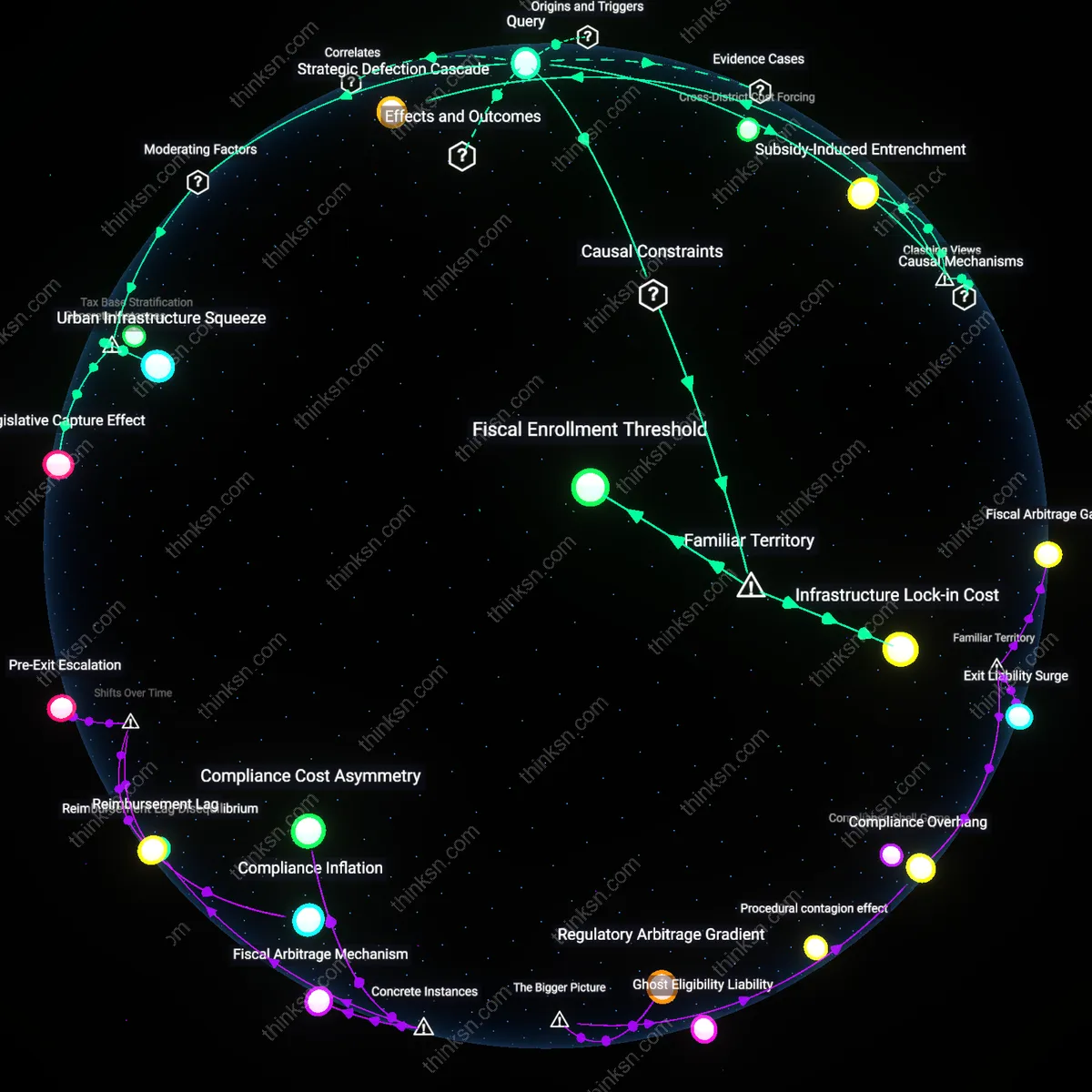
Compliance Overhang
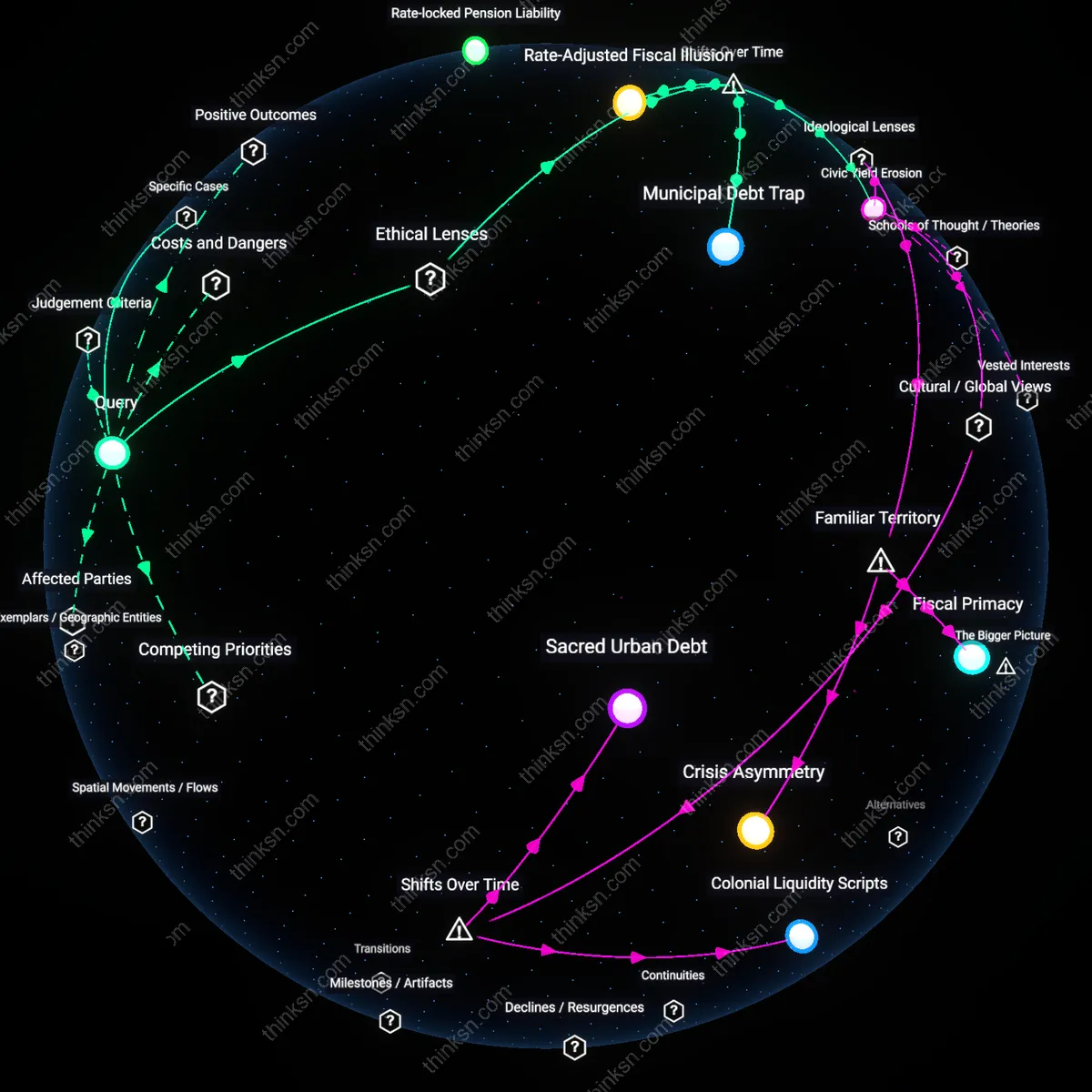
Public school districts spend significantly more on special education compliance for voucher-seeking students than they are reimbursed because federal and state voucher reimbursements typically cover only a fraction of the full per-pupil special education costs, leaving districts liable for services such as evaluations, individualized education programs (IEPs), and due process hearings even after a student departs. This dynamic is driven by the Individuals with Disabilities Education Act (IDEA), which mandates that districts maintain compliance responsibilities for certain students up to the point of departure, creating a cost burden that exceeds the fixed, often minimal, voucher reimbursement rates. What is underappreciated is that compliance is a procedural obligation without proportional fiscal neutrality—costs accumulate not just from serving students, but from the paperwork, legal exposure, and oversight tied to exit procedures.
Fiscal Arbitrage Gap
Public school districts face increasing net losses on special education compliance as voucher programs grow because reimbursements from voucher funds are calculated based on average per-student spending rather than the actual cost of serving high-need students, which can be two to three times higher. This misalignment is systemic in states like Wisconsin and Arizona, where voucher programs allow families to transfer out with a fixed stipend while districts remain responsible for the upstream costs of identification, evaluation, and regulatory adherence. The gap reflects a structural flaw in fiscal design—policymakers treat special education as a transferable line item when in practice its compliance infrastructure is sunk, non-portable, and institutionally embedded.
Exit Liability Surge
The true cost surge occurs when a student with an active IEP exits via a voucher, triggering a spike in district labor hours for compliance tasks like documentation closure, eligibility freeze, and inter-agency reporting—all required under state special education codes but unfunded by voucher transfers. Unlike routine departures, voucher exits often involve legal scrutiny, prompting districts to over-document as a risk-aversion strategy, effectively increasing administrative intensity per exiting student. What is rarely acknowledged is that the act of leaving—specifically the procedural rigor demanded by regulatory familiarity with 'due process' risks—becomes more expensive than ongoing service in marginal cases, distorting cost incentives around student retention.
Compliance shadow costs
Public school districts spend significantly more on special education compliance for voucher students than they are reimbursed because federal and state reimbursement formulas only cover direct service displacement, not the fixed institutional overhead—like IEP documentation, legal review, and monitoring—that districts must maintain regardless of student enrollment. These shadow costs accumulate in systems where accountability infrastructure cannot be scaled down incrementally, meaning districts retain full compliance burdens even as per-pupil revenue declines; this dynamic is particularly acute in urban districts like Philadelphia or Detroit, where voucher uptake is low but regulatory complexity is high. The overlooked reality is that reimbursement models assume proportionality between funding and responsibility, while compliance is a step-function cost, not a marginal one—rendering the financial impact of vouchers structurally regressive.
Audit exposure gradient
The withdrawal of students via vouchers increases the relative audit risk per remaining special education student, raising indirect compliance expenditures in districts already operating under consent decrees or OCR monitoring, such as those in New Orleans or Cleveland. State reimbursement does not account for this heightened legal exposure, which forces districts to over-invest in documentation rigor and third-party compliance consulting to offset the increased scrutiny likelihood when their special education caseload becomes more concentrated. This creates a nonlinear cost distribution where each departing voucher student increases the compliance burden on the residual population, a pattern invisible in aggregate per-pupil spending data; the non-obvious insight is that fiscal exposure is mediated not just by who leaves, but by how their departure repositions the district within a regulatory risk field.
Procedural contagion effect
Districts incur disproportionate compliance costs when voucher students depart because the legal procedures triggering district obligations—such as manifestation determinations or due process hearings—often initiate before exit and remain binding after, requiring districts to complete full federal special education protocols even for students no longer enrolled. For example, in Milwaukee and Indianapolis, districts regularly spend thousands per student to finalize IEP transitions, dispute resolutions, or court-mandated services that extend beyond voucher redemption, costs wholly excluded from voucher reimbursement schemes. The underappreciated mechanism is that procedural timelines are jurisdictionally sticky, not follow-the-child, embedding liability in the sending district regardless of funding follow-through—revealing a temporal misalignment between fiscal settlement and legal closure.
Compliance Inflation
Public school districts have spent increasingly more per student on special education compliance for voucher-eligible students since the 2004 IDEA reauthorization, as rising regulatory documentation and procedural safeguards amplified administrative overhead just as voucher programs expanded eligibility to include disability-based transfers. This shift transformed special education from a service delivery system into a legal-risk mitigation operation, particularly in urban districts like Philadelphia and Los Angeles where high voucher uptake among students with IEPs coincided with stricter federal monitoring. The non-obvious result is that districts now over-invest in compliance infrastructure for students they expect to lose — not to improve outcomes, but to reduce liability if families challenge placements pre-voucher, locking in a self-reinforcing cycle where more spending is driven by anticipated exits rather than actual enrollment.
Reimbursement Lag
The disparity between special education compliance spending and voucher reimbursement has widened significantly since 2011, when states like Indiana and Ohio began indexing voucher payments to per-pupil base funding rather than actual special education costs, decoupling reimbursement from the rising expense of maintaining legally compliant IEP processes for students still enrolled at the time of transfer. As district-level data from the Ohio Department of Education shows, the administrative cost of evaluating, documenting, and defending IEPs for students who later receive vouchers grew by 68% between 2011 and 2020, while voucher reimbursements remained flat or tied to lower formulae. This temporal misalignment reveals that reimbursement mechanisms operate on historical funding norms while compliance costs respond to real-time regulatory accumulation, producing a growing fiscal shadow cost absorbed silently by districts.
Pre-Exit Escalation
Districts have increasingly front-loaded special education spending on students in the year before voucher transfer, a trend that escalated after the 2017 expansion of the Arizona Empowerment Scholarship program to cover full private school tuition for students diagnosed with disabilities, triggering a strategic response in neighboring California and Nevada districts to intensify evaluations and IEP revisions for at-risk families. This behavioral shift reflects a tacit recognition that the moment of voucher application becomes the last point at which districts control both the classification level and documentation burden, enabling them to justify higher baseline costs to state monitors even if the student departs. The underappreciated consequence is that compliance spending is no longer linearly tied to service delivery but follows a temporal spike pattern tied to anticipated exits, revealing a new financial rhythm in special education funding driven by program eligibility thresholds rather than pedagogical timelines.
Regulatory Arbitrage Gradient
Public school districts incur higher per-pupil special education compliance costs than reimbursement values because voucher programs allow private schools to operate outside IDEA’s full regulatory scope while public systems remain bound by its procedural spending requirements. In states like Indiana and Louisiana, private schools receiving voucher students face minimal oversight for special education services, shifting the burden of compliance verification—such as Child Find obligations and documentation audits—back onto the district of origin, which must still operate as the legal entity of record. This creates a regulatory arbitrage gradient where decentralized accountability enables noncompliant cost-shifting, a dynamic sustained by federal enforcement waivers and state-level legislative choices to prioritize choice expansion over fiscal coherence.
Fiscal Arbitrage Mechanism
Milwaukee Public Schools absorbed $9,400 per voucher student in 2022 for special education compliance costs while receiving only $3,200 in state reimbursement under Wisconsin’s Parental Choice Program, creating a $6,200 fiscal gap per student that the district must cover from general funds, revealing how voucher policies externalize special education cost burdens onto public districts despite compliance obligations; this dynamic is driven by statutory caps on voucher reimbursement rates that fail to track actual IEP service expenditures, making the shortfall structurally inevitable rather than accidental; the case shows that compliance costs are not equally shared but systematically redistributed, exposing a hidden subsidy embedded in voucher architecture.
Reimbursement Lag Disequilibrium
In Florida’s McKay Scholarship Program, public school districts spent an average of $14,200 per student with disabilities on mandated services in 2023 while receiving $8,100 in voucher reimbursements, leaving a $6,100 deficit per student that grows when delayed claims processing pushes reimbursements into subsequent fiscal years, forcing districts like Miami-Dade to float unanticipated liabilities; this lag disrupts budgetary equilibrium because districts must front costs without liquidity guarantees, turning time itself into a financial burden; the underappreciated effect is that reimbursement timing, not just rate adequacy, shapes the real fiscal impact, decoupling cash flow from obligation in ways audit reports rarely capture.
Compliance Cost Asymmetry
Under Ohio’s Cleveland Scholarship Program, auditors found in 2021 that the district spent $11,800 annually to maintain IDEA compliance for students who left with vouchers—such as documenting IEPs and coordination with private schools—while receiving only $4,600 per student in state aid, highlighting that compliance is not tied to physical enrollment but to legal liability; this residual obligation persists even after voucher exit because federal law requires districts to monitor services for students in private placements they helped facilitate; the non-obvious insight is that districts bear fixed-cost oversight burdens regardless of enrollment loss, revealing that voucher reimbursement models ignore regulatory stickiness in special education governance.
Compliance Shell Game
Public school districts in Wisconsin’s Milwaukee Parental Choice Program spend up to three times more on special education compliance tracking for voucher students than they receive in state reimbursement, because the state funds only a fraction of evaluation and documentation costs while requiring full adherence to IDEA procedural mandates. This hidden tax on districts persists because voucher students remain legally entitled to special education evaluations even after departure, forcing systems like Milwaukee Public Schools to maintain parallel compliance infrastructures for students no longer under their instruction—exposing how fiscal accountability metrics obscure the administrative burden of serving students the system is incentivized to lose.
Ghost Eligibility Liability
In Florida’s Family Empowerment Scholarship program, districts must identify and evaluate potentially disabled students referred by private schools—often months after enrollment—despite receiving no direct funding for these retroactive assessments, creating a compliance obligation without resource parity. The mechanism arises from a 2022 Florida law mandating public districts investigate special education eligibility for voucher students upon private school request, shifting diagnostic costs back to districts even as students exit the system—undermining the assumption that vouchers reduce district financial strain by revealing a reverse cost channel engineered through statutory referral loops.