PhD in Humanities: Fulfillment or Risky Career Choice?
Analysis reveals 11 key thematic connections.
Key Findings
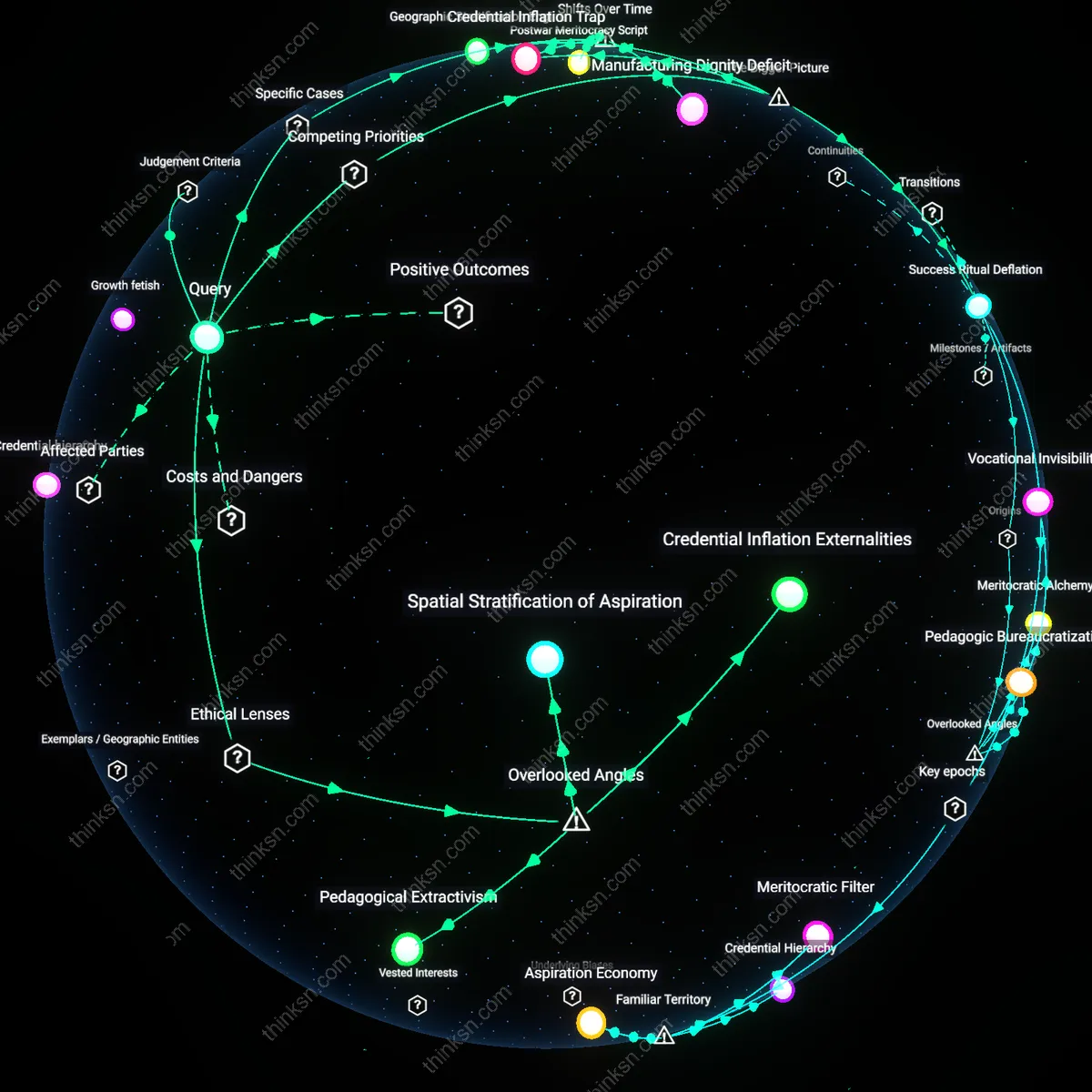
Credential inflation
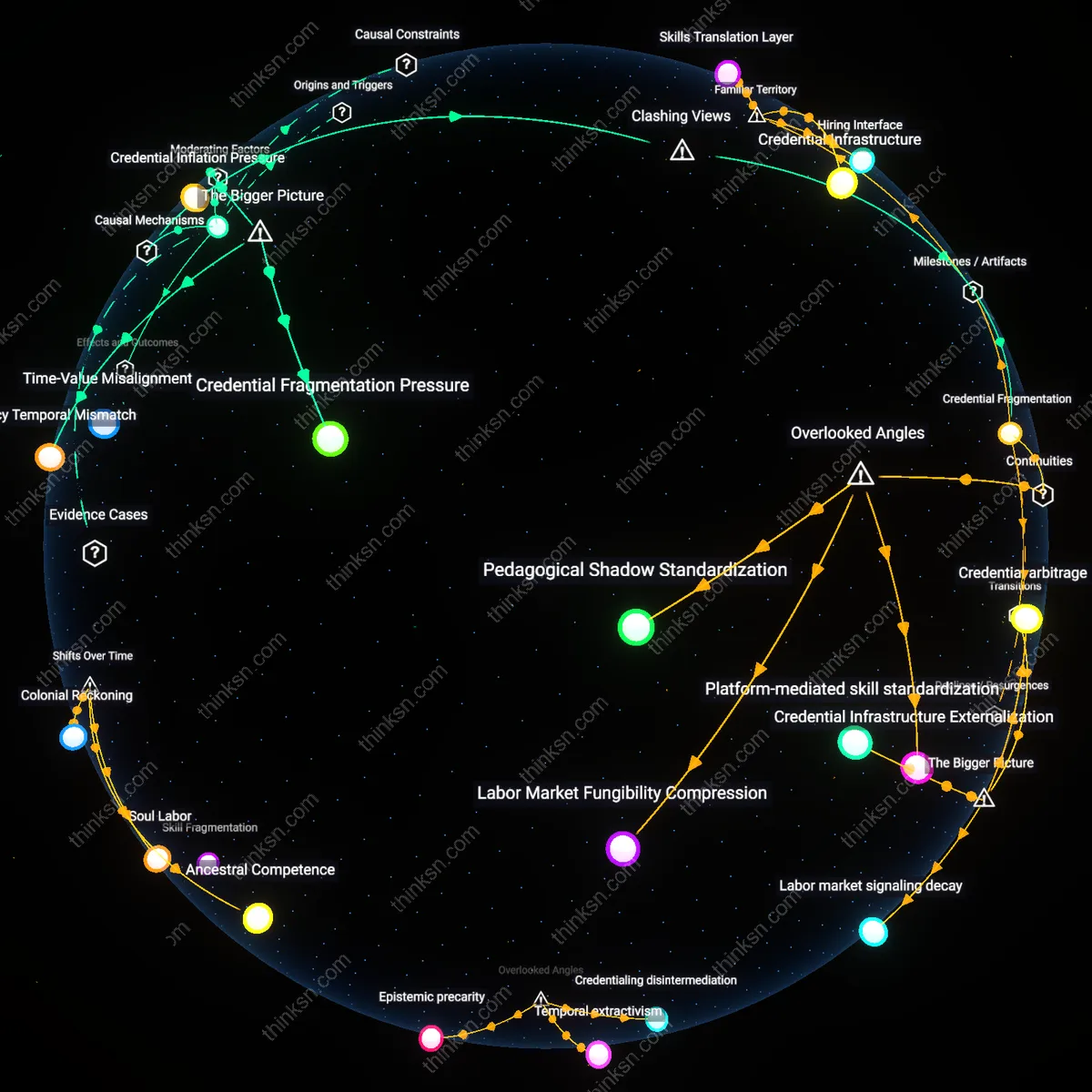
One should prioritize market adaptation because the humanities PhD now functions less as a scholarly credential and more as a high-cost signal in an overloaded academic labor market. Since the 1980s, as universities expanded graduate enrollments without corresponding tenure-track growth, the degree’s economic return decoupled from its intellectual content, transforming PhD programs into de facto filters for non-academic roles despite their design for scholarly training. This shift reveals that the personal value of scholarly fulfillment is institutionally sustained even as its practical function erodes—masking a structural dependency on aspirational labor.
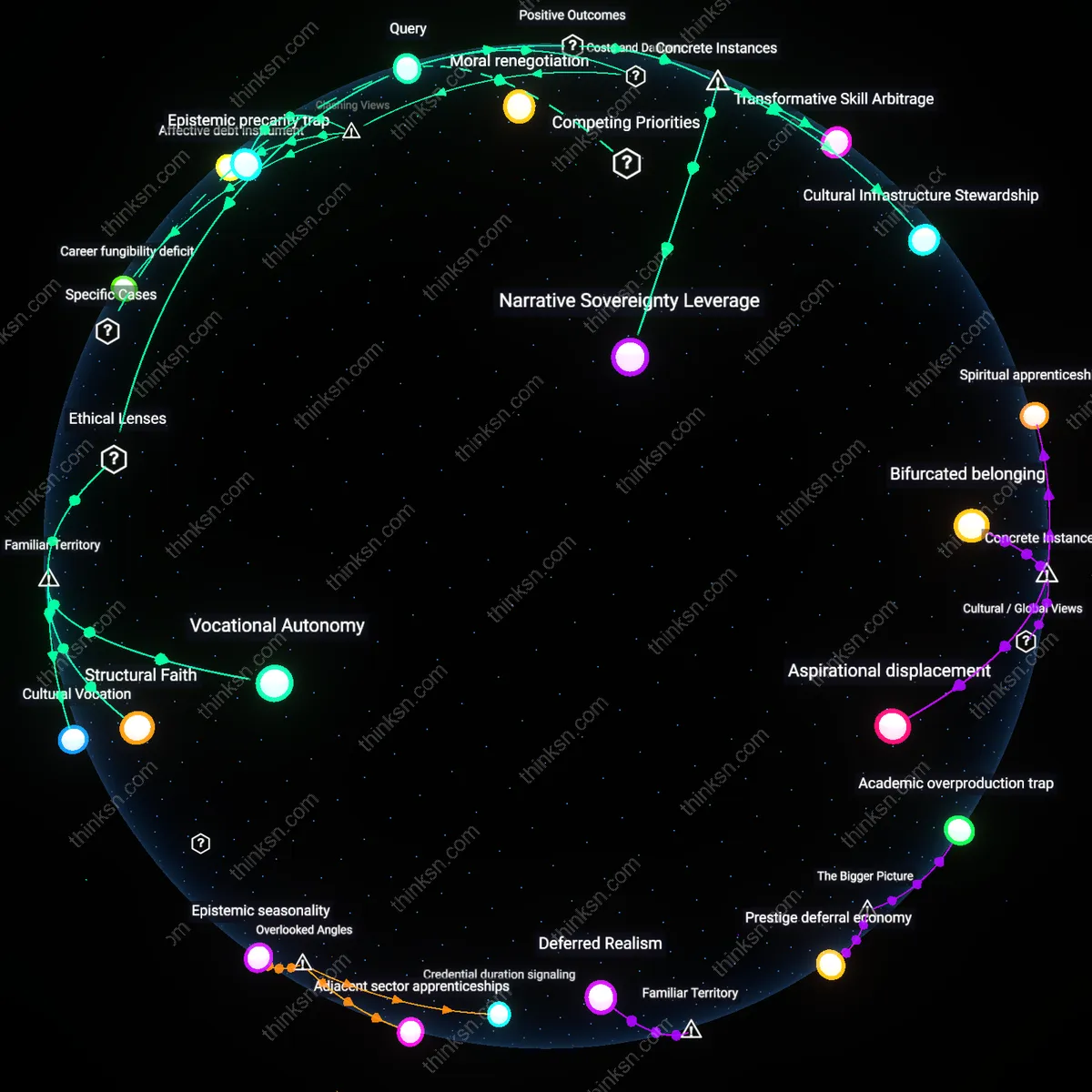
Moral renegotiation
One should frame the decision as a renegotiation of intellectual vocation in light of the post-1968 decline in public investment in the humanities. As state funding shifted from liberal education toward STEM and workforce-aligned disciplines, the moral justification for doctoral study pivoted from civic formation to individual autonomy, reframing scholarly fulfillment as a private good rather than a public trust. The non-obvious consequence is that today’s PhD candidates bear the risk of that historical withdrawal, making personal fulfillment a compensatory ethic for systemic disinvestment.
Transformative Skill Arbitrage
Humanities PhDs who transition into tech-driven policy roles at institutions like the Berkman Klein Center at Harvard demonstrate that deep interpretive training in texts can be repurposed to anticipate ethical risks in emerging technologies—such as AI fairness audits—because their scholarly rigor in contextual analysis enables them to identify blind spots that technical teams overlook. This shift is not a departure from training but a strategic arbitrage of hermeneutic skills into domains where ambiguity is high and value is placed on anticipatory judgment, revealing that the humanities’ long-term career uncertainty is partially offset by their ability to enter high-impact fields at inflection points. The mechanism—a structured bridging program that recognizes interpretive labor as transferable cognitive infrastructure—is underappreciated because it contradicts the assumption that career value flows only from technical or quantifiable credentials.
Cultural Infrastructure Stewardship
The work of historian Dr. Annette Gordon-Reed in reconstructing the lived realities of enslaved families at Monticello transformed both public understanding of Thomas Jefferson’s legacy and the operational priorities of the Thomas Jefferson Foundation, turning a plantation museum into a site of restorative historical engagement. Her humanities training enabled a deep archival recovery that became the foundation for institutional transformation, showing that long-term scholarly commitment can yield delayed but monumental public impact when aligned with evolving cultural reckonings. The non-obvious insight is that individual scholarly fulfillment in humanities PhDs can seed stewardship of national cultural infrastructure, where the delayed career outcome is not inefficiency but incubation within systems that require time to absorb complex truths.
Narrative Sovereignty Leverage
The success of Dr. David Treuer, a literary scholar and Native American author with a PhD in English, in reshaping the narrative authority over Indigenous history through his book 'The Heartbeat of Wounded Knee' illustrates how humanities expertise can reclaim narrative sovereignty from dominant historical accounts. By channeling his scholarly discipline into widely accessible narrative nonfiction, Treuer achieved both personal intellectual fulfillment and broad cultural influence, altering educational curricula and media representations. This case reveals that the uncertain academic job market for humanities PhDs can be circumvented by leveraging scholarly depth to assert control over public stories—transforming personal vocation into collective epistemic empowerment.
Career fungibility deficit
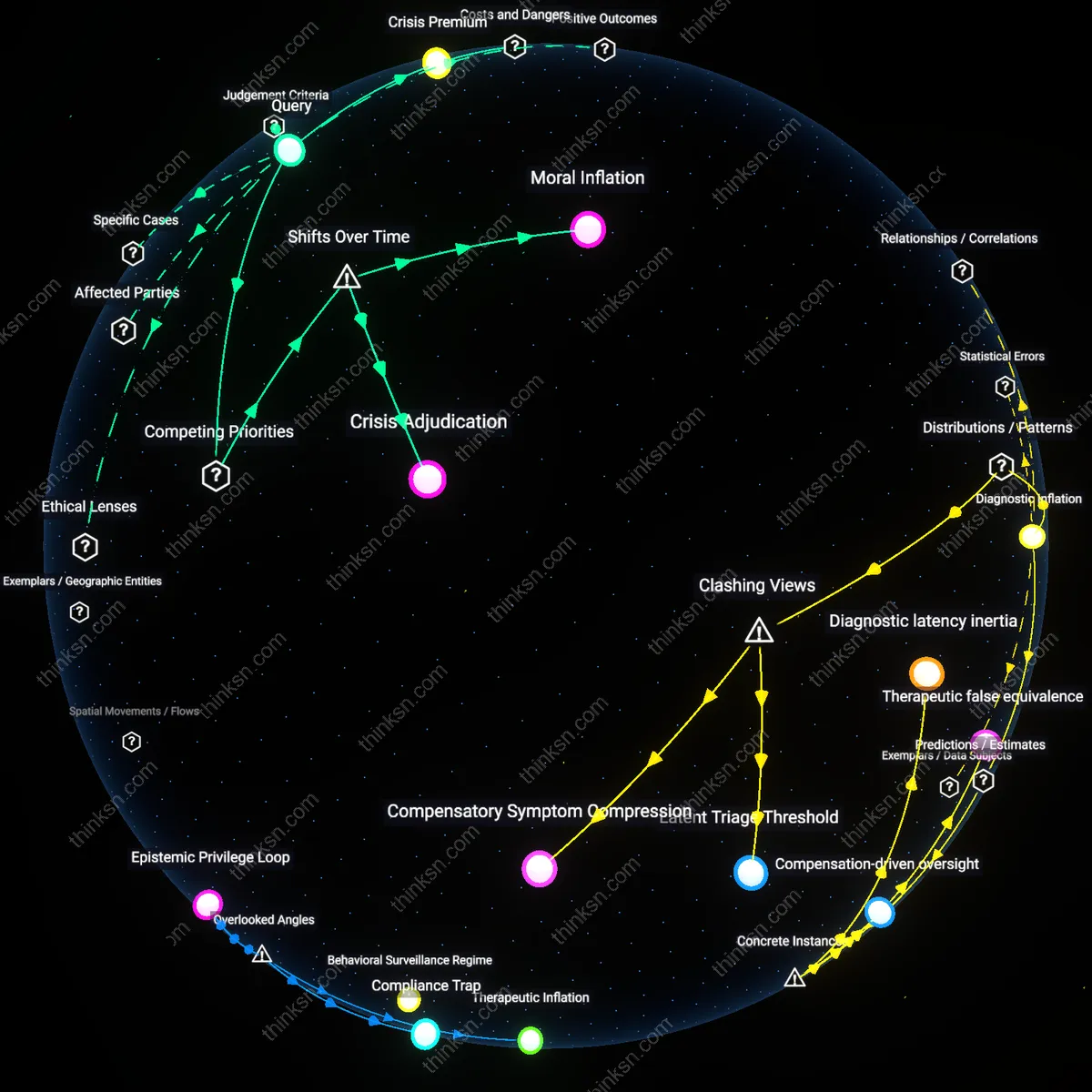
One should reject balancing long-term career outcomes with scholarly fulfillment because the institutional structure of humanities PhD programs systematically suppresses alternative career preparation, rendering doctoral training functionally incompatible with non-academic labor markets. Graduate departments evaluate success through placement in tenure-track positions, leading advisors to discourage engagement with non-academic work, which in turn produces a fungibility deficit where highly skilled scholars cannot translate their expertise into recognizable credentials or competencies outside the academy. This mechanism entrenches a false dichotomy between ‘purity’ of scholarship and ‘compromised’ vocationalism, masking how departments externalize the costs of failed academic placement onto individuals. The non-obvious outcome is that fulfillment becomes a disciplinary tool, justifying exploitation under the guise of intellectual calling.
Affective debt instrument
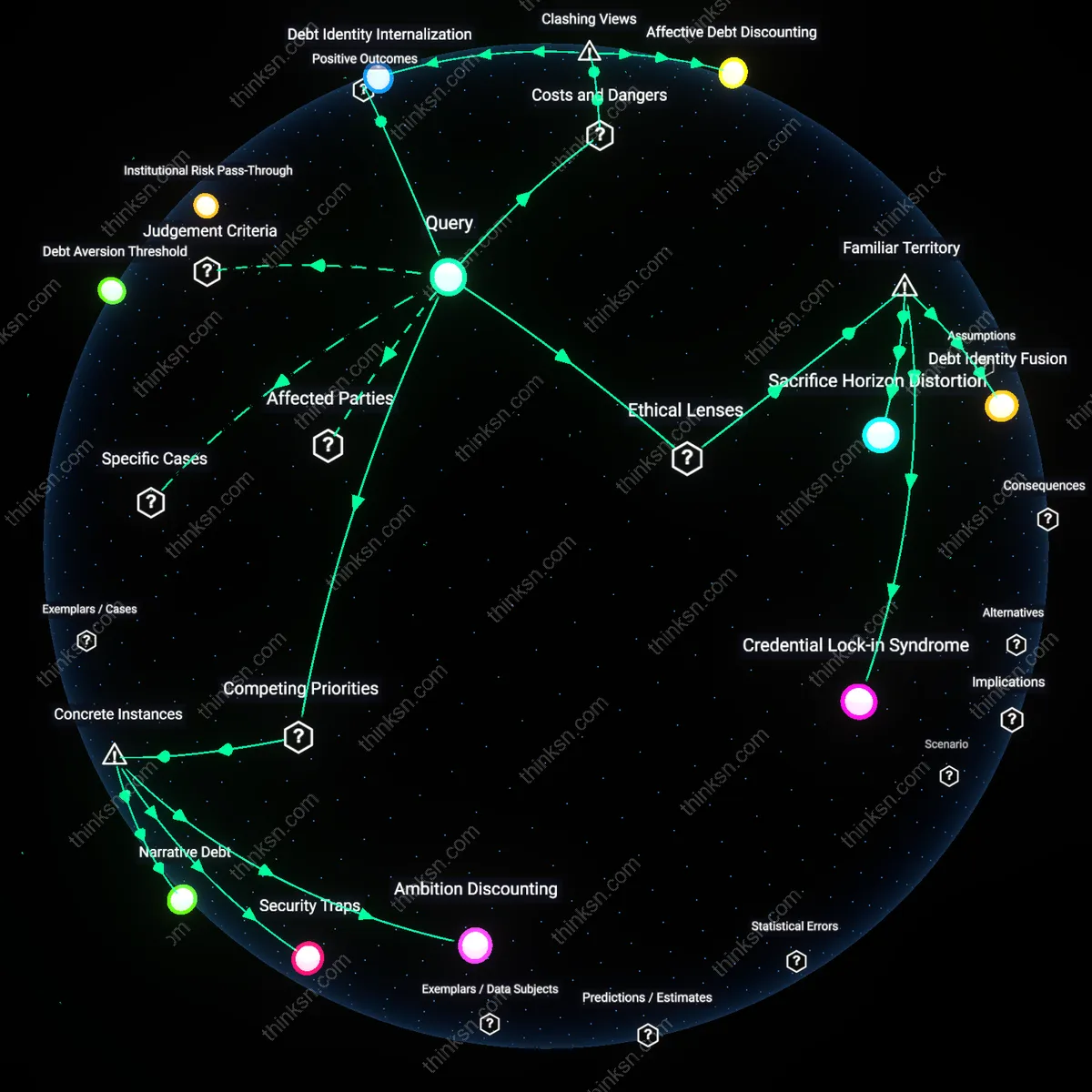
One should recognize that scholarly fulfillment operates not as a personal benefit but as an affective debt instrument that universities extract from humanities PhD candidates in lieu of financial or career security. Programs sustain low funding and precarious teaching loads by cultivating deep emotional investment in research, transforming passion into a subsidy that offsets economic insolvency; this emotional labor subsidizes public higher education at flagship institutions where graduate instructors teach core courses without meaningful oversight or advancement pathways. The system rewards affective overperformance—students who equate identity with their research—while discrediting instrumental concerns about employment as ‘lack of commitment.’ The underappreciated reality is that fulfillment is not a counterweight to career risk but a mechanism of risk redistribution, where personal meaning becomes the currency of institutional solvency.
Epistemic precarity trap
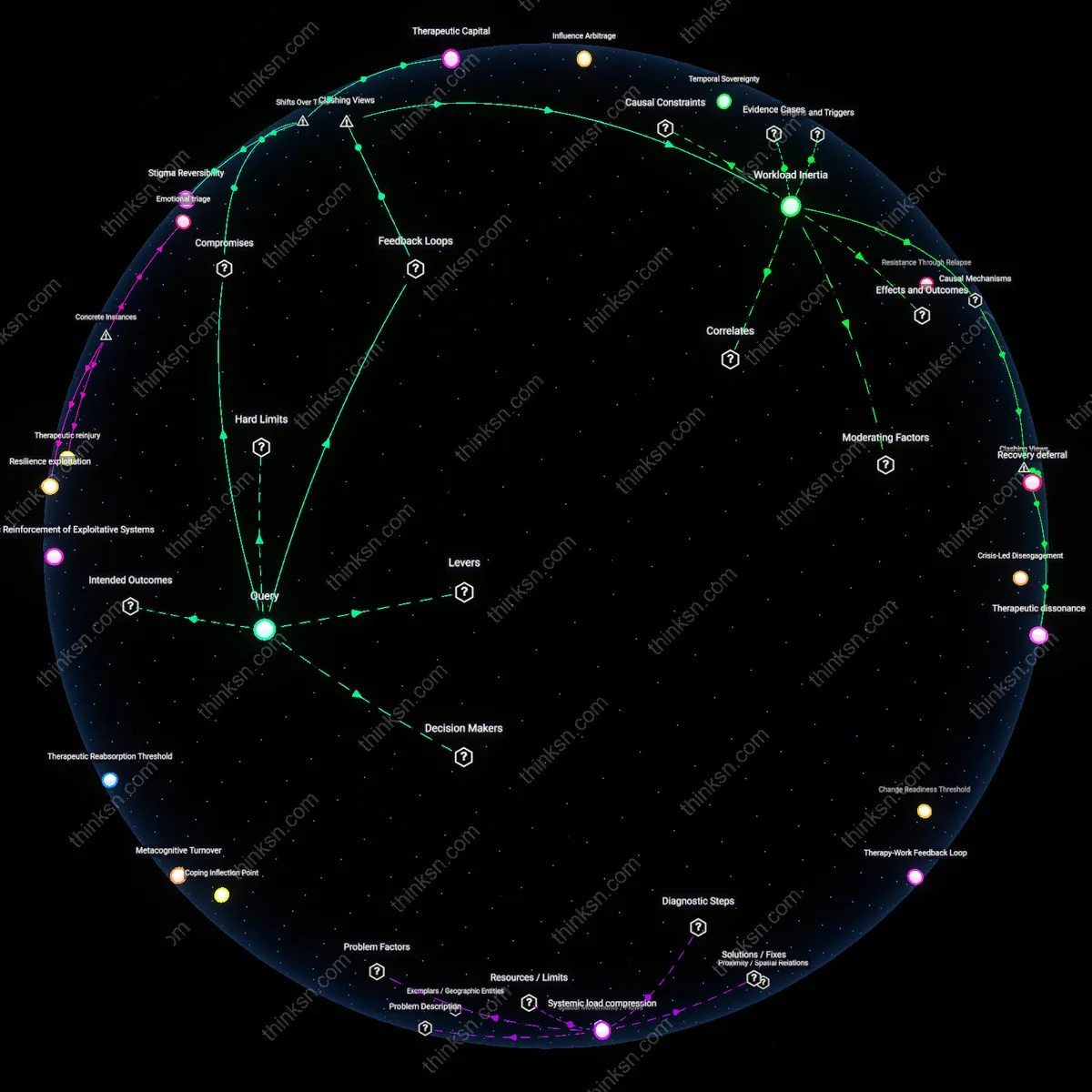
One should abandon the idea that scholarly fulfillment offers legitimate personal value because it is structurally dependent on prolonged epistemic precarity—the condition of needing to produce original knowledge without institutional support or clear criteria for completion. Humanities PhDs face indeterminate timelines enforced by advisors who delay graduation to extract labor or assert scholarly control, making fulfillment contingent on submission to arbitrary authority rather than intellectual growth. This dynamic manufactures a dependency where students interpret endurance of instability as proof of scholarly worth, conflating suffering with authenticity. The non-obvious result is that fulfillment does not balance career uncertainty but reinforces it, normalizing insecurity as a necessary condition of legitimate knowledge production.
Vocational Autonomy
One should prioritize scholarly fulfillment because the ethical imperative of academic freedom grounds individual choice in the pursuit of knowledge as an end in itself. Within liberal democratic institutions, particularly in research universities shaped by Kantian deontological traditions, the autonomy to pursue intellectually meaningful work without instrumental justification is enshrined as a foundational value; this legitimacy allows humanities PhD candidates to ethically justify their path despite labor market precarity, especially when guided by a commitment to truth rather than utility. The non-obvious insight is that vocational choice in the humanities is less about economic risk calibration and more about upholding a normative ideal of self-determination within a system that culturally enshrines the disinterested scholar as a moral figure.
Structural Faith
One should balance uncertainty by trusting that institutional continuity will preserve minimal pathways into academic life, because the tenured professoriate functions as a self-perpetuating epistemic community reliant on normative succession. In fields like literature or philosophy, the tenure system—though shrinking—still operates as a legally codified mechanism of professional inclusion, giving aspiring PhDs reason to believe that symbolic capital and scholarly excellence can overcome statistical improbability, especially at R1 universities where peer review and disciplinary consensus govern hiring. The underappreciated reality is that this faith isn’t irrational optimism but a calculated dependence on the slow inertia of academic legitimacy structures, which reward long-game investment even amid public perceptions of collapse.
Cultural Vocation
One should accept the risk because the humanities are culturally designated as a vocation—a calling imbued with redemptive social meaning—where personal sacrifice is narratively rewarded through moral prestige. Rooted in Romantic and Victorian ideals now embedded in mass culture through media, education, and literary tradition, the image of the dedicated scholar enduring hardship for truth resonates widely, legitimizing individual hardship as socially valuable even when economically nonviable. The overlooked mechanism is that public discourse treats suffering for scholarship not as a market failure but as a signifier of authenticity, making fulfillment self-validating within a symbolic economy of cultural worth.