Ultrasound Screening: Detecting Thyroid Cancer or Triggering Overtreatment?
Analysis reveals 4 key thematic connections.
Key Findings
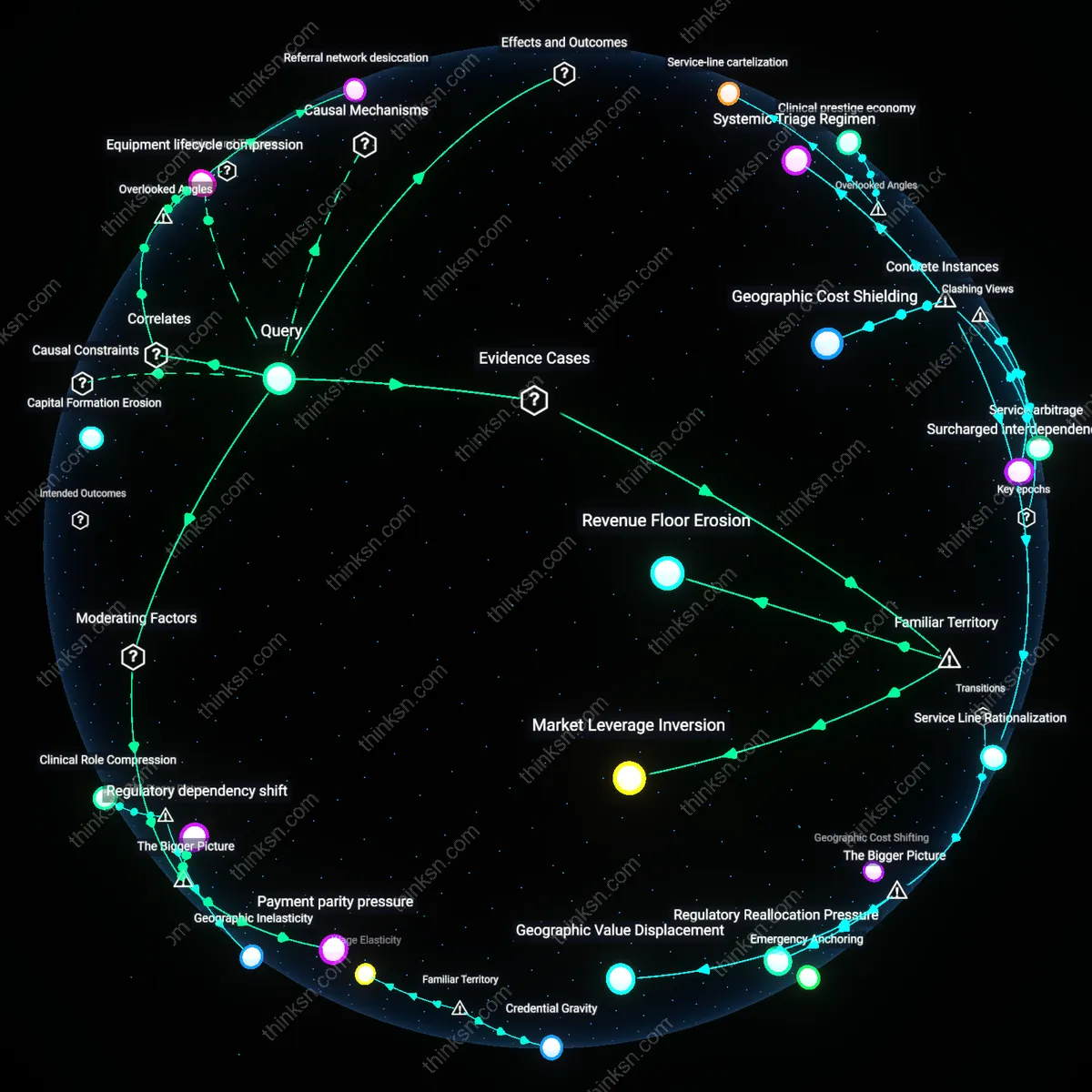
Risk-Stratified Surveillance Regime
Beginning in the 2010s, the medical community’s pivot from immediate surgery to active surveillance for low-risk papillary thyroid microcarcinomas—pioneered by evidence from Japanese cohort studies—created a new standard of care that preserved patient outcomes while reducing complications from unnecessary interventions; this transition institutionalized a temporally layered decision-making framework in which observed tumor behavior over time, rather than initial imaging alone, dictated treatment escalation. The mechanism operated through multidisciplinary tumor boards and guidelines from bodies like the American Thyroid Association, embedding longitudinal assessment into routine practice and redefining 'benefit' as avoidance of harm through calibrated delay. The underappreciated dimension is that this shift did not emerge from new technology but from reframing time itself as a diagnostic tool, transforming passivity into a clinically validated strategy and revealing that the most significant advance in balancing detection and overtreatment was epistemological, not technical.
Diagnostic Overload
Ultrasound screening expands thyroid cancer detection by identifying subclinical nodules, directly increasing diagnosis rates regardless of clinical significance. This mechanism—operating through routine imaging in primary care and public health campaigns—transforms incidental findings into medicalized conditions, primarily affecting asymptomatic adults in high-income countries with access to advanced diagnostics. What is underappreciated in public discourse is that the very accessibility of ultrasound, often celebrated as a triumph of early detection, erodes the threshold for disease definition, turning biological variation into pathology without clear survival benefit.
Treatment Inertia
Once a thyroid nodule is detected via ultrasound, clinical protocols and patient expectations lock in a trajectory toward intervention, even for low-risk papillary microcarcinomas with negligible mortality. This dynamic—driven by physician liability concerns, patient demand for certainty, and institutional revenue incentives in U.S. and South Korean healthcare systems—makes watchful waiting a socially and professionally fragile option. While the public associates early detection with control and safety, the unspoken trade is the loss of non-treatment as a legitimate medical choice, normalizing surgical intervention even when evidence supports surveillance.
Risk Misalignment
Public health campaigns promote thyroid ultrasound as a personal empowerment tool, equating detection with responsibility, but this shifts individual risk perception away from population-level evidence. The mechanism—amplified by media stories of 'cancer survivors' caught early—aligns personal anxiety with diagnostic action, despite clinical guidelines increasingly cautioning against screening in low-risk groups. What feels intuitively correct (‘finding it early is always better’) systematically overrides epidemiological reality, creating a demand for testing that outpaces the actual distribution of life-threatening disease, particularly in nations with rising healthcare consumerism like the United States and South Korea.
Deeper Analysis
Where are the hospitals and clinics most consistently applying active surveillance for low-risk thyroid cancer, and how does that pattern vary across different regions?
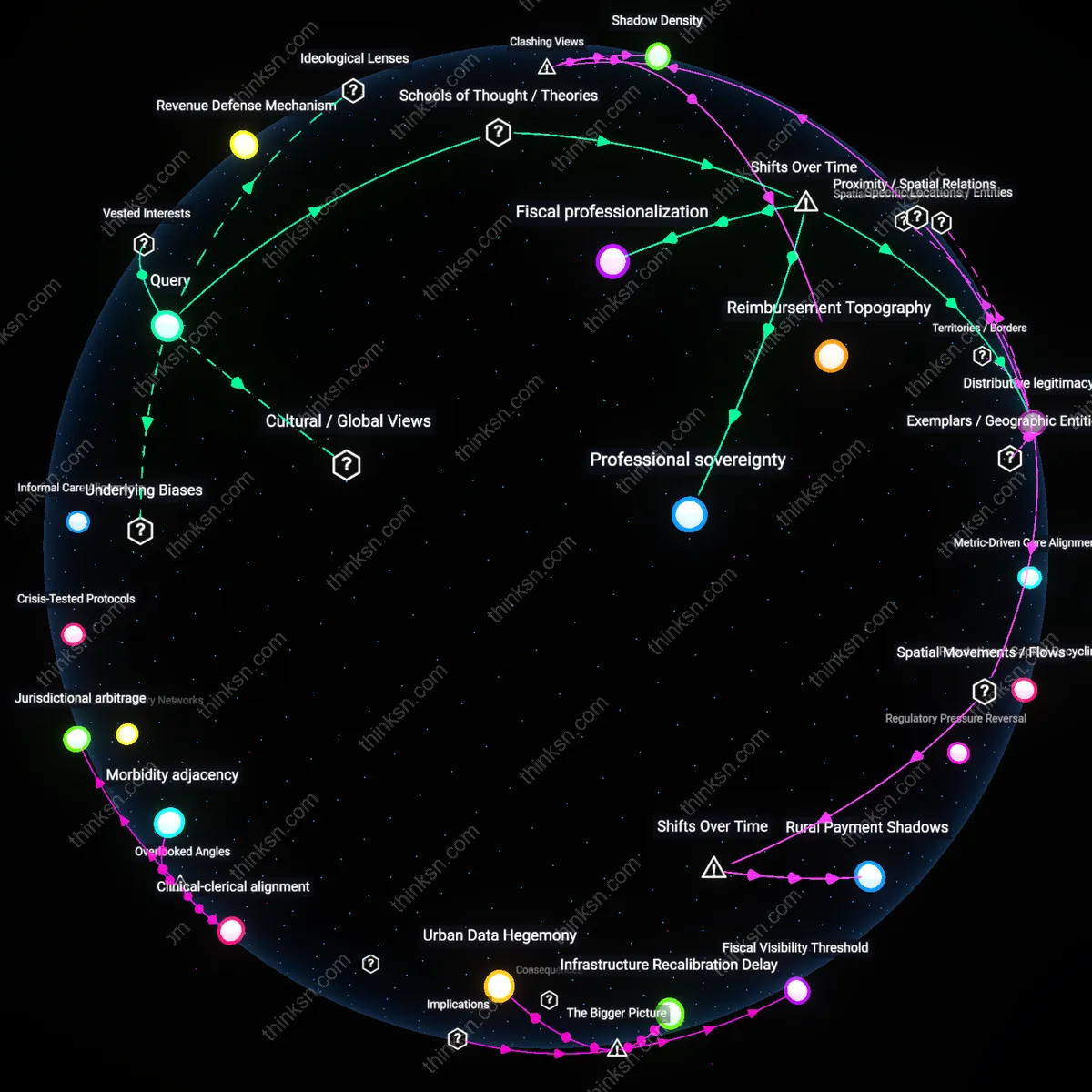
Academic Medical Hubs
The hospitals most consistently applying active surveillance for low-risk thyroid cancer are concentrated in major U.S. academic medical centers like those in Boston, Houston, and New York. These institutions integrate surveillance into standard protocols through multidisciplinary thyroid tumor boards, research-backed guidelines, and clinician-investigators with national influence, making their practices both visible and model-setting despite limited regional diffusion. What’s underappreciated is that these centers dominate the familiar territory of thyroid cancer discourse not because of patient volume but because their published outcomes shape clinical norms, turning individual practices into perceived standards.
Japanese Clinical Pioneers
The most consistent early adoption of active surveillance for low-risk thyroid cancer began in Kuma Hospital in Kobe, Japan, and has remained centered in select Japanese clinical centers. These institutions established the foundational evidence for observation over immediate surgery through decades-long prospective registries and cultural acceptance of conservative management, creating a clinical model that Western medicine now references as both outlier and benchmark. The non-obvious aspect is that despite Japan’s small global share of thyroid cancer cases, its influence on the familiar discourse of surveillance is disproportionate—Kuma Hospital’s protocol has become the archetype, collapsing regional variation into a single symbolic origin point.
North American Guideline Adopters
Major healthcare systems in Canada—particularly in Ontario—and in northern California, such as Kaiser Permanente, are among the most consistent implementers of active surveillance for low-risk thyroid cancer, guided by formal adoption of ATA (American Thyroid Association) guidelines. These systems operate through centralized electronic health records, standardized care pathways, and incentive structures that reduce procedural overuse, enabling surveillance to scale beyond individual champions. The underappreciated reality is that while the U.S. and Canada are seen as high-intervention environments, it is precisely their bureaucratic infrastructure that allows guideline-driven restraint to become routine—turning policy into consistent practice in ways that decentralized or private systems often fail to replicate.
Reimbursement Infrastructure
The highest concentration of active thyroid cancer surveillance occurs in regions with integrated private-public reimbursement models that explicitly compensate for longitudinal monitoring rather than surgical intervention, such as certain academic medical centers in Northern Europe and parts of Japan. These systems financially incentivize non-operative management through bundled payments for serial ultrasound and cytology follow-up, decoupling provider income from surgery volume—a mechanism absent in fee-for-service dominant markets like much of the U.S. South and Midwest. This dimension is overlooked because clinical guidelines focus on risk stratification, not the economic scaffolding that determines whether adherence is economically viable for institutions; without this infrastructure, even evidence-backed surveillance remains rare despite low-risk indications.
Pathology Network Cohesion
Clinics most consistently applying active surveillance are embedded in regional pathology networks with centralized cytology review boards that standardize the interpretation of papillary microcarcinoma indolence, as seen in metro areas like Osaka and Seoul where inter-institutional consensus panels reduce diagnostic variability. Most analyses assume clinical practice variation stems from physician preference or patient demand, but the hidden dependency lies in whether histopathological ambiguity—the borderline morphology of encapsulated follicular variants—is resolved collectively or left to individual pathologists. Where network cohesion exists, diagnostic stability increases, making clinicians more confident in deferring surgery, thereby amplifying surveillance density irrespective of national guidelines.
Radiologist Reporting Conventions
Active surveillance adherence clusters in institutions where radiologists systematically append standardized risk-stratified management prompts directly into thyroid nodule ultrasound reports, a practice formalized in integrated delivery systems like Kaiser Permanente in Northern California and certain Swiss cantonal hospitals. This convention bypasses the usual referral cascade to surgery by making surveillance the default textual recommendation when features match low-risk criteria, thereby shaping downstream behavior through documentation architecture rather than clinician memory or guideline access. The overlooked angle is that reporting syntax—what appears in the structured conclusion of a radiology report—acts as an invisible steering mechanism, making the diffusion of surveillance dependent on radiology workflow design more than oncology policy.
Academic Medical Clusters
Hospitals and clinics most consistently applying active surveillance for low-risk thyroid cancer are spatially concentrated near major academic medical centers, particularly in metropolitan regions with integrated research-teaching-care networks. These institutions leverage proximity to endocrinology and oncology research hubs, multidisciplinary tumor boards, and clinical trial infrastructure, which collectively lower institutional resistance to deviate from surgical norms. This clustering is non-obvious because thyroidectomy remains the dominant treatment nationwide, yet proximity to academic centers creates a normative and logistical enablement for surveillance as a legitimate alternative, driven by physician alignment with evidence revision and peer-reviewed protocols rather than patient demand or cost incentives.
Regulatory Loophole Exploitation
Active surveillance for low-risk thyroid cancer is more consistently applied in regions where healthcare systems operate under bundled payment models or value-based care mandates, particularly in integrated delivery networks like those in Northern California and parts of the Midwest. These systems are incentivized to minimize low-value interventions because overuse penalties or fixed reimbursement rates make surgery financially suboptimal for indolent tumors. The non-obvious insight is that the geographic pattern of surveillance uptake is less about clinical consensus and more about financial architecture—providers in these regions use surveillance not solely as a medical decision but as a compliance strategy within performance-based regulatory frameworks, where avoiding overtreatment generates systemic fiscal relief.
Trans-Pacific Protocol Diffusion
The highest concentration of active thyroid cancer surveillance occurs in clinics directly connected—through physician training or collaborative research—to Kuma Hospital in Kobe, Japan, which pioneered the technique. These clinics, primarily located in coastal U.S. cities with strong academic ties to Japan (e.g., Boston, San Francisco), replicate Kuma’s protocol due to personal mentorship chains, data-sharing agreements, and trust in long-term Japanese outcomes that counter Western skepticism. The underappreciated dynamic is that geographic diffusion of this practice follows social-medical networks rather than epidemiological need or healthcare density, revealing that clinical innovation in oncology can spread through transnational professional affinity rather than formal guidelines or public health directives.
Surveillance Infrastructure
North American medical centers, particularly in the U.S. after the 2015 ATA guidelines, shifted from immediate surgical intervention to structured active surveillance for low-risk thyroid cancer, formalizing outpatient monitoring routes that tethered suburban clinics to academic hubs like the University of Tokyo’s affiliate programs in Los Angeles and Denver, thereby rerouting patient flows away from operating rooms and into serial ultrasound networks. This spatial reconfiguration was driven by insurance-led cost containment and patient demand for less invasive care, which made non-treatment a new form of clinical engagement—revealing that medical progress in this domain now moves as much through deferral as through intervention. The underappreciated shift is that surveillance itself became a transmissible standard of care, flowing along physician training pipelines and professional networks rather than drug distribution chains, marking a departure from mid-20th century oncology models centered on aggressive local treatment.
Clinical Threshold Regimes
In Japan, especially at Kuma Hospital in Kobe, the sustained application of active surveillance since the 1990s established a fixed regional node from which monitoring protocols radiated outward, creating a spatial gradient where proximity to Kobe predicted likelihood of non-intervention, and where European and North American centers later adopted these practices not as innovation but as import. The key mechanism was the retention of long-term patient databases that redefined tumor persistence as stability rather than failure, allowing a temporal shift—two decades of follow-up—to override earlier spatial hierarchies of medical authority. This reveals that the credibility of surveillance flowed not from randomized trials but from longitudinal demonstration sites, making duration a form of epistemic capital that could travel across borders only after local persistence had been proven.
Diagnostic Decentralization
After the 2000s, South Korea’s widespread thyroid cancer screening created such high incidence rates that de-escalation through active surveillance became a spatial necessity, with tiered referral chains forming from rural clinics into Seoul-based academic centers where risk stratification was centralized but monitoring was pushed back downstream. This inverted earlier oncology flows—where diagnosis moved up to specialists—by routing low-risk cases back down into community systems, leveraging a dense network of teleradiology and regional training programs. The non-obvious outcome was not just a change in treatment policy but the emergence of a bidirectional diagnostic-topography in which disease declassification became as important as detection, exposing how overdiagnosis produced its own counter-movement through relocalized care circuits.
Protocol Subversion
South Korea’s widespread implementation of active surveillance for low-risk thyroid cancer at major academic hospitals like Asan Medical Center and Samsung Medical Center contradicts the assumption that overtreatment dominates in high-volume screening environments; the mechanism enabling this is a state-supported, protocol-driven de-escalation model that treats surveillance as the default, not an exception, thereby reframing aggressive intervention as the deviation—revealing that systemic resistance to medical norms can emerge from within high-screening systems themselves rather than in opposition to them.
Geographic Arbitrage
In the United States, active surveillance for low-risk thyroid cancer is most consistently applied not in rural or underserved regions where resources are scarce, but at elite institutions such as the University of California, San Francisco and Massachusetts General Hospital, where high-resource settings paradoxically foster restraint by enabling the development of specialized multidisciplinary clinics that treat surveillance as a premium, precision-guided alternative—undermining the assumption that advanced care equates to aggressive intervention and revealing a new stratification where medical restraint becomes a marker of elite practice.
Explore further:
- Which U.S. regions are most influenced by the thyroid cancer management practices coming from Boston, Houston, and New York, and where do these practices fail to take hold?
- Why do some medical centers choose to monitor low-risk thyroid cancer without surgery, while others rarely do—even when guidelines suggest it?
- If a healthcare system switched to bundled payments, how would it need to change its doctor incentives and patient conversations to make active surveillance the default for low-risk thyroid cancer?
Which U.S. regions are most influenced by the thyroid cancer management practices coming from Boston, Houston, and New York, and where do these practices fail to take hold?
Northeast Referral Cascade
Thyroid cancer patients from Vermont and Maine are routinely referred to Massachusetts General Hospital in Boston for genomic testing and risk stratification, establishing a regional standard where molecular profiling determines surgery extent; this occurs through insurance networks like Tufts Health Plan that incentivize centralized care at National Comprehensive Cancer Network (NCCN)-designated centers, revealing how payer policies—rather than clinical evidence—drive the geographic diffusion of Boston’s conservative surgical approach.
Gulf Coast Implementation Gap
Despite MD Anderson Cancer Center in Houston promoting de-escalated thyroidectomy protocols for small papillary cancers, hospitals in rural Louisiana such as CHI St. Frances Cabrini Hospital continue total thyroidectomies in over 80% of low-risk cases due to malpractice liability concerns exacerbated by state tort laws; this disconnect illustrates how legal risk environments, not access to expertise, prevent adoption of Houston’s risk-adapted surgical standards.
Harlem Protocol Displacement
New York’s Memorial Sloan Kettering guidelines for active surveillance of microcarcinomas are systematically bypassed in central Bronx clinics like Bronx-Lebanon Hospital, where language barriers and lack of bilingual care coordinators result in defaulted surgical referrals; this breakdown exposes how New York’s management models assume a level of health literacy and continuity of care that collapses in safety-net systems serving predominantly Spanish- and Yiddish-speaking populations.
Practice Watersheds
The Midwest and Northern Plains are most shaped by Boston’s thyroid cancer protocols through the reach of academic outreach from Massachusetts General Hospital into regional health systems, where standardized guidelines embed via trainee physicians who return to practice in states like Wisconsin and Minnesota; this influence holds not because of population density or referral volume but due to historically aligned accreditation pathways in medical education that institutionalize specific clinical decision trees around nodule surveillance—revealing that geographic proximity to innovation hubs matters less than affiliation with training networks, challenging the intuitive assumption that medical influence radiates centrifugally from major cities.
Therapeutic Fracture Zones
Appalachian counties across eastern Kentucky and West Virginia resist integration of New York–developed risk-stratification models for papillary thyroid cancer because community-based surgeons, operating under resource-constrained systems and wary of centralized oncology algorithms, favor total thyroidectomy over active surveillance despite low-risk histology—this divergence stems from a deep-seated clinical culture that equates surgical completeness with patient safety, exposing how local medical epistemologies can override nationally circulated guidelines, undermining the dominant narrative that information flows uniformly through professional societies like the American Thyroid Association.
Referral Archipelagos
Coastal Gulf communities in Louisiana and Mississippi adopt Houston’s selective use of molecular testing for indeterminate nodules only when care is channeled through federally qualified health centers linked to MD Anderson’s telepathology partnerships, while nearby rural parishes relying on private pathology labs continue reflexive diagnostic lobectomy—this patchy diffusion occurs because reimbursement structures privilege procedural billing over consultative coordination, demonstrating that jurisdictional fragmentation in care delivery creates disjointed policy terrains where practice change depends not on evidence strength but on billing adjacency, contradicting the assumption that metropolitan medical centers inherently project influence across their surrounding regions.
Residency Alumni Networks
Thyroid cancer management protocols from Boston's academic hospitals disproportionately influence clinical practices in upper Midwest regional medical centers because graduates of Massachusetts General and Brigham and Women's residency programs staff leadership roles in health systems across Wisconsin, Minnesota, and eastern South Dakota. These clinicians import Boston-developed care pathways—such as selective use of active surveillance for microcarcinomas and structured molecular testing algorithms—through departmental policy redesign, embedding them into local guidelines despite differing patient demographics and lower population density. The non-obvious mechanism here is not referral patterns or journal dissemination, but social capital transmitted through medical trainee placement, a hidden conduit of practice diffusion that bypasses formal continuing education channels and resists adaptation to regional epidemiological needs.
Medicaid Reimbursement Scaffolding
Thyroid nodule management innovations emerging from Houston’s MD Anderson and Baylor College of Medicine clinics fail to take root in rural Arkansas and Louisiana safety-net clinics not due to physician resistance but because Louisiana’s Medicaid fee schedule does not reimburse molecular testing or multidisciplinary tumor boards required by Houston’s protocols, making guideline adherence financially unsustainable. This structural misalignment creates a covert economic filter where even desired practice adoption collapses under billing incompatibility, revealing that geographic influence is less about clinical authority and more about reimbursement architecture—which determines which standards are operatively feasible. This dependency on payment infrastructure as a gatekeeper to guideline implementation is absent from most discussions of medical diffusion, which assume clinician agency prevails over fiscal design.
Pathology Reporting Conventions
New York–originating thyroid cancer classifications, such as the emphasis on noninvasive follicular thyroid neoplasm with papillary-like nuclei (NIFTP) reclassification, gain rapid traction in academic centers from Baltimore to Cleveland but falter in community hospitals across eastern Tennessee and central Alabama where pathologists continue to use older, more aggressive diagnostic labels due to entrenched reporting templates in regional laboratory information systems. The bottleneck is not knowledge or training gaps but institutional path dependency in diagnostic software that requires administrative approval and IT coordination to update, slowing semantic alignment with new nosologies. This reveals that oncological practice spread is constrained not only by physician learning curves but by the latency in information system reconfiguration—a technical inertia that decouples clinical advances from operational realities in decentralized healthcare ecosystems.
Explore further:
- If insurance policies are steering patients toward major cancer centers for genomic testing, how often does that lead to more surgery than needed in people who might never have developed harmful thyroid cancer?
- Why do some communities near Houston adopt molecular testing for thyroid nodules while others nearby don’t, even when facing the same medical evidence?
- What would happen if community hospitals could update their diagnostic software to match current thyroid cancer classifications without waiting for administrative approval?
If a healthcare system switched to bundled payments, how would it need to change its doctor incentives and patient conversations to make active surveillance the default for low-risk thyroid cancer?
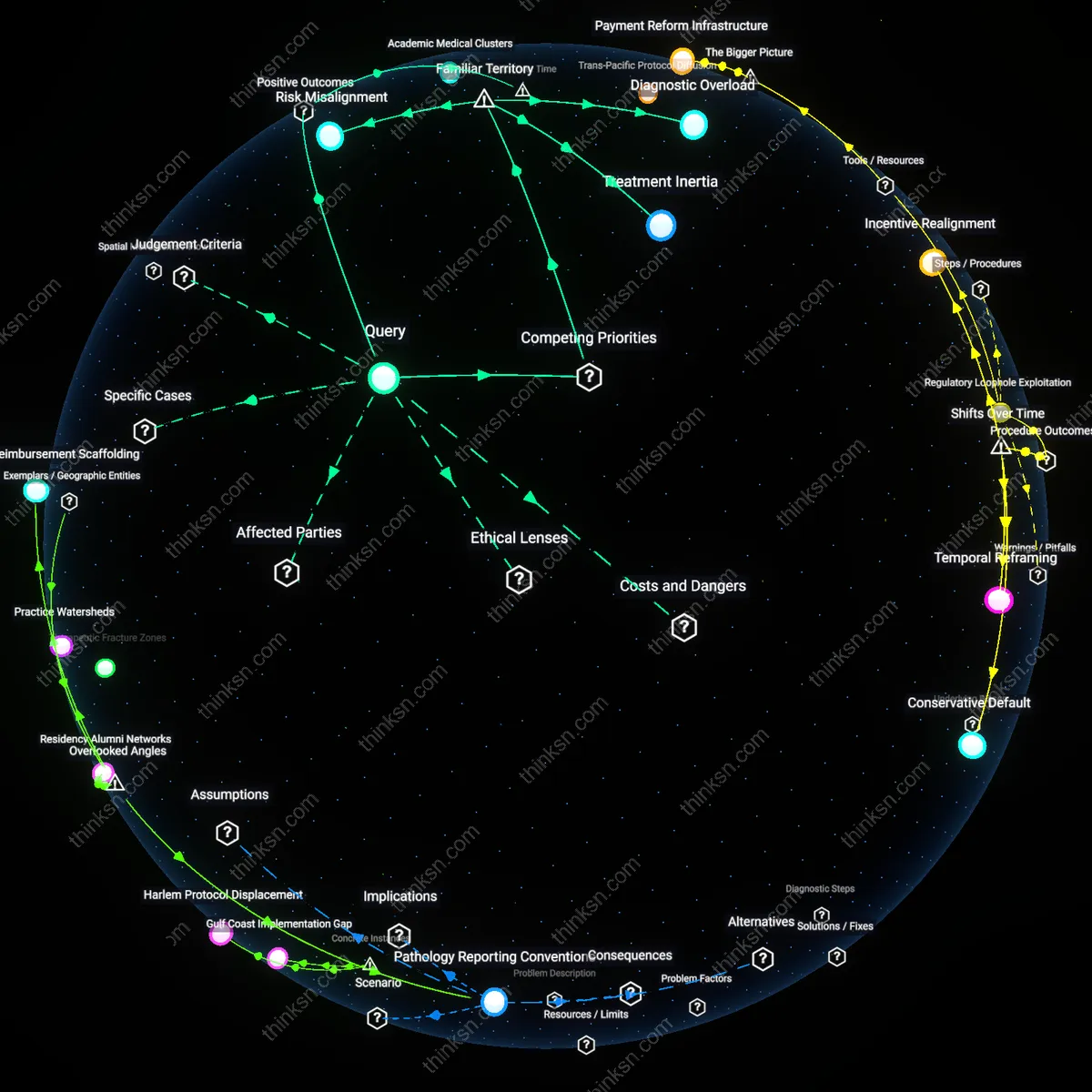
Payment Reform Infrastructure
Adopting bundled payments for thyroid cancer care necessitates building a payment reform infrastructure that recalibrates physician compensation to de-incentivize surgical volume. This requires integrating claims processing systems with clinical registries to monitor adherence to active surveillance pathways, ensuring payments are tied to risk-stratified, time-based care episodes rather than discrete procedures. The non-obvious systemic lever here is that without reconfiguring the financial plumbing—such as episode definition tools, risk-adjustment algorithms, and shared savings triggers—doctors remain financially exposed when forgoing surgery, regardless of clinical guidelines. What makes this connection hold is the interplay between actuarial design in insurance systems and behavioral incentives in medical practice, where payment architecture becomes the active mediator of clinical change.
Incentive Realignment
Shift reimbursement from per-service to episode-based payments to align physician income with conservative management, so endocrinologists and surgeons retain compensation parity when forgoing immediate surgery for active surveillance in low-risk thyroid cancer. This realigns financial incentives within vertically integrated systems like Intermountain Healthcare post-2015, where bundled episode payments penalize utilization intensity and reward adherence to evidence-based pathways; the non-obvious consequence is not cost reduction but the institutional erosion of procedural privilege, a hierarchical marker that once privileged surgeons’ discretion over medical management.
Temporal Reframing
Reposition cancer diagnosis as an initiating event in a long-term monitoring trajectory rather than a crisis requiring immediate intervention, compelling primary care providers and nurse navigators to normalize deferred action during the first patient consultation. Starting in the mid-2010s, institutions like the University of California, San Francisco began embedding time-lapse decision aids into initial post-biopsy counseling, reframing the 'window of action' from days to years—an ontological shift that undermines the cultural immediacy of cancer treatment; this reveals how temporal scaffolding, not just clinical evidence, governs therapeutic urgency.
Conservative Default
Institutionalize active surveillance as the starting protocol in electronic order sets and tumor board guidelines, forcing specialists to justify deviation through peer review, as occurred in the Veterans Health Administration’s thyroid cancer pathways revision of 2018. By making non-intervention the system-automated choice, this proceduralizes inertia, transforming passive acceptance into structured endorsement; the underappreciated effect is the inversion of clinical burden—now, overtreatment requires laborious exception reporting, exposing how routinization, not persuasion, sustains practice change.