Is Underinsurance Risk Worth Cost Savings in High-Net-Worth Umbrella Policies?
Analysis reveals 10 key thematic connections.
Key Findings
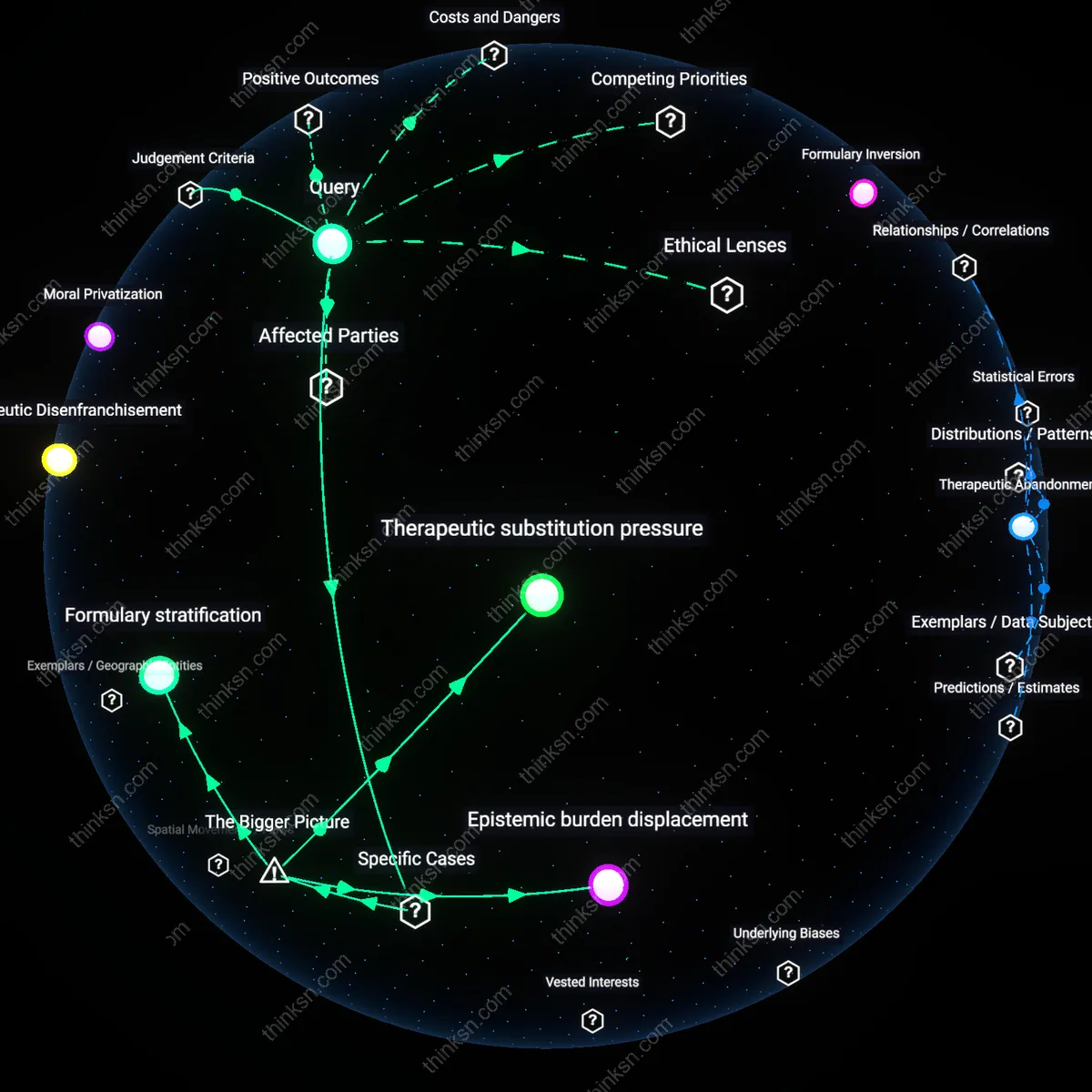
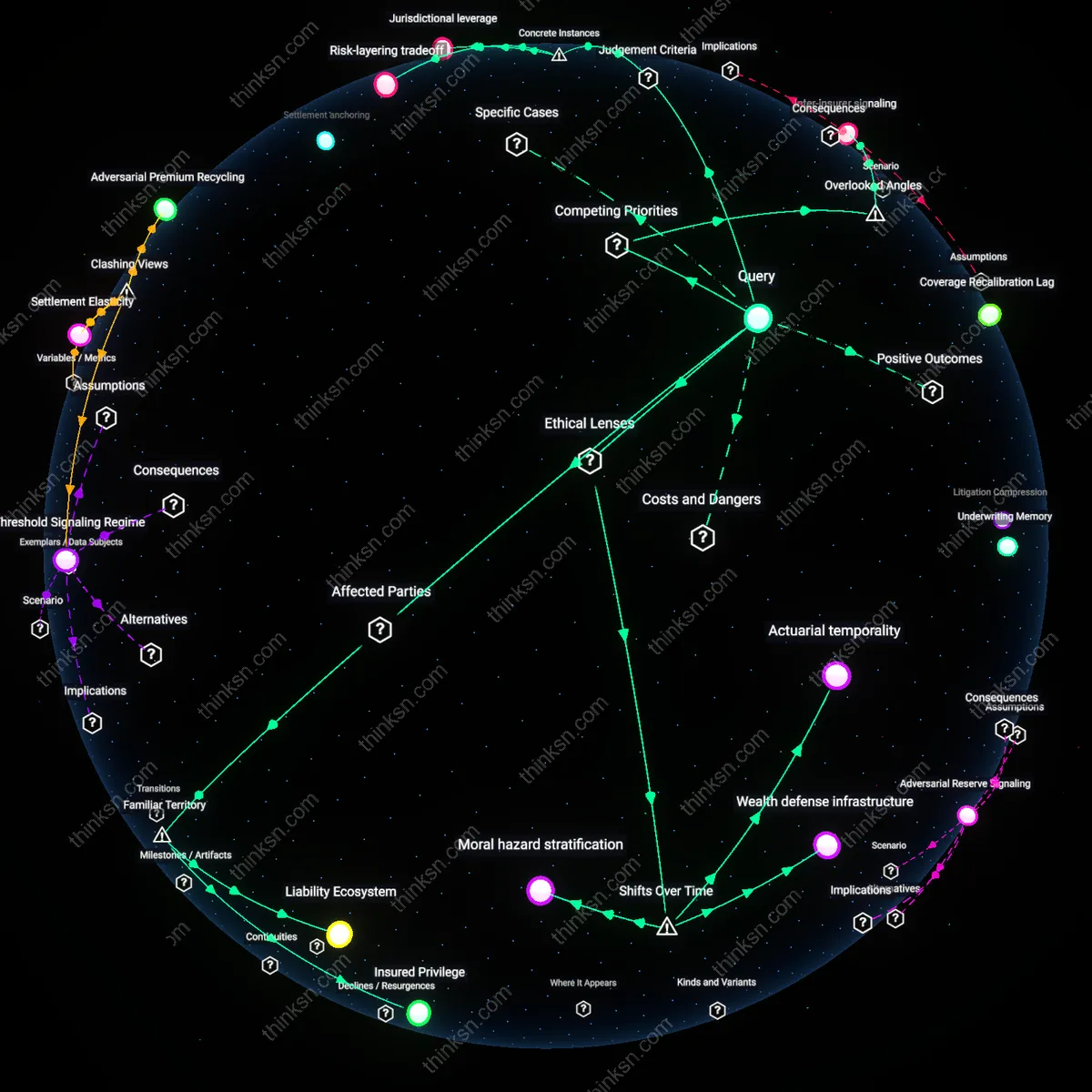
Insured Privilege
High-net-worth individuals should set umbrella policy limits at levels that neutralize the risk of personal liability claims eroding their lifestyle stability, because the primary beneficiaries of underinsurance cost savings—themselves—are also the ones most exposed to reputational and financial asymmetries when coverage falls short, operating through private wealth management networks that frame insurance as a binary choice between overpaying or relying on self-insurance, making this balance a performative act of financial identity rather than mere risk calculus—what is underappreciated is how often the 'cost-conscious' decision replicates class-based assumptions about resilience that quietly exclude dependents, employees, and service communities from the circle of protection.
Liability Ecosystem
High-net-worth individuals should calibrate umbrella coverage to exceed the maximum foreseeable liability arising from their asset footprint, because third parties such as household staff, tenants, and event vendors are statistically more likely to initiate claims that scale with lifestyle complexity, operating through local civil courts where jury awards increasingly reflect community standards of accountability, making underinsurance a hidden transfer of risk onto working-class claimants—who rarely recover fully and absorb the consequence of insufficient limits as de facto cost-shifting, a dynamic seldom acknowledged in mainstream insurance advice focused on asset protection alone.
Wealth Signaling
High-net-worth individuals should adopt umbrella limits that visibly exceed industry benchmarks to preempt litigation targeting symbolic wealth cues, because litigants’ attorneys and opposing experts are influenced by coverage amounts as indicators of vulnerability or defensibility, operating through the cognitive heuristic in personal injury law that equates policy ceilings with net worth accessibility, making underinsurance a liability multiplier in adversarial negotiation—what is typically missed is that the cost savings from lower limits may be priced not in premiums but in higher settlement demands, turning the policy itself into a tactical communication in the theater of perceived affluence.
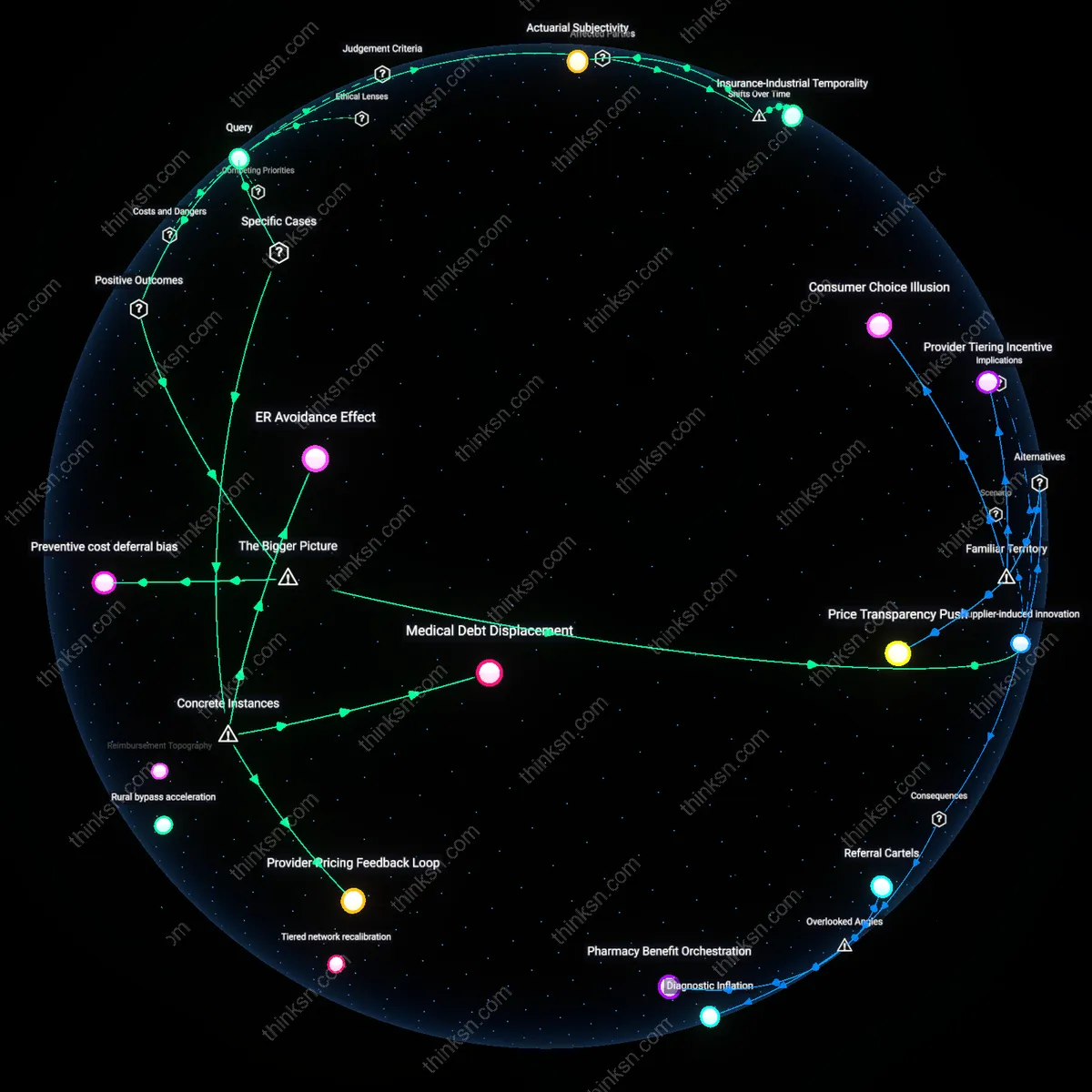
Risk-layering tradeoff
High-net-worth individuals should set umbrella policy limits just above their most probable personal liability exposure, not maximum net worth, because over-insuring generates diminishing risk reduction per dollar spent—exemplified by the 2017 malpractice litigation against Dr. Robert Grossman at NYU Langone, where a $20 million claim was covered by a $15 million umbrella policy due to layered defense tactics and partial indemnity clauses, revealing that legal strategy and institution-backed shields materially reduce the likelihood of total personal exposure, a nuance often ignored in cost-versus-coverage models.
Jurisdictional leverage
Wealthy individuals in multi-state asset positions should calibrate umbrella limits to the highest tort damage caps in jurisdictions where they reside, travel, or own property—demonstrated by the 2012 Liebeck v. Streit family case in New Mexico, where a single car accident led to a $14 million judgment due to absence of non-economic damage limits, prompting the Streits to restructure their $10 million umbrella policy around forum-specific precedents, exposing how geographic legal arbitrage, not global net worth, determines optimal premium allocation.
Behavioral premium effect
Affluent households reduce insurance costs without increasing net risk by selecting higher self-insured retentions tied to proven safety behaviors, as seen in the 2020 AIG Private Client Group pilot for ultra-high-net-worth clients, which offered 35% lower umbrella premiums in exchange for verified home automation, defensive driving courses, and liability audits—documenting that insurers price behavioral diligence more heavily than asset totals, an underutilized asymmetry in risk pricing.
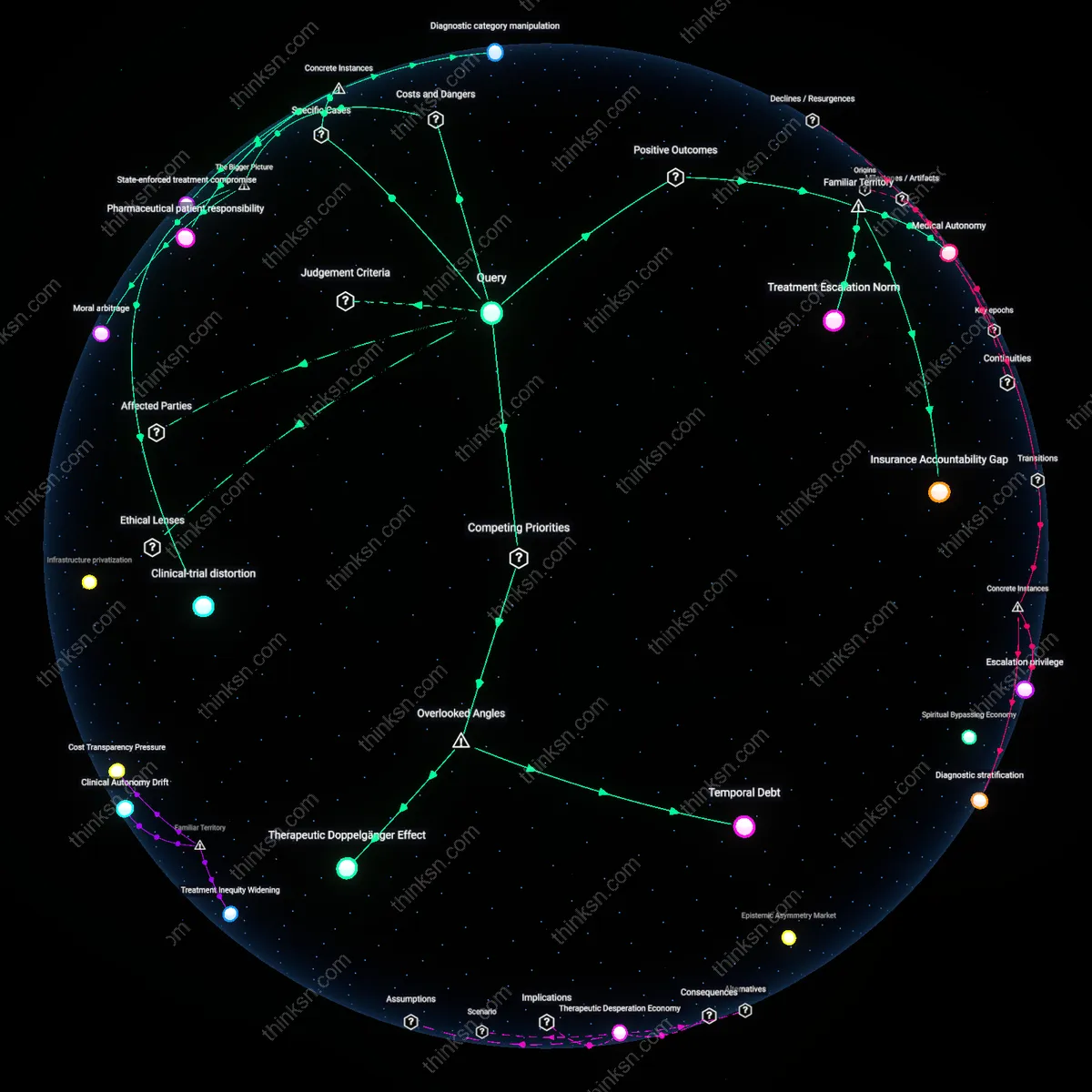
Inter-insurer signaling
Choosing lower umbrella coverage limits can degrade an individual’s standing in the informal network of high-net-worth insurers, leading to stricter underwriting terms across all policies. Carriers like Chubb or AIG participate in quiet data reciprocity systems where coverage reductions are interpreted not as rational cost management but as signals of hidden risk—such as impending divorce or regulatory scrutiny—triggering manual reviews or premium adjustments on unrelated policies like art or aviation. The non-obvious dynamic is that cost-saving on umbrella limits functions as a negative *inter-insurer signal*, activating collateral risk reassessment even without claims history, because these carriers treat coverage decisions as behavioral indicators within an opaque risk-tiering hierarchy. This means underinsurance risks creating a stealth feedback loop that undermines future insurability and increases total cost of risk beyond premium savings.
Moral hazard stratification
High-net-worth individuals should prioritize alignment with deontological ethics by setting coverage limits that reflect duty-based responsibility rather than cost-benefit optimization, because since the 1980s financial deregulation era, the legal codification of negligence standards increasingly treats underinsurance as evidence of moral recklessness. This shift transformed umbrella policies from mere risk-transfer tools into indicators of ethical standing in tort law, where courts began interpreting insufficient coverage as a signal of disregard for potential harm to others, particularly in high-impact jurisdictions like California and New York. The mechanism—liability apportionment influenced by insurance adequacy—embeds a moral calculus into civil responsibility, making underinsurance not just a financial miscalculation but a legally discursive act. What is underappreciated is that this evolution reframes insurance limits as ethical commitments, not economic choices, thereby elevating distributive justice concerns over utilitarian savings.
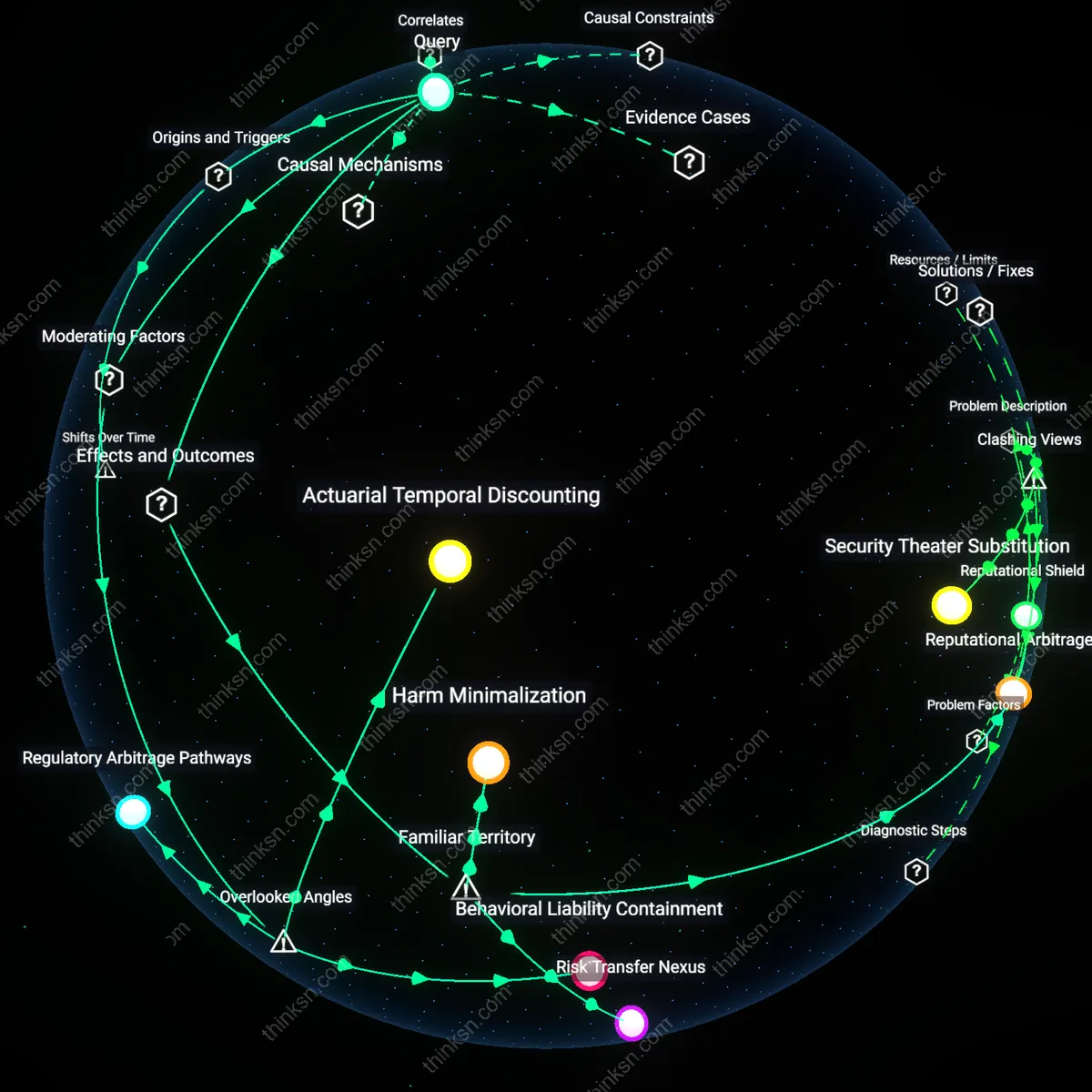
Actuarial temporality
High-net-worth individuals should calibrate coverage based on the shift from indemnity-based insurance principles to predictive risk modeling that emerged in the early 2000s with the rise of big data analytics in underwriting, because modern pricing no longer reflects static asset levels but projects long-term exposure trajectories using machine learning algorithms. Insurers such as Chubb and AIG now use lifetime risk pooling that factors in inflation-adjusted liability trends, social inflation litigation patterns, and wealth mobility—transforming coverage limits into forward-looking instruments rather than retroactive safeguards. This temporal recalibration means cost savings achieved today through lower limits may collapse under future claims amplified by judicial inflation or reputational harm, revealing that contemporary cost-efficiency strategies are structurally atemporal. The overlooked insight is that underinsurance risk is no longer about present thresholds but about misalignment with actuarial projections of future harm, which now govern policy design more than historical loss data.
Wealth defense infrastructure
Wealthy individuals should anchor coverage limits in the broader privatization of public risk absorption that accelerated after the 1970s neoliberal turn, when state retrenchment from social welfare created a normative expectation that private wealth must self-insure against systemic liabilities, because personal liability is no longer offset by robust public safety nets but instead absorbed by individualized financial fortresses. Legal doctrines like comparative fault and the erosion of joint-and-several liability in states such as Texas and Florida incentivize high limits not merely for protection but as participation in a decentralized liability regime where personal wealth functions as de facto civil compensation infrastructure. The underappreciated reality is that underinsurance now risks destabilizing an entire ecosystem of privatized accountability—umbrella policies evolved from optional hedges into required nodes in a liability grid maintained by elites. This reveals that cost-saving calculations are not just personal financial decisions but withdrawals from a tacit class-based compact of risk mutualization among the affluent.