Why Is Midwest Slowing Down Renewable Grid Integration?
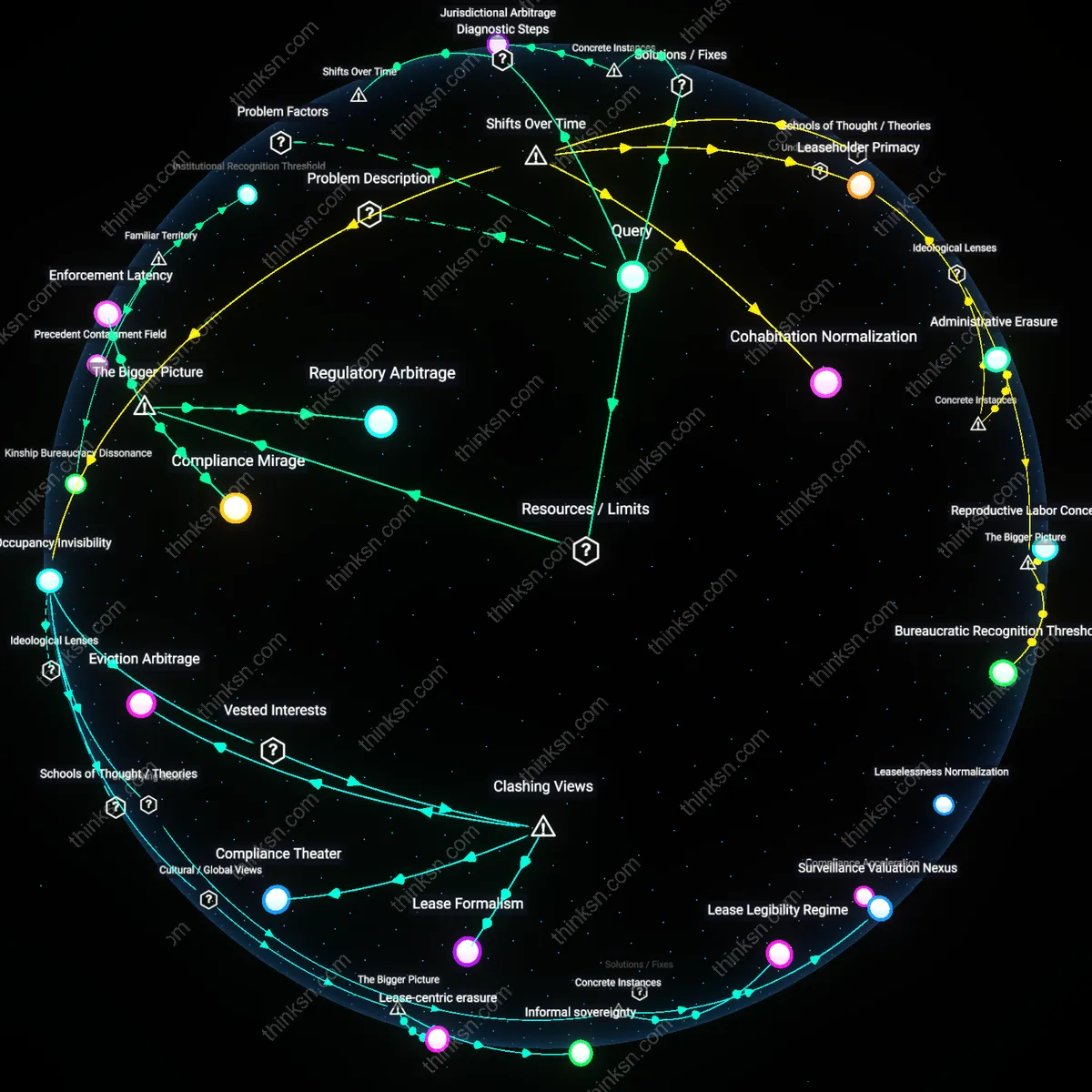
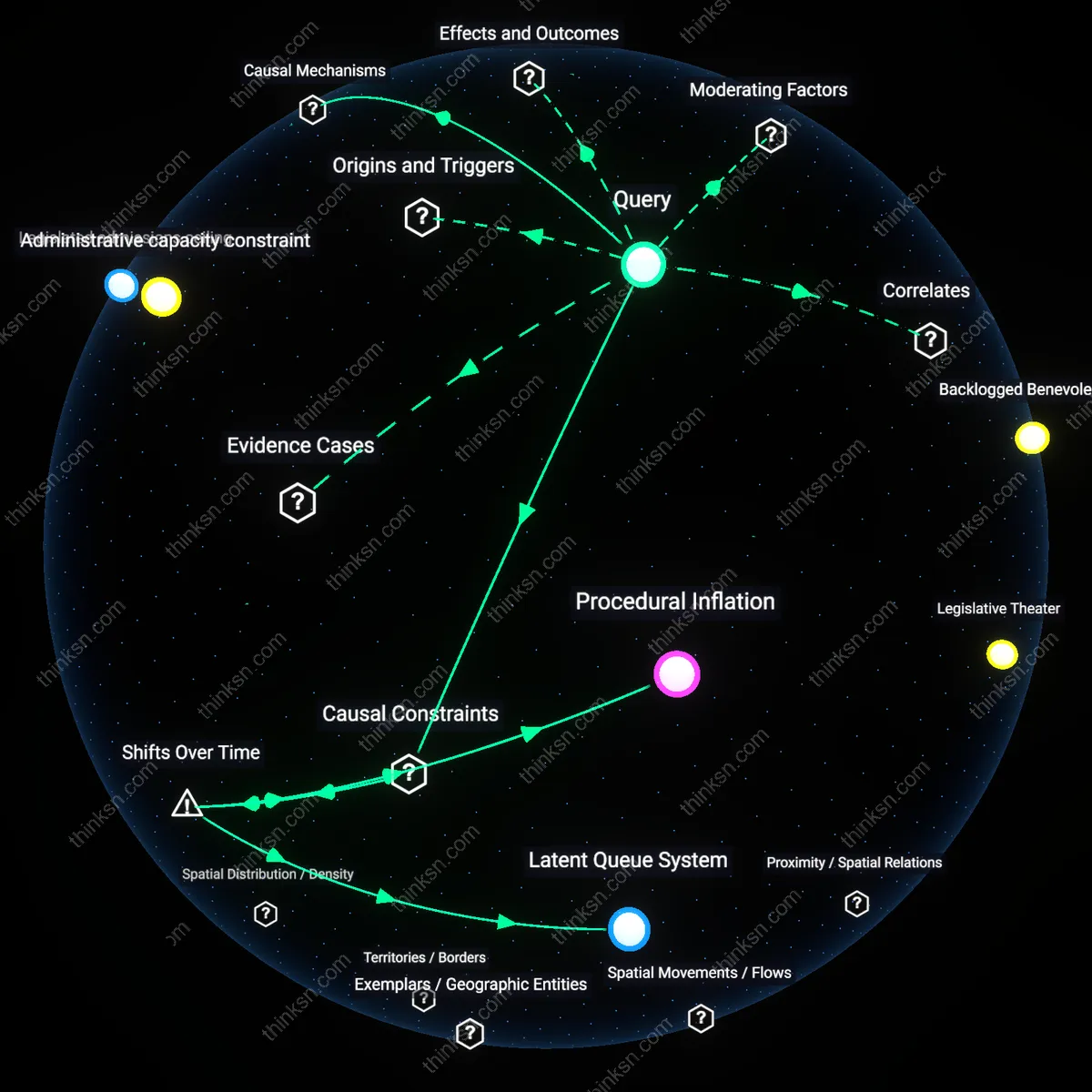
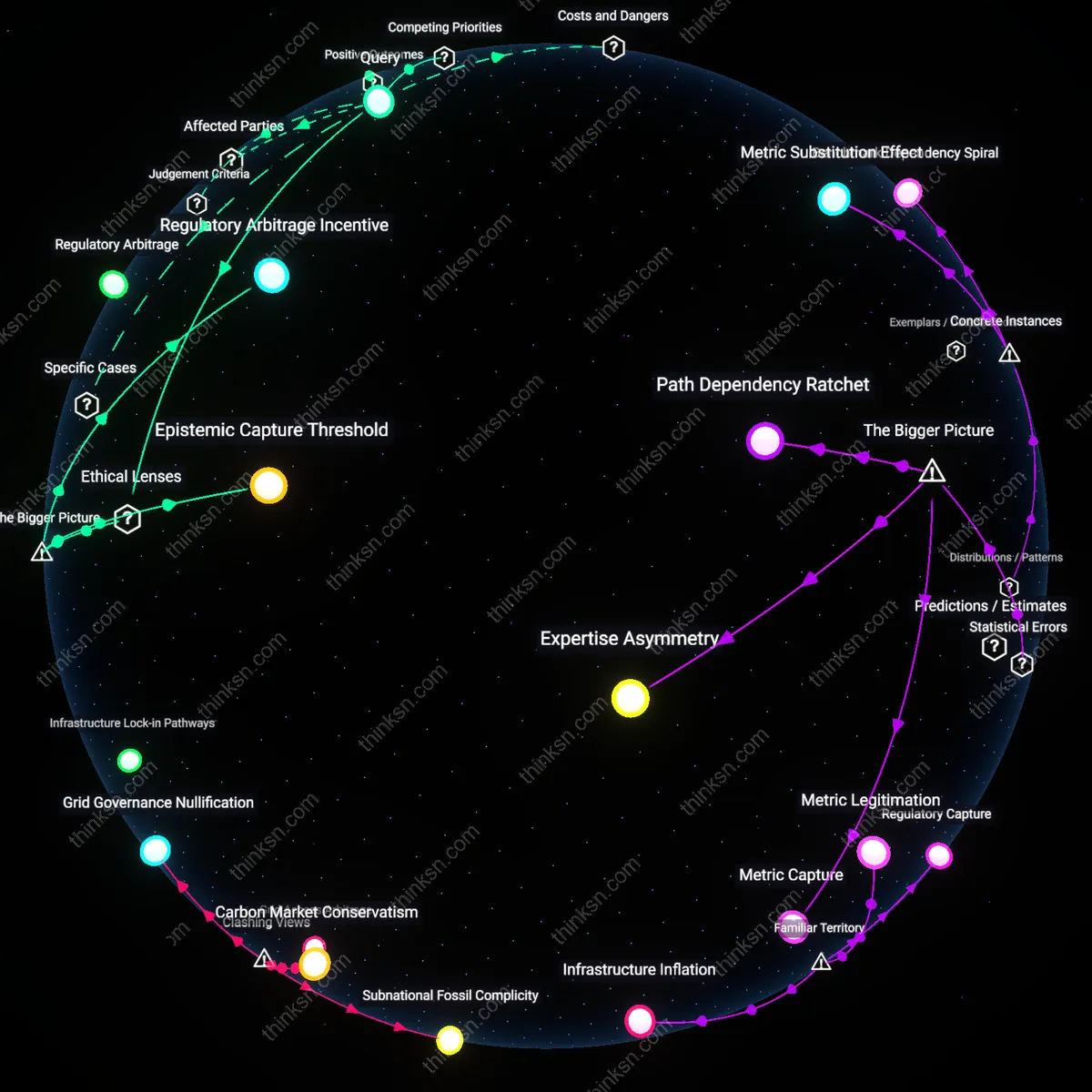
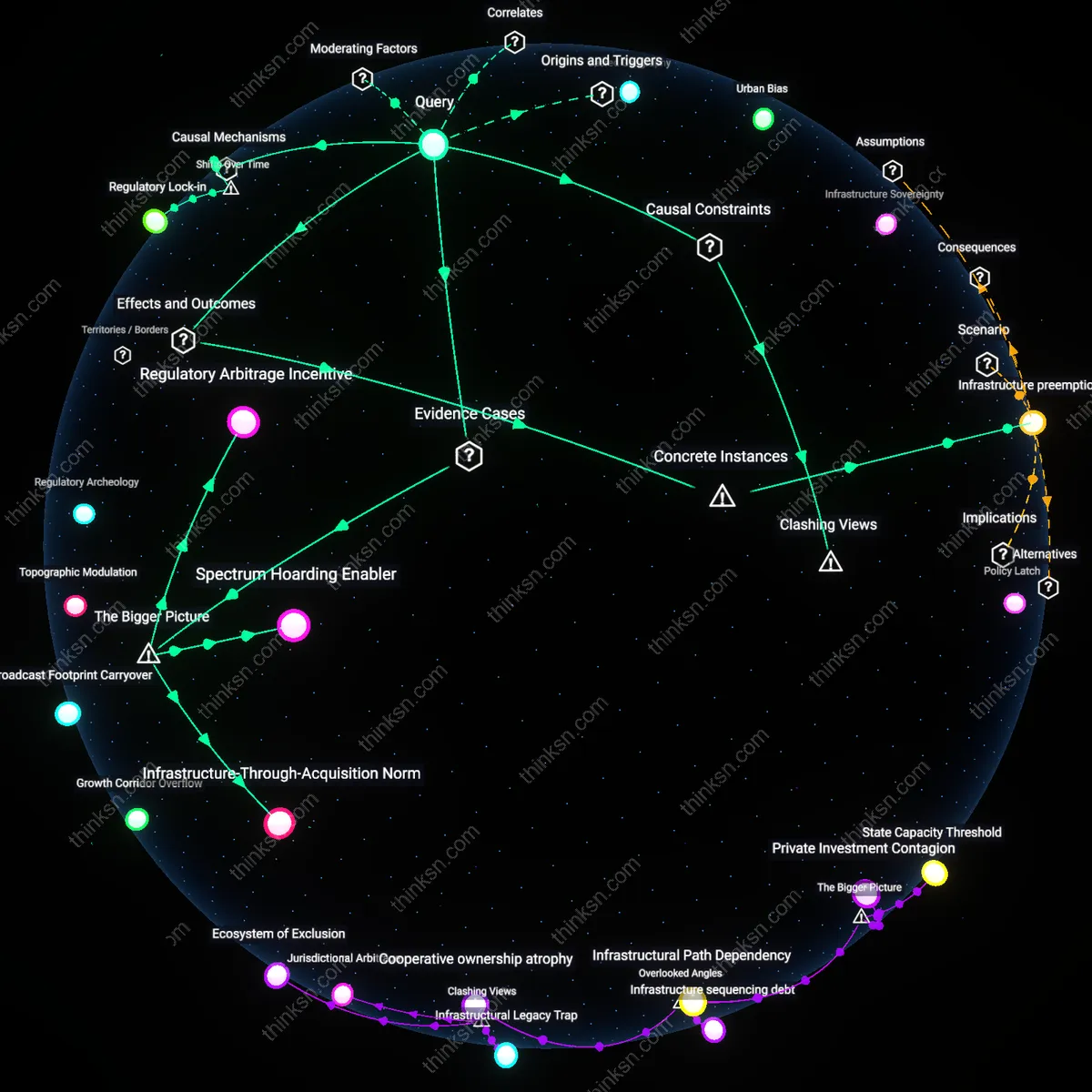
Analysis reveals 11 key thematic connections.
Key Findings
Regulatory Arbitrage
The delayed development of transmission infrastructure in the Midwest stems from interstate regulatory fragmentation that enables utilities to exploit jurisdictional loopholes, not from technical or financial constraints. State-level control over siting and permitting—combined with the absence of binding regional transmission planning mandates—allows incumbent utilities in states like Iowa and Missouri to delay or dilute multi-state projects that would undermine their local monopolies, even when those projects serve federally aligned renewable integration goals. This mechanism reveals that regulatory misalignment is not an accident but a structural invitation to strategic noncompliance, where utilities leverage decentralized authority to maintain control over energy flows and pricing. The non-obvious insight is that delays are not signs of dysfunction but calculated outcomes of a system designed to preserve local regulatory autonomy at the expense of continental-scale grid modernization.
Renewable Containment
The transmission backlog in the Midwest functions not as a bottleneck but as a deliberate mechanism to cap the rate at which wind energy from the Great Plains displaces incumbent generation in neighboring load centers. Regional transmission organizations like MISO approve high-voltage lines only when they serve cost-benefit models that undervalue carbon externalities and over-weight short-term reliability, effectively filtering out projects that would flood low-cost renewables into markets still dependent on coal and natural gas. This calibrated underdevelopment reflects a systemic preference for incremental integration over transformative displacement—what appears as inertia is actually a filtering regime. The dissonant finding is that transmission delays are not failures of coordination but features of a regulatory logic designed to contain, rather than accelerate, the energy transition.
Infrastructure Deferral
Delays in Midwest transmission expansion reveal that federal energy policy implicitly subsidizes the deferral of public infrastructure investment by allowing private utilities to treat transmission as an optional capital reserve rather than a public good. Unlike generation assets, which utilities recover costs on through rate bases, high-voltage transmission projects require multi-state agreements and federal backstops—conditions that enable powerful rural cooperatives and vertically integrated utilities to resist cost-sharing frameworks under FERC jurisdiction. Evidence indicates that this deferral is not passive neglect but a rational response to regulatory incentives that reward underinvestment in shared assets while protecting returns on localized generation. The counterintuitive insight is that the grid’s stagnation reflects a rational, incentive-aligned strategy among regulated monopolies to avoid capital risk under a policy regime that punishes overbuild but never penalizes underprovision.
Regulatory Jurisdictional Fragmentation
The delayed expansion of transmission lines in the MISO (Midwest Independent Transmission System Operator) region reveals that overlapping authority among state public utility commissions, the Federal Energy Regulatory Commission (FERC), and local zoning boards obstructs coordinated infrastructure development. Because transmission planning requires alignment across state lines but siting authority remains localized, projects like the Grain Belt Express—a high-voltage direct current line intended to carry wind power from Kansas to Illinois—face protracted delays as individual states veto or condition approval, revealing that federal oversight is structurally limited despite interstate commerce implications. This fragmentation creates a de facto veto point at the state level, which allows localized political opposition to override regional public interest in decarbonization, a dynamic that is underappreciated given FERC's nominal authority over interstate transmission. Research consistently shows that this institutional misalignment systematically disfavors long-distance renewable transmission compared to incremental, locally controlled grid upgrades.
Renewables' Political Geography
The defeat of the Plains & Eastern Clean Line project in Oklahoma illustrates how rural transmission routes become political targets when perceived as benefiting distant urban consumers at the expense of local land sovereignty. Although the project would have delivered 7,000 MW of Oklahoma wind power to Tennessee and other southeastern states, the Oklahoma Corporation Commission denied a crucial permit, responding to pressure from agricultural landowners and state legislators who framed the line as a 'foreign' corporate land grab. This outcome reveals that renewable integration depends not only on technical feasibility but on narrative control over infrastructure—where transmission is recast as an extraction corridor rather than a public good. Evidence indicates that such resistance emerges most strongly in states without renewable portfolio standards, where environmental and economic benefits are discursively detached from local identity.
Permitting Gridlock
Regulatory fragmentation across Midwest states slows transmission development because overlapping jurisdictional authorities create veto points that stall multi-state projects. State-level public utility commissions, regional planning bodies like MISO, and local zoning boards all exercise control over different segments, leading to sequential delays that accumulate even when there is broad support for renewable integration. The non-obvious consequence is that technical feasibility and economic demand for transmission are systematically undermined by institutional misalignment—what appears to be a physical infrastructure deficit is actually a coordination failure embedded in governance design.
Incumbent Advantage
Transmission delays in the Midwest preserve the economic position of existing fossil-fueled generators by limiting new grid access for wind and solar projects in high-yield areas. Regional utilities with legacy investments benefit from constrained capacity because it reduces competitive pressure from lower-cost renewables that could undercut their rate-based returns. The underappreciated dynamic is that regulatory frameworks, while formally technology-neutral, de facto reinforce incumbent control through slow interconnection processes and cost-allocation rules that penalize new entrants—revealing how procedural inertia serves as a quiet subsidy.
Rural-Urban Misalignment
Transmission bottlenecks persist because renewable-rich rural areas lack proportional political influence compared to urban centers where electricity demand is concentrated but transmission opposition is politically potent. State legislatures and regulatory decisions are shaped by population-weighted representation, which skews infrastructure priorities toward localized reliability concerns over regional resource optimization. The overlooked reality is that democratic representation mechanisms, often assumed to support equitable outcomes, instead generate structural bias against long-distance transmission that would enable cleaner, cheaper power flows from remote wind corridors to city markets.
Regulatory Asymmetry
The delayed development of transmission infrastructure in the Midwest reveals that federal energy policy cannot unilaterally overcome state-level regulatory control over siting decisions, as demonstrated by the prolonged grid expansion delays by the Midcontinent Independent System Operator (MISO) despite federal encouragement. State public utility commissions in states like Iowa and Indiana retain authority over transmission routing and cost allocation, creating a fragmented decision-making environment that bottlenecks large-scale renewable integration even when regional benefits are clear. This misalignment between federal aspirations for clean energy and state-level regulatory authority reveals a systemic friction point where national energy goals are constrained by legally decentralized oversight structures, exposing how jurisdictional boundaries can silently strangle interregional coordination needs.
Institutional Risk Aversion
The backlog in Midwest transmission development illustrates how regional grid planners prioritize reliability and cost containment over future renewable scalability, as seen in the historically conservative planning cycles of the Midcontinent ISO, which under-forecast wind adoption in states like North Dakota and Minnesota. These planning models rely on incremental cost-benefit analyses that systematically undervalue long-term renewable synergies and network resilience, effectively embedding risk aversion into technical standards. This reveals how ostensibly neutral engineering criteria become a de facto barrier to transformation by locking in existing fossil-centric infrastructure logics, making system inertia not just physical but procedural.
Value Dissociation
The persistent failure to expand transmission in renewable-rich areas like the Dakotas and northern Iowa reveals that market mechanisms within organized wholesale markets—such as scarcity pricing and nodal allocation—do not adequately compensate long-distance transmission for enabling renewable access, despite copious energy savings and emission reductions. Unlike generators, transmission owners face uncertain cost recovery under FERC Order 1000, even when lines serve demonstrable public policy goals, causing investor hesitation. This structural undervaluation of network enablers compared to energy producers reveals a core imbalance in how grid investments are prioritized, where the economic worth of connectivity is dissociated from the clean energy transitions it facilitates.