Is CGM Tech Failing Type 1 Diabetics with Basic Skills?
Analysis reveals 6 key thematic connections.
Key Findings
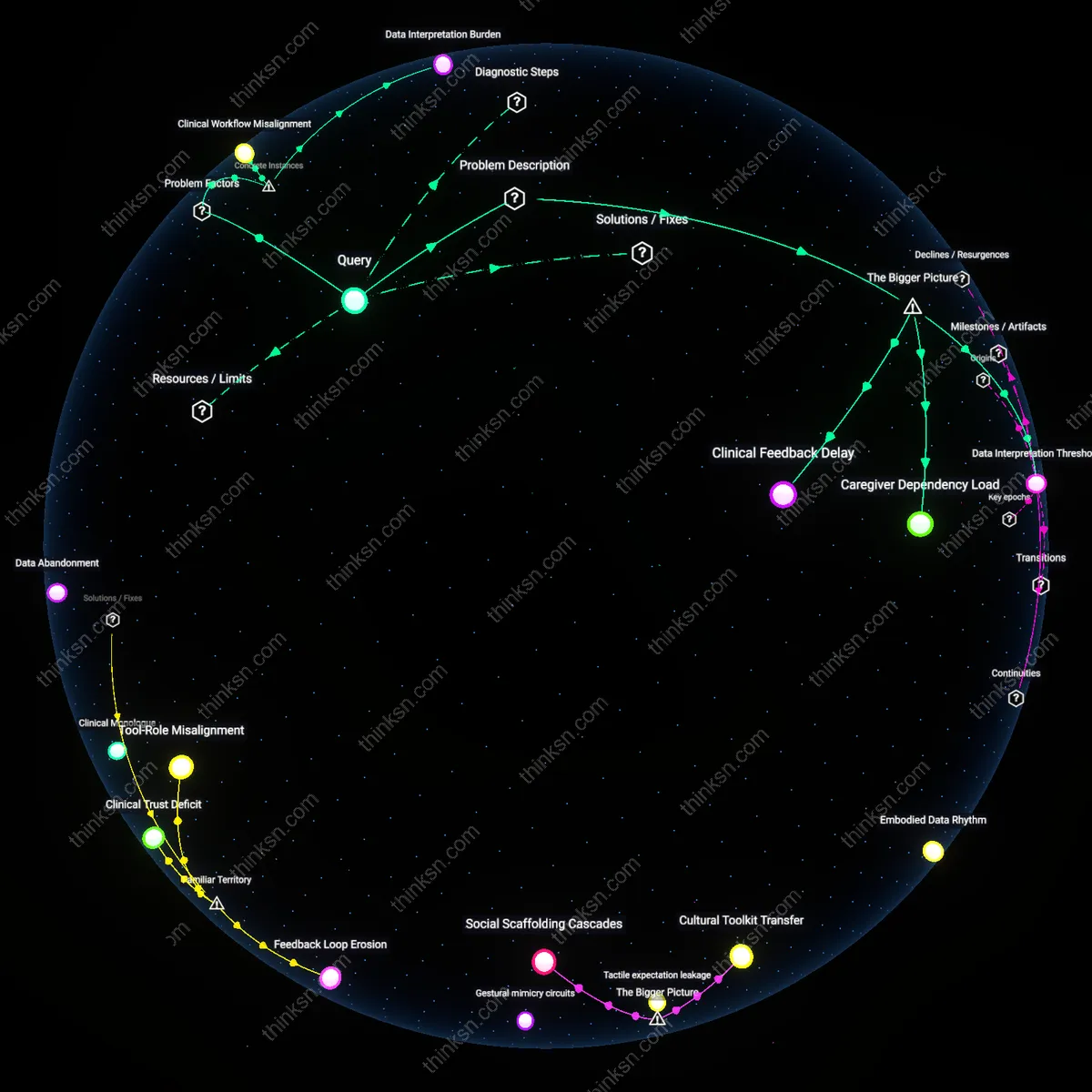
Data Interpretation Threshold
Patients with limited tech literacy cannot translate continuous glucose monitoring data into actionable insights because they lack familiarity with digital interfaces and real-time trend analysis, which are required to interpret dynamic glucose curves; this creates a functional disconnect between data availability and behavioral response, revealing how the clinical benefit of a technology depends not on access alone but on the user’s cognitive alignment with its output format.
Caregiver Dependency Load
When patients with limited tech literacy rely on family or clinicians to interpret glucose data, decision-making becomes asynchronous and inconsistent, introducing delays in insulin adjustment or meal planning; this shifts the burden of interpretation onto overextended caregivers within understaffed health systems, exposing how the scalability of digital health tools is constrained by pre-existing social support asymmetries rather than device efficacy.
Clinical Feedback Delay
Healthcare providers often lack time during routine visits to teach patients with low digital proficiency how to use continuous glucose monitoring systems effectively, resulting in underutilization of alarm features and trend forecasts; this institutionalizes a gap between technological capability and patient competence, demonstrating how fragmented care delivery timelines disable the very preventive logic that real-time monitoring promises.
Interface Affordance Gap
In the rollout of Dexcom G6 integration with insulin pump systems in rural clinics in Appalachia, healthcare providers observed that patients with limited prior engagement with touchscreen devices could not reliably distinguish between actionable alerts and background data fields on the mobile app interface, revealing that the visual design assumed a pre-existing fluency with smartphone conventions such as swipe gestures and color-coded hierarchies, making critical glucose trends functionally invisible despite accurate sensor data transmission.
Clinical Workflow Misalignment
At a safety-net hospital in Oakland, California, a pilot program distributing Abbott Libre sensors to low-income type 1 diabetes patients found that without dedicated clinic time for data review, patients deferred interpretation to overburdened primary care providers who lacked training in real-time glucose trace analysis, exposing a systemic mismatch between the technology’s demand for continuous clinical engagement and the episodic structure of under-resourced care settings where visits averaged seven minutes per patient.
Data Interpretation Burden
A 2021 ethnographic study at Harlem Hospital Center documented that elderly patients with type 1 diabetes, already managing multiple comorbidities, experienced increased anxiety when confronted with raw interstitial glucose plots from continuous monitors, as the absence of automated contextual summaries forced them to personally infer hypoglycemic risk from fluctuating line graphs—an unanticipated cognitive load that converted potential clinical insight into psychological strain, even when technical usage was otherwise stable.