401(k) Match or Loan: Safeguarding Savings in Market Volatility?
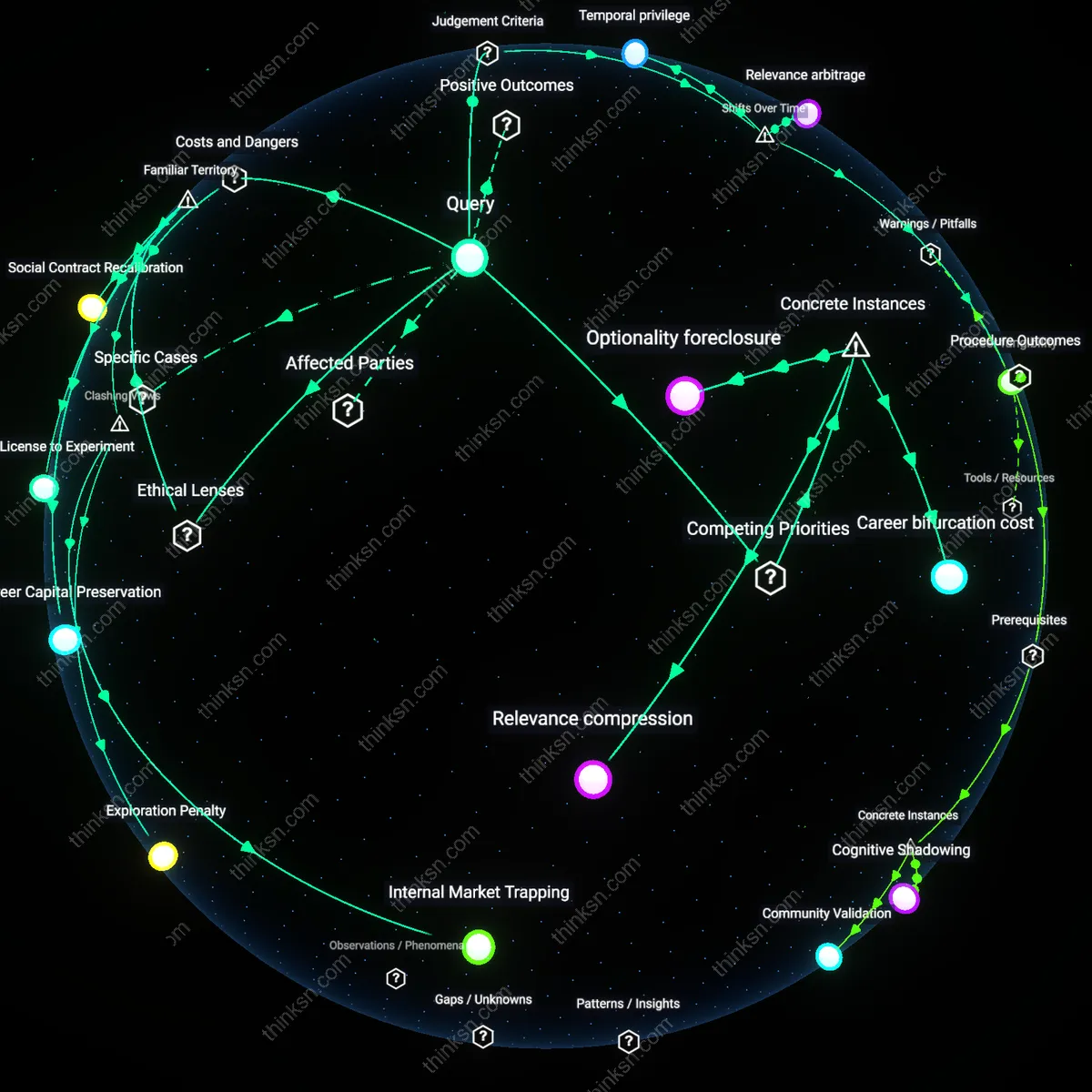
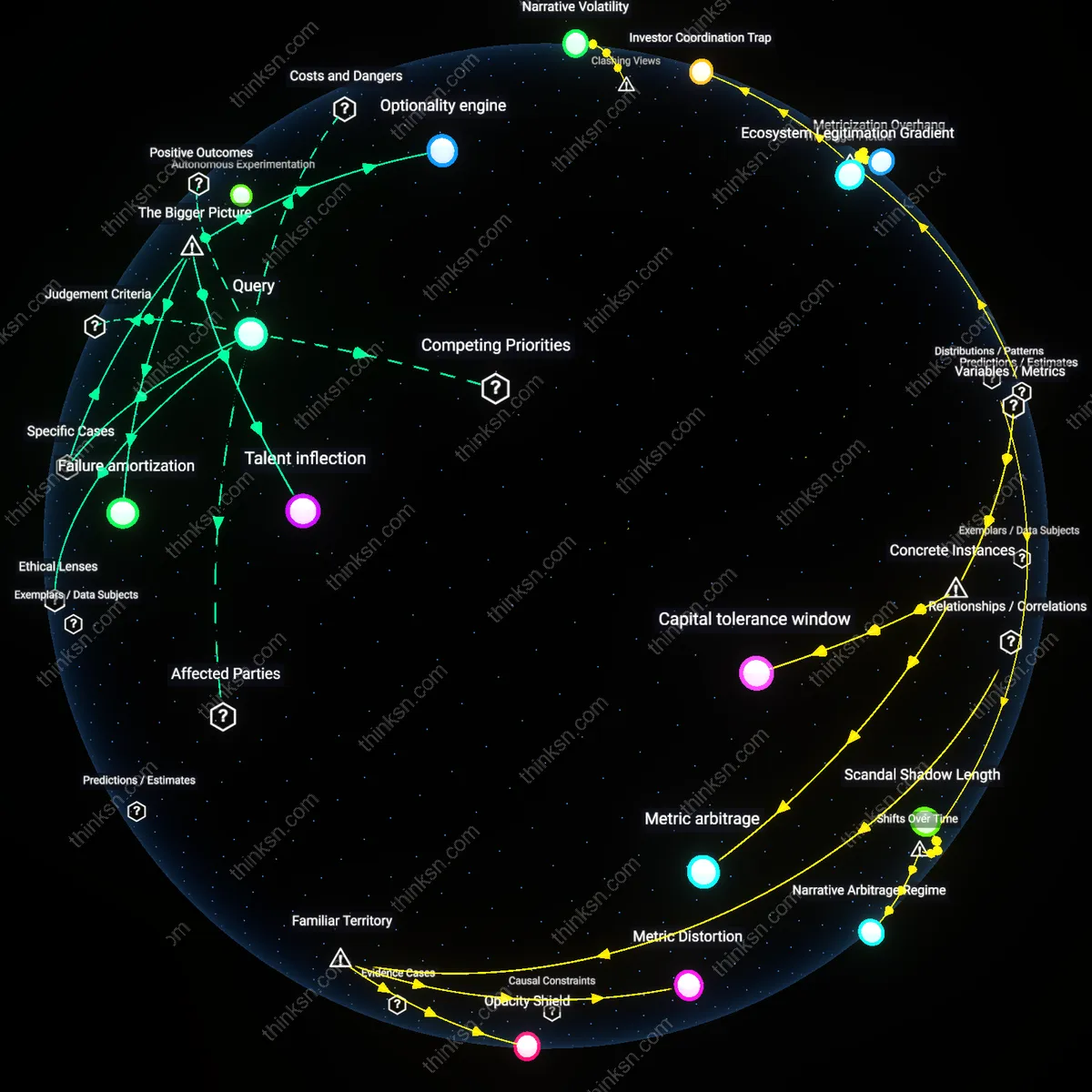
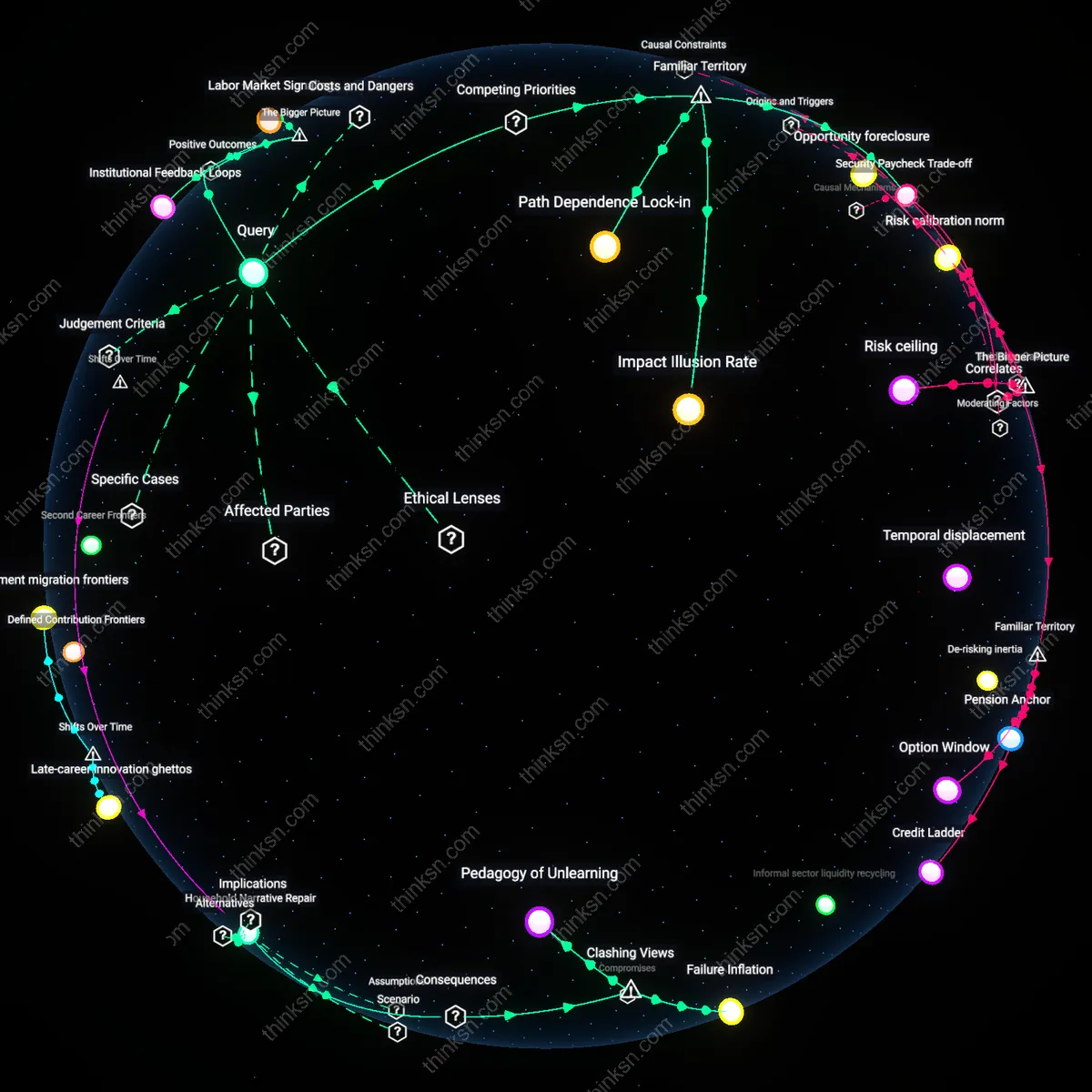
Analysis reveals 3 key thematic connections.
Key Findings
Contribution Arbitrage
Employer matching creates a volatility hedge through immediate equity transfer, analogous to the U.S. Railroad Retirement Board’s 1937 dual-tier system, where guaranteed employer contributions insulated workers from asset fluctuations that affected individually managed portions of the fund. The matched portion functioned as a pre-funded, non-reversionary claim, growing independently of subsequent market cycles, while loan mechanisms tied future solvency to contemporaneous performance. This reveals that matching is not a savings incentive but a structural transfer of risk-bearing capacity—an arbitrage between wage contracts and capital risk, often mistaken for deferred compensation rather than embedded insurance.
Deferred Risk Transfer
Employer matching 401(k) contributions better protect against future market volatility because they institutionalize a risk-allocation shift that began in the 1980s with the mass displacement of defined benefit pensions by defined contribution plans—employers outsourced investment risk to employees while retaining symbolic equity through matching, which functions as a non-discretionary floor beneath accumulation. This mechanism anchors protection not in market performance but in the historical pivot to individualized retirement responsibility, where the match acts as a counterbalance to volatility by injecting capital independent of asset fluctuations. The underappreciated consequence is that matching transforms employer obligation into a stabilizing inertial force, not a market bet.
Leverage-Induced Exposure
Using a low-interest 401(k) loan worsens vulnerability to market volatility because it emerged institutionally in the 1990s as federal regulations permitted self-loans under ERISA, converting retirement accounts from shielded assets into accessible credit lines during periods of rising consumer debt and stagnant wages. The mechanism—borrowing against one’s own principal—creates a dual-risk structure where market downturns reduce both collateral value and repayment capacity, particularly dangerous post-2008 when simultaneous job loss and portfolio declines became more correlated. The non-obvious insight is that the loan option, designed to increase participation, actually reintroduces systemic risk by tethering retirement wealth to cyclical personal leverage.
Deeper Analysis
How much could a 42-year-old actually lose if a market crash wiped out the value of their 401(k) loan collateral right when they need to repay it?
Employment Contingency Exposure
The actual loss exceeds the loan balance because repayment of a 401(k) loan is structurally contingent on continued employment, and a market crash often coincides with job loss, especially in sectors tied to financial cycles like tech or construction. When employment ends, the loan term shortens from years to 60–90 days, creating a repayment horizon misaligned with asset recovery timelines. This hidden dependency reveals that the 401(k) loan system functions not as a standalone financial tool but as a fragile extension of labor market stability, enforced by employer-managed plan rules and IRS safe-harbor provisions, making midlife workers disproportionately vulnerable during synchronized economic shocks.
How did the shift from pensions to 401(k) matches change the way employees have to think about market ups and downs over time?
Personalized risk socialization
The shift from defined benefit pensions to 401(k) matches in the 1980s forced employees to internalize market volatility as a routine condition of retirement security, marking a departure from the era when employers absorbed investment risk. This transition embedded financial market performance into individual decision-making through mechanisms like employer matching thresholds and vesting schedules, which required workers to monitor account balances and adjust contributions in response to bull and bear cycles. What is underappreciated is how this created a new form of financial subjectivity—where managing emotional reactions to market swings became a de facto job skill—thereby socializing risk through personal responsibility rather than collective pooling.
Temporal fragmentation of trust
During the 1990s and early 2000s, the dominance of 401(k) plans reconfigured employee trust in financial institutions from a long-term, institutionally anchored expectation to a sequence of discrete, time-bound performance evaluations tied to quarterly statements and annual employer matching announcements. Unlike the mid-20th century pension model, where workers trusted employers to deliver benefits decades later with minimal input, 401(k) holders began assessing market outcomes annually, recalibrating their faith in fund managers, advisors, and even their own judgment after each downturn. This fragmentation of trust across time intervals made sustained confidence contingent on visible, recurring validation—turning market fluctuations into recurrent trust crises rather than one-off disruptions.
Emotional Speculation
Employees now treat market declines as personal threats rather than abstract fluctuations because 401(k) balances are visible and tied directly to their future security. The shift from pensions to defined-contribution plans placed individuals in constant contact with daily market swings, transforming stock performance into an immediate psychological concern rather than a background administrative function managed by employers. This visibility forces routine emotional engagement with risk, making downturns feel like personal losses even when long-term conditions remain stable, a dynamic rarely acknowledged despite widespread 401(k) adoption. What’s underappreciated is how this daily surveillance of balances turns employees into de facto retail investors, habituated to speculate not just with money but with peace of mind.
Market Citizenship
Employees have become reluctant shareholders whose civic duties now include interpreting Fed announcements and election impacts, because 401(k) dependence ties personal welfare directly to equity market outcomes. This transformation reorients ordinary workers toward financial news, corporate earnings, and political risk in ways previously reserved for investors, making market cycles a form of public participation no less consequential than voting or taxation. The unspoken assumption is that everyone is now a capital allocator, expected to endure bear markets with patience while celebrating bull runs as personal milestones. What remains hidden in plain sight is that retirement security now requires sustained engagement with high-finance discourse—a role most enter passively, through payroll deductions, yet one that demands active, ongoing allegiance to market logic.
Investment Burden Interiorization
The shift from pensions to 401(k) matches forced employees to absorb market volatility as a personal accounting responsibility, not a deferred concern. Defined contribution plans transferred investment risk from employers to individuals, making employees de facto portfolio managers who must monitor asset allocation, fee structures, and market cycles—evidenced by the rise in 401(k) participation after the 1979 Revenue Act and the Pension Protection Act of 2006 codifying default safe harbor mechanisms. This reframes market fluctuations not as background economic noise but as direct threats to retirement viability, contradicting the intuitive view that market downturns are cyclical and manageable at scale; the non-obvious outcome is that emotional and cognitive labor, not just financial loss, becomes a structural component of retirement planning.
Temporal Fragmentation of Risk
The 401(k) regime fractured long-term retirement saving into discrete, event-driven decision milestones, altering how employees perceive market timing. Unlike pensions, where longevity and actuarial stability smoothed volatility, 401(k) account statements, annual enrollment windows, and employer matching cliffs (e.g., the 6% contribution threshold) made discrete moments—such as job changes or market crashes—into irreversible financial inflection points. The 2008 financial crisis revealed this when employees panicked and withdrew funds during the market trough, locking in losses, a behavior rarely seen under pension systems; this challenges the dominant belief that more 'financial literacy' empowers rational long-term thinking, revealing instead that structural fragmentation encourages short-termism even among informed savers.
Match Calculus Rationality
Employees developed a calculative mindset centered on optimizing employer matches rather than long-term market resilience, transforming market volatility into a backdrop for tactical contribution adjustments. The 6% employer match benchmark, now a standard artifact seen in HR onboarding packets and benefits portals, incentivized employees to contribute exactly enough to maximize free funds while minimizing exposure beyond that threshold—especially during downturns when contributions were deferred or reduced. This undercuts the common narrative that 401(k)s foster broad market engagement, revealing instead a narrow instrumental rationality where market conditions are filtered through match optimization logic, not wealth accumulation strategy, making employees less responsive to long-term trends than to immediate employer incentives.
How did the link between job loss and 401(k) loan repayment rules start, and how has it changed as economic crises have unfolded over the past few decades?
Plan Sponsor Fiduciary Shield
The link between job loss and 401(k) loan repayment emerged in 1984 when ERISA-safe harbor rules implicitly incentivized employers to design loan provisions that defaulted to immediate repayment upon termination, treating job loss as a fiduciary risk mitigation trigger rather than a borrower hardship. Employers, as plan sponsors, adopted automatic loan acceleration not because of IRS mandate but to insulate themselves from Department of Labor scrutiny over plan asset mismanagement, embedding a structural bias toward speed over solvency. This shift, rooted in Midwestern manufacturing firms' pension overhauls during the early 1980s, transformed loan rules into employer risk-control instruments, a dimension rarely acknowledged because analyses typically frame loan defaults as individual financial failures, not employer governance strategies. The overlooked mechanism is how fiduciary anxiety reshaped borrower obligations independent of capital markets or tax policy.
Secondary Loan Market Incentive
The connection intensified in the late 1990s when 401(k) loan portfolios began functioning as implicit balance sheet assets for third-party recordkeepers, creating off-book value through servicing rights and securitization potential, especially after the rise of bundled plan administration platforms like Fidelity’s Workplace Investing. When employees lost jobs, accelerated repayment created cash flow events that enhanced the liquidity and perceived reliability of these portfolios, indirectly boosting valuations during M&A activity in the benefits administration sector. This financialization of loan streams—visible in the 2001–2003 consolidation wave among 401(k) providers—meant that job-loss-triggered defaults were not merely compliance events but were structurally favored for asset packaging. This dimension is ignored because regulatory discourse treats 401(k) loans as isolated debt contracts, not as components in a shadow market for retirement cash flows.
Wage Stagnation Arbitrage
The economic crises of 2001 and 2008 amplified the job loss-loan link not just through unemployment spikes, but because real wage stagnation since the 1990s had already made 401(k) loans a de facto wage supplement, causing workers to treat them as revolving liquidity buffers rather than one-time loans. When layoffs surged, the repayment shock was magnified because balances were structurally higher—not due to overborrowing, but because routine loan-against-repayment cycling replaced lost income growth, particularly in auto and retail sectors where employer contributions lagged. This dependency, rooted in suppressed wage dynamics rather than financial illiteracy, meant that job loss triggered loan default cascades not as exceptions but as systemic outcomes, a causal pathway missed in mainstream analysis that focuses on crisis-induced panic borrowing rather than pre-existing household cash flow engineering.
Retirement Penalty
Job loss triggers immediate 401(k) loan repayment because plan rules treat separation from employment as a default on outstanding loans, forcing repayment within weeks or facing taxes and penalties; this mechanism, rooted in IRS code and administered through employer-sponsored plans, transforms temporary unemployment into forced retirement account liquidation, a consequence most associate with financial fragility but rarely attribute to structural design—what remains unspoken is how the system codifies job continuity as a silent prerequisite for retirement security.
Crisis Withdrawal Norm
During economic downturns like the 2008 recession or 2020 pandemic, waves of job losses led to widespread defaults on 401(k) loans, making emergency withdrawals socially normalized and politically visible; employers, plan administrators, and policymakers began treating loan forgiveness or delayed repayment as crisis response staples—this shift entrenched the idea that retirement accounts are de facto emergency funds, revealing a public expectation that long-term savings should buffer immediate income shocks despite their intended purpose.
Employer as Gatekeeper
The link between job loss and 401(k) loan repayment persists because employers control plan design and termination terms, deciding when and how loans convert to distributions upon separation; most workers assume their 401(k) is theirs, yet the employer’s administrative authority—amplified during layoffs when HR systems auto-trigger loan defaults—exposes a hidden dependency that only becomes tangible when employment ends, surfacing the employer’s role not just as sponsor but as enforcer of financial consequences.
Plan design inertia
The link between job loss and 401(k) loan repayment acceleration emerged because defined contribution plan structures were optimized for stable employment tenures, not labor market volatility, causing loans to become immediately due when employment ends. Plan sponsors and third-party administrators standardized this rule to limit fiduciary risk and administrative complexity, embedding a structural assumption that employment continuity underpins retirement security. This mechanism is non-obvious because it reveals how private retirement systems absorbed employer-centric assumptions from the mid-20th century even as labor markets fragmented, making worker mobility a systemic liability rather than a neutral event.
Crisis-driven formalization
The 2008 financial crisis hardened the job loss–loan default link by exposing widespread 401(k) liquidity withdrawals among unemployed workers, prompting regulators to codify repayment acceleration rules in IRS guidance and employer plan documents to prevent systemic leakage from retirement pools. This formalization was driven by institutional investors and plan fiduciaries seeking to shield retirement assets from being treated as emergency cash accounts during downturns, reinforcing a systemic preference for long-term asset growth over short-term household stability. The underappreciated dynamic is that economic crises didn’t soften the rule but instead legitimized it as a risk-mitigation tool for financial markets, not workers.
Policy feedback loop
Persistent job loss during the Great Recession and the pandemic triggered congressional temporary relief measures, like delayed repayment and expanded borrowing under the CARES Act, which paradoxically entrenched the existing loan structure by treating it as salvageable rather than flawed. These episodic interventions, brokered by employer groups and retirement industry lobbyists, created a feedback loop where crisis accommodations reinforced the centrality of 401(k) loans despite their fragility under unemployment, displaceing demand for structural alternatives like emergency savings accounts. The overlooked consequence is that temporary policy fixes became permanent stabilizers of a risky status quo, revealing how crisis responses can re-legitimize the very mechanisms they expose as broken.
Employer-as-Custodian Paradox
The transformation of 401(k) loan defaults post-2008 revealed that employers—not employees or financial regulators—became the de facto gatekeepers of retirement solvency when ERISA’s fiduciary frameworks failed to classify loan administration as a fiduciary act, allowing HR departments and payroll systems to enforce immediate repayment upon termination per plan documents like the Standard Form 5300 adoption agreements. During the Great Recession, companies such as Circuit City and Chrysler used these forms to trigger automatic loan recalls, converting personal savings into taxable income overnight, not because of federal mandate but because the system outsourced financial risk management to non-financial actors incentivized by administrative simplicity. This contradicts the common belief that financial literacy or market volatility determines retirement security, exposing instead a hidden dependency on corporate personnel practices that treat retirement accounts as balance sheet items rather than lifelines.
Explore further:
- What would happen to someone’s retirement savings if they took a 401(k) loan and then lost their job during a market downturn?
- How do the typical paths money takes into and out of 401(k) accounts differ when people use them for emergencies versus planned retirement savings?
- How did temporary fixes for 401(k) loans during past crises end up making them a permanent part of retirement planning?
How does the way employer matching and 401(k) loans are set up change what workers actually do when the market goes up or down?
Behavioral Floor
Employer matching caps create a behavioral floor during market downturns by guaranteeing workers a fixed return on contributions up to a threshold, which since the 1990s has increasingly tethered participation rates to vesting schedules rather than market performance, revealing how policy design supplants market signals in shaping retirement decisions among middle-income workers.
Debt-Driven Withdrawal Norm
The normalization of 401(k) loans since the 2008 financial crisis has transformed account downturns into debt-collateral events, shifting worker behavior from passive holding to strategic borrowing against depreciated assets, exposing how emergency liquidity needs now override long-term saving logic in distressed markets.
Asymmetric Risk Learning
Post-2001, after repeated market corrections exposed mismatches between projected and actual retirement balances, workers began adjusting contributions reactively only after sustained downturns, learning to fear losses more than they value gains—a shift that institutionalized asymmetric sensitivity to market movements, reshaping 401(k) usage as a feedback-driven practice rather than a static enrollment.
Match Ceilings as Behavioral Anchors
Employers capping 401(k) matches at 6% of salary cause workers at Tyson Foods processing plants to consistently contribute exactly 6%, regardless of market swings, because exceeding that offers no additional employer benefit; this threshold acts as a cognitive anchor that dampens responsiveness to asset appreciation or depreciation, revealing how plan design elements become de facto contribution governors even during volatile periods.
Loan Recapture Reflex
When the 2008 financial crisis triggered plummeting 401(k) balances among University of Michigan staff, loan repayments—automatically deducted from paychecks—remained constant in dollar terms, effectively increasing their proportional burden on reduced take-home pay; this invariant repayment mechanism made employees feel greater immediate financial pressure than market loss alone would suggest, exposing how loan structures can amplify perceived risk during downturns independent of actual portfolio performance.
Liquidity Priming in Bull Markets
During the 2017–2019 stock rally, employees at tech startups in Austin, Texas increasingly took 401(k) loans to fund down payments on homes, interpreting paper gains as accessible wealth despite no actual liquidation; the rising account balances interacted with loan availability to create a psychological license for borrowing, demonstrating how sustained market growth activates latent liquidity options not as financial strategy but as behavioral permission structures.