Bitcoin Collapse: Could It Destabilize Small Economies First
Key Findings
Bitcoin Crash Effect
A Bitcoin crash can destabilize smaller economies by driving investors to safe assets like U.S. Treasuries, which weakens local currencies and increases debt pressure in nations with limited financial resilience.
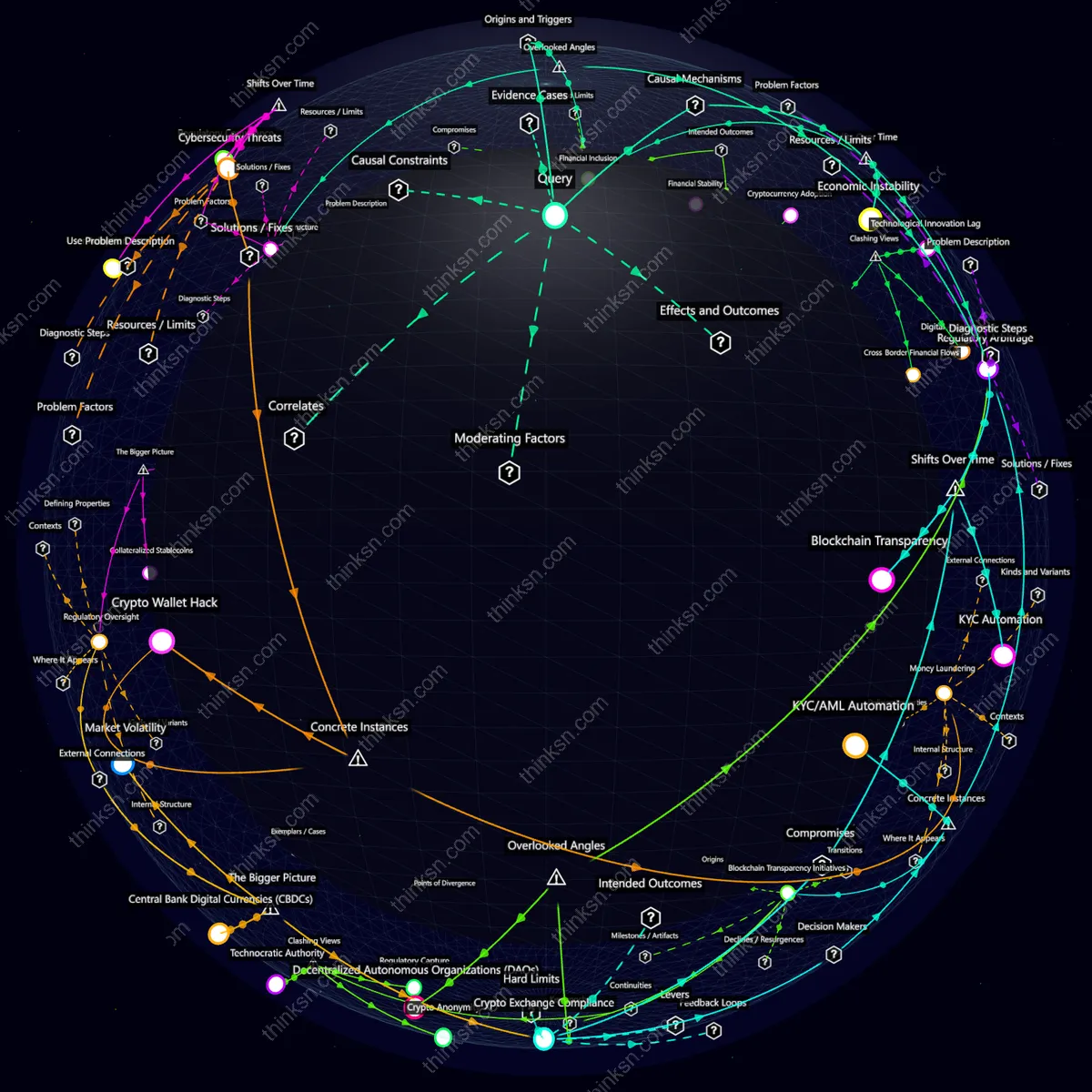
Many emerging economies rely on money flows tied to the U.S. dollar. This pattern began with the Bretton Woods system and repeated in financial crises from Latin America in the 1980s to Asia in 1997. When a global asset like Bitcoin crashes, investors rush to safe assets, especially U.S. government bonds. This shift causes money to leave smaller economies. Their currencies fall in value, and debts become harder to repay. Even if their finances were not directly tied to dollars, the global shift in risk changes their borrowing costs. Countries with high foreign debt and weak financial systems suffer most. They lose room to manage their economies. The result is greater risk of financial crisis. A Bitcoin collapse would hit these nations first. It triggers a flight to safety, just like past shocks. This repeats a long-standing pattern: global turmoil hits fragile economies hardest and fastest.
Dollar Safety Net
Some non-US economies avoid crisis collapse because Federal Reserve dollar swaps provide emergency liquidity during global risk shocks.
Since the 1970s, the global financial system has favored the United States. The U.S. dollar’s role as the main reserve currency lets the U.S. avoid the harsh limits other countries face during money crises. Normally, when global fear rises, investors pull money from smaller economies and rush into U.S. Treasury bonds. This flight to safety drains cash from emerging markets and worsens their crises. But since 2008, things have changed. The Federal Reserve now offers dollar loans to select countries through swap lines. These were expanded in 2020 and backed by new IMF rules in 2021. This access lets some non-U.S. nations get emergency cash without crashing their currency or selling assets cheaply. As a result, not all small economies suffer equally when risks rise. Countries with swap line access face less danger of collapse, even during sharp global sell-offs. The old idea that all vulnerable nations react the same way to market fear is no longer accurate. Special access to U.S. dollars breaks that pattern.
Deeper Analysis
What if major central banks were to hold significant Bitcoin reserves—how would that change the flight-to-safety dynamics described in the finding?
Bitcoin Reserve Shift
Bitcoin reserve shift would reduce financial pressure on emerging economies during crises if widely adopted by central banks, but institutional resistance keeps the system favoring dollar-based flight-to-safety flows.
Most emerging markets face financial instability because their capital flows depend on risk models set by rich countries. These models favor assets like U.S. Treasuries during global crises. The International Monetary Fund has reinforced this pattern through repeated crisis responses. If major central banks held large Bitcoin reserves, Bitcoin might be seen as a safe asset. This could weaken the dollar's dominance in times of financial stress. During a market crash, money might flow into Bitcoin instead of only into U.S. Treasuries. That could reduce the rush to the dollar when investors flee risk. Less demand for dollars would mean less pressure on emerging market currencies to fall sharply. But this change would only happen if many key central banks held Bitcoin. Right now, most big central banks follow conservative policies focused on inflation control. Their traditions make large-scale Bitcoin reserves very unlikely. Without broad adoption, U.S. Treasuries will stay the main safe haven. So even if some banks held Bitcoin, capital would still rush to dollars in crises. This means poor countries would still face sudden capital stops and currency crashes.
Bitcoin In Central Banks
Central banks holding Bitcoin will not make it a safe asset in crises because it lacks the institutional backing that gives traditional assets credibility and resilience.
When the European Central Bank bought bonds in the 2010–2012 crisis, it changed how investors ranked safe assets. It did not end the global preference for U.S. Treasuries. Central banks holding Bitcoin would not change how investors act in times of crisis. Bitcoin lacks key features like tax support, stable supply, and legal status. These features back trust in traditional safe assets. Buying Bitcoin might make it seem safer for a time. But it does not create real financial stability. True confidence comes from institutions that can act as a backstop. In a crisis, money still flows to assets backed by strong governments. Assets tied to productive economies with deep markets remain preferred. Bitcoin’s price would still drop sharply under stress. This would hurt smaller economies most. They rely on foreign money and lack deep markets. So capital would still flee from them first. The global pattern of risk spreading stays unchanged. Central bank ownership alone does not make Bitcoin a true safe haven.
What would happen to smaller economies' stability if the Federal Reserve restricted access to its dollar swap lines during a crisis triggered by Bitcoin's collapse?
Dollar Lifeline Access
Smaller economies with access to Federal Reserve dollar swap lines are shielded from severe financial stress during crises because direct access to U.S. dollar liquidity prevents market-driven funding collapses.
Smaller economies often struggle during global financial crises. A major reason is the sudden rush to safe-haven assets like U.S. dollars. This causes stress in foreign exchange markets. Normally, such pressure forces countries to sell assets or cut spending. But some nations avoid the worst effects. The key difference is access to Federal Reserve dollar swap lines. These are emergency lending channels. They allow foreign central banks to obtain U.S. dollars directly. This access stabilizes their financial systems quickly. During the 2008 and 2020 crises, countries with swap lines saw far less funding stress. They did not have to raise interest rates or deplete reserves. The swap lines act like a circuit breaker. They stop panic-driven dollar shortages from spreading. Without such access, countries face sharper monetary strain. Therefore, during a crisis sparked by Bitcoin’s collapse, access will again be decisive. Countries linked to the Fed’s facilities will remain more stable. Those without access will suffer more. It is not just how exposed a nation is. It is whether it has institutional backing. Access to the dollar lifeline shapes crisis outcomes.
Dollar Swap Lines
Countries without access to the Federal Reserve's dollar swap lines face greater financial instability during crises because they lack a reliable source of emergency dollars to meet external obligations.
The Federal Reserve provides temporary U.S. dollar loans to certain foreign central banks during global financial crises. These swap lines help stabilize the global financial system. They act like emergency lifelines for countries that have access. During times of market stress, some nations can use these loans to meet their dollar needs. This prevents panic-driven currency crashes and defaults. The availability of swap lines reduces the risk of severe economic disruption in connected countries. Others without access do not get this protection. In a crisis caused by the collapse of Bitcoin, the Fed might limit swap line access. Smaller economies outside this network would face sharp dollar shortages. They could suffer major financial strain even if their economies are sound. This harm would not result from their own weaknesses. It would result from being left out of the Fed's support system. Global financial stability now depends more on who has institutional access than on economic fundamentals alone. Exclusion from these monetary backstops increases a nation's crisis risk directly. Inclusion acts as a buffer against contagion. The system thus divides countries into those protected and those exposed.
Dollar Access Matters
Smaller economies survive a Bitcoin crisis if they have institutional access to central bank liquidity, because such access allows them to manage dollar outflows without depleting reserves.
After the 2008 crisis, a two-tier financial system emerged. The Federal Reserve provides dollar liquidity to close allies through swap lines. These lines act as a temporary shield in times of stress. During the 2020 market crisis, this difference became clear. When panic hit, some countries could defend their economies. Others could not. If Bitcoin collapses, global investors will rush to safe assets. Demand for dollars will soar. Smaller economies will face heavy pressure. Those in the Fed’s network can access dollars in advance. So can countries backed by groups like the Chiang Mai Initiative or the IMF. This lets their central banks absorb outflows quietly. They avoid selling reserves at a loss. They keep control of monetary policy. But countries without access cannot stem the tide. Even if their economies are sound, they lose reserves fast. They must devalue currency and face capital flight. Past crises show the risk. In 1997 and 2008, no support meant deeper pain. With support, shocks spread more slowly. Therefore, survival in a Bitcoin crisis does not depend on the crash size. It depends on access to major central bank liquidity.
Dollar Swap Limits
Smaller economies stay stable during crises only if they have strong local financial systems to absorb foreign liquidity, not just access to dollar swaps.
Federal Reserve dollar swap lines help stabilize economies during global crises only if those countries already have strong monetary institutions. Smaller economies often lack this foundation. Many have weak central bank credibility due to past inflation and underdeveloped financial markets. Without deep local bond markets or solid foreign asset reserves, these nations cannot anchor their currency value. During the 2008 and 2020 crises, swap lines failed to stop sharp currency drops in such countries. Liquidity alone cannot fix structural weaknesses. When global investors pull back, valuations shift broadly across emerging markets. For a future crisis caused by Bitcoin's collapse, the same rule applies. Stability will depend not on access to dollars. It will depend on whether a country can use foreign funding internally. If it cannot, new dollar inflows will cause immediate depreciation. The currency will fall as dollars are traded out. This has happened before under IMF lending programs in the 1990s and 2000s. The mechanism is clear: without strong local financial systems, dollar infusions do not become stabilization reserves.
Explore further:
- What happens to smaller economies' stability if the Federal Reserve restricts access to dollar swap lines during a crisis triggered by Bitcoin's collapse?
- What would happen to global financial stability if central banks in emerging markets developed their own dollar liquidity facilities, bypassing the Federal Reserve's swap lines?
- What if the Federal Reserve refused to extend swap lines during a Bitcoin-induced crisis—would existing regional safety nets like the Chiang Mai Initiative fill the gap or collapse under pressure?
What if a major central bank adopted Bitcoin as a reserve asset without requiring fiscal backstops, how would that change the flight-to-safety behavior during a global crisis?
Bitcoin As Reserve Asset
Bitcoin cannot act as a safe-haven asset during crises because it lacks the fiscal backing of a taxing state to stabilize its value.
Major financial systems need reliable assets during crises. These assets must be backed by real economic power. Bitcoin is not such an asset. It is not a fiscal instrument. It does not give a claim on real economic output. In past crises, confidence in such assets vanished quickly. Foreign currency bonds in emerging markets failed because they lacked domestic fiscal backing. Central banks holding Bitcoin would not change investor behavior. Bitcoin lacks a government that can tax and spend to support its value. U.S. Treasuries work because the U.S. government can tax and spend. The Federal Reserve and Congress together uphold their value. Gold once served as a reserve asset because it was convertible or trusted. Bitcoin has no such backing. It yields no return. It cannot be used to stabilize money supply. In times of crisis, money flows to safe assets. These assets are tied to strong, taxing states. During the 1997 Asian crisis and 2008 global crisis, even large economies without fiscal depth lost capital. Investors fled to assets backed by strong states. If a central bank holds Bitcoin, it will not stop this flight. Without taxing power, Bitcoin cannot anchor confidence. Investors will abandon it in a crisis.
What happens to smaller economies' stability if the Federal Reserve restricts access to dollar swap lines during a crisis triggered by Bitcoin's collapse?
Dollar Lifeline Access
A country's financial survival during a Bitcoin-driven crisis depends on access to Federal Reserve dollar swaps, which hinges on its central bank's inclusion in the core network of the global monetary system.
When a crash in non-government assets like Bitcoin causes global financial stress, access to U.S. Federal Reserve dollar swaps decides which countries can survive. These swap lines let certain central banks get dollars directly, avoiding dangerous shortages. Countries with access can keep their financial systems stable, even during global market fires. Others without it face collapse, not because of their own risk, but because they are locked out. The key factor is whether a nation's central bank is part of the inner circle of the global monetary system. This status depends on past agreements and geopolitical ties, not economic size. The Fed's decision to grant swaps acts as a gatekeeper. In a crisis, being inside this network stops panic from spreading to domestic markets. Without access, countries must sell assets fast, driving down prices and worsening the crisis. So, survival in a shock like Bitcoin's collapse depends on inclusion in the privileged financial tier. Structural position in the global system—not just market forces—determines economic fate.
What would happen to global financial stability if central banks in emerging markets developed their own dollar liquidity facilities, bypassing the Federal Reserve's swap lines?
Dollar Lending Power
Emerging market dollar lending facilities fail to enhance stability because they lack the credible backing and deep markets that give the Fed’s balance sheet unique crisis-fighting power.
Central banks in emerging markets could set up dollar lending facilities similar to the Fed’s swap lines. These would provide limited access to dollars during crises. They might calm markets temporarily by showing coordinated action. But they would not prevent financial stress when global panic spreads. Such facilities depend on deep and trusted financial systems. Emerging markets often lack these traits. The Fed has both credibility and deep markets. Historical efforts like the IMF’s credit lines show similar limits. Facilities without strong backing only signal intent. They cannot stop capital flight. During the 2020 market crash, only the Fed’s unlimited dollar power stopped the fall. So, even with new facilities, smaller economies would still rely on the U.S. The global structure of dollar access would stay the same. Their vulnerability to shocks, including those from Bitcoin movements, would not decrease.
What if the Federal Reserve refused to extend swap lines during a Bitcoin-induced crisis—would existing regional safety nets like the Chiang Mai Initiative fill the gap or collapse under pressure?
Regional Crisis Loans
Regional crisis loans fail during dollar shortages because they require consensus and external rules, not preset autonomous funding.
Regional liquidity arrangements struggle to respond during a global dollar shortage. This happens when countries rely on each other’s approval before releasing funds. The Chiang Mai Initiative showed this flaw during the 2008 crisis. It had the capacity to act but was rarely used. The reason was its strict rules and weak joint decision-making. These rules copied those of the International Monetary Fund. They required external approval instead of fast, independent action. When the Federal Reserve shuts off swap lines during a crisis caused by Bitcoin volatility, regional systems cannot step in. They lack preset, automatic funding rules and shared reserves. Only the Eurosystem has such tools today. Other regions must agree in real time, which takes too long. Delays block timely responses to rapid capital flight. Without automatic access, regional efforts fail when most needed.
Dollar Lifeline
Regional safety nets fail in a dollar crisis because they rely on the Fed for liquidity and cannot create dollars on their own.
Regional safety nets cannot survive a global dollar shortage without U.S. support. The Federal Reserve's willingness to provide dollar funding is essential. This was clear during the 2008 crisis, when Asian reserves could not offset frozen funding markets. The Chiang Mai Initiative struggled because it lacks direct access to offshore dollars. Its members cannot shield their economies from capital flight or support banks that owe dollars. Swap lines from the Fed are a key source of dollar liquidity. Without them, these regional pools have no power to act. They become ineffective when stress hits. Even large reserve holdings cannot fix this gap. The system depends on U.S. backing, not independent strength. A crisis driven by Bitcoin or other shocks would expose this flaw. If the Fed does not step in, the initiative cannot function.
Explore further:
- What if a regional bloc redesigned its liquidity mechanism without mimicking IMF conditions—could it shield smaller economies from a Bitcoin-triggered capital flight even if the Fed withholds support?
- What if the Federal Reserve prioritized stabilizing domestic markets over foreign dollar liquidity during a Bitcoin-induced crisis—how would that decision redefine the functional limits of regional financial safety nets?
What if a coalition of small economies adopted Bitcoin as a reserve asset without fiscal backstops—could their collective participation create a new center of gravity in the global financial system despite lacking taxing authority?
Bitcoin Reserve Weakness
Bitcoin cannot become a true reserve asset because it lacks the backing of a state with taxing authority and the ability to generate crisis liquidity.
A reserve asset must be backed by a government that can tax and spend to maintain confidence in times of crisis. Systems without this backing lose trust when stress hits. This happened when the Bretton Woods system collapsed. It also occurred when Argentina’s currency board failed. In those cases, no lender of last resort could stop capital flight. Now, some small economies hold Bitcoin as a reserve. But Bitcoin produces no income. It cannot be converted into spending power by a state. During market stress, investors seek safety in assets tied to strong economies. Bitcoin has no link to real output or taxation. So it gets sold off when confidence falls. Even if many small countries use Bitcoin, their combined action cannot make it a global reserve asset. Only states with taxing power and deep markets can provide crisis liquidity. Without that, Bitcoin cannot play the role of assets like U.S. Treasuries. Confidence in a reserve asset depends on the power to tax and spend. Bitcoin lacks this power. So it cannot become a center of global finance. Collective adoption by small nations does not change this fact.
Reserve Currency Power
True reserve status requires state-backed financial infrastructure, not just asset holding, because investor trust in crises depends on enforceable taxation and central bank support.
When countries use assets like Bitcoin for reserves, they cannot create a strong alternative to major global currencies. This is because global financial power depends on more than just holding assets. The key is having strong tax systems and central banks that stand behind those assets. During crises, investors rush to assets backed by powerful governments. These assets are trusted because they can be sold quickly and their value stays stable. U.S. government bonds remain the top choice, even when others offer higher returns. This happens because the U.S. has deep markets, reliable dealers, and a central bank that supports bond values. Smaller countries pooling reserves or using unbacked digital assets cannot match this. Their assets lack the support of strong, enforceable tax systems. Even if many small nations agree to use Bitcoin, it does not give it crisis-safe status. Investors care about the power behind the money, not just how many hold it. Without taxing power and central bank backing, no asset can become a true global reserve. So the global financial system stays centered on strong, sovereign states.
Bitcoin Reserve Use
Small economies cannot make Bitcoin function as a true reserve asset because they lack the financial infrastructure and state-backed mechanisms needed to support large-scale transactions and systemic stability.
Reserve assets in global markets depend on strong financial systems and government support. The U.S. dollar and Treasury markets are backed by deep infrastructure. These include regulated clearinghouses, collateral systems, and central bank oversight. They handle trillions in daily transactions. Small economies adopting Bitcoin lack tax power and fiscal strength. They also lack access to critical financial machinery. This includes clearinghouses, repo markets, and central bank lending. Without these, their reserves cannot function like major currencies. Even if they pool Bitcoin, it cannot support large-scale transactions. History shows similar efforts failed. During the 1997 Asian Financial Crisis, emerging markets tried to build regional financial systems. The Chiang Mai Initiative had limited success. Pooled reserves without integrated markets did not shift financial power. Collective adoption alone cannot create a new financial center. It requires systems to settle and guarantee claims at scale.
Would a coalition of excluded central banks bypassing Fed intermediation by creating an alternative liquidity network undermine the centrality of dollar swap lines?
Central Bank Backup
A central bank network can only provide crisis liquidity if a credible fiscal backstop exists to inspire market confidence through the promise of unlimited intervention.
An alternative global liquidity network needs a strong financial market and fiscal support to work. The Eurozone meets this need through shared debt markets and fiscal rules. Reserve pools alone cannot prevent capital flight during crises. What matters most is market trust in a powerful central authority that can step in without limit. The European Central Bank proved this in 2012 with its bond-buying promise. Without such an anchor, cooperation between smaller central banks fails. During financial panics, mere reserves are not enough. Investors lose confidence because no credible backstop exists. The expectation of strong, unlimited intervention is what preserves liquidity. This trust is missing in any group of countries without unified fiscal power. Such networks remain weak and unclear to global investors. They cannot replace Federal Reserve swap lines. Only a central authority with real fiscal muscle can create true liquidity confidence.
What if a regional bloc redesigned its liquidity mechanism without mimicking IMF conditions—could it shield smaller economies from a Bitcoin-triggered capital flight even if the Fed withholds support?
Pooled Reserve Funds
Regional liquidity mechanisms protect smaller economies from capital flight only if they have a pooled reserve fund large enough to cover members' short-term foreign debts, as the European Stability Mechanism demonstrated.
The original claim says regional liquidity plans fail under dollar shortages because they copy IMF rules. But the real reason is whether the plan has a large pooled reserve fund. This fund must be big enough to cover members' short-term foreign debts. The European Stability Mechanism has paid-in capital and gives credit without strict conditions. In 2012, Spain got rapid liquidity this way without IMF oversight. That broke the link between crisis help and outside approval. The key condition for protecting small economies from capital flight is the reserve fund size. It must exceed each member's potential capital outflows. A regional group could shield smaller economies from a Bitcoin-triggered capital flight without Fed support. It needs a pooled reserve fund bigger than all members' short-term foreign-currency debts. The European Stability Mechanism showed this works. But the Chiang Mai framework lacks such a fund. That limits its protective power no matter what conditions it uses.
What if the Federal Reserve prioritized stabilizing domestic markets over foreign dollar liquidity during a Bitcoin-induced crisis—how would that decision redefine the functional limits of regional financial safety nets?
Dollar Funding Failure
Regional safety nets fail to stop dollar funding crises because they depend on U.S. central bank support to access offshore liquidity.
Regional financial safety nets cannot create offshore dollar liquidity on their own. This limit becomes clear during major crises when central banks lack direct access to U.S. Federal Reserve swap lines. In 2008, Asian nations used their dollar reserves to cover shortfalls. But those reserves were not enough when cross-border dollar lending froze. Reserves in non-dollar assets cannot pay dollar debts without help from abroad. The Chiang Mai Initiative pools funds but did not act when needed most. Its rules require all members to agree before releasing money. That slows response and weakens credibility. Such plans only work when the U.S. Federal Reserve supports them. Without that support, banks facing dollar shortages cannot be stabilized. Even large reserves cannot fix the gap between dollar assets and liabilities. The real flaw is not the size of reserves but the reliance on U.S. policy choices. If a crisis caused by Bitcoin disruptions forces the Fed to focus on U.S. markets, it will not provide offshore liquidity. Then, regional safety nets will fail to protect their economies.