Cultural Preservation in the Digital Age: Prioritizing Archives Over Threatened Heritage Sites
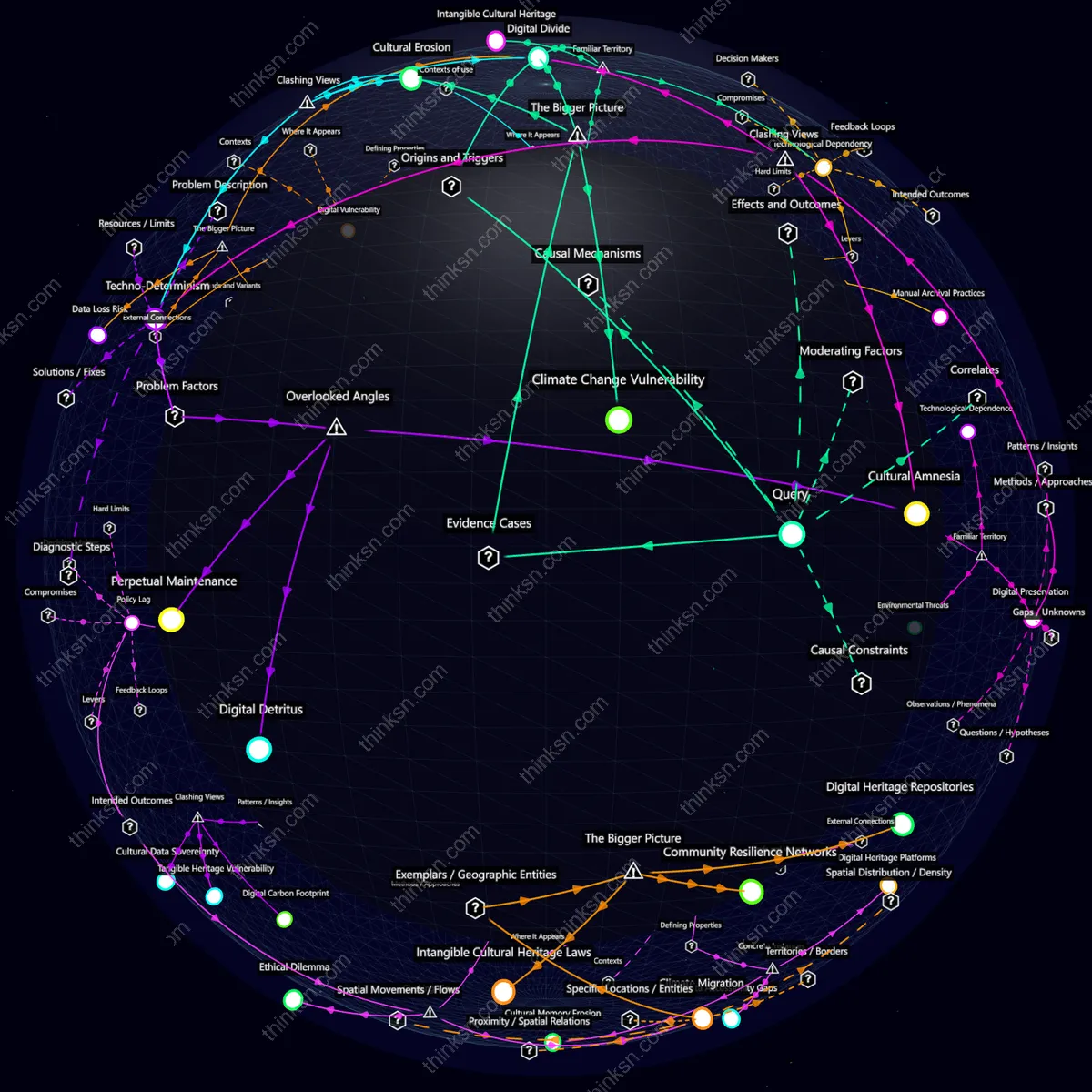
Analysis reveals 6 key thematic connections.
Key Findings
Climate Change Adaptation Strategies
Prioritizing digital archiving over tangible heritage conservation shifts focus towards virtual preservation methods. This can lead to a neglect of physical sites and artifacts, exacerbating the loss of irreplaceable cultural heritage due to climate change impacts like flooding or erosion.
Intangible Cultural Heritage
Digital archiving efforts may overlook intangible aspects such as oral traditions, performing arts, and rituals, which are equally vital for maintaining cultural identity. This oversight can lead to a fragmented understanding of heritage and diminish community cohesion and resilience in the face of environmental challenges.
Technological Dependency
Relying heavily on digital technologies for archiving raises concerns about data security, accessibility, and longevity. As climate change intensifies, natural disasters may disrupt digital infrastructure, potentially leading to significant losses in digitized cultural records if robust backup systems are not implemented.
Digital Divide
Prioritizing digital archiving over tangible heritage conservation can exacerbate the digital divide. Wealthier regions with robust internet infrastructure may have more resources to digitize cultural artifacts, leaving poorer communities behind who rely on physical preservation methods for their cultural identity.
Climate Change Vulnerability
The shift towards digital archiving might lead to a false sense of security against climate change threats. However, digital archives are vulnerable to cyber-attacks and power outages, which can result in data loss or corruption, while tangible heritage often remains resilient to such risks.
Cultural Erosion
Focusing on digital archiving over physical preservation could cause a significant cultural erosion. Communities might lose the tactile and sensory experiences that come with interacting with tangible heritage, potentially weakening their connection to historical events and traditions.
Deeper Analysis
What are the static components, categories, and spatial distributions involved in climate change adaptation strategies when prioritizing digital archiving over tangible heritage conservation for cultural preservation?
Digital Divide
Prioritizing digital archiving over tangible heritage conservation amplifies the digital divide by neglecting communities with limited access to technology. This leaves marginalized groups more vulnerable, as their intangible cultural assets are preserved at the expense of physical sites that often serve as community centers.
Cultural Erosion
Focusing on digital archiving can lead to a superficial understanding of culture, eroding deeper connections and traditional practices. As communities rely more on digitized records, there's a risk that the living, evolving nature of cultural heritage becomes static and detached from its original context.
Techno-Determinism
The assumption that digital solutions are inherently superior can lead to techno-deterministic policies in climate change adaptation. This may overlook the resilience and adaptability inherent in traditional practices, potentially undermining community-led initiatives that have proven effective over generations.
What strategies can be formulated to reduce technological dependency on digital archiving in order to better preserve tangible heritage amidst climate change threats?
Digital Vulnerability
Increased reliance on digital archiving systems can expose tangible heritage to cyber threats and data loss. For instance, a museum's digitization initiative may enhance accessibility but simultaneously make unique artifacts vulnerable to ransomware attacks or system failures, undermining preservation efforts.
Climate Resilience
Technological dependency on digital archiving can paradoxically undermine climate resilience by centralizing critical cultural data in infrastructure that is itself at risk from extreme weather events. For example, the flooding of a coastal city's main server center could result in catastrophic loss of historical records and digital collections.
Manual Archival Practices
The shift towards technological dependency can marginalize traditional archival methods such as physical storage and analog documentation. As a consequence, archivists may lack the skills and resources to maintain robust backup systems for when digital infrastructure fails or becomes inaccessible due to climate change.
Explore further:
- What are the digital vulnerabilities associated with prioritizing digital archiving over tangible heritage conservation in relation to cultural preservation under climate change threats?
- How has the prioritization of digital archiving over tangible heritage conservation evolved as a strategy for climate resilience in response to environmental threats, and what mechanisms are driving this shift?
What are the digital vulnerabilities associated with prioritizing digital archiving over tangible heritage conservation in relation to cultural preservation under climate change threats?
Data Loss Risk
Prioritizing digital archiving over tangible heritage conservation can lead to an increased risk of data loss due to cyber attacks or technical failures, undermining efforts to preserve cultural heritage. This shift in focus may leave digitized assets more vulnerable to ransomware and other cybersecurity threats, potentially erasing irreplaceable historical records.
Climate Change Mitigation Neglect
By focusing on digital preservation, resources might be diverted away from essential climate change mitigation efforts needed for tangible heritage conservation. This could exacerbate the physical deterioration of cultural sites due to rising sea levels and extreme weather events, creating a paradox where digitized content survives while physical artifacts are lost.
Digital Divide
The emphasis on digital archiving can widen the digital divide between communities with varying access to technology. This shift may marginalize those who rely heavily on tangible heritage for cultural identity, reinforcing social inequalities and undermining holistic approaches to cultural preservation that consider diverse needs and perspectives.
How has the prioritization of digital archiving over tangible heritage conservation evolved as a strategy for climate resilience in response to environmental threats, and what mechanisms are driving this shift?
Digital Preservation
The shift towards digital preservation over tangible heritage conservation as a climate resilience strategy has led to the neglect of culturally significant physical artifacts. This prioritization risks losing invaluable historical and cultural context, as digital records may not capture the full essence or emotional resonance tied to material objects.
Environmental Threats
As environmental threats intensify, governments and institutions are increasingly viewing tangible heritage conservation as a luxury rather than an essential part of climate resilience. This reallocation of resources towards digital archiving may inadvertently undermine social cohesion and collective identity, particularly in regions where cultural artifacts serve as touchstones for community memory.
Technological Dependence
The growing reliance on technological solutions for climate resilience is creating a new set of vulnerabilities. As more heritage is stored digitally, the risk of data loss due to cyber attacks or technical failures becomes acute, potentially erasing irreplaceable historical records and cultural knowledge.
How does the neglect of climate change mitigation measures in prioritizing digital archiving over tangible heritage conservation evolve and impact cultural preservation strategies over time?
Intergenerational Impact
Climate change mitigation neglect has profound intergenerational implications for cultural preservation strategies. As younger generations become more aware of environmental threats, there is a growing disconnect between their concerns and the older generation's focus on digital archiving. This gap widens as climate impacts intensify, leading to potential loss of irreplaceable heritage sites and traditions that cannot be captured through digitization alone.
Policy Lag
The slow response by policy makers to integrate climate change mitigation into cultural preservation strategies highlights a systemic lag. This is exacerbated by the complex interplay between environmental, technological, and social factors, where immediate economic benefits of digital projects overshadow long-term risks. Such delays can lead to irreversible damage to tangible heritage sites before adequate policies are implemented.
What are the emerging insights and diverse viewpoints on how prioritizing digital preservation over tangible heritage conservation affects cultural preservation in the context of climate change threats?
Cultural Amnesia
The prioritization of digital preservation over tangible heritage can lead to cultural amnesia as physical artifacts carry unique sensory and emotional connections that are hard to replicate digitally. Communities may lose a direct, visceral link with their past, impacting intergenerational knowledge transfer.
Techno-Determinism
Relying heavily on digital preservation can foster a techno-determinist mindset within cultural institutions, where the assumption is that all heritage values can be preserved through technology. This overlooks the essential role of physical conservation in maintaining biodiversity and ecological integrity tied to cultural practices.
Digital Divide
Focusing on digital preservation widens the digital divide between communities with access to advanced technological resources and those without, exacerbating existing inequalities. This can marginalize less technologically savvy groups from engaging meaningfully with their own heritage documentation and preservation.
What strategies can policymakers employ to mitigate policy lag in digital archiving initiatives when prioritizing them over tangible heritage conservation amidst climate change threats?
Digital Obsolescence
Rapidly evolving digital technologies can render archiving policies outdated before they are fully implemented. Policymakers face a delicate balance, as prioritizing tangible heritage may protect against immediate loss but exacerbate the risk of digital data becoming inaccessible due to technological shifts.
Climate Migration
As climate change forces populations to relocate, there's an increased urgency to preserve cultural and historical records. However, this migration can dilute political will for long-term archiving initiatives, leading to fragmented digital preservation efforts that struggle with coordination and funding.
Ethical Dilemma
The prioritization of digital archiving over tangible heritage raises ethical questions about cultural identity and continuity. Communities may resist policies favoring digital records if they perceive it as a neglect of their physical, culturally significant landmarks and artifacts, leading to social unrest or loss of traditional knowledge.
Explore further:
In the context of techno-determinism, what are the measurable systemic strains and potential failures when prioritizing digital archiving over tangible heritage conservation in response to climate change threats for cultural preservation?
Digital Detritus
Techno-determinism often leads to the neglect of physical conservation in favor of digital archiving, resulting in an explosion of 'digital detritus'. This overwhelming volume of data can become a burden rather than a resource, as storage costs rise and curation efforts fail to keep pace. The environmental impact of maintaining vast server farms also exacerbates climate change, creating a paradoxical situation where the very technology meant for preservation contributes to destruction.
Cultural Amnesia
Prioritizing digital archiving over tangible heritage conservation can inadvertently foster 'cultural amnesia', as younger generations become increasingly detached from physical cultural artifacts. This disconnection risks eroding the deeper emotional and experiential ties to culture that only direct interaction with historical objects can provide, leading to a fragmented understanding of history and identity.
Perpetual Maintenance
Techno-determinism's push towards digital archiving implies perpetual maintenance requirements for outdated formats and evolving technologies. This continuous cycle of data migration and format conversion not only drains resources but also introduces risks such as data loss or corruption, highlighting the fragile dependencies on constant technological support to preserve cultural heritage.
How does digital obsolescence impact the evolution of cultural preservation strategies as a response to climate change threats over time?
Technological Ecosystems
As digital technologies evolve rapidly, the interdependencies within technological ecosystems become increasingly fragile. This fragility is exacerbated by frequent updates and upgrades, which can lead to rapid obsolescence of existing systems or devices. For instance, museums may find that digitized artifacts become unusable due to outdated software or hardware, undermining efforts to preserve cultural heritage through digital means.
Climate Change Adaptation
Digital obsolescence poses a significant challenge for climate change adaptation strategies by requiring constant updates and replacements of critical infrastructure. This can be particularly problematic in regions experiencing extreme weather events, where the need to maintain resilient systems is paramount but hindered by rapid technological changes that necessitate ongoing investment and maintenance.
Data Sustainability
The quest for data sustainability is complicated by digital obsolescence. As older formats become unreadable or incompatible with current technology, there's a risk of losing valuable cultural and historical data. For example, early digital archives may use file types that are no longer supported, making it difficult to access or preserve critical information about environmental changes over time.
Explore further:
- What emerging insights can be gained from examining how technological ecosystems are reshaping the prioritization between digital archiving and tangible heritage conservation in light of climate change threats?
- What are the spatial distributions and structural components involved in climate change adaptation strategies that prioritize digital archiving over tangible heritage conservation for cultural preservation?
What are the spatial impacts of climate migration on cultural preservation efforts that prioritize digital archiving over tangible heritage conservation?
Digital Heritage Repositories
As climate-induced migration displaces communities from their ancestral lands, digital heritage repositories face the challenge of capturing and preserving intangible cultural assets. However, this transition often overlooks the nuances and sensory experiences that make tangible heritage irreplaceable, leading to a fragmented understanding of cultural identity.
Community Resilience Networks
The establishment of community resilience networks in response to climate migration can sometimes reinforce digital archiving over physical conservation efforts. This prioritization may inadvertently isolate younger generations from direct engagement with tangible heritage, risking the loss of traditional skills and lived cultural experiences that are crucial for identity formation.
Intangible Cultural Heritage Laws
In regions heavily impacted by climate migration, such as the Pacific Islands or parts of Southeast Asia, new laws aimed at protecting intangible cultural heritage often struggle to balance digital archiving with tangible conservation needs. This legal framework can create a dependency on technology for cultural continuity, while neglecting the immediate threats faced by physical artifacts and sites.
What emerging insights can be gained from examining how technological ecosystems are reshaping the prioritization between digital archiving and tangible heritage conservation in light of climate change threats?
Digital Carbon Footprint
The growing emphasis on digital archiving within technological ecosystems amplifies the digital carbon footprint, a critical yet often overlooked aspect of climate change. As more cultural heritage is digitized to preserve it against environmental threats, the energy consumption and emissions from data centers increase, paradoxically exacerbating the very risks that digital archiving aims to mitigate.
Tangible Heritage Vulnerability
The prioritization towards digital archiving in technological ecosystems can lead to a neglect of tangible heritage conservation. This shift diverts resources and attention from critical physical preservation needs, leaving sites vulnerable to irreversible damage due to climate change, such as coastal erosion or extreme weather events, thereby undermining the very mission of cultural preservation.
Cultural Data Sovereignty
As technological ecosystems become more integrated into heritage conservation strategies, issues of cultural data sovereignty emerge. Digital archiving can lead to a centralization and commodification of cultural assets by tech companies, threatening the autonomy and control that local communities have over their own historical and cultural records.
What are the spatial distributions and structural components involved in climate change adaptation strategies that prioritize digital archiving over tangible heritage conservation for cultural preservation?
Digital Heritage Platforms
The rise of digital heritage platforms prioritizes virtual preservation over tangible heritage conservation. This shift can lead to uneven access and representation, as marginalized communities may lack the technological infrastructure needed for effective digital archiving.
Data Accessibility Gaps
Climate change adaptation strategies that rely heavily on digital archiving exacerbate data accessibility gaps in rural or underdeveloped areas. This dependency can result in a loss of local knowledge and cultural identity, as physical heritage sites are neglected for virtual representations.
Cultural Memory Erosion
Focusing solely on digital archiving risks eroding the tangible aspects of cultural memory. As communities lose direct interaction with their historical artifacts and monuments, the emotional and educational value associated with these spaces diminishes, leading to a fragmented understanding of heritage.