AI vs Ethics: The Race to Verify Machine-Made News
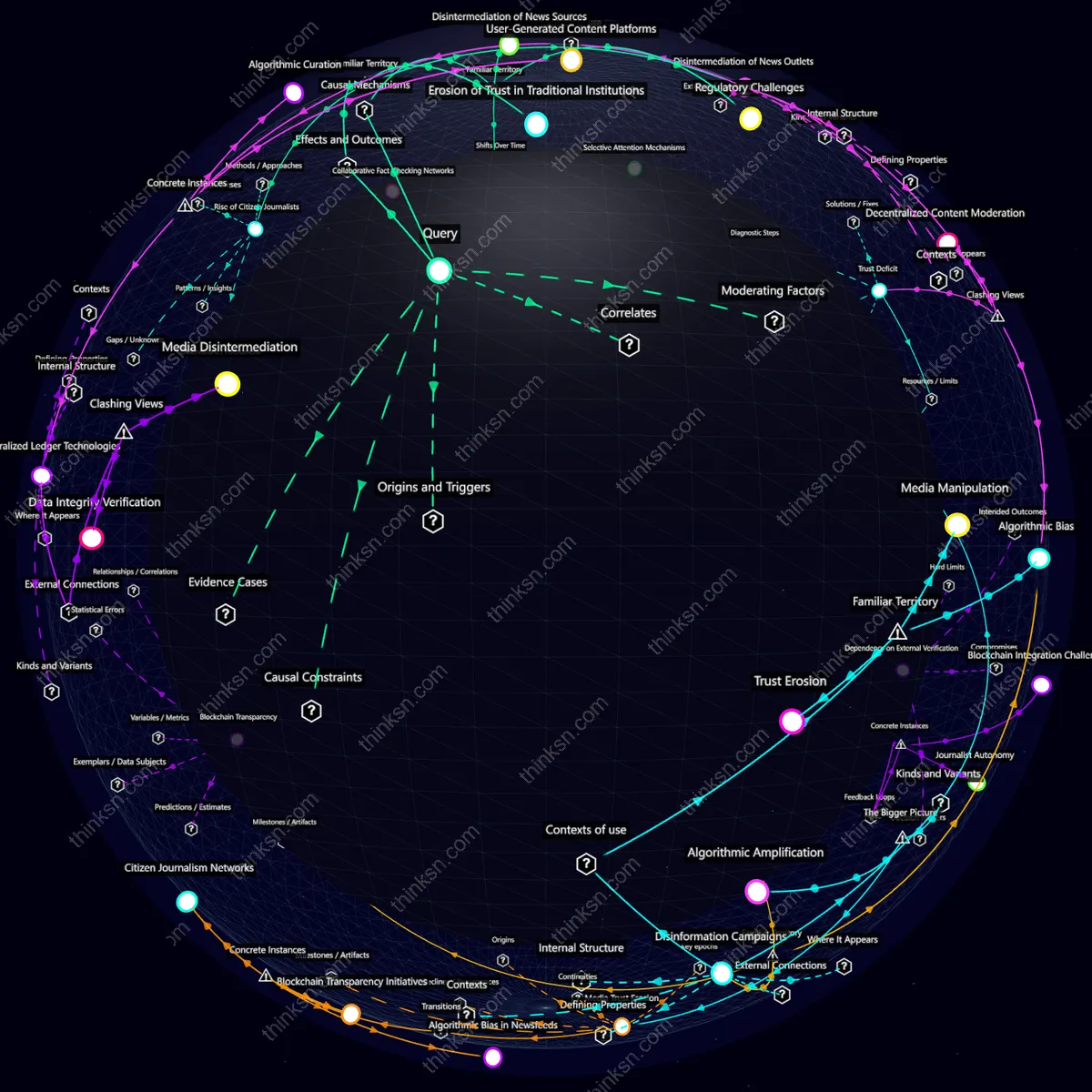
Analysis reveals 6 key thematic connections.
Key Findings
Media Bias
AI-generated news exacerbates media bias by automating echo chambers that reinforce existing beliefs, potentially silencing dissent and undermining public discourse.
Journalistic Integrity
The rise of AI in journalism threatens journalistic integrity as machines outpace human verification processes, leading to a surge in misinformation and erosion of trust among readers and viewers.
Public Perception
As AI-generated news spreads rapidly on social media, public perception becomes increasingly polarized, with marginalized communities facing disproportionate risks from deepfakes and automated propaganda.
Disinformation Campaigns
AI-generated news can rapidly disseminate disinformation, challenging traditional fact-checking mechanisms. Journalists and media watchdogs find themselves in a race against time as AI tools create content faster than humans can verify it, leading to widespread misinformation that undermines public trust in journalism.
Algorithmic Bias
The reliance on algorithms for news generation risks perpetuating or even amplifying existing societal biases. As machines learn from historical data, they may embed and reinforce prejudiced viewpoints, further dividing communities along racial, gender, or socioeconomic lines, while the ethical responsibility falls squarely on human creators who must navigate complex value trade-offs between innovation and equity.
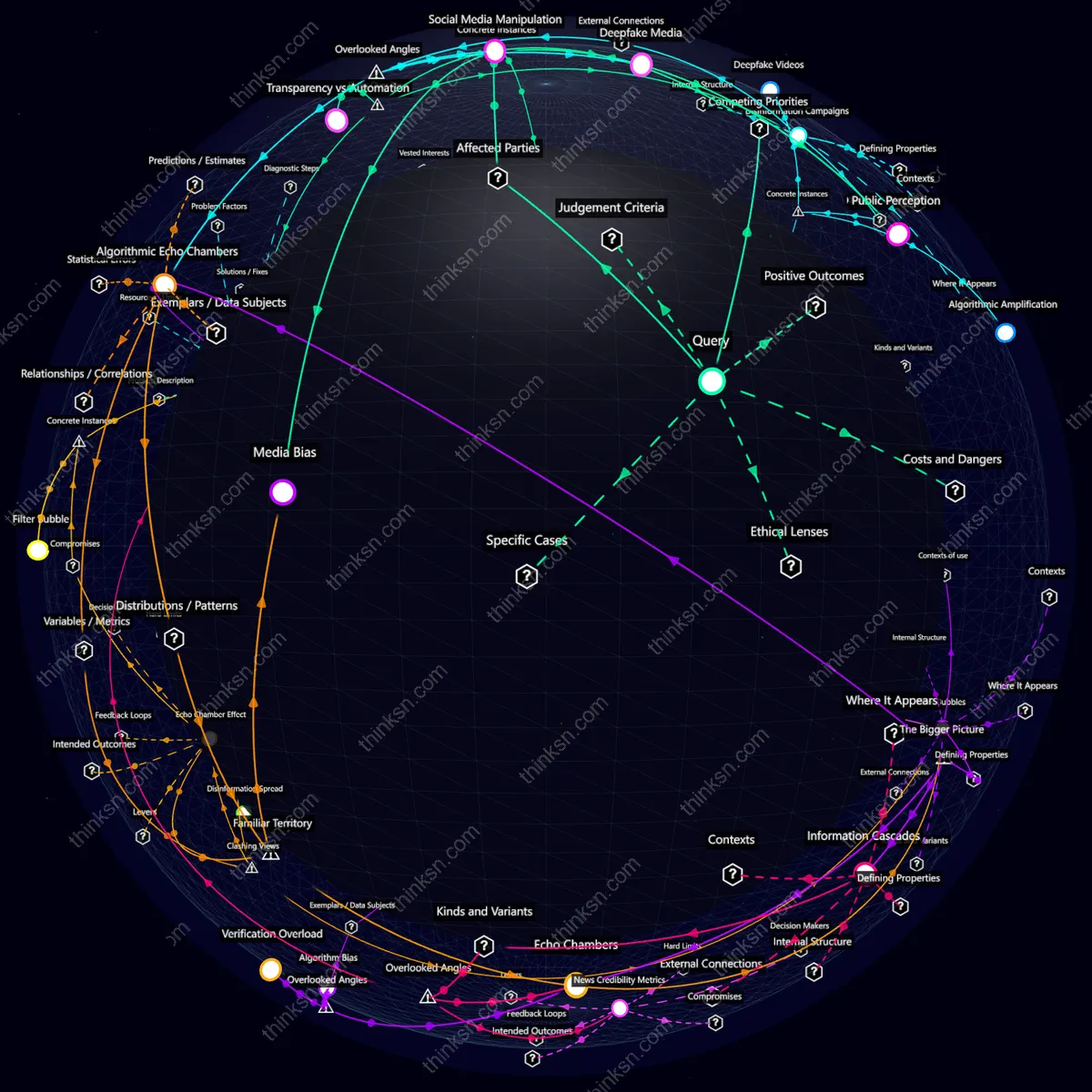
Transparency vs Automation
The push for automated news generation highlights a tension between transparency and efficiency. While automation promises faster dissemination of information, it often comes at the cost of reduced transparency about how content is generated, leading to public skepticism and mistrust when opaque AI systems are used without clear disclosure mechanisms.
Deeper Analysis
How do disinformation campaigns leverage AI-generated news to challenge traditional journalistic ethics and verification processes?
Algorithmic Echo Chambers
Disinformation campaigns exploit algorithmic echo chambers to amplify AI-generated news, creating feedback loops where users are exposed only to content that reinforces their existing beliefs. This leads to a polarized information landscape, undermining journalistic ethics by eroding public trust in fact-based reporting and verification processes.
Deepfake Media
The rise of deepfake media complicates traditional journalistic verification processes as disinformation campaigns leverage AI-generated videos and images that appear real. This technology not only distorts human perception but also places immense pressure on journalists to develop sophisticated tools for content verification, creating a costly arms race in fact-checking.
Social Media Manipulation
Disinformation campaigns use social media manipulation tactics to rapidly spread AI-generated news, often targeting vulnerable populations and exploiting psychological triggers. This approach not only challenges journalistic ethics by bypassing traditional verification methods but also risks exacerbating societal divisions and undermining democratic discourse.
Deepfake Videos
Disinformation campaigns exploit deepfake videos to create misleading narratives that challenge traditional journalistic ethics by blurring the line between reality and fiction. The use of AI-generated content complicates verification processes, leading journalists and media consumers to question the authenticity of video evidence.
Social Media Bots
Disinformation campaigns leverage social media bots to spread AI-generated news at an unprecedented scale, overwhelming traditional fact-checking mechanisms. This strategy exploits the echo chamber effect, where information is repeatedly shared among like-minded individuals, reinforcing false narratives and eroding public trust in credible sources.
Algorithmic Amplification
Disinformation campaigns strategically use algorithmic amplification to target specific demographics with AI-generated content, exploiting the vulnerabilities of recommendation systems. This tactic escalates the reach and impact of misinformation, challenging journalists' ability to identify and counteract disinformation at scale.
What are the measurable impacts of algorithmic echo chambers on the reliability and ethical standards of AI-generated news in journalism?
Information Bubble
The proliferation of algorithmic echo chambers leads to the deepening of information bubbles, where users are increasingly exposed only to content that aligns with their existing beliefs. This creates a fragile system dependent on continuous reinforcement of pre-existing views, leading to polarization and decreased engagement with opposing viewpoints.
Filter Bubbles
Algorithmic echo chambers intensify filter bubbles by personalizing news feeds based on user behavior data, which can lead to the underrepresentation or outright exclusion of diverse perspectives. This not only limits exposure to a wide range of societal issues but also undermines the credibility and reliability of AI-generated news sources.
Echo Chamber Effect
The echo chamber effect in algorithmic systems can result in users becoming less critical consumers of information, as repeated exposure to similar viewpoints reinforces biases and decreases cognitive diversity. This systemic consequence poses risks for democratic processes that rely on informed public discourse.
Media Bias
Algorithmic echo chambers exacerbate media bias by reinforcing existing beliefs, leading users to consume only information that aligns with their views. This creates a feedback loop where AI-generated news becomes increasingly polarized and less reliable, undermining the ethical standards of journalism.
Explore further:
How do AI-generated news stories contribute to the formation and perpetuation of information bubbles in journalism?
Algorithmic Bias
AI-generated news stories can perpetuate algorithmic bias by reinforcing existing prejudices through selective data use. This creates echo chambers where diverse viewpoints are marginalized, thereby distorting public perception and discourse.
Social Media Echo Chambers
The dissemination of AI-generated content on social media platforms intensifies the formation of echo chambers, as users increasingly interact with like-minded peers. Over time, this can erode nuanced understanding of complex issues, leading to polarized communities.
Filter Bubbles
AI's role in curating news feeds based on user behavior creates filter bubbles that isolate individuals from contrary viewpoints. This not only limits cognitive diversity but also undermines the democratic principle of informed citizenship.
What strategies can be formulated to mitigate the echo chamber effect in AI-generated news, ensuring robust human verification and diverse perspectives are maintained?
Algorithmic Bias
Social media algorithms that prioritize user engagement can amplify algorithmic bias by repeatedly showing users content similar to their existing views. This creates an echo chamber effect, reinforcing biases and limiting exposure to diverse perspectives.
Filter Bubble
The filter bubble phenomenon occurs when personalized news feeds limit users' access to a wide range of information, trapping them in a self-reinforcing loop of similar viewpoints. This can lead to misinformation spreading unchecked within isolated communities.
How do filter bubbles affect the ethical implications of AI-generated news in journalism as machines outpace human verification?
Algorithmic Bias
Filter bubbles exacerbate algorithmic bias by reinforcing existing prejudices in AI-generated news. This can lead to a false sense of consensus among users, making it harder for journalists and fact-checkers to surface and correct misinformation.
Echo Chambers
The creation of echo chambers through filter bubbles distorts public perception by limiting exposure to diverse viewpoints. Journalists face the challenge of breaking through these barriers to reach audiences outside their usual demographic, potentially silencing minority voices in critical discussions.
Information Cascades
Filter bubbles can trigger rapid information cascades where sensational or misleading content spreads unchecked due to confirmation bias. This poses a significant risk for AI-generated news, as automated systems may amplify false narratives without human oversight to temper them.
Echo Chamber Effect
The Echo Chamber Effect amplifies Filter Bubbles by reinforcing users' pre-existing beliefs, creating a closed loop where alternative viewpoints are systematically excluded. This can lead to misinformation being treated as fact within isolated online communities, undermining the role of journalism in fostering informed public discourse.
User Autonomy
Filter Bubbles often erode User Autonomy by manipulating what information is presented based on inferred preferences, reducing individuals' ability to engage with diverse perspectives. This undermines the ethical imperative in journalism to provide balanced coverage and can lead to a more polarized society as users become increasingly insulated from opposing views.
How do information cascades affect the spread and verification of AI-generated news in journalism?
Echo Chambers
Information cascades within echo chambers amplify AI-generated news, reinforcing biases among users. While this can accelerate the spread of content, it also undermines fact-checking efforts and public trust in journalism.
Algorithmic Bias
AI algorithms driving information cascades may inadvertently prioritize sensational or misleading AI-generated stories due to biased training data, leading to systemic misinformation and a skewed perception of reality among audiences.
News Credibility Metrics
Emerging systems for verifying news credibility struggle with the rapid spread of AI-generated content in cascades. This creates a fragile dependency on real-time fact-checking, which can fail under high-pressure scenarios or during rapid shifts in public discourse.
How has user autonomy in consuming news evolved as AI-generated content increases, and what are the ethical implications over time?
Algorithmic Filtering
As AI-driven algorithms increasingly personalize news feeds, users face an opaque system that can limit exposure to diverse viewpoints. This risks creating echo chambers and undermining user autonomy by reinforcing existing beliefs rather than challenging them.
Data Privacy Concerns
The rise of personalized content generation often relies on extensive data collection, raising ethical concerns about user privacy. Users may feel compelled to share personal information for a more tailored experience but at the cost of losing control over their digital footprint and potential misuse of their data.
Content Bias
AI systems can inadvertently or deliberately introduce biases into news content, whether through programming oversights or manipulation by external actors. This can distort users' understanding of events, leading to a skewed perception of reality and eroding the autonomy of users in discerning truth from fiction.
What are the measurable impacts and trade-offs of algorithmic filtering on the reliability and ethics of AI-generated news in journalism when verification processes are overwhelmed by machine speed?
Echo Chamber Effect
Algorithmic filtering creates personalized news feeds that can isolate individuals in echo chambers, reinforcing biases and reducing exposure to diverse viewpoints. This siloing has the risk of polarizing societies and undermining public discourse by limiting critical thinking and fostering confirmation bias.
Disinformation Spread
The rapid propagation of algorithmically filtered content can accelerate the spread of disinformation, especially when verification processes are overwhelmed. Journalists and fact-checkers struggle to keep up with machine speed, leading to a proliferation of unverified stories that gain traction before they are debunked.
Algorithmic Bias
Biased algorithms can perpetuate systemic inequalities by disproportionately filtering content from underrepresented groups or communities. This not only affects the reliability and ethics of AI-generated news but also reinforces existing social biases, undermining journalistic integrity and public trust in media.
Algorithm Bias
Algorithmic filtering can exacerbate bias in AI-generated news by prioritizing content that aligns with the algorithm's training data, often skewing towards popular narratives and excluding minority or less represented viewpoints. This creates a feedback loop where marginalized communities are further excluded from public discourse due to their reduced visibility online.
Echo Chambers
The implementation of algorithmic filtering in news platforms can inadvertently strengthen echo chambers, as users increasingly encounter content that reinforces existing beliefs rather than challenging them. This effect is particularly pronounced among older demographics and those with limited digital literacy, who may lack the tools or inclination to seek out diverse perspectives.
Verification Overload
As algorithmic filtering automates content curation at machine speed, human verification teams struggle to keep up with the sheer volume of flagged material. This overload can lead to a higher rate of false positives and negatives, undermining the reliability of AI-generated news by allowing misinformation or valid but controversial viewpoints to slip through unchecked.