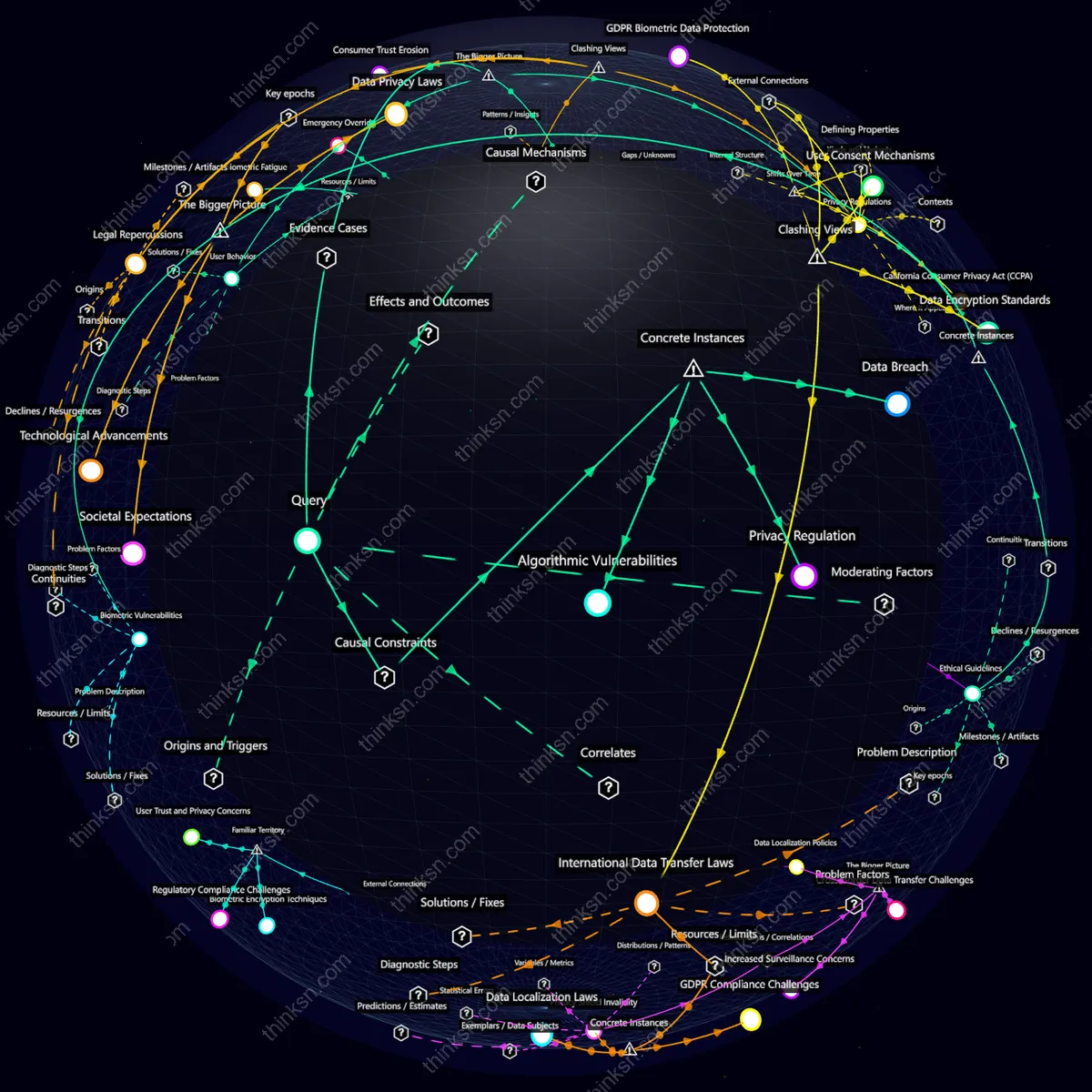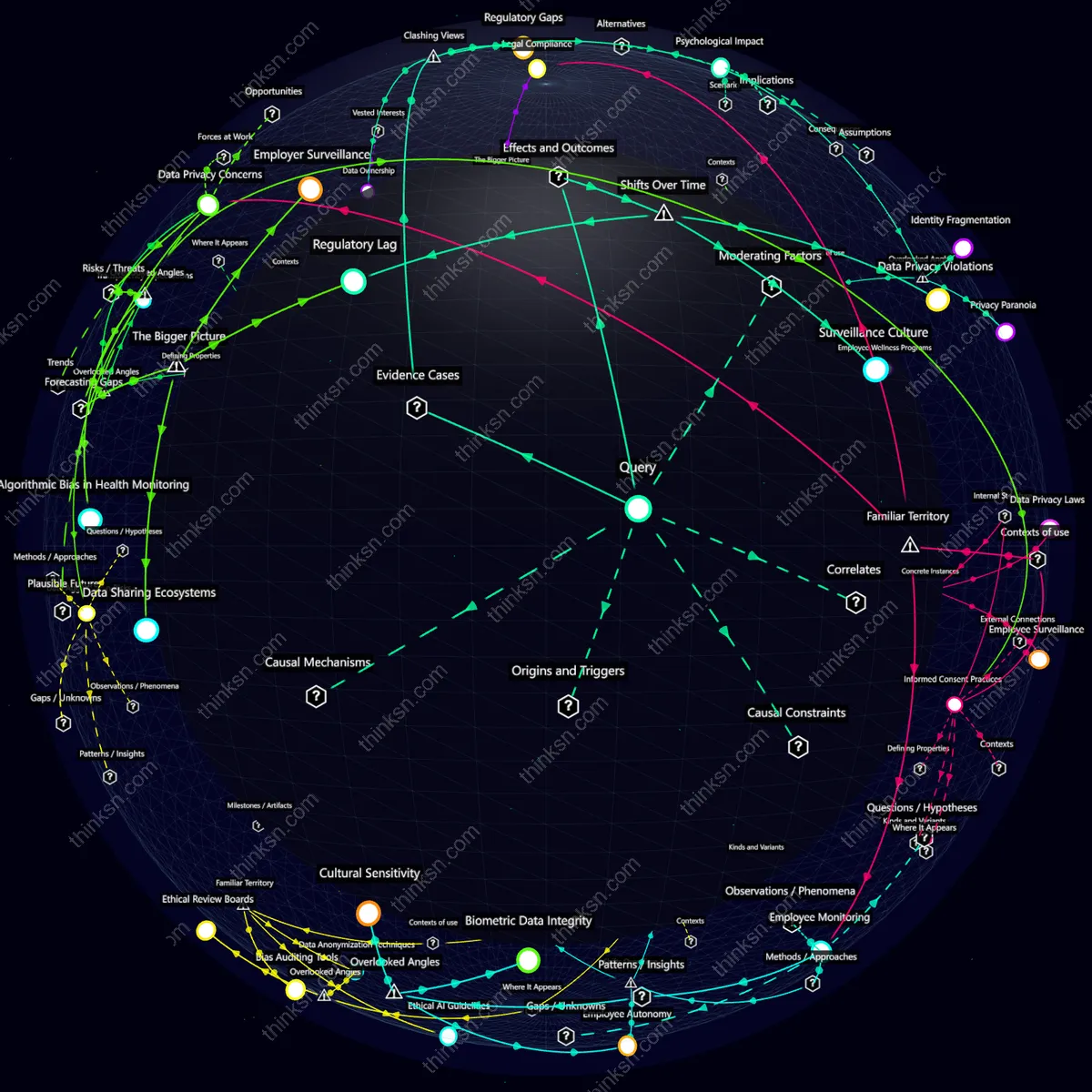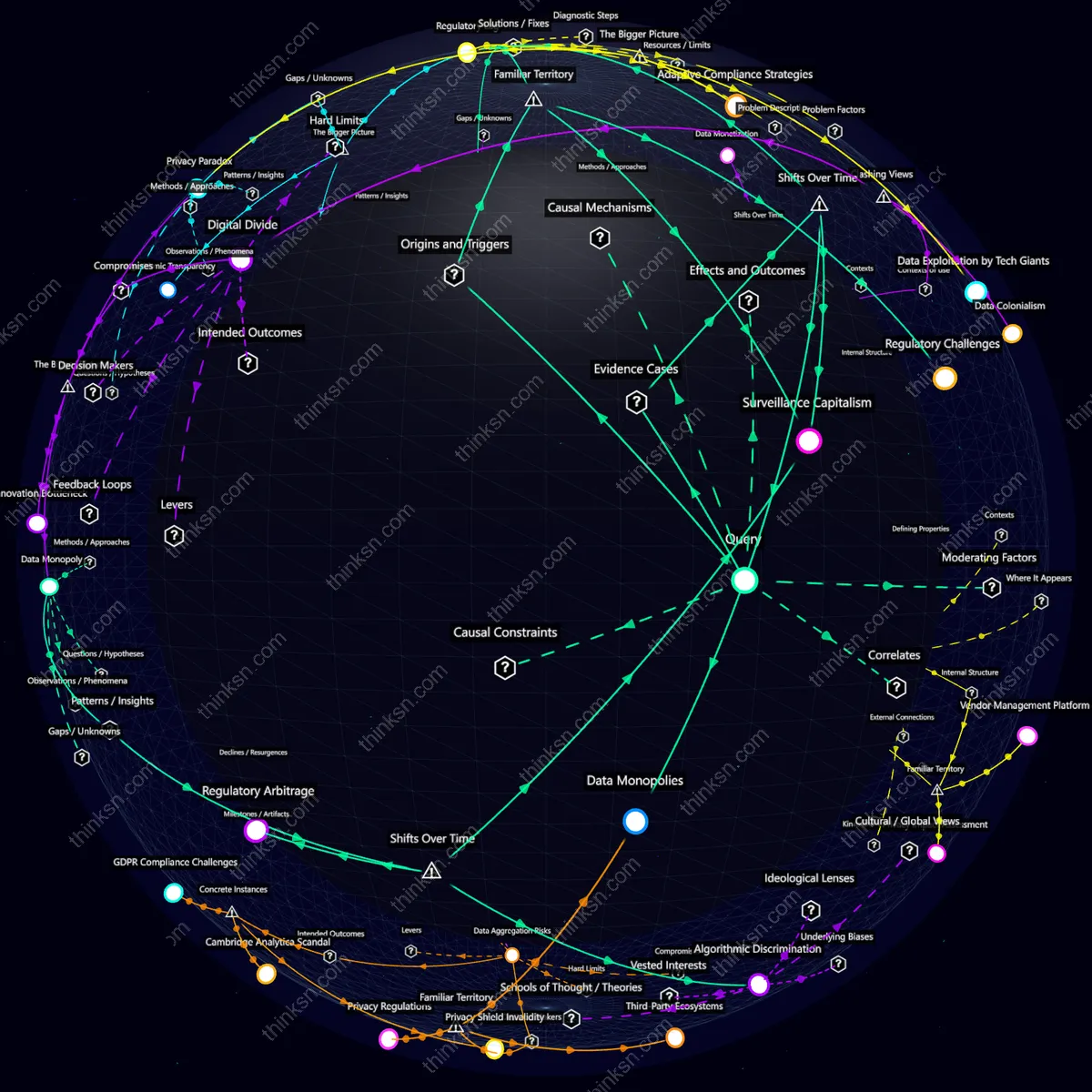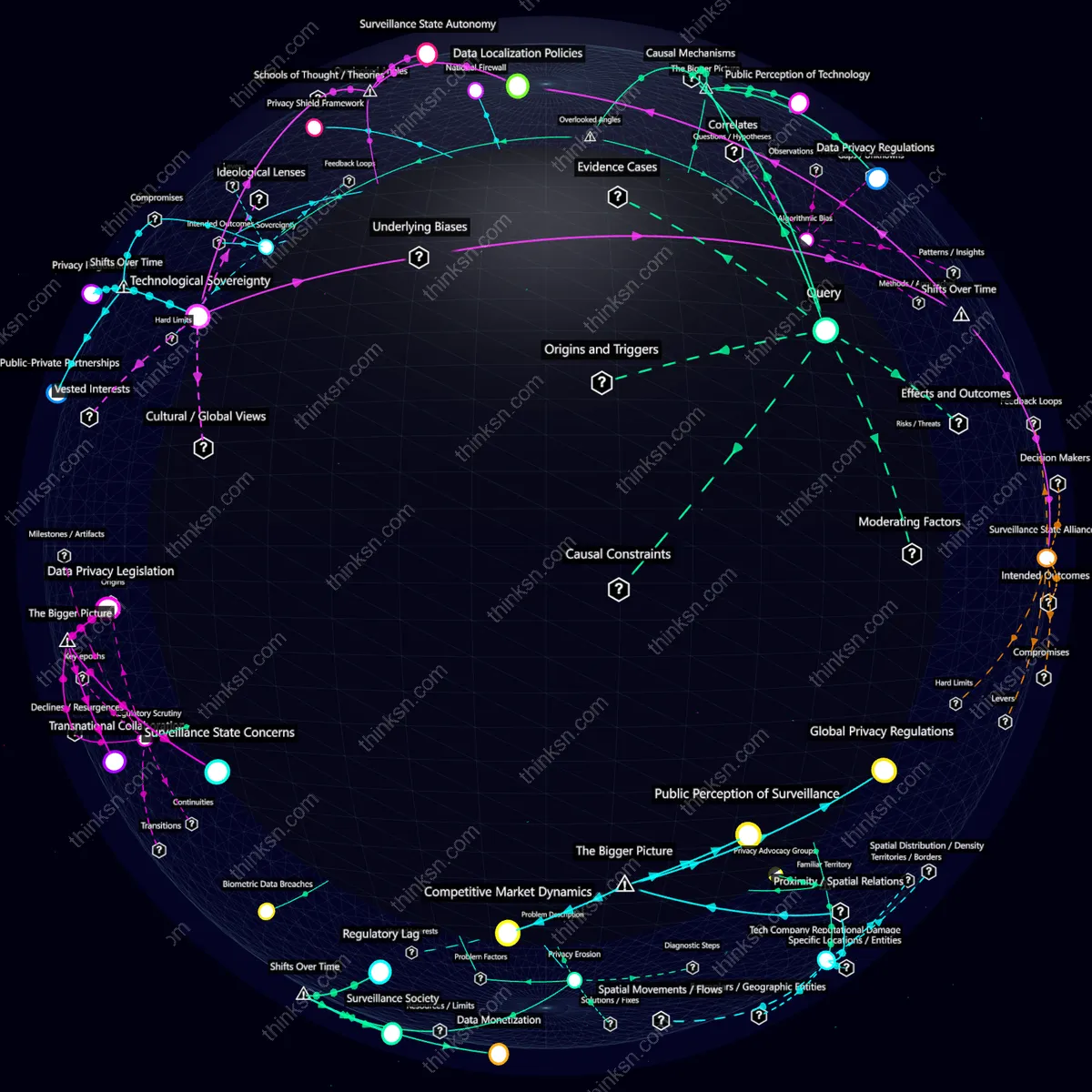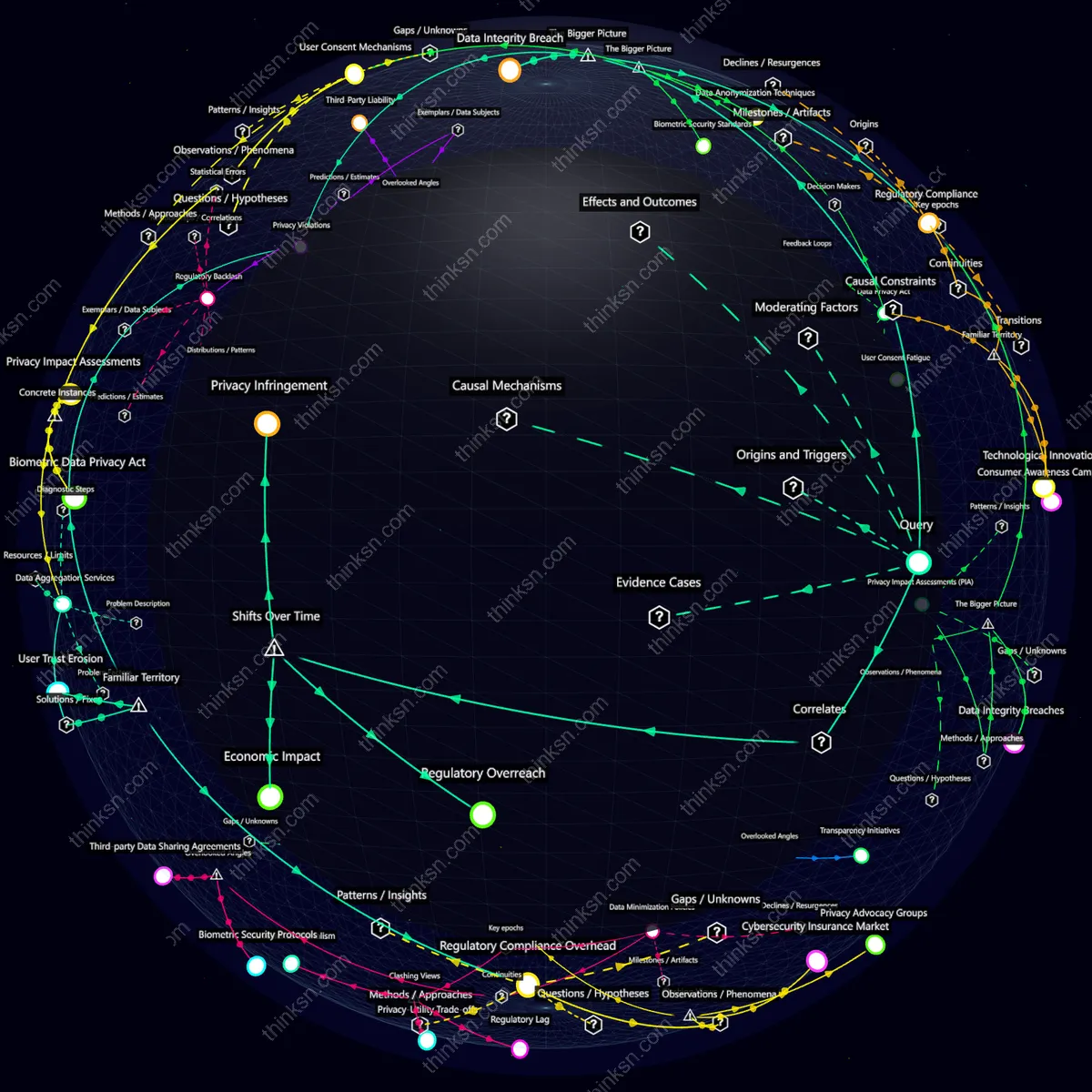
The Devastating Ripple Effect of Biometric Data Breaches in Hospitals and Schools
Analysis reveals 6 key thematic connections.
Key Findings
Privacy Infringement
The breach of biometric data in large institutions can rapidly shift public perception from a concern about technical security to a broad distrust in privacy management, leading organizations to invest heavily in protective measures while consumers increasingly demand stronger privacy guarantees and legal accountability.
Regulatory Overreach
As incidents of biometric data breaches escalate, governments may overreact by enacting overly restrictive regulations that stifle innovation and technological advancement. This can create a paradox where the very measures intended to protect individuals limit technological progress and economic growth.
Economic Impact
Large-scale breaches affecting biometric data in major institutions often trigger significant financial repercussions, including compensation payouts, increased insurance premiums for businesses handling sensitive information, and a decline in consumer trust that can severely impact stock prices and market confidence.
Data Integrity Breach
A data integrity breach in biometric systems can immediately trigger a cascade of trust issues among users and regulatory scrutiny for large institutions, potentially leading to long-term reputational damage and legal penalties. The fragility of the system highlights how even a single breach can undermine years of security investments.
Privacy Violations
The exposure of biometric data through breaches creates significant privacy violations for millions of individuals, exposing them to identity theft and surveillance risks. Institutions face the daunting task of compensating affected users while navigating complex legal landscapes, highlighting the intricate balance between technological advancement and personal rights.
Regulatory Compliance
A breach necessitates stringent compliance with data protection regulations like GDPR or CCPA, imposing heavy financial and operational burdens on institutions. The systemic challenge lies in adapting rapidly evolving legal requirements while maintaining robust security measures to prevent future breaches, creating a delicate balance between innovation and regulatory adherence.
Deeper Analysis
What are the measurable impacts and systemic pressures on large institutions when privacy violations occur through biometric data breaches, and how do these affect various stakeholders?
Regulatory Backlash
Following a biometric data breach at a major corporation, regulatory bodies intensify scrutiny and enforcement actions. This increased oversight often leads to financial penalties that can destabilize the company's financial health, forcing it to divert resources away from innovation and growth to legal defense and compliance.
Public Perception Shift
A high-profile biometric data breach at a hospital network shifts public perception towards an increased distrust of all medical institutions regarding patient privacy. This shift not only affects the immediate institution involved but also impacts other healthcare providers who face decreased trust and potential loss of patients to competitors.
Third-Party Liability
In cases where a biometric data breach occurs due to vulnerabilities in third-party software or services, the breached entity faces significant legal challenges as victims sue both parties. This complex liability landscape exposes companies to unpredictable litigation risks and complicates insurance coverage.
How has regulatory compliance in biometric data protection evolved over time in response to large-scale breaches, and what future implications can be anticipated for various systems and stakeholders?
Data Privacy Act
As biometric data breaches increase, countries rapidly update their Data Privacy Acts to mandate stricter regulatory compliance. However, this often leads to a fragmented legal landscape, complicating international business operations and potentially undermining uniform standards of protection.
Consumer Awareness Campaigns
Public awareness campaigns about biometric data protection have grown significantly post-breach, shifting consumer behavior towards more cautious digital practices. Yet, this heightened vigilance can strain compliance efforts for companies already struggling to meet stringent regulations, creating a paradox where increased awareness intensifies the regulatory burden.
Technological Innovation
The rapid pace of technological innovation in biometrics challenges existing regulatory frameworks, leading to a persistent lag between emerging technologies and legal protections. This gap exposes consumers and businesses to new vulnerabilities, underscoring the need for adaptive regulatory mechanisms that can keep pace with technology advancements.
What strategies should be formulated under a Data Privacy Act to mitigate risks and enhance security measures in large institutions following a biometric data breach?
Biometric Security Standards
The Data Privacy Act mandates stringent biometric security standards for institutions. However, the rapid pace of technological advancement outstrips regulatory updates, leaving a vulnerable window where outdated regulations fail to protect against sophisticated threats.
User Consent Mechanisms
Institutions must implement robust user consent mechanisms as mandated by the Data Privacy Act. Yet, these mechanisms often face resistance from users who find them overly cumbersome or complicated, leading to decreased compliance and potential data breaches due to human error.
Data Anonymization Techniques
To mitigate risks associated with biometric data breaches, the Data Privacy Act promotes the use of data anonymization techniques. However, these techniques can sometimes fail when combined with other datasets, potentially re-identifying individuals and undermining privacy protections.
Regulatory Compliance Overheads
The imposition of stringent Data Privacy Acts can lead to substantial regulatory compliance overheads for large institutions. While these regulations aim to protect biometric data, they often necessitate significant investments in technology and manpower, potentially diverting resources from core business operations and innovation.
User Consent Fatigue
Data Privacy Acts that mandate frequent user consent requests may inadvertently cause 'consent fatigue', leading users to bypass or ignore privacy notifications. This can undermine the effectiveness of data protection measures, as individuals may become desensitized to security alerts, thereby increasing risks associated with biometric data breaches.
Privacy vs. Security Dilemma
The enforcement of Data Privacy Acts often faces a critical dilemma between privacy and security. Institutions may find themselves caught in a paradox where enhancing privacy protections can sometimes compromise operational security, such as delaying the deployment of critical updates due to stringent review processes.
Explore further:
- What are the emerging insights and diverse perspectives on how user consent mechanisms should evolve in response to breaches of biometric data in large institutions, considering the interests of various stakeholders?
- What strategies can large institutions implement to reduce regulatory compliance overheads after a breach of biometric data?
What are the emerging insights and diverse perspectives on how user consent mechanisms should evolve in response to breaches of biometric data in large institutions, considering the interests of various stakeholders?
Biometric Data Privacy Act
The introduction of the Biometric Data Privacy Act aims to protect user consent in biometric data usage. However, it faces criticism for its broad compliance requirements that may stifle innovation and privacy-friendly startups while large institutions continue to exploit loopholes.
Privacy Impact Assessments
Organizations implementing Privacy Impact Assessments (PIAs) as part of user consent mechanisms often find themselves struggling with the balance between transparency and operational efficiency. While PIAs aim to identify risks early, they can also become bureaucratic hurdles that delay necessary technological advancements in privacy protection.
Data Aggregation Services
The rise of data aggregation services complicates user consent mechanisms as these platforms centralize vast amounts of personal information from various sources. Users may not fully comprehend the extent of data sharing, leading to increased risks of unauthorized access and breaches, despite explicit consents given.
What strategies can large institutions implement to reduce regulatory compliance overheads after a breach of biometric data?
Data Encryption Standards
After a biometric data breach, institutions rush to adopt stricter encryption standards. However, this shift often leads to increased operational complexity and costs, creating a fragile dependency on third-party vendors for compliance solutions that can introduce new vulnerabilities.
Privacy Impact Assessments (PIA)
Decision-makers in large institutions are compelled to conduct regular Privacy Impact Assessments following data breaches. While these assessments aim to identify risks and enhance protections, they frequently uncover gaps in existing compliance measures, leading to a cascade of new regulations that can overwhelm IT departments tasked with implementation.
Compliance Officer Roles
The rise in regulatory scrutiny after biometric data breaches often necessitates the expansion or creation of specialized Compliance Officer roles. These professionals navigate complex legal landscapes, but their effectiveness heavily depends on clear communication channels and support from senior leadership to drive meaningful change.
What are the potential failures and measurable systemic strain on data aggregation services when a biometric data breach occurs in large institutions, and how do these affect various stakeholders?
Privacy Violations
A biometric data breach can lead to severe privacy violations as aggregated biometric data is uniquely personal and sensitive. Large institutions may find that even with robust encryption, the systemic strain on their data aggregation services escalates due to the increased scrutiny and legal ramifications faced by them.
User Trust Erosion
The occurrence of a biometric data breach in large institutions can significantly erode user trust in data aggregation services. This erosion may lead to a decline in service usage, as users opt for less sensitive methods or abandon the use of biometrics altogether, thereby creating a systemic challenge that affects institutional operations and market dynamics.
Regulatory Compliance Overhead
Following a significant breach, institutions experience heightened regulatory scrutiny leading to increased compliance overhead. This strain on data aggregation services can be exacerbated by the need for continuous monitoring and reporting, often at the expense of innovation and operational efficiency.
What are the emerging insights and diverse viewpoints on conducting Privacy Impact Assessments (PIA) in response to a breach of biometric data within large institutions, and how do these impact various systems and stakeholders?
Data Integrity Breaches
The occurrence of data integrity breaches significantly challenges the efficacy of Privacy Impact Assessments (PIA) by exposing inherent vulnerabilities in data handling and security protocols. Institutions may find themselves inadequately prepared to mitigate biometric data leaks, leading to a loss of public trust and increased regulatory scrutiny.
Regulatory Compliance
Stricter regulatory compliance frameworks pose both opportunities and challenges for conducting effective Privacy Impact Assessments (PIA) in the wake of biometric data breaches. While stringent regulations enforce stricter security measures, they also create a complex legal landscape where non-compliance can result in severe penalties and reputational damage.
Stakeholder Engagement
Effective stakeholder engagement is critical for conducting Privacy Impact Assessments (PIA) following biometric data breaches. Engaging with diverse stakeholders, including affected individuals and privacy advocates, can provide valuable insights but also poses challenges in managing expectations and addressing varied interests and concerns.
What are the emerging insights and hidden assumptions regarding the regulatory compliance overhead imposed on large institutions after a breach of biometric data?
Privacy Advocacy Groups
As regulatory compliance overhead escalates post-breach, privacy advocacy groups increasingly pressure institutions for stricter controls. This can lead to a vicious cycle where heightened scrutiny fuels more stringent regulations and vice versa.
Cybersecurity Insurance Market
The surge in biometric data breaches compels large institutions to rethink their cybersecurity insurance strategies, leading to higher premiums and reduced coverage limits. This paradoxically incentivizes some firms to cut corners on compliance to save costs, exacerbating vulnerabilities.
Data Minimization Strategies
In response to growing regulatory burdens, companies may adopt extreme data minimization policies that limit operational capabilities, stifling innovation and customer experience. This can create a trade-off where businesses prioritize compliance over functionality, inadvertently undermining their competitive edge.
What strategies can large institutions formulate to enhance stakeholder engagement in response to a breach of biometric data?
Transparency Initiatives
In response to a biometric data breach, institutions might hastily implement transparency initiatives without fully considering their long-term implications. While immediate public disclosure can mitigate short-term trust issues, it may also embolden hackers by revealing more about the institution's security practices and vulnerabilities.
Data Minimization Policies
Institutions often overlook the complexities of data minimization policies in their stakeholder engagement strategies. While reducing data collection seems straightforward, it can alienate users who value convenience over privacy, leading to a potential decline in user base and revenue streams.
Third-party Audits
Relying on third-party audits for biometric security validation shifts responsibility away from the institution but can create a false sense of security. Trust in these auditors is critical, yet their independence and thoroughness may be compromised by financial incentives or conflicts of interest.
How has the implementation and evolution of data minimization policies in large institutions affected their response to breaches involving biometric data over time?
Surveillance Capitalism
Data minimization policies pose a challenge to surveillance capitalism's profit model by limiting the collection of unnecessary personal data. This tension has led some companies to find creative ways around these policies, often at the expense of user privacy and security.
Privacy-Utility Trade-offs
The implementation of strict data minimization policies can lead to a reduction in service functionality and user experience as organizations struggle to balance legal compliance with operational necessity. This trade-off becomes particularly acute in industries heavily reliant on user data, like social media platforms.
Regulatory Lag
As biometric technologies advance rapidly, regulatory bodies often find themselves playing catch-up. Data minimization policies designed for traditional personal data may not fully account for the unique risks and challenges of biometric data, leading to potential vulnerabilities in legal protections.
Biometric Security Protocols
The implementation of strict data minimization policies has often led to a paradoxical situation where biometric security protocols become overly complex and opaque, as institutions attempt to balance the need for strong security with the requirement to minimize data collection. This complexity can inadvertently create vulnerabilities that are exploited by sophisticated attackers.
Third-party Data Sharing Agreements
Data minimization policies have driven institutions to meticulously scrutinize third-party data sharing agreements. However, this scrutiny can sometimes be superficial or overly focused on specific types of data, leading to blind spots where other forms of sensitive information are inadequately protected and shared unnecessarily.