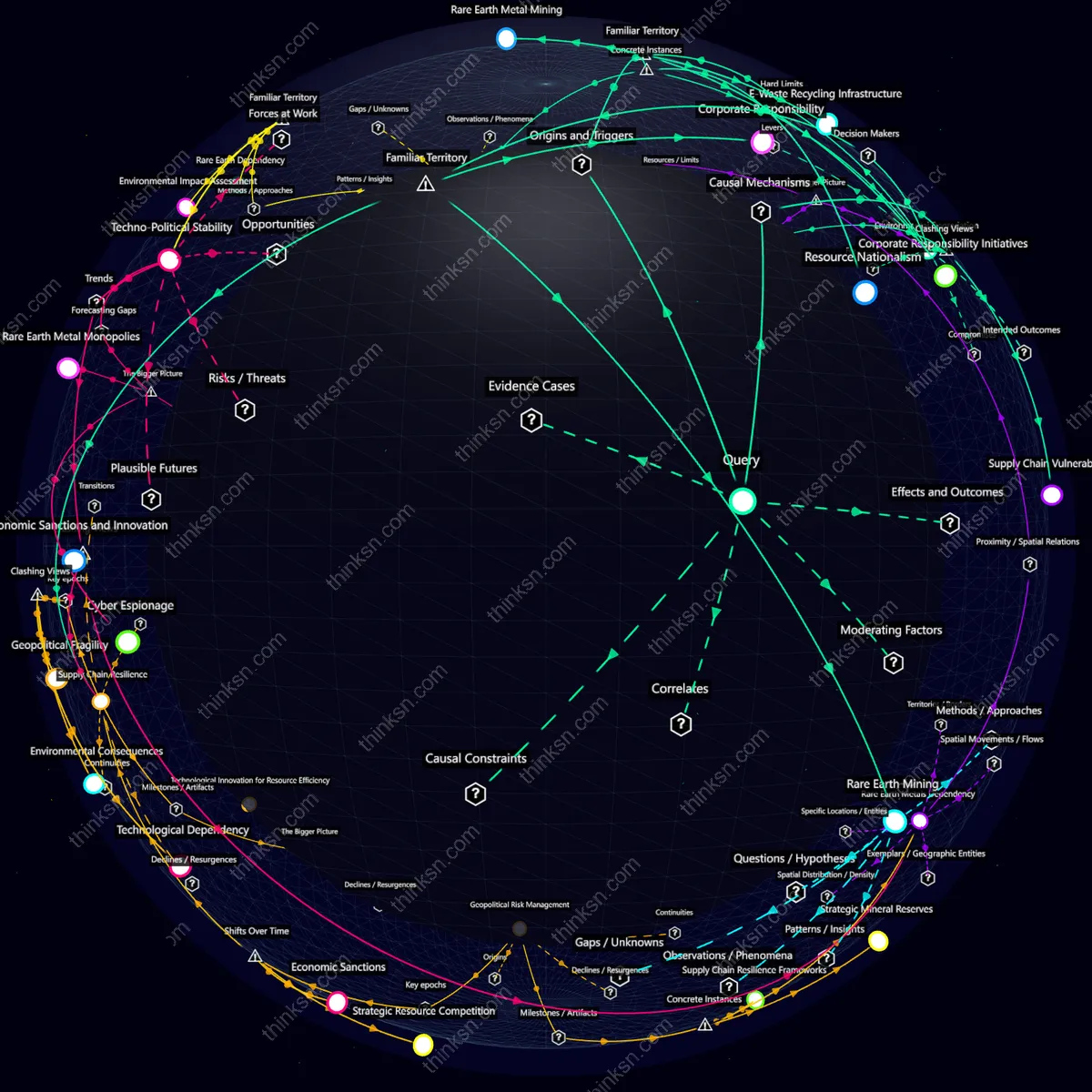
Global Supply Chain Shock: Impact of Strict Export Controls on Critical Materials
Analysis reveals 5 key thematic connections.
Key Findings
Economic Isolation
Strict export controls on critical materials can lead to economic isolation for countries that rely heavily on imports. As nations implement these controls, companies may seek alternative suppliers, often within their own borders or neighboring friendly nations, reinforcing regional trade blocs and weakening global interconnectedness.
Black Market Activity
The imposition of strict export controls can spur the growth of black market activities for critical materials. Smugglers might find new routes to transport these goods illegally, leading to increased risks for national security and economic instability as underground networks become more sophisticated.
Market Volatility
Strict export controls on critical materials can cause sudden market volatility, as companies scramble to secure alternative supplies. This shifts focus from long-term strategic planning to short-term crisis management, potentially leading to hoarding and speculative trading.
Geopolitical Tensions
Increased geopolitical tensions emerge as nations vie for control over critical materials. This can lead to diplomatic conflicts and even trade wars, complicating global supply chains further and undermining international cooperation on other fronts such as climate change or cybersecurity.
Cascading Effects on Industries
Industries heavily reliant on critical materials, such as semiconductor manufacturing or renewable energy production, face significant disruptions. Smaller firms without diversified supplier networks are particularly vulnerable, leading to a consolidation of power among large corporations that can afford to stockpile resources.
Deeper Analysis
How might strict export controls on critical materials lead to the evolution and expansion of black market activities in global supply chains over time?
Underground Manufacturing
Strict export controls on critical materials drive black market actors to establish clandestine manufacturing networks that bypass legal regulations, leading to a surge in counterfeit goods and compromised supply chain integrity. This evolution underscores the fragile dependency of legitimate industries on government oversight.
Smuggler Networks
Increased enforcement at official borders prompts black market smugglers to forge alliances with corrupt officials or exploit remote, under-monitored regions for trafficking critical materials, exacerbating regional instability and undermining national security efforts. This highlights the risk of unintended consequences in tightening export controls.
E-commerce Fraud
The rise of digital black markets leverages encrypted online platforms to sell restricted goods, exploiting vulnerabilities in international e-commerce regulations. This shift not only complicates law enforcement but also normalizes illicit trading practices among consumers and businesses alike, reflecting a systemic reframe towards acceptance of such activities.
How would geopolitical tensions exacerbate disruptions to global supply chains if strict export controls on critical materials are implemented by nations?
Export Controls
Strict export controls on critical materials like rare earth elements can lead to a domino effect in global supply chains. Nations may prioritize domestic industries, leading to shortages and higher costs for downstream manufacturers, particularly in tech and automotive sectors.
Sanctions
Geopolitical tensions often escalate into sanctions that disrupt the flow of goods and technology across borders, creating a ripple effect on supply chains. Companies may face sudden disruptions as they scramble to find alternative suppliers or risk breaching sanctions, impacting production timelines and customer trust.
Economic Isolation
Countries imposing strict export controls can isolate themselves economically from global markets. This isolation not only affects bilateral trade relations but also undermines the interconnectedness of supply chains worldwide, making recovery more challenging during crises like pandemics or natural disasters.
How might economic isolation contribute to disruptions in global supply chains due to strict export controls on critical materials?
Sanction Fatigue
As countries experience prolonged economic isolation through strict export controls on critical materials, businesses and governments develop sanction fatigue, leading to increased risk-taking behaviors such as illicit trade and circumvention of regulations. This creates fragile dependencies on shadow markets, undermining global supply chain stability.
Supply Chain Multipolarity
Economic isolation pressures countries to diversify their supply chains, fostering a multipolar system where reliance on single suppliers is reduced but complexity and coordination costs increase. This fragmented structure can lead to slower response times during crises and heightened vulnerability to geopolitical tensions.
Technological Autarky Initiatives
In response to economic isolation, nations invest heavily in technological autarky initiatives, aiming for self-sufficiency but often falling short due to the interconnected nature of global innovation. This misallocation of resources can distort market dynamics and inadvertently hinder long-term technological progress.
Supply Chain Vulnerability
Economic isolation exacerbates supply chain vulnerability as nations reliant on critical materials from isolated economies face shortages and inflated prices. Companies scramble to diversify suppliers but often encounter bottlenecks due to the global scarcity of alternatives, leading to unpredictable disruptions and increased operational costs.
Sanctioned Technologies
The proliferation of sanctioned technologies under economic isolation pressures tech companies to innovate within constrained environments. This leads to fragmented technological ecosystems where nations develop their own proprietary standards, hindering interoperability and stifling global technological advancement due to the inability to share resources and knowledge freely.
Resource Nationalism
Economic isolation triggers resource nationalism as countries hoard critical materials deemed vital for national security. This not only disrupts global trade but also emboldens protectionist policies, creating a domino effect where other nations rush to secure their own reserves, further isolating the global economy and deepening mutual distrust.
Explore further:
- How would supply chain multipolarity mitigate or exacerbate disruptions caused by strict export controls on critical materials, and what are the measurable systemic strains involved?
- How might resource nationalism evolve as a response to strict export controls on critical materials and what are the potential disruptions to global supply chains over time?
How might resource nationalism evolve as a response to strict export controls on critical materials and what are the potential disruptions to global supply chains over time?
Strategic Stockpiling
As resource nationalism intensifies due to export controls, nations increasingly stockpile critical materials. This shift alters global supply dynamics by creating new vulnerabilities; if major suppliers cut off trade abruptly, smaller countries dependent on these reserves could face severe shortages.
Informal Trade Networks
The rise of informal trade networks becomes a crucial coping mechanism for nations hit hard by strict export controls. These networks may involve smuggling and grey-market transactions, undermining official supply chains and leading to increased corruption and market instability.
Technological Diversification
In response to resource nationalism and export restrictions, industries accelerate research into alternative materials or technologies that can replace critical raw inputs. This technological shift may lead to unintended environmental consequences as new processes are adopted hastily without full ecological assessments.
Local Mining Resurgence
In response to strict export controls, nations may revive or expand domestic mining operations, leading to environmental degradation and conflicts with indigenous communities. This can also strain local infrastructure and create new dependencies on technologies for extraction and processing.
Trade Bloc Formation
Resource nationalism could drive the formation of trade blocs among countries sharing similar resource endowments or interests, isolating non-member nations and fostering economic fragmentation. This may lead to increased protectionism and reduced global cooperation on critical material flows.
Explore further:
- What strategies could nations and businesses employ to mitigate disruptions in global supply chains by leveraging informal trade networks if strict export controls on critical materials are imposed?
- How might local mining resurgence in response to strict export controls on critical materials affect global supply chains and what are the emerging insights from this scenario?
What strategies could nations and businesses employ to mitigate disruptions in global supply chains by leveraging informal trade networks if strict export controls on critical materials are imposed?
Sanction Evasion Techniques
The reliance on sanction evasion techniques within informal trade networks can lead to increased scrutiny from regulatory bodies and heightened risk of legal repercussions for businesses. While these methods allow circumvention of export controls, they also introduce vulnerabilities such as being exposed to espionage or exploitation by hostile actors.
Grey Market Supply Chains
The proliferation of grey market supply chains can create a fragile ecosystem where the quality and reliability of goods are uncertain. This can lead to significant operational disruptions for businesses dependent on these channels, as well as legal risks if products do not meet regulatory standards or intellectual property requirements.
Intermediary Broker Networks
Relying heavily on intermediary broker networks in informal trade settings can result in opaque transaction processes and increased corruption risks. While brokers may facilitate access to critical materials, they also pose significant financial and reputational risks if trust is misplaced or legal frameworks are not adequately navigated.
How might local mining resurgence in response to strict export controls on critical materials affect global supply chains and what are the emerging insights from this scenario?
Critical Material Shortages
As local mining surges to counteract export controls on critical materials like rare earth elements, supply chains for electronics and renewable energy face unpredictable shortages. This surge could lead to a fragmented market where smaller miners dominate local supplies but struggle with global scale demands, exacerbating price volatility.
Environmental Degradation
Increased small-scale mining activities in response to export controls can lead to significant environmental degradation, often overlooked due to the immediate economic benefits. Local ecosystems suffer from toxic waste and deforestation, potentially triggering long-term sustainability issues that could outlast the supply chain disruptions.
Global Economic Fragmentation
The resurgence of local mining in response to strict export controls may accelerate global economic fragmentation as countries seek self-sufficiency. This shift can create new trade barriers, leading to a less interconnected and potentially more unstable global economy where past supply chain resilience is compromised.
How might global economic fragmentation evolve over time as a result of strict export controls on critical materials by nations, and what are the potential disruptions to global supply chains?
Strategic Resource Monopolies
Nations with monopolistic control over critical materials will increasingly dictate global economic terms, leading to a fragmented supply chain architecture that prioritizes bilateral trade agreements and self-sufficiency at the expense of multilateral cooperation. This shift undermines established international institutions like the WTO, fostering a new era of geopolitical risk and economic instability.
Reshored Manufacturing Clusters
The rise of reshored manufacturing clusters in response to export controls on critical materials accelerates local industrialization but also creates supply chain silos. These self-contained ecosystems may enhance short-term resilience but can lead to long-term inefficiencies and higher costs, as they lack the economies of scale and competitive pressures found in global markets.
Digital Trade Barriers
As physical trade routes become more fragmented, digital trade barriers are erected by both established and emerging economies. These include data localization laws and cybersecurity protocols that impede cross-border data flows essential for coordinating complex supply chains. This digital balkanization can exacerbate economic fragmentation, isolating technological advancements and stifling innovation.
Renewed Regional Trade Agreements
Strict export controls on critical materials are pushing countries towards bilateral and regional trade agreements to secure supply chains. For instance, the EU-Japan Economic Partnership Agreement includes provisions for joint procurement of strategic raw materials, illustrating how nations strategically align to mitigate risks of global economic fragmentation.
Emerging Technological Sovereignty
As nations impose export controls on critical technologies and materials, there is a growing emphasis on domestic innovation and technological sovereignty. China's push for self-reliance in semiconductor manufacturing through initiatives like the National Integrated Circuit Industry Investment Fund exemplifies this trend.
Diversified Supply Chain Networks
The increasing fragmentation of global supply chains due to export controls is driving companies to diversify their sourcing strategies. Companies such as Apple are increasingly looking towards India and other emerging markets to establish manufacturing bases, creating new economic opportunities while reducing dependency on any single nation.
Explore further:
- How might emerging technological sovereignty influence the evolution of global supply chain disruptions due to strict export controls on critical materials?
- In what ways could diversified supply chain networks mitigate or exacerbate potential disruptions to global supply chains if strict export controls on critical materials are implemented by nations?
How might emerging technological sovereignty influence the evolution of global supply chain disruptions due to strict export controls on critical materials?
National Security
As nations assert their technological sovereignty, national security becomes increasingly intertwined with domestic tech production. This can lead to a paradoxical situation where stricter export controls intended to protect critical materials from adversaries inadvertently undermine global supply chains, causing economic harm to allies and fostering international tension.
Supply Chain Resilience
Emerging technological sovereignty emphasizes the importance of self-reliance in technology production. However, this push for resilience can paradoxically increase dependency on niche suppliers or emerging markets with questionable stability, leading to new vulnerabilities and supply chain bottlenecks when these sources face their own disruptions.
Digital Isolation
Countries striving for technological sovereignty may isolate themselves from global tech networks. This isolation can lead to a fragmented digital ecosystem, where innovation is stifled due to the lack of collaboration and access to cutting-edge technologies from other nations, thereby weakening their competitive edge in the long run.
Technology Self-Reliance
As nations prioritize technology self-reliance under emerging technological sovereignty, the global supply chain faces radical restructuring. Countries may isolate critical tech sectors from international trade to protect domestic innovation, but this also risks isolating industries that rely on imported components, leading to fragmented supply chains and increased vulnerability.
Digital Resource Nationalization
The strategic nationalization of digital resources under emerging technological sovereignty can lead to dramatic shifts in global data flows. While securing domestic control over critical internet infrastructure might enhance cybersecurity, it also creates new barriers for international collaboration, stifling the free exchange of information and potentially undermining global cooperation against cyber threats.