Election Day as National Holiday: Would Voter Turnout Soar?
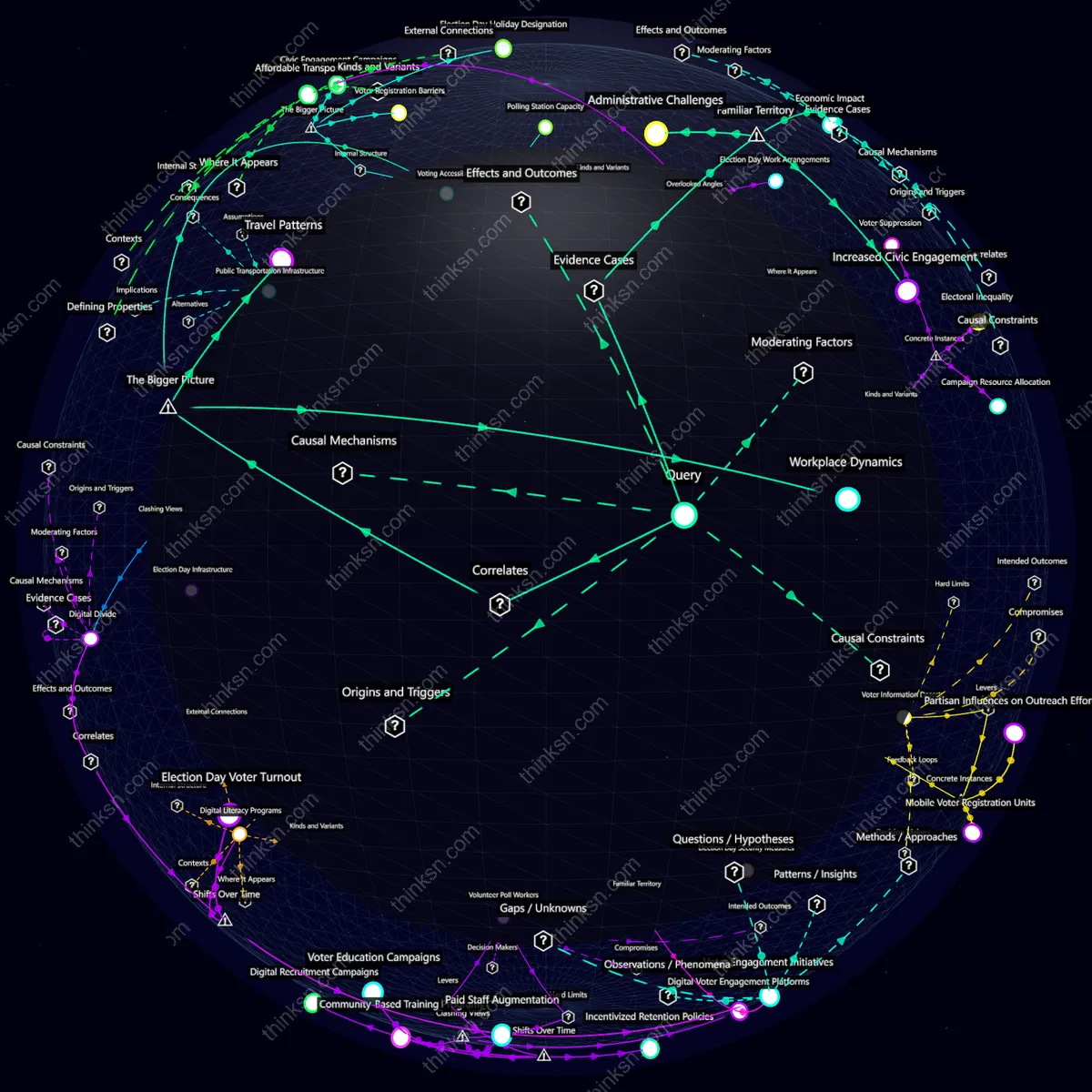
Analysis reveals 6 key thematic connections.
Key Findings
Voting Accessibility
Increased voting accessibility on a holiday could paradoxically overwhelm local election offices, leading to longer lines and potential disenfranchisement for those who arrive late. This surge in demand might also highlight existing logistical challenges in voter registration systems.
Travel Patterns
The shift of election day to a national holiday could alter travel patterns significantly, with many people planning trips around this date. This mobility change could disproportionately affect certain demographics, such as low-income workers who cannot afford extra vacation days, potentially skewing the voter turnout demographic.
Workplace Dynamics
While a national holiday might free up more time for voting, employers may not provide incentives or accommodations that encourage employees to vote. This could lead to mixed results, where some workers take advantage of extra time, while others face pressure from work obligations, inadvertently reducing overall turnout.
Increased Civic Engagement
Making election day a national holiday could significantly boost civic engagement by reducing barriers to voting. However, this shift might disproportionately benefit those already engaged in politics, widening the gap between active and passive voters, unless accompanied by comprehensive voter education programs.
Economic Impact
Designating election day as a holiday could have unforeseen economic impacts, such as lost productivity or increased costs for businesses providing employee benefits. This might particularly affect small enterprises less equipped to manage additional financial burdens without corresponding support measures from the government.
Administrative Challenges
While intended to ease voting logistics, declaring election day a national holiday could introduce significant administrative challenges for election management bodies, especially in terms of polling station staffing and operational coordination. This would require robust planning and additional resources, potentially straining existing infrastructures.
Deeper Analysis
What is the relationship between voting accessibility and voter turnout when election day is designated as a national holiday?
Election Day Holiday Designation
Designating Election Day as a national holiday can significantly boost voter turnout by allowing more people to vote without sacrificing work time, but it may also disproportionately benefit those with flexible jobs or no employment at all, leading to socioeconomic biases in the electorate.
Voter Registration Barriers
While Election Day holidays increase voting accessibility, persistent voter registration barriers can still limit turnout among marginalized communities who face systemic obstacles like restrictive ID laws and limited civic engagement programs.
Civic Engagement Campaigns
The effectiveness of making election day a holiday depends heavily on accompanying civic engagement campaigns that educate the public about voting rights and procedures. Without such efforts, many eligible voters may still miss out due to lack of awareness or understanding.
Public Transportation Infrastructure
Designating election day as a national holiday can exacerbate existing disparities in voter turnout if public transportation infrastructure is inadequate. In states like Louisiana, where rural areas face significant transit challenges, increased turnout could be negated by the lack of reliable transport options for polling stations.
Economic Disparities
While national holidays may boost voter participation among employed individuals with flexible schedules, it disproportionately benefits middle and upper-class workers who have the financial stability to take unpaid leave. In contrast, hourly wage earners or those in low-wage jobs might face hardships if losing a day's pay impacts their ability to vote.
Polling Station Capacity
Designating election day as a holiday can lead to unexpected bottlenecks and long queues at polling stations due to increased voter turnout, especially in densely populated urban areas like New York City. This surge can overwhelm the capacity of existing infrastructure, potentially deterring some voters from casting their ballots.
How might economic disparities affect voter turnout if election day were designated as a national holiday?
Voter Suppression
Designating election day as a national holiday could paradoxically exacerbate voter suppression in economically disadvantaged areas by creating logistical challenges. Lower-income voters, often burdened with multiple jobs or precarious employment, might struggle to find childcare or arrange transportation, despite the holiday status.
Electoral Inequality
Economic disparities can distort electoral inequality further when a national holiday designation disproportionately benefits wealthier citizens who have more flexibility in their work schedules. This disparity can lead to increased political engagement among higher-income groups while lower-income individuals, already facing barriers like language and education gaps, might feel disenfranchised.
Campaign Resource Allocation
Political campaigns may strategically allocate resources unevenly based on economic demographics when election day is a national holiday. Wealthier areas likely to turn out more voters due to less work-related impediments will receive more campaign attention and funding, potentially amplifying existing socioeconomic biases in political representation.
Affordable Transportation
Designating election day as a national holiday disproportionately benefits voters in urban areas with reliable public transportation over those in rural regions where access is limited. This disparity can lead to higher voter turnout among wealthier, more educated populations and lower participation rates for economically disadvantaged groups who rely on personal vehicles or do not own one.
Digital Literacy Gaps
In the digital age, online voting and information campaigns are increasingly common. However, economic disparities exacerbate digital literacy gaps, leaving low-income voters less equipped to navigate complex registration processes or effectively participate in virtual town halls. This can lead to a skewed representation of public opinion and reduced civic engagement among economically disadvantaged communities.
Election Day Work Arrangements
While national holidays provide flexibility for many employees, workers in low-wage jobs often face rigid scheduling practices that make it difficult or impossible to take time off without financial penalty. This creates a precarious situation where economic necessity forces some individuals to prioritize work over voting rights, thereby perpetuating voter turnout disparities along socioeconomic lines.
Explore further:
- How would making election day a national holiday affect voter turnout in terms of affordable transportation options for low-income voters?
- How might digital literacy gaps affect voter turnout if election day were declared a national holiday, and what measurable systemic strains could arise from this change?
How might digital literacy gaps affect voter turnout if election day were declared a national holiday, and what measurable systemic strains could arise from this change?
Voter Information Deserts
In areas with high digital literacy gaps, declaring election day a national holiday can exacerbate voter information deserts. Elderly and low-income communities may struggle to access online voting portals or understand complex ballot measures, leading to lower turnout despite increased convenience.
Election Technology Adoption Disparities
The shift towards digital election infrastructure creates systemic strains as regions with weak technological adoption face difficulties in implementing new systems. This disparity can lead to long lines at polling stations and errors in vote counting, undermining public trust in the electoral process.
Digital Divide In Voter Education
When voter education increasingly relies on digital platforms, communities lacking internet access or technological proficiency are left behind. Local organizations that typically bridge this gap through offline events face challenges reaching these populations, resulting in misinformation and apathy among less digitally literate voters.
Voter Education Programs
The effectiveness of voter education programs diminishes when digital literacy gaps widen, leading to an uneven dissemination of critical election information. This inequality can skew political participation patterns, disproportionately affecting younger and less digitally literate demographics.
Election Day Infrastructure
Declaring election day a national holiday without considering the existing digital literacy gaps exacerbates systemic strains on voting infrastructure. Older voters or those in rural areas may struggle with online registration processes, creating bottlenecks and potential disenfranchisement.
Digital Divide
The digital divide intensifies as urban and suburban residents with higher digital literacy rates overwhelm election websites and mobile apps designed to support remote voting. This surge in traffic can cause technical failures, undermining the integrity of the electoral process for less connected communities.
Explore further:
- What strategies could be implemented to address voter information deserts if election day were declared a national holiday, and how might these interventions impact voter turnout in underserved areas?
- How might the digital divide evolve over time if election day became a national holiday, and what would be the causal mechanisms affecting voter turnout in different socioeconomic groups?
What strategies could be implemented to address voter information deserts if election day were declared a national holiday, and how might these interventions impact voter turnout in underserved areas?
Community Voting Centers
Establishing community voting centers in underserved areas can significantly increase voter turnout by providing accessible information and resources. However, these centers may face challenges such as limited funding and coordination issues among local organizations.
Mobile Voter Registration Units
Deploying mobile units to reach remote or sparsely populated regions can bridge the gap in voter registration and education. Yet, logistical constraints like transportation costs and scheduling conflicts could hinder their effectiveness.
Partisan Influences on Outreach Efforts
Non-partisan groups often struggle against partisan messaging that may mislead or discourage certain demographic segments from voting. Ensuring balanced and accurate information is crucial but challenging in politically charged environments.
How might the digital divide evolve over time if election day became a national holiday, and what would be the causal mechanisms affecting voter turnout in different socioeconomic groups?
Voter Engagement Initiatives
As election day becomes a national holiday, voter engagement initiatives could exacerbate the digital divide by prioritizing online campaigns over traditional methods. This could disproportionately disenfranchise low-income communities with limited internet access or technological literacy.
Election Day Voter Turnout
Changes in election day status to a national holiday might initially boost overall turnout but risk increasing disparities between socioeconomic groups, as high-tech campaigns may not reach those without reliable digital access, leading to unequal voter engagement and skewed political representation.
Digital Literacy Programs
Increased emphasis on digital literacy programs could mitigate the digital divide over time by equipping underserved communities with necessary skills. However, initial funding gaps and implementation delays might leave a significant portion of the population behind during critical elections, highlighting the fragile dependency on rapid program adoption.
How might the evolution of community voting centers over time be influenced by election day becoming a national holiday, and what would be the resulting impact on voter turnout?
Voter Engagement Initiatives
Increased voter engagement initiatives at community voting centers could lead to overcrowding on election day. While a national holiday might alleviate this, it also shifts the burden to organizers who must prepare for unprecedented turnout and manage long wait times efficiently.
Election Day Security Measures
Transitioning election day into a national holiday introduces new security challenges at community voting centers. While enhanced presence could deter fraud and intimidation, it may also create a perception of election interference or undue scrutiny among voters, potentially discouraging participation.
Volunteer Poll Workers
Community voting centers often rely heavily on volunteer poll workers who might be less available during holidays. This dependency highlights the need for robust recruitment and training processes to maintain service quality when typical workforce availability is compromised.
Election Day Holiday
The declaration of Election Day as a national holiday significantly shifts voter behavior by alleviating barriers such as work commitments and travel time, leading to increased turnout. However, this change also strains local resources at community voting centers, potentially causing long queues and operational challenges.
Digital Voting Systems
As digital voting systems become more prevalent in community voting centers, they offer greater convenience but raise concerns about cybersecurity and voter privacy. The introduction of these systems disproportionately benefits tech-savvy demographics, possibly widening the gap between different socioeconomic groups.
Community Engagement Programs
Initiatives like educational workshops and community outreach programs enhance civic engagement at voting centers, yet they face challenges in reaching underserved populations due to limited funding and geographic constraints. Successful implementation could lead to higher voter turnout but requires sustained effort from both government and grassroots organizations.
Explore further:
What strategies could be implemented to recruit and train more volunteer poll workers if election day becomes a national holiday, and how might this affect voter turnout?
Digital Voter Engagement Platforms
The reliance on digital platforms to recruit volunteer poll workers could exacerbate the digital divide, disproportionately excluding older populations and those with limited internet access. This may lead to a less diverse pool of volunteers, affecting election integrity and public trust.
Paid Staff Augmentation
Replacing some volunteer positions with paid staff might seem like an efficient solution, but it could undermine the grassroots nature of election support networks, reducing community engagement and long-term sustainability. This shift may also increase costs for local election boards without guaranteed improvements in service quality.
Voter Education Campaigns
Intensive voter education campaigns aimed at increasing turnout might backfire if they oversimplify complex voting procedures or fail to address the needs of marginalized communities. This could lead to confusion, decreased trust, and ultimately lower actual voter participation on election day.
Digital Recruitment Campaigns
Implementing digital recruitment campaigns to attract young volunteers can significantly boost the pool of available poll workers. However, this strategy heavily relies on internet access and digital literacy, potentially excluding older demographics or those with limited online presence.
Community-Based Training Programs
Training programs embedded within community organizations offer localized support but may face challenges in maintaining uniform quality standards across diverse regions. This approach also risks overburdening local volunteers who already manage multiple responsibilities.
Incentivized Retention Policies
Offering incentives such as stipends or future employment prospects can retain experienced poll workers, but might create dependency on financial rewards rather than fostering a sense of civic duty. This could undermine long-term volunteerism and the intrinsic motivation needed for sustained public service.