The Impending Threat of Quantum Computers to Encryption Standards
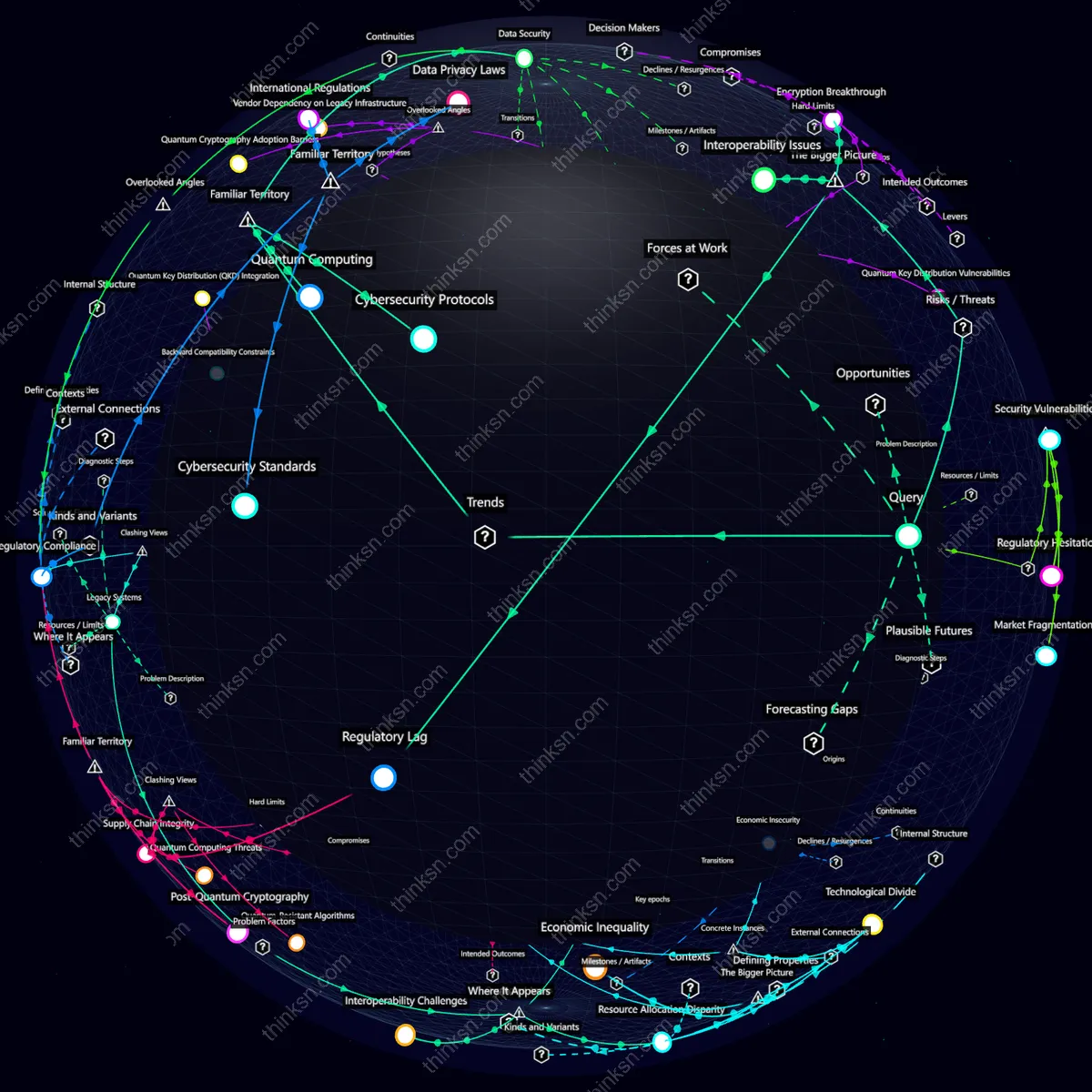
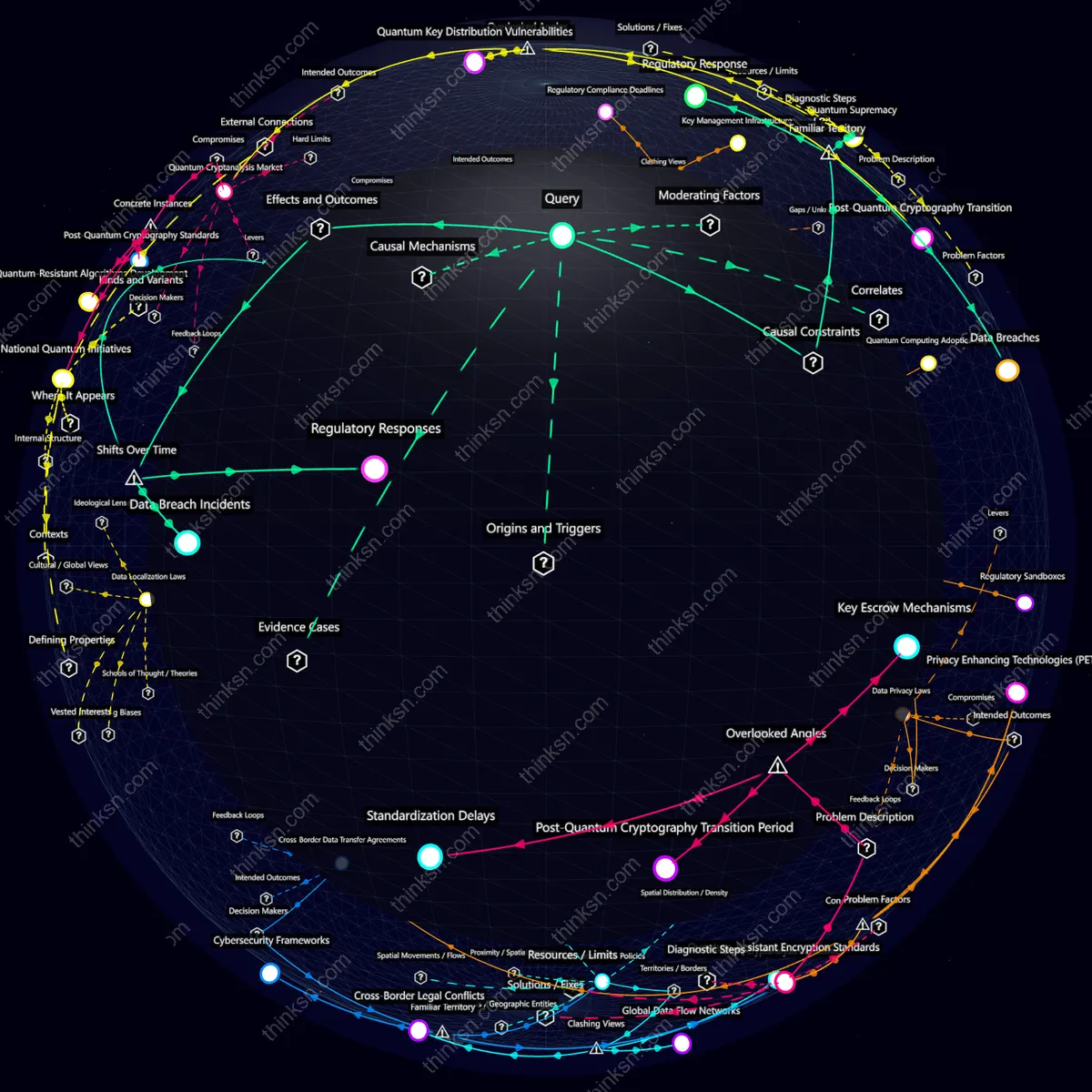
Analysis reveals 6 key thematic connections.
Key Findings
Data Breach Incidents
The rapid decryption of encrypted data by quantum computers can lead to a surge in data breach incidents. This not only affects large corporations but also undermines the trust between service providers and their customers, as sensitive information like financial records and personal identities become vulnerable.
Regulatory Responses
Governments worldwide will face pressure to develop new encryption standards and regulatory frameworks to address quantum computing threats. However, this could lead to a fragmented global landscape where different countries adopt varying levels of security measures, creating loopholes for cybercriminals to exploit.
Post-Quantum Cryptography Adoption
Companies will rush to implement post-quantum cryptographic solutions before their data becomes vulnerable. This transition period is fraught with risks as companies may cut corners or face delays in adoption, leaving them exposed during the interim. Additionally, the complexity and cost of upgrading encryption methods can disproportionately affect small businesses.
Quantum Supremacy
Achieving quantum supremacy by breaking current encryption standards triggers a cybersecurity arms race. Governments and tech firms must rapidly develop post-quantum cryptography, but the transition period exposes critical infrastructure to unprecedented vulnerabilities.
Data Breaches
The rapid decryption of data encrypted with traditional algorithms leads to catastrophic data breaches, potentially compromising decades' worth of sensitive information. This not only affects financial institutions and government agencies but also erodes public trust in digital security systems.
Regulatory Response
Governments face the urgent need to update cybersecurity regulations to address quantum computing threats. The process is fraught with delays, bureaucratic hurdles, and political resistance, leaving industries vulnerable until new standards are enforced.
Deeper Analysis
What strategies and workflows should organizations implement to adopt post-quantum cryptography before quantum computers break current encryption standards?
Key Management Infrastructure
As organizations transition to post-quantum cryptography, they must overhaul their key management infrastructure. This involves not only updating algorithms but also ensuring seamless integration with existing systems and compliance with new regulations, posing significant operational challenges and potential security risks.
Cryptographic Algorithm Standardization
The push for post-quantum cryptographic standards faces resistance from established players who may favor current encryption technologies. This delay in standardization can lead to fragmentation, where different organizations adopt varying algorithms, complicating interoperability and increasing security vulnerabilities.
Regulatory Compliance Deadlines
Governments and regulatory bodies are grappling with setting timelines for post-quantum cryptography adoption. Organizations may rush to meet compliance deadlines without fully understanding the implications, leading to poorly implemented solutions that could compromise data integrity and security.
What are the potential systemic failures and measurable strains on cybersecurity and data protection if quantum computers achieve quantum supremacy shortly after release, breaking current encryption standards?
Post-Quantum Cryptography Transition
The sudden onset of quantum supremacy could force a rapid shift to post-quantum cryptographic standards, creating significant strain on businesses and governments. This transition risks exposing vulnerabilities in data protection as systems scramble to update infrastructure, potentially leading to breaches during the interim period.
Quantum Cryptanalysis Market
Emergence of a new market for quantum cryptanalytic services would likely see tech firms racing to offer tools that exploit quantum supremacy. This could exacerbate existing cybersecurity disparities between large and small organizations, as only the wealthiest entities can afford state-of-the-art quantum-resistant solutions.
Quantum Key Distribution Vulnerabilities
While quantum computers threaten traditional encryption, they also offer advanced security protocols like Quantum Key Distribution (QKD). However, QKD's effectiveness depends on secure key exchange and the physical integrity of communication channels, which could be compromised if not properly implemented or maintained.
What are the emerging insights and hidden assumptions in cryptographic algorithm standardization as quantum computers threaten current encryption standards shortly after their release, and how do these impact cybersecurity and data protection strategies?
Post-Quantum Transition Challenges
The transition to post-quantum cryptographic algorithms poses significant challenges for standardization bodies like NIST and ISO, requiring them to balance the need for rapid deployment against the risks of premature standardization. This creates a delicate dance between security needs and technological readiness, potentially leading to vulnerabilities if quantum-resistant standards are rushed or inadequately vetted.
Quantum Computing Adoption Lag
As quantum computers threaten current encryption standards, there is an emerging disconnect between the rapid pace of quantum technology development and its slower adoption in practical cybersecurity applications. This lag can create a window where data remains vulnerable despite awareness of potential threats, highlighting the critical importance of proactive standardization efforts to mitigate risks before they materialize.
Regulatory Fragmentation
The diverse array of regulatory bodies and national interests complicates global cryptographic standardization. Different regions may prioritize varying levels of quantum resistance or opt for proprietary solutions, leading to a fragmented cybersecurity landscape that undermines the effectiveness of unified encryption standards and hinders international cooperation in data protection.
What strategies should be formulated to address the impact of quantum cryptanalysis market on cybersecurity and data protection as quantum computers break current encryption standards shortly after their release?
Post-Quantum Cryptography Standards
Governments and tech firms rush to implement post-quantum cryptography standards before quantum computers become powerful enough, but this race can strain existing cybersecurity infrastructures, leading to vulnerabilities in the transition period.
National Quantum Initiatives
Countries invest heavily in national quantum initiatives to secure a technological edge, yet these efforts often come at the cost of public transparency and may exacerbate global cyber power imbalances.
Quantum-Resistant Algorithms Development
Developing quantum-resistant algorithms demands significant computational resources and research effort, potentially diverting attention from other critical cybersecurity measures and leading to a fragmented market with multiple proprietary solutions.
What are the implications of regulatory fragmentation in cybersecurity policies as quantum computers break current encryption standards, and how might this affect data protection measures globally?
Cybersecurity Standards
Regulatory Fragmentation leads to inconsistent cybersecurity standards across jurisdictions, leaving multinational corporations vulnerable. While each country may aim to protect its own interests, the lack of a unified approach undermines global data protection measures and hampers international cooperation.
Quantum-Resistant Encryption
As regulatory fragmentation stalls coordinated efforts in developing quantum-resistant encryption standards, tech companies face increased risks from emerging threats. This delay could result in fragmented technology ecosystems where only some regions benefit from advanced security measures, widening the digital divide.
Data Privacy Laws
Disparate data privacy laws due to regulatory fragmentation complicate compliance for global firms, especially as quantum computing challenges existing encryption. This complexity can lead to gaps in protection where certain types of sensitive information are inadequately safeguarded, exposing individuals and businesses to significant risks.
Data Localization Laws
Regulatory Fragmentation promotes the proliferation of data localization laws aimed at protecting domestic data from foreign threats. However, these laws can create silos that hinder effective international cooperation and information sharing during cybersecurity incidents, ultimately undermining collective defense mechanisms against emerging quantum-based attacks.
Global Interoperability
Regulatory Fragmentation complicates the development of globally interoperable encryption standards necessary to combat quantum computing threats. This dependency on unified cryptographic solutions is undermined by divergent regulatory environments, potentially delaying widespread adoption and leaving nations vulnerable to sophisticated cyberattacks exploiting fragmented security frameworks.
Explore further:
- What strategies should be formulated to ensure compliance with data privacy laws in light of quantum computing's ability to break current encryption standards, and what are the potential impacts on cybersecurity and data protection?
- How might data localization laws evolve in response to the threat posed by quantum computers breaking current encryption standards, and what are the potential implications for cybersecurity and data protection from a perspectival standpoint?
What strategies should be formulated to ensure compliance with data privacy laws in light of quantum computing's ability to break current encryption standards, and what are the potential impacts on cybersecurity and data protection?
Quantum-Resistant Encryption
The shift towards quantum-resistant encryption is crucial as current data privacy laws inadequately address the risks posed by quantum computing. This transition, however, poses significant challenges for organizations due to high costs and technical complexity, potentially leading to a fragmented adoption landscape where only large corporations can afford the upgrade.
Data Sovereignty Movements
As concerns over data privacy grow in response to quantum computing threats, national and regional data sovereignty movements are gaining traction. These initiatives aim to limit data storage and processing to domestic servers, which could conflict with existing global data sharing practices, creating new barriers for international businesses while aiming to enhance local control and security.
Regulatory Sandboxes
To foster innovation in cybersecurity without compromising privacy, regulatory sandboxes have emerged as a testing ground for novel technologies like quantum-resistant encryption. However, these experimental environments can create a false sense of security if the transition to full-scale implementation is not carefully managed, risking compliance gaps and exposure to real-world cyber threats.
Quantum-Resistant Encryption Standards
As quantum computing advances, companies must update their encryption methods to comply with data privacy laws. Failing to transition to post-quantum cryptography exposes businesses to significant legal and reputational risks as breaches become more likely.
Privacy Enhancing Technologies (PETs)
To ensure compliance with evolving data privacy regulations, organizations are increasingly adopting PETs such as homomorphic encryption and differential privacy. However, implementing these technologies can be costly and complex, posing a challenge for smaller firms to keep up.
Cross-Border Data Transfer Agreements
Data privacy laws vary significantly between countries, complicating cross-border data transfers in the quantum era. Companies must navigate intricate legal landscapes, risking fines or sanctions if they fail to adhere strictly to international compliance standards and agreements.
Explore further:
- In the context of quantum computers breaking current encryption standards, how might data sovereignty movements be stress-tested for their ability to protect sensitive information against systemic failures and vulnerabilities?
- What strategies should be formulated for Cross-Border Data Transfer Agreements to ensure cybersecurity and data protection in light of quantum computers breaking current encryption standards shortly after their release?
In the context of quantum computers breaking current encryption standards, how might data sovereignty movements be stress-tested for their ability to protect sensitive information against systemic failures and vulnerabilities?
Quantum Cryptography Research
As quantum computers pose a threat to traditional encryption methods, data sovereignty movements must invest heavily in quantum cryptography research. This dependency on cutting-edge technology poses significant risks, including the possibility of lagging behind rapidly evolving threats and potential vulnerabilities in new cryptographic systems.
Government Surveillance
Data sovereignty movements are increasingly under scrutiny by governments concerned about national security implications of quantum computing advancements. This surveillance can undermine trust among movement participants and stifle innovation, as activists may avoid discussing sensitive topics or sharing critical research out of fear of legal repercussions.
Economic Inequality
The ability of data sovereignty movements to adapt to the challenges posed by quantum computing is heavily influenced by economic disparities. Wealthier entities can afford advanced security measures, leaving poorer communities more vulnerable and exacerbating digital divides, which undermines collective efforts towards universal data protection.
What strategies should be formulated for Cross-Border Data Transfer Agreements to ensure cybersecurity and data protection in light of quantum computers breaking current encryption standards shortly after their release?
Quantum-Resistant Encryption Standards
The rapid adoption of quantum-resistant encryption standards is crucial for cross-border data transfer agreements to remain viable. However, this transition poses significant challenges, including the need for global consensus and interoperability among diverse systems.
Data Localization Policies
As nations implement stricter data localization policies to protect against quantum threats, cross-border data transfer agreements face increased complexity due to varying national regulations. This can lead to fragmented international cooperation and hinder the flow of critical information.
Cybersecurity Frameworks
The effectiveness of cybersecurity frameworks in mitigating risks posed by quantum computers is pivotal for cross-border data transfer agreements. However, reliance on outdated or inadequate frameworks can expose sensitive data to breaches, highlighting the need for continuous innovation and adaptation.
Explore further:
- What are the potential failures and measurable systemic strain on cybersecurity when quantum computers break current encryption standards, and how can quantum-resistant encryption standards mitigate these issues?
- What is the spatial distribution and implementation of data localization policies in response to quantum computing threats to cybersecurity and data protection?
What are the potential failures and measurable systemic strain on cybersecurity when quantum computers break current encryption standards, and how can quantum-resistant encryption standards mitigate these issues?
Key Escrow Mechanisms
The adoption of quantum-resistant encryption standards necessitates robust key escrow mechanisms to ensure data accessibility and legal compliance. However, this introduces complex challenges such as balancing privacy with law enforcement needs, potentially leading to conflicts over surveillance powers.
Post-Quantum Cryptography Transition Period
The transition period for implementing post-quantum cryptography standards can expose organizations to significant security risks if not managed carefully. This phase often involves legacy systems and interoperability issues, creating a window of opportunity for cyber attacks.
Standardization Delays
Delays in standardizing quantum-resistant encryption protocols can leave critical infrastructure vulnerable to emerging threats from quantum computers. These delays may stem from disagreements over technical specifications or reluctance to invest in costly upgrades, leading to a fragmented cybersecurity landscape.
What is the spatial distribution and implementation of data localization policies in response to quantum computing threats to cybersecurity and data protection?
Quantum Cryptanalysis Capabilities
The rise of quantum cryptanalysis capabilities challenges the efficacy of data localization policies. As quantum computers break traditional encryption, countries with advanced research may exert geopolitical pressure to access localized data for competitive intelligence, undermining sovereignty and trust in digital borders.
Global Data Flow Networks
Data localization policies disrupt global data flow networks by creating isolated data islands. This fragmentation hampers innovation and collaboration across borders, leading to inefficiencies and increased operational costs, as companies must develop parallel infrastructures for each jurisdiction's unique requirements.
Cross-Border Legal Conflicts
Data localization policies create cross-border legal conflicts when multinational corporations struggle to comply with conflicting regulations. This legal ambiguity can lead to regulatory arbitrage and unintended data vulnerabilities, as companies may exploit loopholes to bypass stringent local protections.