Is It Fair When One Sibling Inherits It All?
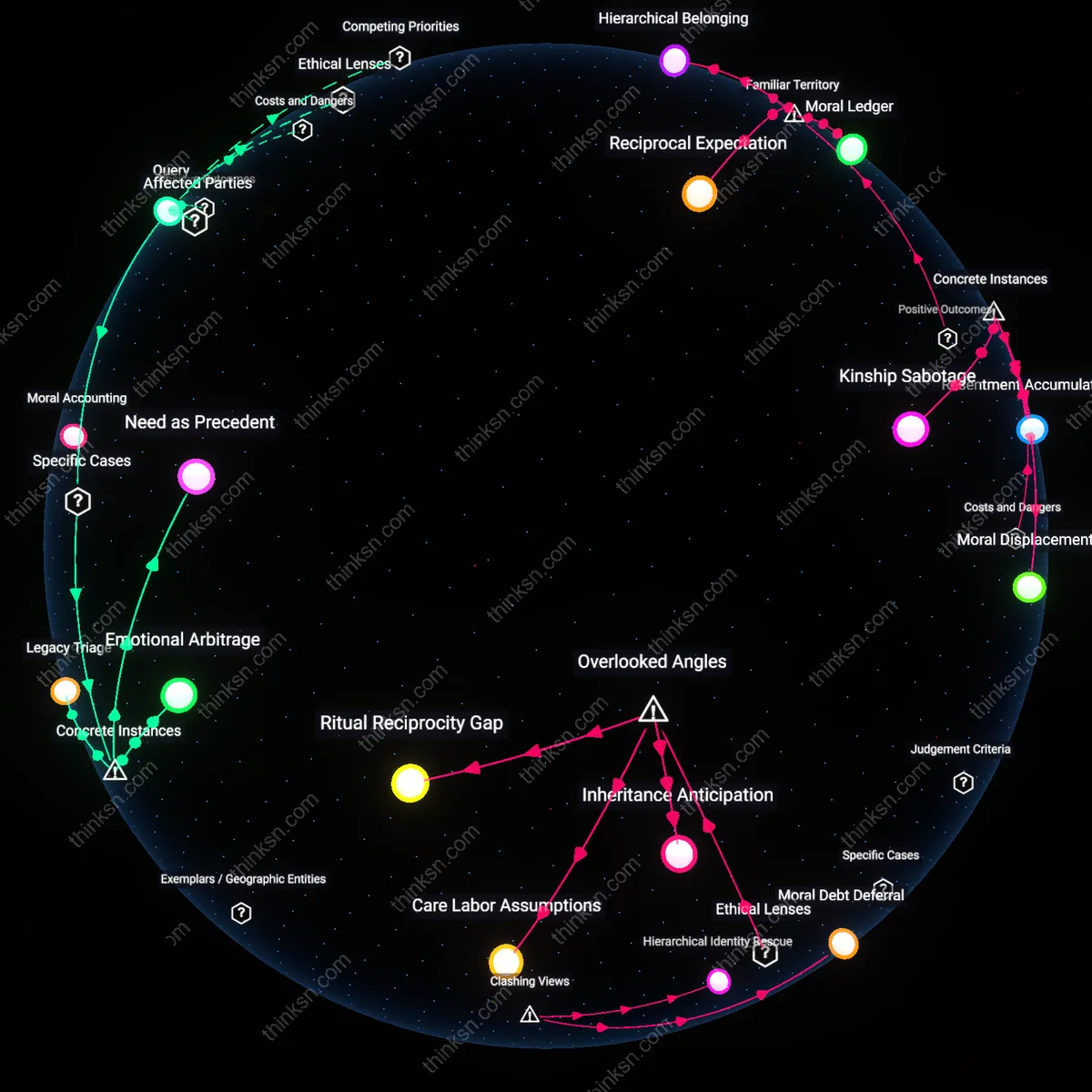
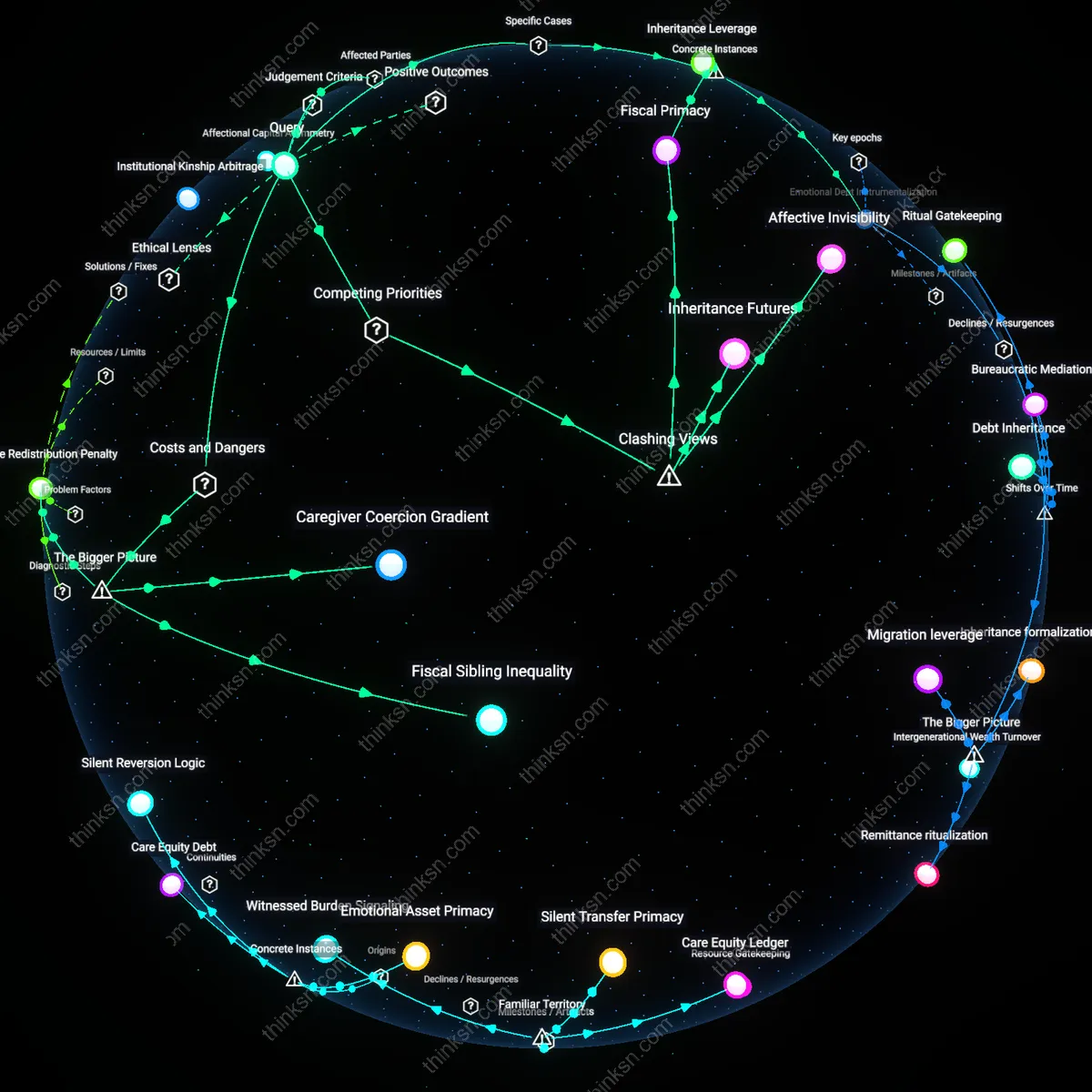
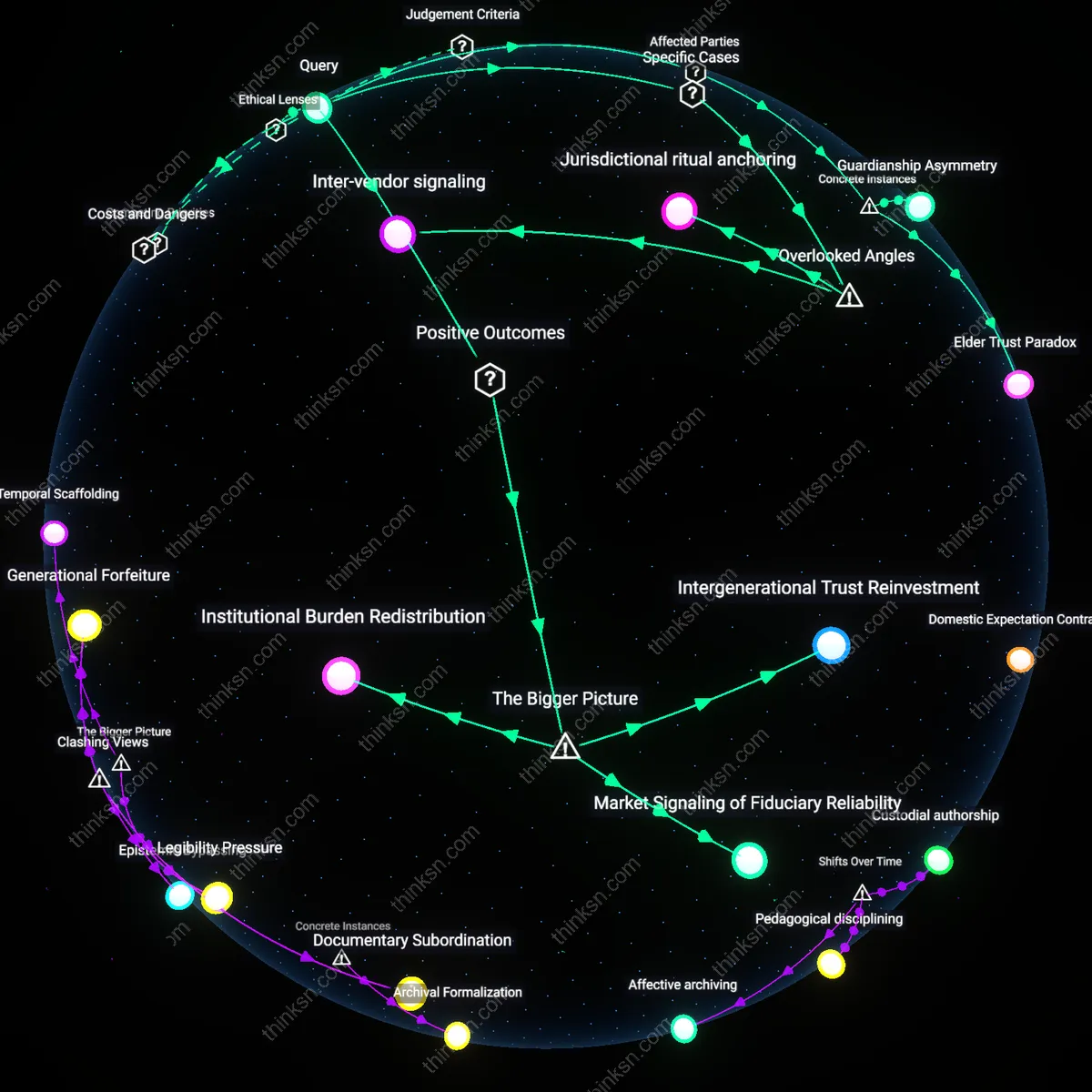
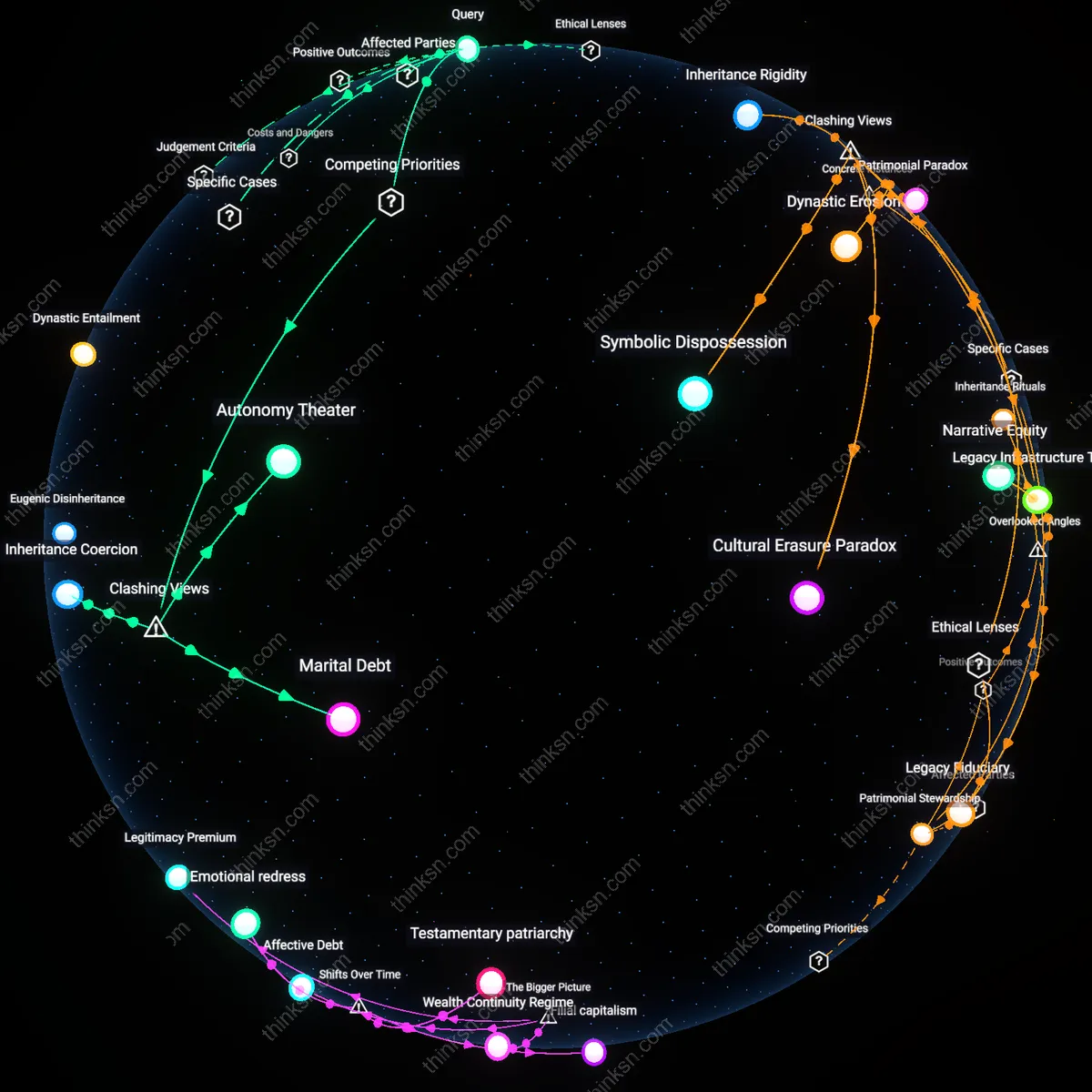
Analysis reveals 6 key thematic connections.
Key Findings
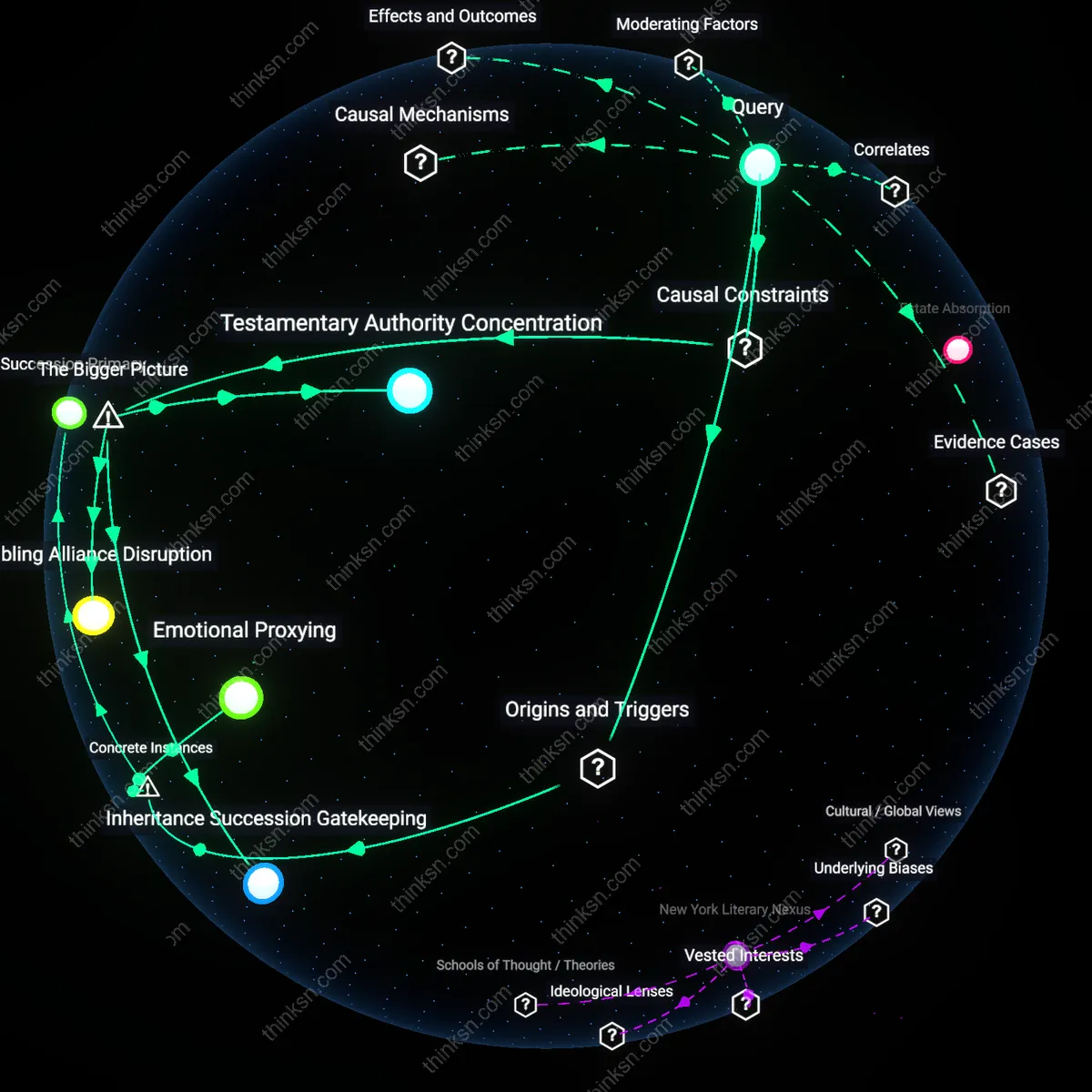
Succession Primacy
When one sibling serves as both executor and primary beneficiary, it reflects a familial consolidation of authority rooted in perceived competence or proximity, as seen in the Rockefeller family, where David Rockefeller assumed both roles in Nelson Rockefeller’s estate, reinforcing dynastic control through institutional trust and financial stewardship. This arrangement privileged continuity over parity, leveraging legal instruments to align familial hierarchy with economic governance, revealing how elite families naturalize authority through procedural legitimacy rather than explicit designation. The non-obvious mechanism is not favoritism but the alignment of bureaucratic efficacy with inherited status, positioning administrative capability as hereditary.
Emotional Proxying
The overlap of executorship and primary inheritance can signal an unspoken familial assignment of caregiving responsibility, crystallized in the case of Patricia Neal’s estate, where her daughter Oona McKeown was named both executor and principal beneficiary after years of serving as primary caretaker during Neal’s recovery from a stroke. This dual role emerged not from formal adoption of authority but from accumulated emotional labor transforming filial duty into de facto succession rights, illustrating how care work becomes invisible capital in inheritance dynamics. The underappreciated insight is that legal roles may retroactively validate affective economies rather than economic planning.
Structural Elimination
In the Steinbeck family, John Steinbeck IV’s designation as sole executor and primary heir of his father’s literary estate marginalized siblings who had already been distanced through prior estrangement and geographic dispersion, revealing how legal frameworks formalize pre-existing relational fractures rather than create new power divides. The estate mechanism here operated as a juridical codification of alienation, where testamentary roles confirmed familial exclusion that had taken shape over years of broken communication and divergent lifestyles. The non-obvious function is that inheritance structures often do not redistribute power but ratify its prior dissolution.
Testamentary Authority Concentration
Concentrating executor and primary beneficiary roles in one sibling indicates that parental testamentary authority is exercised to preempt posthumous family contestation. This mechanism functions through the parent’s unilateral power to align legal control (executorship) with material gain (beneficiary status), conditioning inheritance on compliance with their designated hierarchy. The non-obvious consequence is that the estate becomes a tool for enforcing long-term behavioral compliance during the parent’s lifetime, as siblings anticipate exclusion from both decision-making and assets. The bottleneck lies in the parent’s access to legal testamentary instruments and their willingness to use them asymmetrically, which only holds in jurisdictions where wills are difficult to contest and familial norms tolerate overt favoritism.
Inheritance Succession Gatekeeping
When one sibling holds both executor and primary beneficiary roles, it signals that succession gatekeeping has been institutionalized within the family’s intergenerational transfer system. This occurs when elder parents delegate not only wealth but also procedural authority—such as asset distribution and will interpretation—to a trusted sibling, effectively making them the chokepoint for all post-death claims. The systemic dynamic at play is the informal delegation of judicial-like powers to a family insider, which relies on the absence of external oversight (e.g. probate courts with robust monitoring). The non-obvious risk is that this gatekeeper can manipulate timing, access, and information to marginalize siblings even within legally compliant boundaries, a vulnerability enabled by weak institutional oversight in private estate administration.
Sibling Alliance Disruption
Assigning both executorship and primary beneficiary status to one sibling disrupts potential lateral sibling alliances by introducing an asymmetric power-resource coupling that predates the inheritance event. This functions through the anticipatory perception of unfair advantage, which undermines trust and collective negotiation among siblings prior to the parent’s death. The broader system involves informal family economies where emotional reciprocity is exchanged for future claims on care or inheritance, and the designation signals that the parent has withdrawn from balanced reciprocity toward patronage. The bottleneck is the lack of mediating rituals or third-party validators (e.g. family councils or independent trustees) that could legitimize the distribution; without them, the structure defaults to winner-take-all dynamics embedded in estate law.