Do Higher Barriers in Class Action Hurt Predatory Lending Victims?
Analysis reveals 6 key thematic connections.
Key Findings
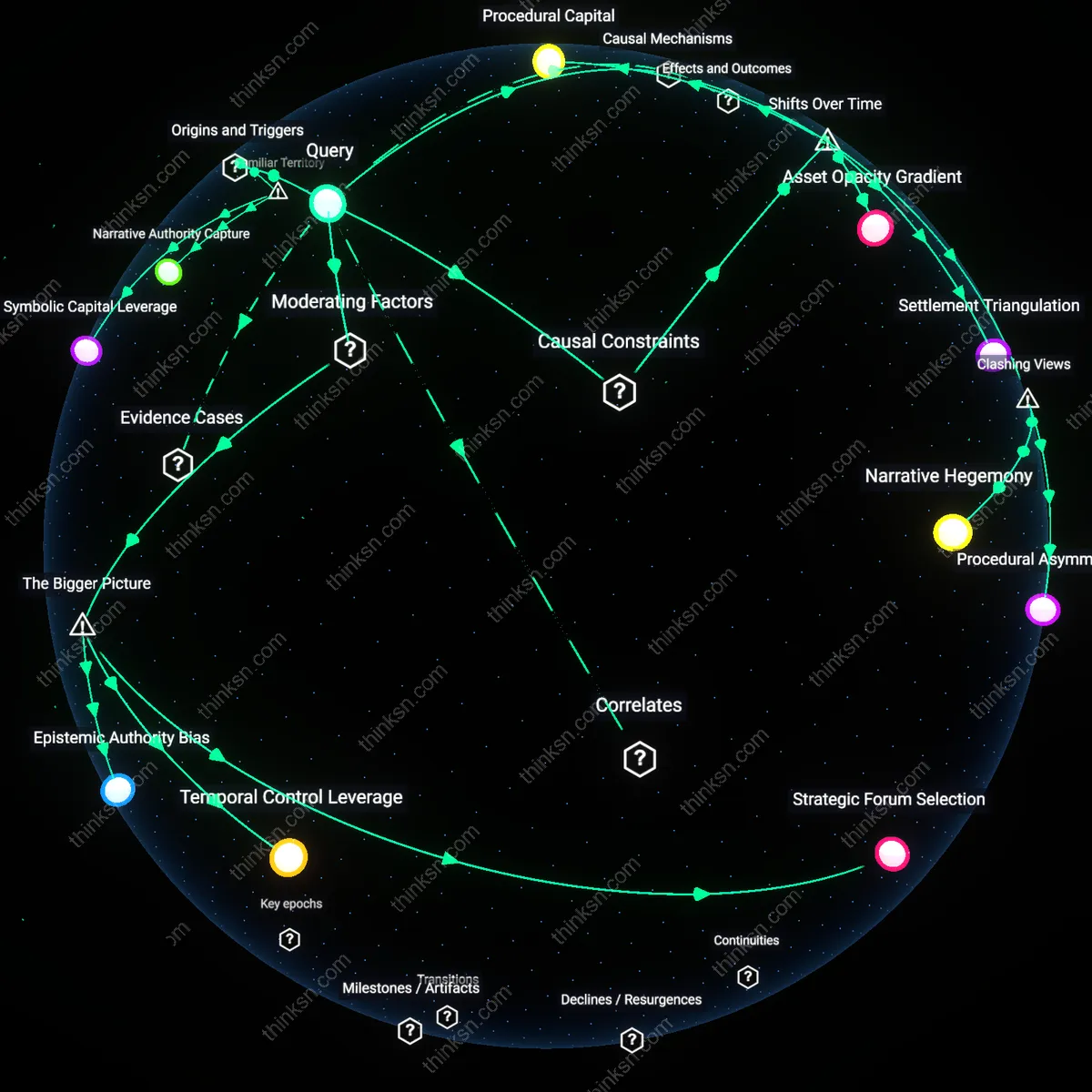
Procedural Disenfranchisement
In the wake of the 2010 American Express Co. v. Italian Colors Restaurant Supreme Court decision, low-income plaintiffs in payday lending suits faced heightened procedural barriers when courts required individual arbitration over class-wide claims, effectively nullifying collective standing even in cases of small-scale, systemic harm; this mechanism embedded cost asymmetry into dispute resolution, where individual damages were too low to justify litigation without class aggregation, yet reforms prevented that aggregation, disproportionately silencing marginalized borrowers; the non-obvious insight is that procedural rules—often seen as neutral—can function as structural valves, filtering out claims by economic vulnerability rather than merit.
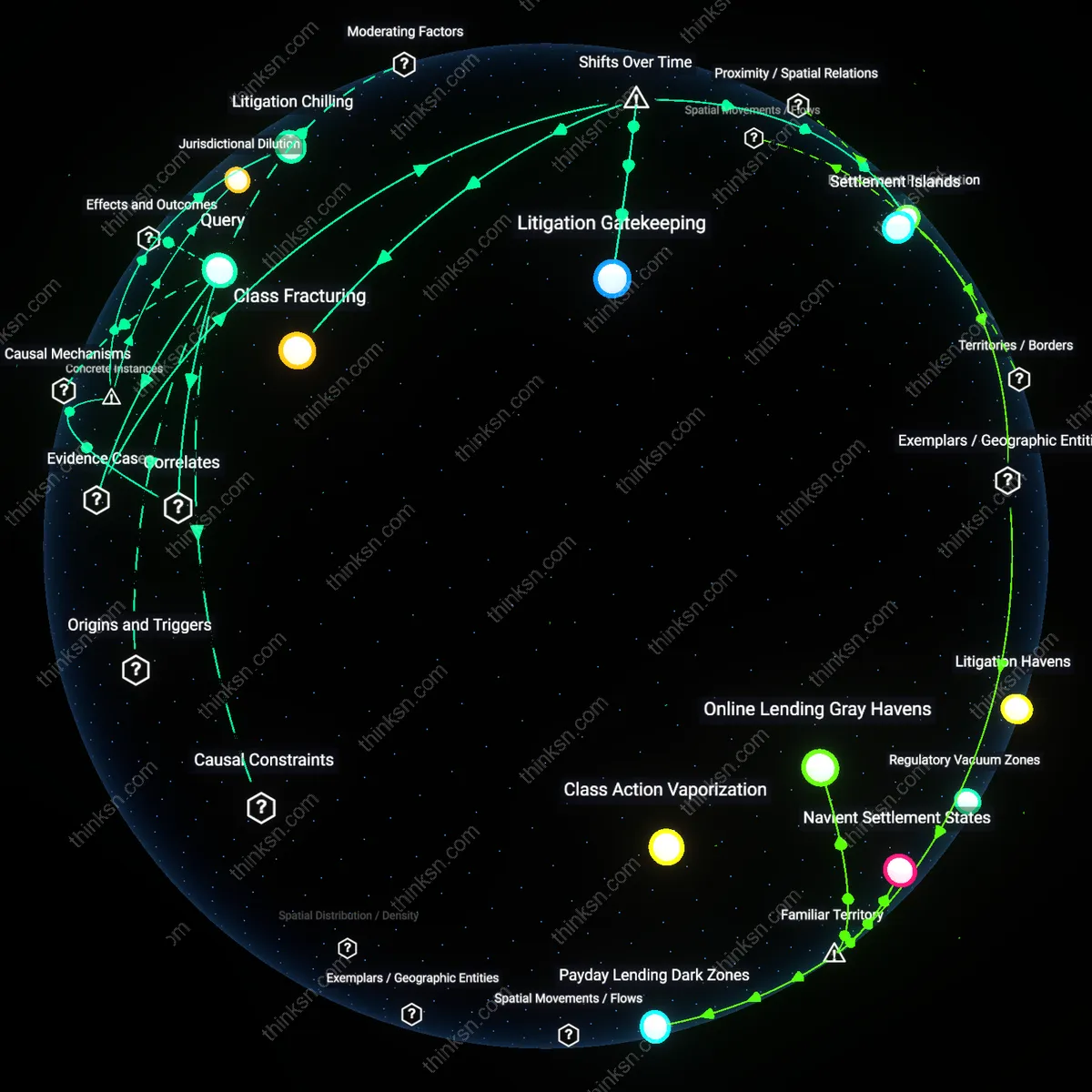
Jurisdictional Dilution
When North Carolina’s 2015 adoption of standing requirements for debt collection defenses led to dismissal of multiple class actions against predatory title lenders in Charlotte and Greensboro, courts interpreted the reforms to demand individualized proof of financial injury, even in standardized loan agreements, thereby fragmenting collective claims into economically unviable pieces; this jurisdiction-specific tightening of injury-in-fact thresholds allowed predatory actors to exploit geographic concentration of low-income borrowers while evading systemic liability; the underappreciated dynamic is that localized legal interpretations, not just federal doctrine, can erode access to justice by decoupling widespread harm from remedy.
Litigation Chilling
Following the 2017 dismissal of a class petition against World Acceptance Corporation in the U.S. District Court for the Eastern District of Tennessee—where plaintiffs failed to meet newly strict pleading standards for 'concrete harm' despite near-uniform allegations of hidden fees and rollover traps—plaintiff law firms retreated from similar small-dollar lending cases in Appalachia due to rising cost-risk ratios; this shift was not driven by lack of harm but by intensified judicial skepticism codified in standing doctrine, which elevated evidentiary thresholds beyond what low-documentation borrowers could meet; the overlooked consequence is that investor-backed legal enterprises, not grassroots advocates, now dictate the frontier of lendee representation, suppressing claims before they are filed.
Litigation Gatekeeping
Raising standing thresholds in class actions after the 2013 Gomez v. Campbell-Ewald decision progressively excluded low-income borrowers from contesting predatory loan terms by requiring individualized proof of harm, which resource-constrained plaintiffs cannot meet. Federal courts increasingly dismissed aggregated harm claims even in cases of identical contract fraud, shifting the burden onto borrowers to prove personal injury through costly documentation many lack—such as archived account statements or call logs. This post-2013 procedural hardening reveals how doctrinal interpretations of standing have evolved not just to filter frivolous suits but to systematically gatekeep access to remedies, especially in digital lending environments where harm is diffuse and records are controlled by fintech platforms.
Class Fracturing
Following the 2010 Dodd-Frank reforms and subsequent judicial narrowing of ascertainability standards—most notably in the 2015 Briseno v. ConAgra ruling—low-income consumers harmed by payday lenders could no longer aggregate small-dollar harms into unified actions, effectively dissolving potential classes. As courts demanded verifiable, objective criteria to identify class members, plaintiffs from informal economies or with fragmented financial records were filtered out, preventing cohesion even when harmed by the same actor, such as Check 'n Go or Wonga. This transition from inclusive certification practices pre-2012 to strict documentary prerequisites after 2015 exposed how procedural reforms weaponized administrative feasibility to fragment collective redress, particularly disadvantaging renters, gig workers, and unbanked populations.
Enforcement Privatization
After the 2017 Trump-era dismantling of the Consumer Financial Protection Bureau’s enforcement capacity, private litigation became the de facto mechanism for checking predatory lending, yet simultaneous standing reforms in federal circuits blocked low-income individuals from filling the enforcement gap. Where public oversight once preempted systemic abuses—as seen in the CFPB’s 2012 action against AmeriCash Loans—its erosion forced reliance on reactive lawsuits just as courts made them harder to initiate. This inversion, crystallizing between 2017 and 2019, transformed consumer protection into a privatized, resource-intensive burden, revealing how the withdrawal of state enforcement coincided with procedural barriers that together outsourced accountability to those least able to pursue it.