Should You Debate Extreme Ideology at Family Gatherings?
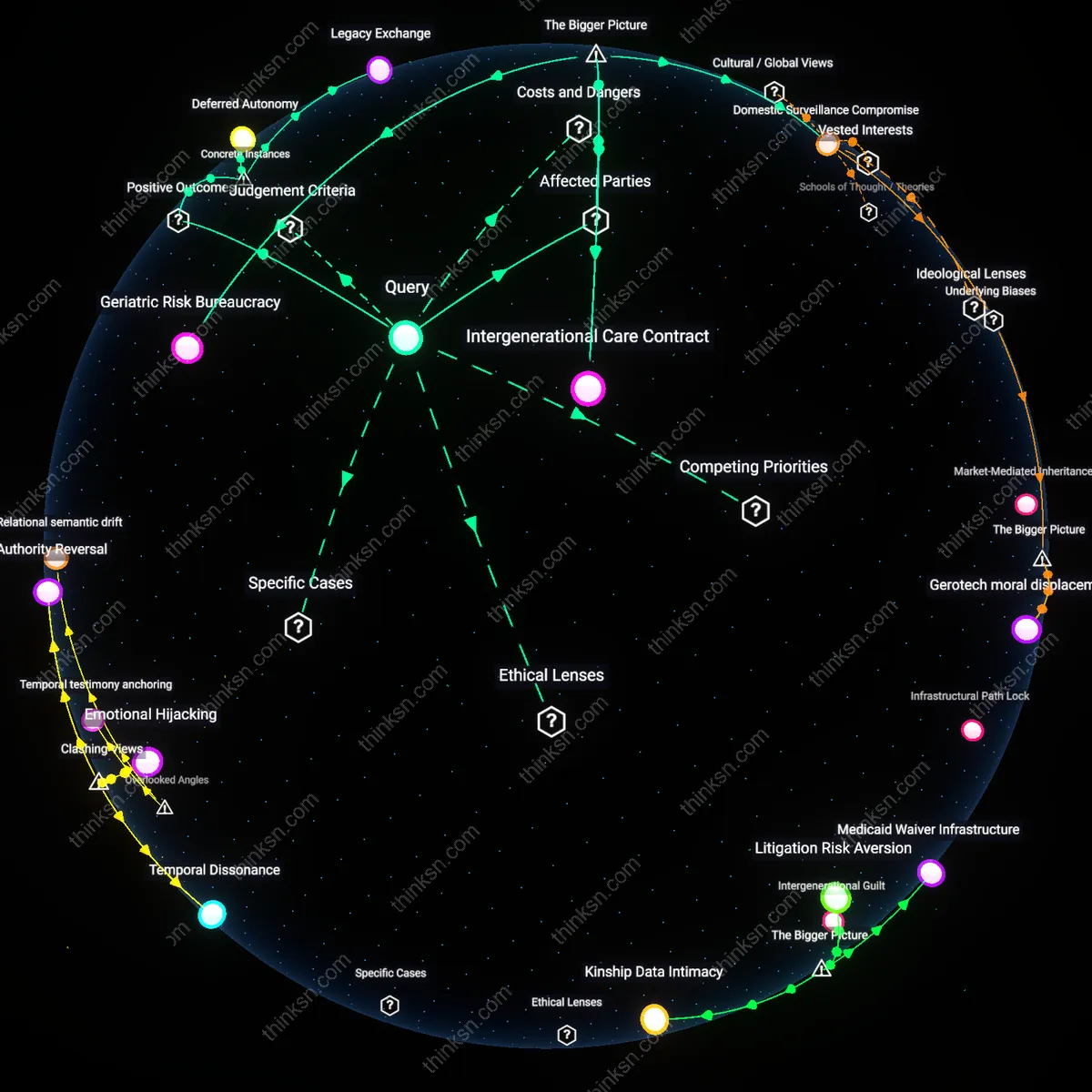
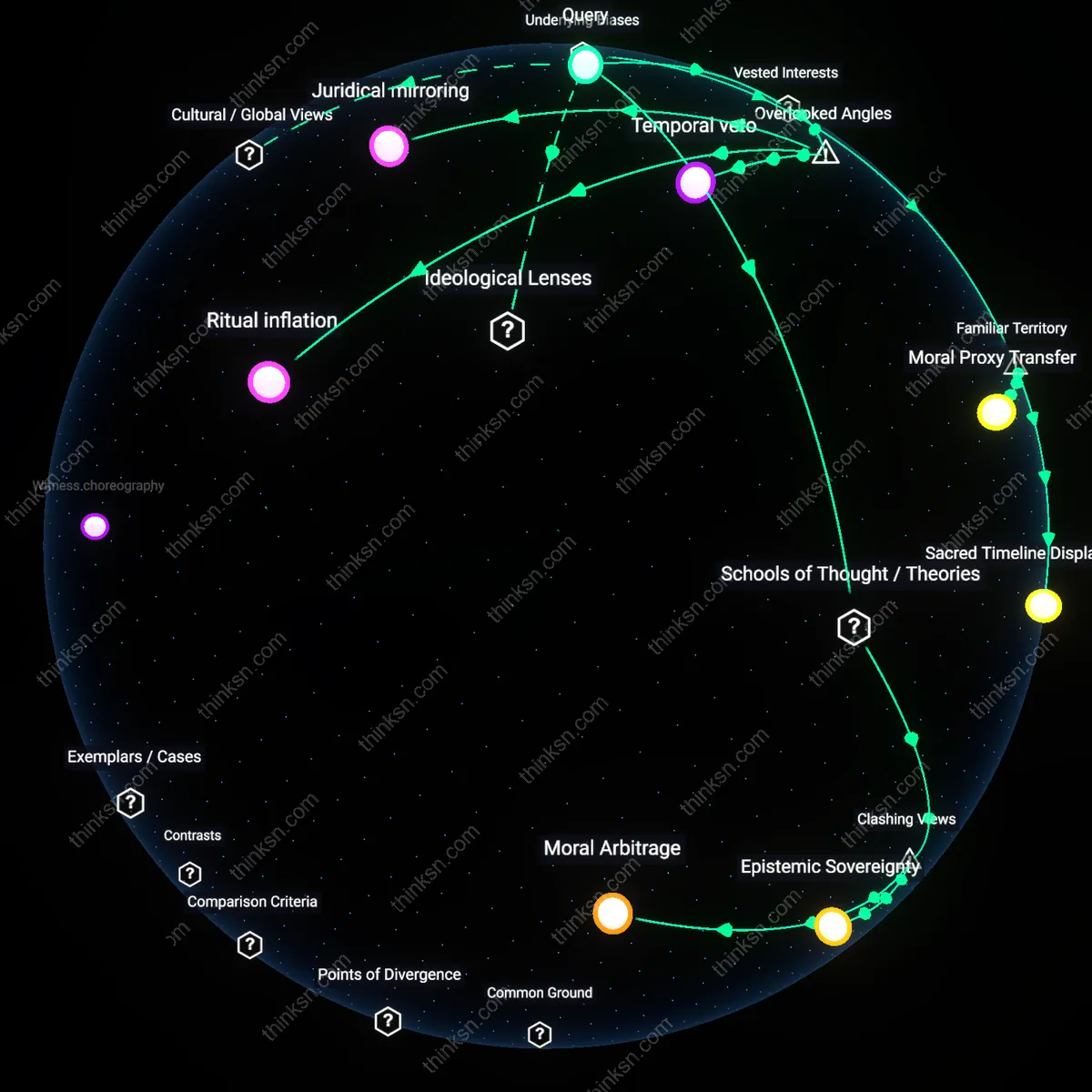
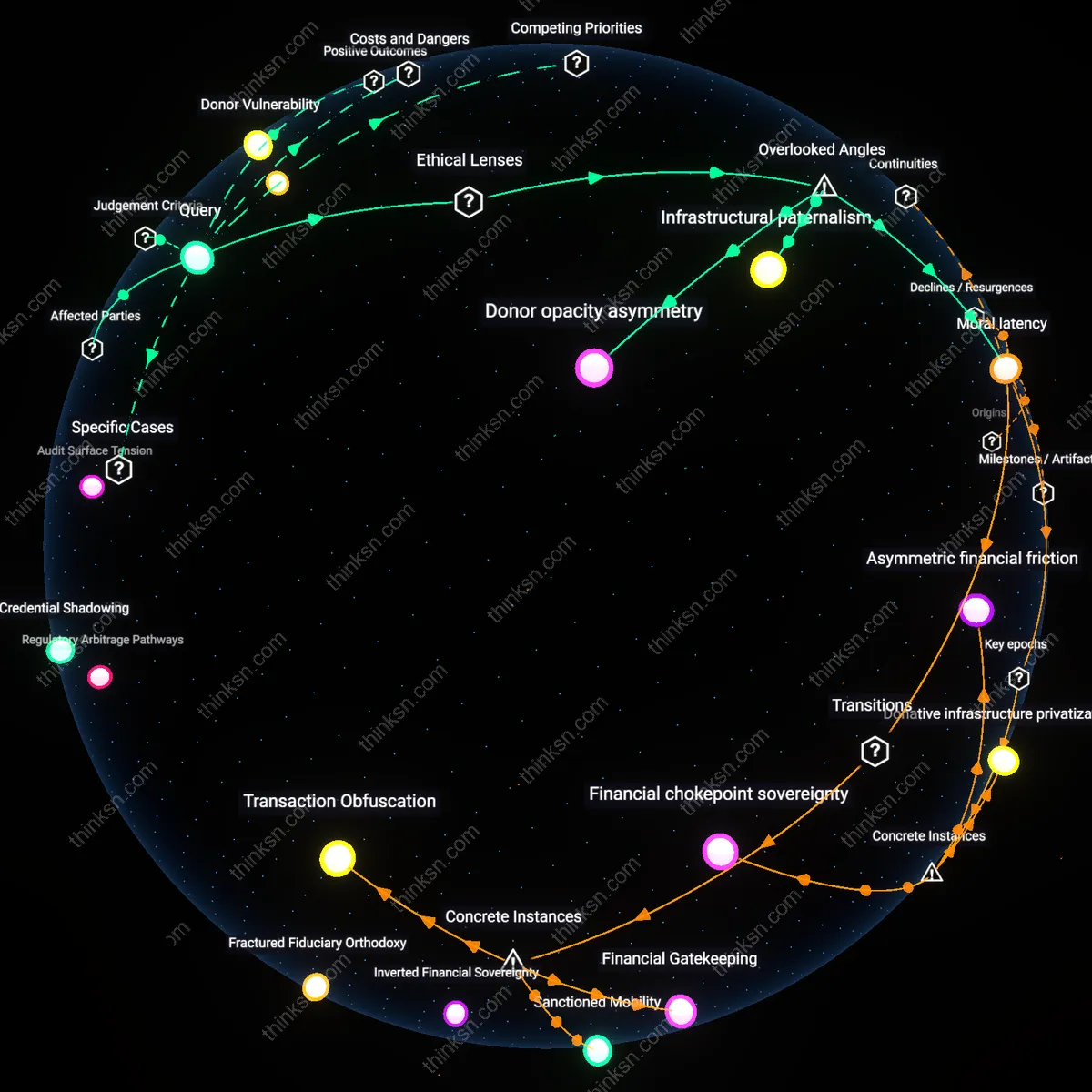
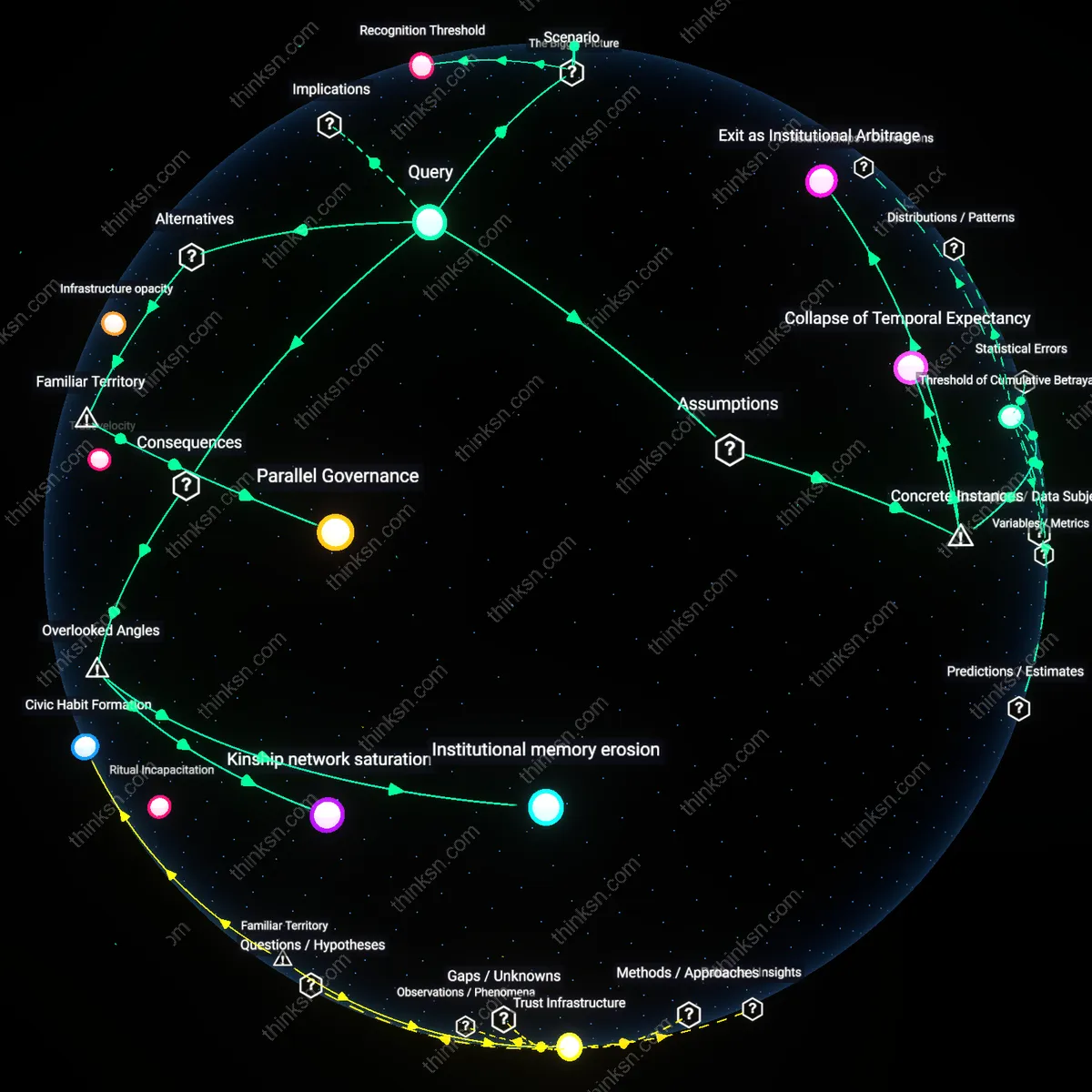
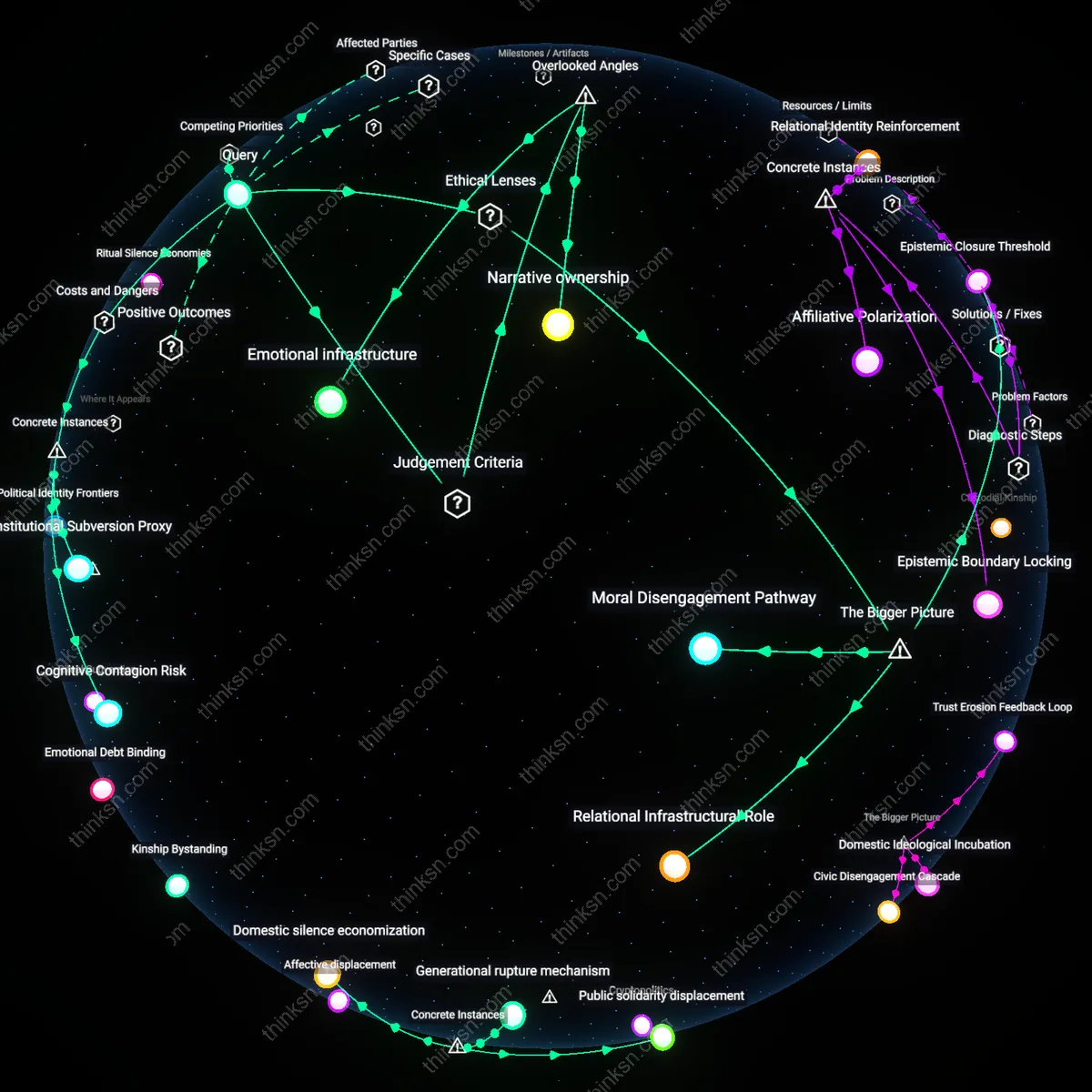
Analysis reveals 9 key thematic connections.
Key Findings
Emotional infrastructure
Continue the discussion only if the adult child’s presence sustains the family’s emotional infrastructure—such as the maintenance of mutual care routines or intergenerational trust—because disrupting communication risks destabilizing caregiving dependencies that extend beyond politics, like elder care or financial co-reliance. Most analyses focus on moral disapproval or ideological safety, overlooking how political tolerance can function as a pragmatic subsidy for a broader, fragile network of familial interdependence that lacks external institutional support, particularly in rural or medically underserved regions where family is the de facto social safety net.
Narrative ownership
Continue political discussions only when the adult child demonstrates capacity for narrative ownership—meaning they can articulate how their views emerged from specific experiences rather than regurgitating movement slogans—because this signals potential for reflective equilibrium, a precondition for dialogue that resists ideological scripting. Standard treatments assume engagement hinges on content tolerance, but miss that the real barrier is often not belief extremity but the absence of personal authorship in belief formation, which makes the person a conduit rather than a participant, rendering dialogue inert.
Ritual integrity
Continue discussions only if political exchanges preserve the ritual integrity of the family gathering—defined by the maintenance of shared temporal rhythms, symbolic gestures, and predictable interaction scripts—because these rituals function as non-negotiable cognitive scaffolds for elderly or neurodivergent relatives who rely on environmental stability to manage anxiety. Typical advice weighs free expression against offense avoidance, yet fails to account for how ideological conflict can erode the implicit choreography of family life, with cascading effects on mental health that outweigh the immediate political exchange.
Relational Erosion Threshold
Cease discussions when continued engagement normalizes views that dehumanize group identities, as seen in the 2016–2020 gatherings of relatives of Atomwaffen Division members in Idaho Falls, where repeated unchallenged antisemitic rhetoric during holiday meals eroded familial trust to the point that kin ceased attending altogether, revealing that private tolerance can silently authorize public radicalization through the slow collapse of interpersonal accountability.
Cognitive Contagion Risk
Terminate dialogue when an adult child's framing exploits emotional credibility to reframe conspiracy narratives as familial loyalty, exemplified by a 2021 case in Bochum, Germany, where a university student radicalized by QAnon convinced two younger siblings that the 2020 U.S. election fraud myth was a moral imperative, using repeated family dinners to embed disinformation, illustrating how emotionally intimate settings can become vector circuits for ideological infection across generational bounds.
Institutional Subversion Proxy
End political exchanges when the adult child's rhetoric aligns with dismantling democratic infrastructure, as occurred in the 2019–2022 family meetings of a senior Brazilian judge’s son in Brasília who openly advocated military coup restoration, turning holiday meals into venues for recruiting extended family members with state connections, thereby transforming private kinship into an indirect instrument of anti-constitutional coordination and exposing that extremist discourse within elite families can function as soft leverage against governance.
Moral Disengagement Pathway
Continue discussions only if communication mechanisms exist to disrupt the adult child’s moral disengagement, a psychological process by which individuals rationalize harm through dehumanization or diffusion of responsibility, because prolonged exposure to unchecked extremist rhetoric within familial settings can reinforce identity-protective cognition, a phenomenon documented in social psychology and amplified in affectively polarized environments; this mechanism is systemically significant because family units often serve as informal echo chambers where cognitive biases are validated rather than challenged, making the household a covert site of ideological entrenchment rather than ethical deliberation.
Relational Infrastructural Role
Continue discussions only when the family functions as a relational infrastructure capable of countering extremist radicalization pipelines, because kinship networks that maintain consistent, non-judgmental engagement can disrupt the isolation-to-extremism gradient observed in deradicalization studies, particularly when they replicate the emotional belonging that extremist groups exploit; this dynamic is structurally consequential because state-sponsored prevention programs often fail to reach individuals in early radicalization stages, leaving family-based relational systems as the primary, yet under-resourced, frontline intervention nodes within counterextremism ecosystems.
Epistemic Closure Threshold
Discontinue discussions when the adult child exhibits epistemic closure sustained by algorithmically reinforced information ecologies, because reliance on closed belief systems—typically fed by recommendation-driven platforms like YouTube or encrypted messaging networks such as Telegram—creates cognitive encapsulation that resists interpersonal correction, a condition exacerbated when offline interactions merely affirm online grievance narratives; this threshold is systemically pivotal because the fusion of digital propaganda architectures with familial emotional dynamics transforms private gatherings into extension nodes of decentralized disinformation networks, effectively offloading radicalizing infrastructure onto intimate social units.