More Extracurriculars: College Edge or Middle-Class Burnout?
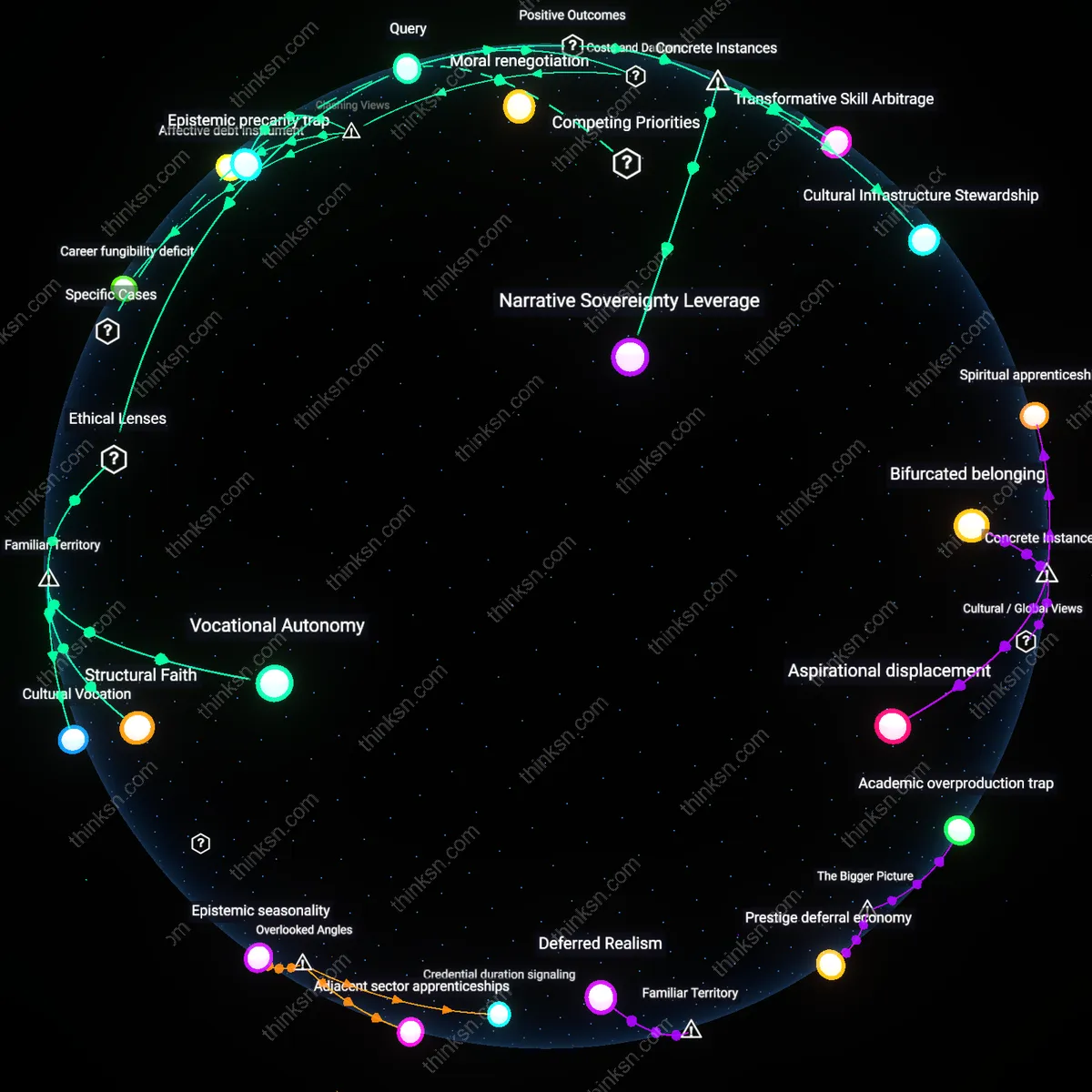
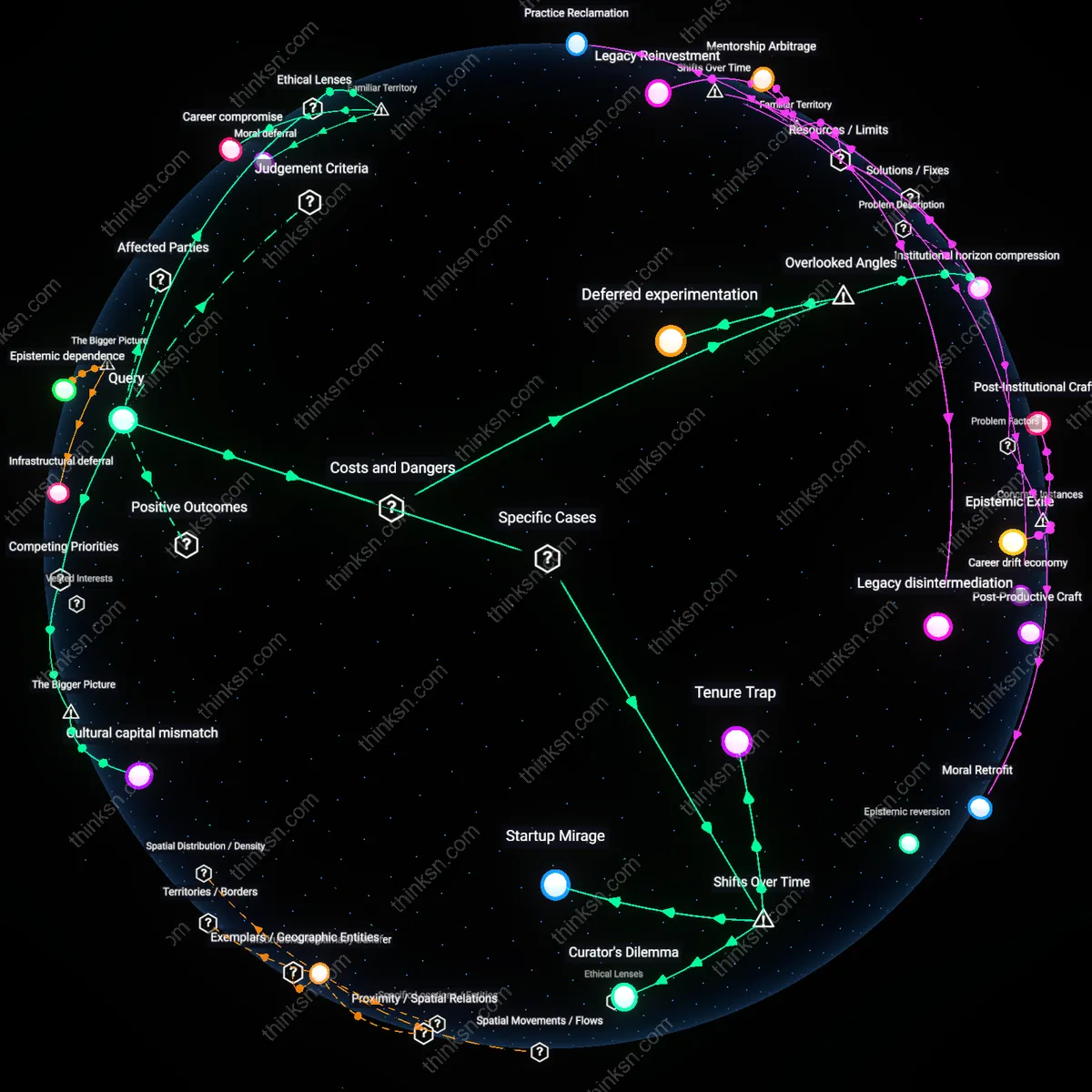
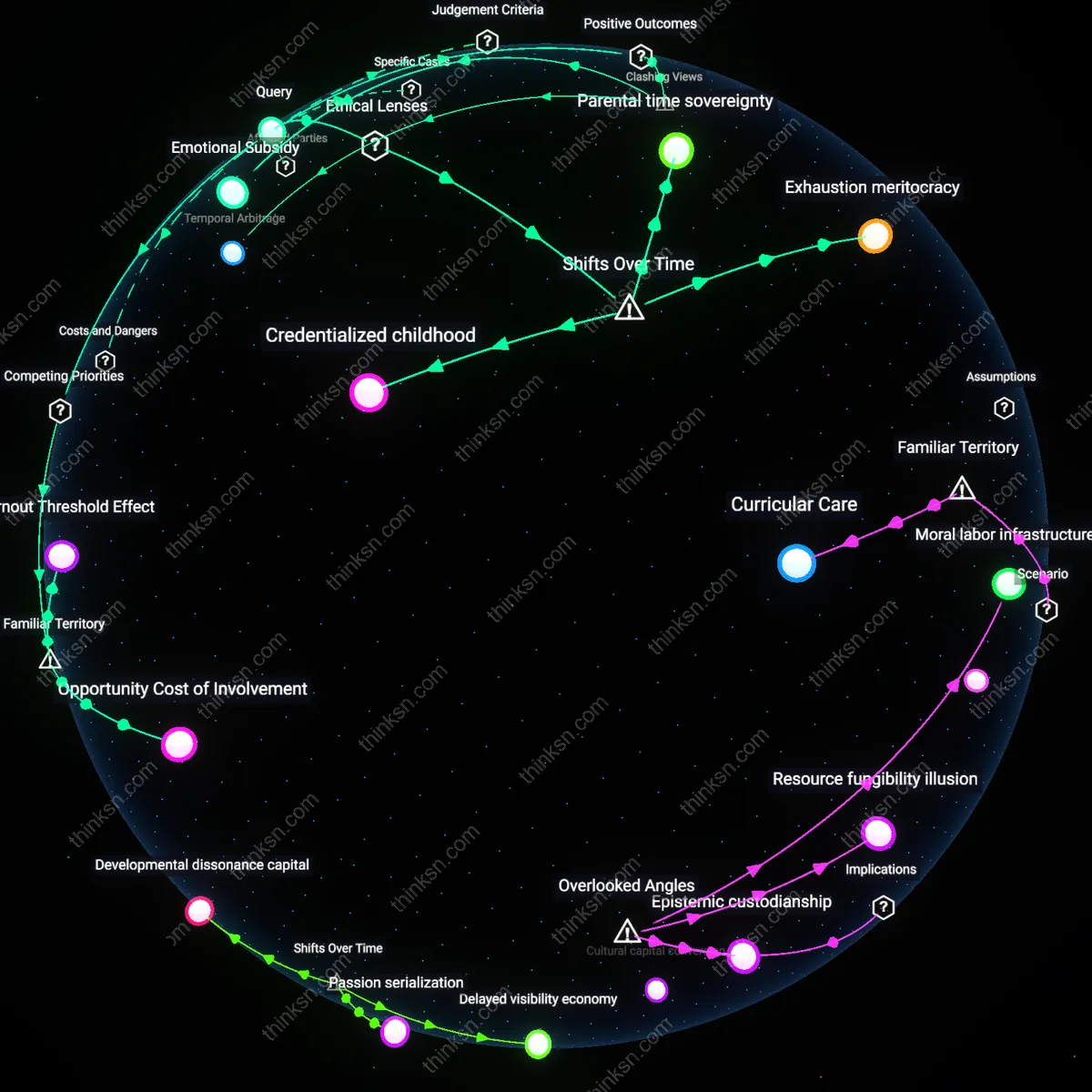
Analysis reveals 8 key thematic connections.
Key Findings
Meritocratic Mirage
Pursuing more extracurricular activities does not improve college prospects for middle-class families because admissions advantage increasingly accrues to applicants who convert leisure into credentialized performance, a practice natural to affluent families who treat time as a strategic asset. Middle-class students, even when highly involved, lack the social capital and financial slack to sustain curated, narrative-consistent portfolios that elite institutions reward—rendering their extracurricular effort misaligned with selective admissions logic. This misalignment reveals that the system punishes additive effort without elite framing, exposing the meritocratic mirage of equal opportunity through activity volume.
Emotional Subsidy
Increased extracurricular participation enhances college prospects for middle-class families not by boosting admissions outcomes directly, but by enabling students to generate emotionally compelling personal statements grounded in authentic struggle and commitment—something admissions officers at selective institutions actively seek. Unlike wealthy applicants whose experiences may appear polished or expected, middle-class students’ sustained involvement despite resource constraints reads as narrative resilience, transforming potential burnout into a covert form of emotional subsidy that elite reviewers interpret as character evidence.
Temporal Arbitrage
The pursuit of more extracurriculars improves college prospects only when middle-class families master temporal arbitrage—strategically displacing family time not as a loss but as an investment in future social mobility that recalibrates intergenerational time economies. Far from mere burnout risk, this recalibration allows students to accumulate institutionally legible forms of commitment that bypass academic metrics saturated with socioeconomic bias, making the trade-off not a cultural erosion but a rational adaptation to a system where visibility depends on performance beyond the classroom.
Opportunity Cost of Involvement
Pursuing more extracurricular activities reduces family time because structured student commitments directly displace unstructured home hours, particularly in dual-income middle-class households where schedules are already optimized for work and school. The mechanism operates through time-budgeting constraints in suburban school districts, where competitive college admissions incentives push parents to treat after-school hours as investment zones rather than relational space. What’s underappreciated is how this substitution is rationalized not as loss but as advancement—familiar framing sees 'doing more' as inherently beneficial, obscuring the quiet erosion of shared meals, weekend downtime, and informal mentorship that typically occurs within family proximity.
Burnout Threshold Effect
Increasing extracurricular participation leads to diminishing academic returns and heightened stress once students exceed three major commitments, a tipping point observed in AP course-taking populations across affluent public high schools. This operates through the cognitive load management systems of adolescents who lack autonomous time to process learning, rest, or self-reflect—systems now stretched thin by back-to-back robotics, debate, volunteer logging, and SAT prep. The familiar narrative of 'well-roundedness' masks the physiological reality that sustained over-scheduling degrades executive function, which ironically undermines the very academic performance colleges measure most closely.
Credentialized childhood
Pursuing more extracurricular activities strengthens college prospects for middle-class families because admissions selectivity since the 1980s has institutionalized a meritocratic ideal that equates structured achievement with potential, transforming once-optional pursuits into required markers of distinction, particularly through elite university signaling mechanisms in a post-affirmative action, test-optional era; this shift from mid-20th century general academic readiness to 21st century curated accomplishment portfolios reveals how extracurriculars became institutionalized as merit proxies, obscuring their role not in development but in competitive differentiation. The non-obvious consequence is that the very activities marketed as enrichment now function as credentials whose value lies not in experience but in their scarcity and traceability within a quantified merit economy.
Parental time sovereignty
The expansion of extracurricular demands since the 1990s has eroded family time not through individual over-scheduling alone but through a structural realignment of middle-class parenting labor, wherein college preparation has shifted from an end-stage academic task to a decade-long logistical project coordinated primarily by mothers, whose unpaid domestic labor absorbs the coordination burden of transporting, registering, and emotionally supporting children across fragmented activity silos; this transformation—marked by the post-industrial rise of the 'concerted cultivation' parenting model—exposes how educational opportunity is now extracted through temporal surrender rather than financial investment alone. The underappreciated shift is that family time has ceased to be a private domain and instead operates as a fungible resource in college access pipelines, subordinated to institutional timelines beyond family control.
Exhaustion meritocracy
Extracurricular overload generates burnout not as a side effect but as an intrinsic feature of a late-20th century shift in college admissions toward holistic review, which since the 1970s replaced singular academic thresholds with multidimensional assessments requiring sustained performance across domains, thereby incentivizing continuous self-presentation and emotional labor from adolescents; this regime, intensified after 2000 by digital portfolios and application platforms like Common App, rewards visible effort over intellectual curiosity, converting psychological strain into evidentiary markers of ambition acceptable to elite institutions. The non-obvious outcome is that burnout is not a failure of balance but a successful signal within a system that interprets exhaustion as commitment, thereby normalizing depletion as a prerequisite for opportunity.