Should You Fund Legal Battles Against Tech Giants via Crowdfunding?
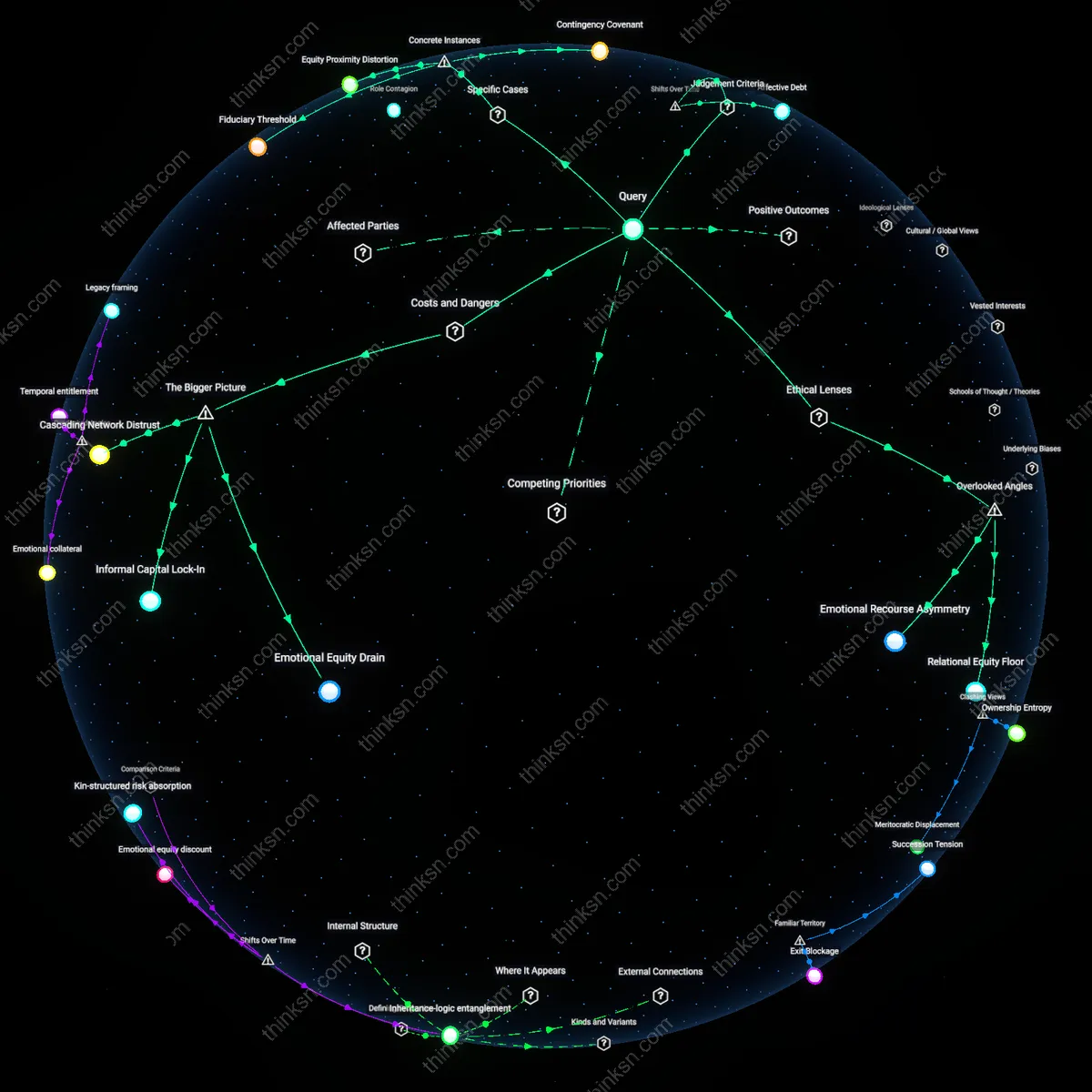
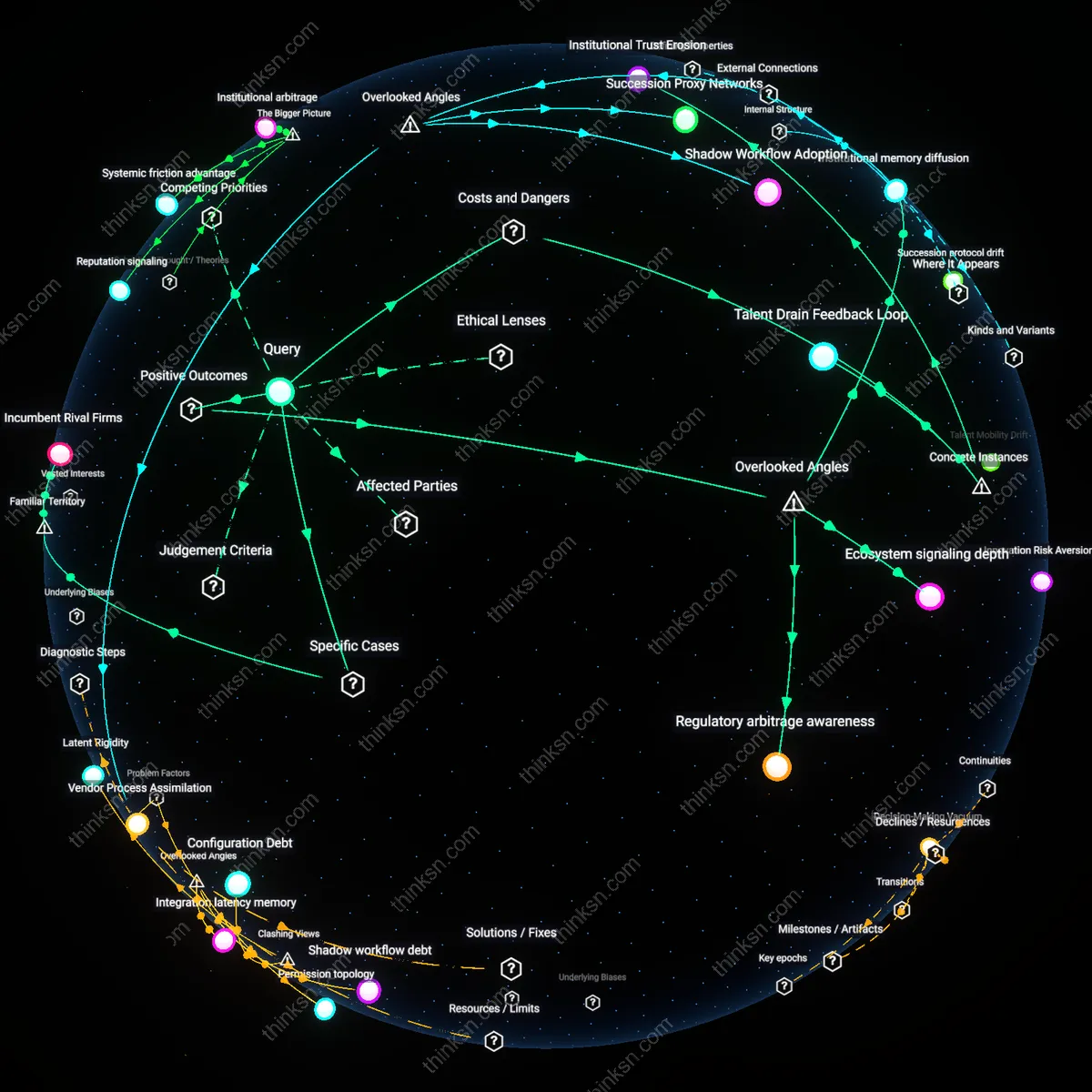
Analysis reveals 10 key thematic connections.
Key Findings
Litigation ecosystem workers
A consumer should consider the material dependence of temporary legal laborers on crowdfunding outcomes, because paralegals, process servers, and freelance investigators in underfunded plaintiff-side firms often rely on irregular litigation financing for sporadic income. These workers are embedded in a shadow workforce tied to the success of high-risk campaigns, yet remain invisible to donors who perceive their contribution as solely symbolic support for an individual plaintiff. This dimension reframes crowdfunding not as a pure justice signal but as a wage stabilization mechanism for a precariat whose livelihoods fluctuate with public sentiment trends, a dynamic absent from mainstream ethical donation frameworks.
Jurisdictional arbitrage risk
A consumer should weigh how the plaintiff’s choice of filing venue may exploit regulatory asymmetries to pressure the tech company into settlement regardless of legal merit, because certain state courts—such as California’s Alameda County or New York’s Southern District—are systemically leveraged by plaintiff attorneys to increase discovery costs for out-of-state defendants. This tactical forum shopping inflates perceived campaign viability without reflecting underlying justice, turning donations into de facto bets on procedural inefficiency rather than ethical outcomes. Most backers overlook that their funds may subsidize strategic venue manipulation, not truth-seeking, thereby aligning them with litigation tactics that undermine equitable access to justice.
Adjacent innovation suppression
A consumer should recognize that successful crowdfunded litigation against dominant tech firms can inadvertently freeze experimentation in adjacent startup ecosystems, because venture capital allocates based on regulatory risk projections and a precedent-setting case—even if narrowly decided—triggers broad-based caution among early-stage investors. Startups in related domains like data aggregation or AI-driven services may lose funding or alter product designs preemptively, not due to guilt but to avoid association with contested practices. This ripple effect reveals that donation decisions carry unintended consequences beyond the named parties, effectively shaping technological evolution through risk aversion, a feedback loop rarely visible to campaign contributors.
Evidentiary Momentum
Funding a litigation campaign generates public pressure that compels regulatory scrutiny, even if the case fails in court. When consumers collectively finance legal action against a powerful tech firm, the resulting visibility transforms isolated allegations into a matter of public record and political concern, activating agencies like the FTC or EU Data Protection Board who monitor systemic risks. This shift occurs not through judicial victory but through the amplification of asymmetrical information—where consumer-backed litigation exposes internal practices that would otherwise remain obscured by trade secrecy and jurisdictional fragmentation. The non-obvious insight is that financial support functions less as a bet on legal success and more as a mechanism to trigger institutional oversight through demonstrated societal concern.
Precedent Infrastructure
Consumer contributions build a shared legal resource pool that lowers entry barriers for future challengers, enabling cumulative litigation strategies across jurisdictions. By funding one case, supporters indirectly subsidize the development of legal arguments, expert witnesses, and discovery materials that can be repurposed in subsequent suits, such as those involving algorithmic bias or antitrust violations. This occurs through the systemic feature of common law precedent and procedural transparency, where case filings become public assets that weaker parties—like small developers or advocacy groups—can leverage. The underappreciated dynamic is that individual campaigns are nodes in a distributed legal network, where perceived failure in one forum may seed successful challenges elsewhere via doctrinal spillover.
Market Accountability Signaling
Financial participation in litigation crowdfunding sends a high-cost signal to investors and corporate boards about consumer tolerance for unethical tech practices, influencing capital allocation decisions. When retail contributors back legal challenges against firms with opaque AI systems or exploitative data policies, they generate a measurable disruption in reputation capital that asset managers interpret as regulatory risk, prompting ESG re-evaluations or shareholder activism. This operates through feedback loops between public sentiment platforms and institutional investment models, where crowd-funded litigation becomes a proxy metric for governance instability. The overlooked mechanism is that consumer dollars directed toward legal defiance function not just as support but as a form of market-based sanction, altering firm behavior through financial ecosystem pressures rather than court mandates.
Litigation Speculation
Consumers risk enabling unregulated financial speculation on legal outcomes that evolved from grassroots solidarity into venture-style betting after 2016, when crowdfunding platforms began standardizing campaign metrics and enabling cross-campaign portfolios. This shift transformed donations into pseudo-investments, mediated by platforms that profit from emotional narratives while insulating themselves from liability, thereby externalizing systemic risk onto individuals who mistake moral support for financial safety. The non-obvious consequence is not exploitation by bad actors but the normalizing of legal uncertainty as a tradable commodity, eroding public understanding of justice as distinct from market logic.
Precedent Erosion
Financial contributions to uncertain litigation now carry the unintended cost of weakening future collective legal strategies, a danger that emerged only after 2020, when fragmented crowdfunding campaigns began diverting energy and resources from coordinated class actions toward isolated, media-friendly lawsuits. This shift, driven by platform algorithms favoring viral campaigns over procedural strength, has created a system where symbolic victories outweigh legal durability, leaving behind no enforceable precedents even if won. The overlooked cost is not individual loss but the slow degradation of jurisprudential infrastructure, as courts see fewer high-impact cases reach maturity due to the privatization of legal risk through micro-donations.
Moral Hazard
A consumer’s decision to fund litigation against a tech giant risks reinforcing a public assumption that individual contributions can level the playing field, when in reality most funds dissipate in pretrial delays and legal overhead, leaving little room for meaningful accountability—thus mistaking participation for outcome. This dynamic operates through the psychology of civic engagement, where people conflate financial support with effective resistance, even as the asymmetry in legal resources ensures that symbolic victories rarely translate into structural change. The non-obvious insight here is that the very act of donating becomes a safety valve, siphoning off collective frustration into low-impact channels that preserve the status quo, which most discussions of crowdfunding overlook by focusing only on its empowering surface.
Narrative Ownership
Consumers inevitably back campaigns that cast them as underwriters of a counter-narrative against corporate overreach, yet in doing so they surrender control over how that story evolves once it enters the legal arena dominated by institutional actors with conflicting interests. The mechanism lies in how crowdfunding platforms frame cases through emotionally resonant but legally thin storylines—like privacy betrayal or algorithmic harm—while the real legal battle hinges on technical standing and evidence thresholds most donors never see. What goes unnoticed is that the people most affected by the tech company’s actions are often not the ones shaping the narrative, nor the beneficiaries if compensation arises, yet public imagination remains fixated on the hero-victim trope.