Are Traditional Discipline Methods Like Time-Out Actually Harmful?
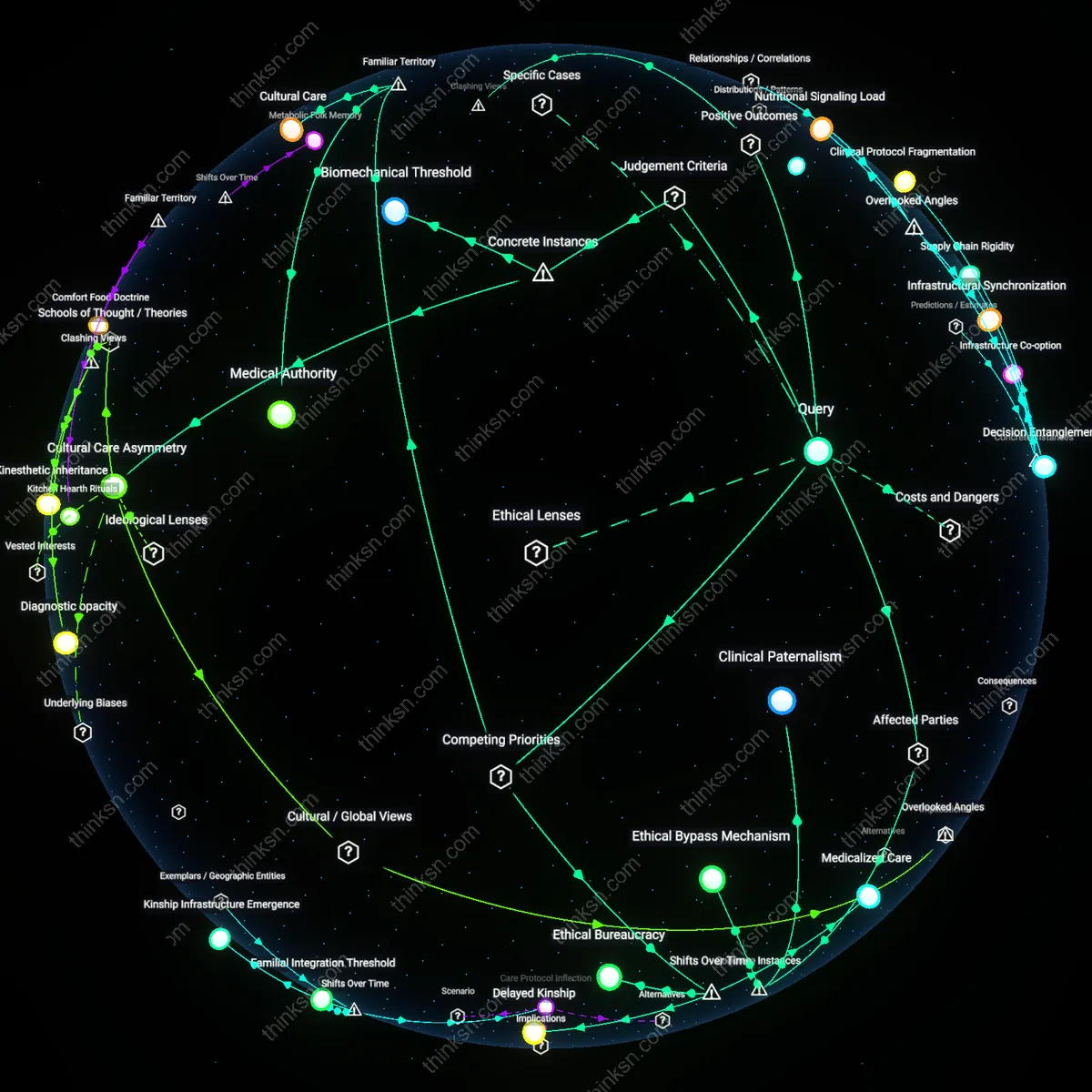
Analysis reveals 2 key thematic connections.
Key Findings
Temporal Dissonance
Dominant child psychology operates on a compressed developmental clock that treats emotional regulation as an individual skill to be acquired rapidly, while many culturally grounded families conceptualize moral development as a lifelong, relational process shaped across extended kin networks. Time-out, with its bounded duration and individualized correction logic, disrupts rather than repairs relational harmony in settings where misbehavior is addressed through narrative, reintegration, and communal witnessing. The overlooked insight is that disagreement over time-out is not about effectiveness per se, but about incompatible theories of time and healing—one pathologizes delay, the other dignifies duration.
Sanctioned Withdrawal
Marxism reveals time-out as a micro-disciplinary tool that reproduces broader systems of compliance by isolating the child from communal bonds, mirroring workplace or school-based alienation. Researchers advocating for connection-based alternatives challenge not just the method but the individualizing logic of capitalist socialization, while culturally grounded families often resist precisely because their caregiving models are already communal and non-alienating. The underappreciated insight is that time-out is not merely criticized for being harsh, but for enacting a sanctioned withdrawal of care that replicates structural abandonment—something both groups recognize, though they name it differently.
Deeper Analysis
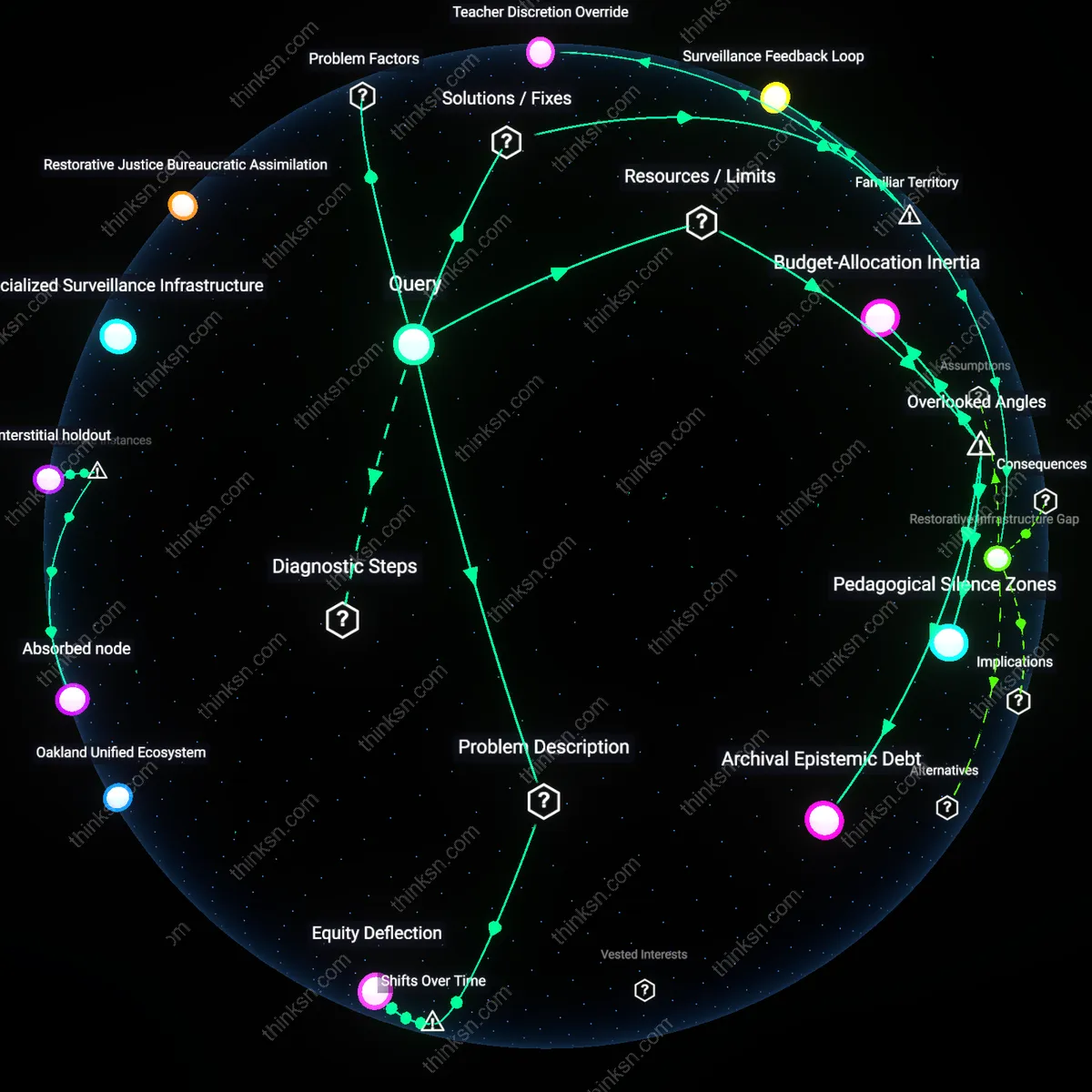
What would discipline look like in schools if it were designed to repair relationships instead of correcting individuals quickly?
Restorative Authority
In Oakland Unified School District’s implementation of restorative justice practices starting in 2005, discipline shifted from punitive suspension to peer-led circles involving students, teachers, and families to mediate harm, revealing that authority is reconfigured not through enforcement but through facilitated accountability. The mechanism—trained staff guiding structured dialogues after conflicts—enabled transgressors and affected parties to co-construct resolutions, embedding discipline in relational repair rather than hierarchical correction. This challenges the assumption that order requires removal, showing instead that sustained engagement, not expulsion, can recalibrate school climate. The non-obvious insight is that authority gains legitimacy not from swiftness or severity, but from its capacity to convene and sustain vulnerable dialogue.
Pedagogical Repair
At Freetown Collective, a democratic microschool in Massachusetts inspired by Sudbury Valley principles, students who disrupt communal norms are invited into curriculum-design committees to address the root causes of conflict, transforming disciplinary incidents into co-developed learning modules on empathy, consent, and community law. This system treats behavioral harm as a pedagogical gap, not a personal flaw, and leverages student agency to design educational responses that reintegrate rather than isolate. Unlike traditional behavior modification, which isolates the individual, this embeds discipline within the school’s knowledge-making process. The underappreciated dynamic is that repairing relationships becomes a form of collective curriculum development, where wrongdoing generates new civic learning for the whole community.
Restorative Circles
Discipline would center on facilitated group dialogues after conflicts, where students and affected parties jointly articulate harm and agree on reparative steps. Teachers and trained student mediators lead structured circles that replace detention or suspension, operating through school-based restorative justice programs in districts like Oakland and Denver. These circles make visible the hidden relational debts that punitive discipline erases, revealing how shared storytelling—not isolation—becomes the normative response to harm, challenging the public presumption that discipline must feel like punishment.
Accountability Plans
Students who disrupt classroom learning would co-develop personalized plans with counselors, educators, and peers to repair trust and rebuild participation. These plans, enforced through advisory periods and progress check-ins, function like probation without stigma, embedding responsibility in ongoing relationships rather than one-off consequences. Unlike suspensions that remove 'problem' students, these plans institutionalize the underappreciated expectation that misbehavior is an invitation to re-engage, not expel—an inversion of the zero-tolerance logic ingrained in mainstream school culture.
Harm Mapping
After an incident, students and staff collaboratively chart the ripple effects of their actions across the school community, documenting emotional, academic, and social impacts in written or visual form. This process, used in pilot programs in Minneapolis and Winnipeg, activates empathy by making indirect consequences visible, replacing the familiar script of blame with a shared diagnostic tool. What’s rarely acknowledged in public debates is that discipline could function less like a verdict and more like an autopsy of collective well-being, where the damage is neither minimized nor exaggerated but traced with precision.
Pedagogical Friction
Discipline designed to repair relationships would embed teachers as mediators of structural ambiguity rather than enforcers of rules, requiring them to navigate moments where pedagogical authority is suspended during conflict resolution. In such systems, educators must balance their role as instructional leaders with their function as facilitators of relational repair, a task rarely trained for in teacher preparation programs that prioritize classroom control over dialogic restoration. This creates pedagogical friction—a tension that emerges when educators are asked to simultaneously uphold curriculum timelines and pause instruction for emotionally contingent repair processes—exposing how deeply school discipline is tied not to behavior management alone but to the hidden pacing demands of standardized education. The overlooked reality is that time, not punishment, is the scarce resource in schools, and repairing relationships requires temporal flexibility that accountability regimes systematically erode.
Spatial Equity
Reparative discipline would demand physically reconfigured spaces in schools—such as neutral, non-institutional rooms for restorative circles—because conventional disciplinary architecture reinforces power asymmetry through design elements like principal offices with desks as barriers or hallways as transit zones. These spatial defaults communicate hierarchy and transience, undermining the psychological safety needed for genuine repair, yet most reform efforts ignore the built environment’s role in shaping relational dynamics. Spatial equity—equal access to dignified, private, and symbolically neutral spaces for conflict resolution—becomes a prerequisite for justice, not just a logistical detail, revealing how physical layout silently governs the legitimacy of student voice. This dimension is typically absent from equity debates, which focus on curriculum or punishment disparities while overlooking how walls, doors, and chairs embed institutional values in three dimensions.
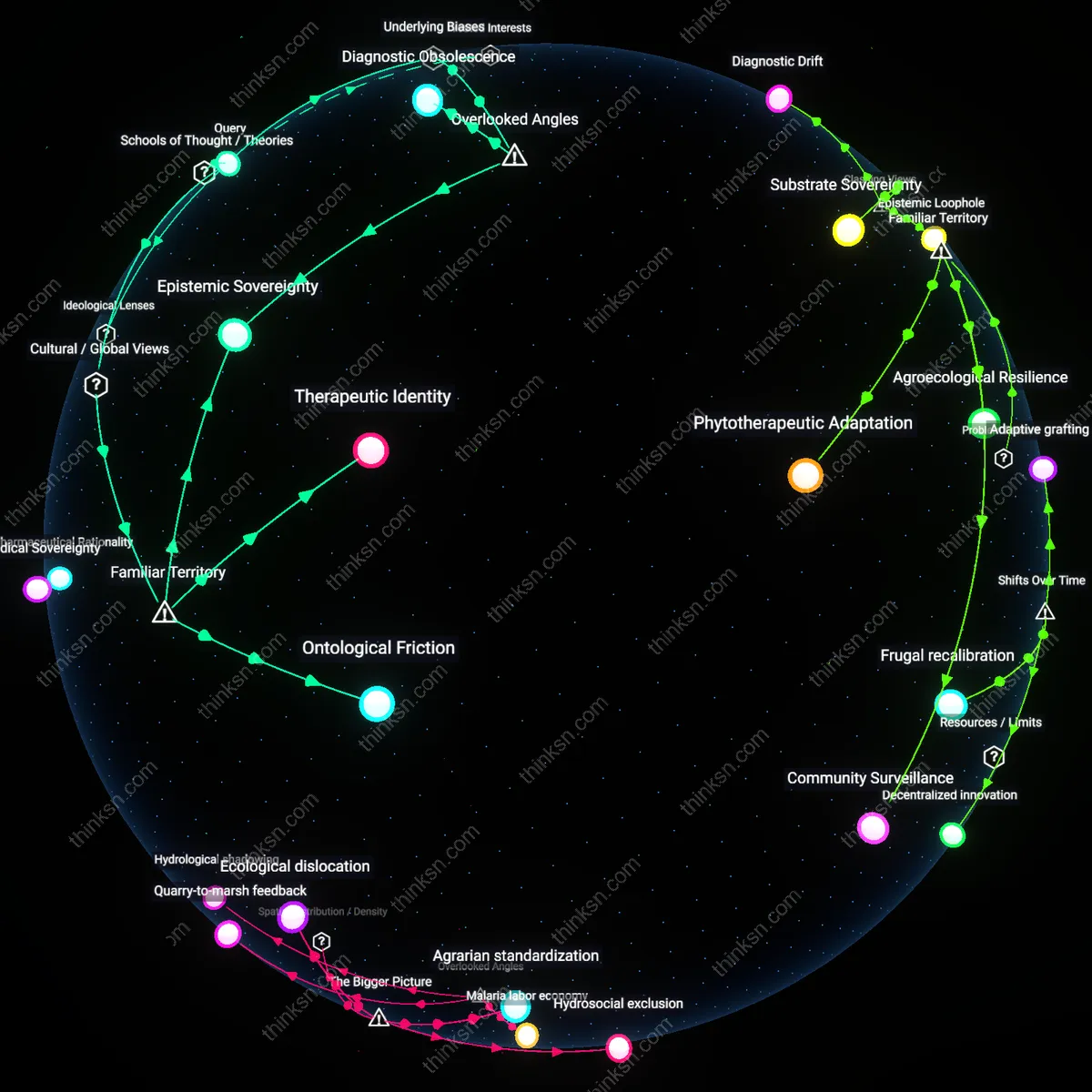
Where do researchers and culturally grounded families agree or diverge in how they see the role of isolation during discipline?
Disciplinary Interiority
Researchers began treating isolation during discipline as a measurable psychological event in the mid-20th century, whereas culturally grounded families historically framed it as a relational realignment involving ancestors, community, or spiritual consequence. This shift from communal-moral to individual-cognitive frameworks transformed isolation from a socially embedded corrective into a behavioral intervention targeting self-regulation, revealing how modern developmental science recast moral formation as internalized compliance. The non-obvious effect of this transition is that the same practice—temporary separation—became analytically invisible as culture once it was reduced to a variable in self-control studies.
Temporal Compression
In post-1980 behavioral parenting programs, researchers standardized isolation (e.g., 'time-out') into fixed, clock-based intervals, while many culturally grounded families sustain isolation for indeterminate durations calibrated by emotional readiness or communal consensus. The mechanization of discipline through timed episodes reflects a broader shift from qualitative moral pacing to quantifiable behavior modification regimes in child-rearing, particularly in U.S. clinical and educational settings. What is underappreciated is how this temporal formalization severs isolation from narrative resolution, replacing relational closure with procedural completion.
Authority Relegation
Since the 1990s, child development researchers have repositioned parental authority during isolation by emphasizing emotional availability post-discipline—an affective recalibration—while culturally grounded families often maintain authority through unspoken hierarchy and generational precedent even after isolation ends. This shift reframed discipline from a reaffirmation of enduring social position to a rupture-repair cycle dependent on verbal reconciliation, particularly in Euro-American middle-class norms. The residual effect is that isolation no longer serves to reproduce stable roles but instead indexes emotional labor as proof of effective parenting.
Disciplinary epistemologies
Researchers treat isolation during discipline as a measurable behavioral intervention, whereas culturally grounded families often view it as a relational recalibration, revealing divergent disciplinary epistemologies. Scientists classify time-out as a standardized technique to suppress undesirable behavior through operant conditioning, validated by experimental control and longitudinal compliance metrics, while many kinship-based communities see removal from social space as a context-dependent act of moral restoration contingent on emotional attunement. This divergence persists because research institutions standardize protocols across populations to ensure replicability, whereas familial systems embed discipline within intergenerational norms and localized ethics of care. The non-obvious insight is that the conflict is not merely about technique but about whose knowledge counts in defining effective discipline.
Infrastructure of observation
Researchers rely on isolation practices that are legible only through an infrastructure of observation built into clinical and school-based settings, whereas culturally grounded families implement discipline within opaque, kin-mediated environments resistant to external measurement. Behavioral scientists require coded, timestamped instances of child noncompliance and adult response to validate isolation as effective, which assumes surveillance capacity and procedural compliance; in contrast, families operating within collectivist or Indigenous worldviews often discipline through withdrawal of relational access in ways that evade third-party verification. This gap is sustained by institutional funders who incentivize scalable, observable interventions over context-sensitive practices. The underappreciated mechanism is that research validity depends on visibility, which systematically excludes forms of isolation rooted in unmonitored relational dynamics.
Temporal sovereignty
Culturally grounded families assert temporal sovereignty over disciplinary processes by allowing isolation to end when relational harmony is restored, whereas researchers define its duration through preset, protocol-driven intervals. In many Pacific Islander or rural Latin American households, a child’s reintegration after withdrawal depends on communal cues like apology readiness or elder judgment, not elapsed minutes; in contrast, clinical guidelines often prescribe fixed durations (e.g., one minute per year of age) to ensure treatment fidelity. This misalignment persists because research funding and implementation science prioritize uniform dosing for comparative effectiveness, undermining context-responsive timing. The overlooked factor is that control over duration reflects deeper control over social time, making temporal sovereignty a site of cultural resistance to institutional standardization.