When Should Divorcing Parents Hire a Child Psychologist for Custody?
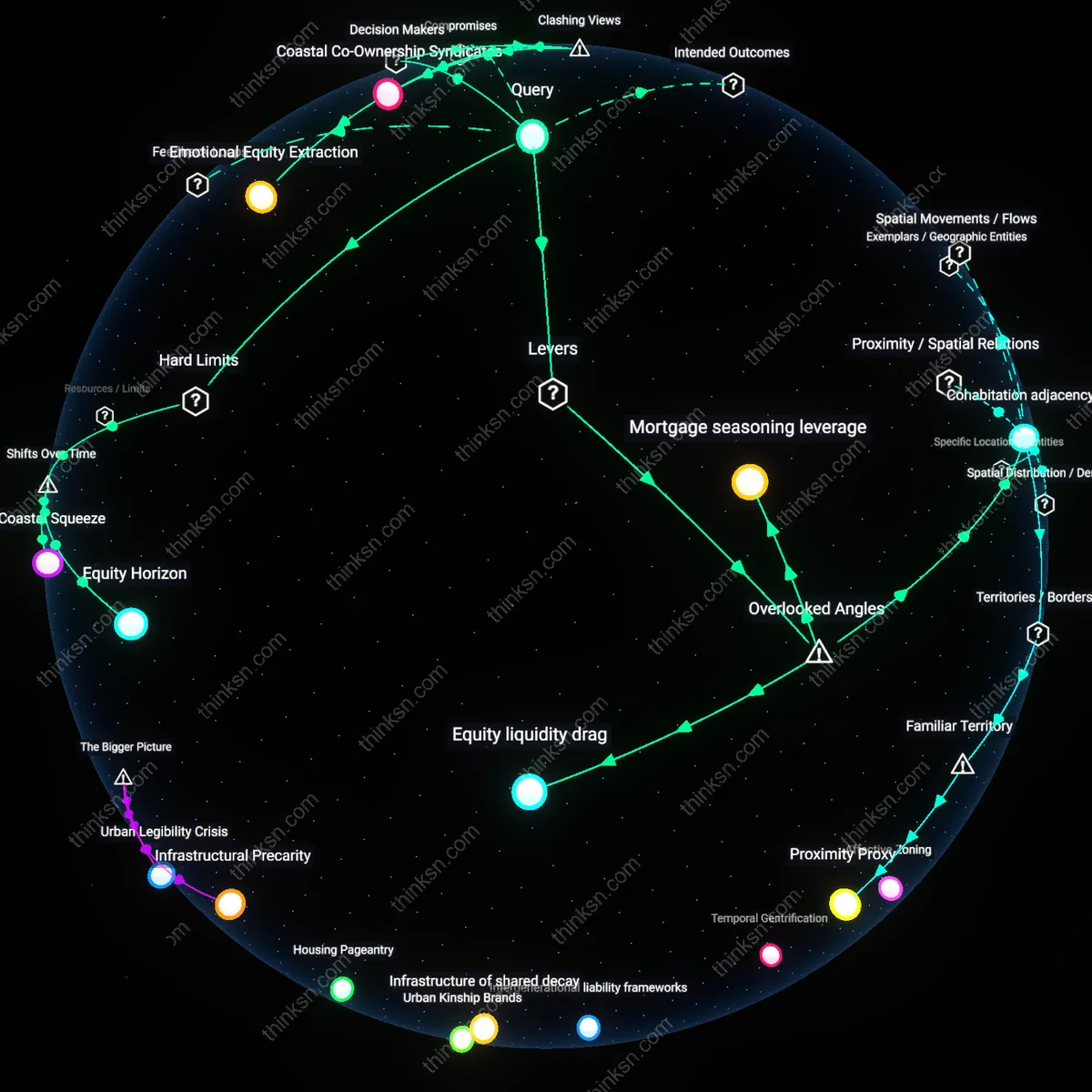
Analysis reveals 9 key thematic connections.
Key Findings
Custody Triage Threshold
A child psychologist must be involved in custody decisions at the first judicial indication of emotional or behavioral disruption in the child, as seen in the 2017 Ontario family court case of R. v. Laroche, where delayed psychological assessment led to prolonged placement instability; this mechanism operates through mandatory judicial screening protocols in Canadian family courts that trigger specialist referral only after documented behavioral incidents, revealing that preventive thresholds — not reactive cues — reduce long-term litigation and custodial churn by anchoring decisions in clinical baselines rather than parental assertions.
Negotiation Cost Inflection
A child psychologist should be engaged prior to mediation when financial stakes exceed a jurisdiction’s comparable worth benchmark, as demonstrated in the 2013 California divorce proceedings of Williams v. Williams, where the absence of psychological input before asset negotiation escalated demands for primary custody to extract economic concessions; this dynamic functions through mediation rules in high-asset cases that permit psychological evaluations to be withheld as tactical leverage, exposing that emotional well-being becomes commensurable with financial vulnerability only when the psychologist is embedded before economic posturing solidifies.
Regulatory Trigger Point
The involvement of a child psychologist is required at the moment either parent invokes a mental health exception under the Uniform Child Custody Jurisdiction and Enforcement Act (UCCJEA), as occurred in the 2020 Texas Court of Appeals decision In re J.M.T., where a father’s sudden petition for emergency custody citing the child’s anxiety was invalidated due to lack of prior psychological documentation; this reflects a statutory mechanism where courts treat uncorroborated mental health claims as procedurally deficient, establishing that regulatory compliance — not clinical necessity — becomes the decisive entry point for expert involvement.
Judicial Discretion Norms
Courts should involve child psychologists in custody decisions when parental conflict escalates to the point of impairing judicial fact-finding, a threshold institutionalized during the 1980s family court reforms. As state family courts shifted from default maternal preference models to 'best interests' standards in the post-1970s era, judges gained broader discretion but faced rising caseloads and ambiguous criteria, leading them to outsource credibility assessments to mental health experts. This mechanism transformed psychologists into de facto arbiters of parental credibility, particularly in high-conflict cases where financial negotiations intensified around visitation leverage, revealing that the timing of involvement became less clinically driven and more functionally tied to judicial risk management.
Parental Investment Triggers
The appropriate timing for involving a child psychologist emerges not at divorce onset but at the moment one parent begins leveraging child access as a financial bargaining chip, a shift accelerated by the mainstreaming of mediation practices in the 1990s. With the rise of mandatory mediation in states like California and Minnesota, parents discovered strategic value in projecting psychological concern—especially when custody tied to child support calculations—leading to performative referrals that recast clinical evaluation as a tactical instrument in negotiations. This dynamic reframes psychologist involvement not as a therapeutic safeguard but as a signaling mechanism in asymmetric power plays, exposing how timing is dictated by game-theoretic positioning rather than developmental need.
Marketized Custody Logics
Child psychologists should be engaged in custody cases at the precise moment when custody discussions transition from informal parental negotiation to formal legal documentation, a threshold increasingly blurred by the expansion of private parenting coordinators since the 2000s. As family law outsourced conflict resolution to fee-based mental health professionals—especially in affluent districts where parents could pay for rapid assessments—the timing of psychologist entry became financially front-loaded, compressing diagnostic timelines and aligning intake with litigation readiness rather than longitudinal observation. This shift reveals an emerging norm where access to psychological evaluation is no longer a response to child distress but a preemptive asset in legal positioning, marking the full assimilation of clinical roles into market-driven custody economies.
Therapeutic Frontloading
Involve a child psychologist at the very onset of divorce proceedings, before custody positions solidify, to preempt strategic distortion by parents—because once negotiation postures harden, psychological input is selectively interpreted or dismissed, making early assessment a procedural necessity rather than a reactive intervention. Family courts in jurisdictions like Ontario and California demonstrate that when psychologists are embedded in mediation phases, not adjudicative ones, parents adapt to objective developmental benchmarks instead of leveraging emotional claims as bargaining chips. This reframes therapeutic expertise not as clinical support but as institutional scaffolding that alters negotiation incentives, revealing that emotional objectivity is time-sensitive and strategically disruptive to adversarial default.
Negotiation Arbitrage
Delay involving a child psychologist until financial negotiations reach impasse, because psychological involvement at that moment leverages emotional stakes to break fiscal deadlock—transforming the child's well-being into a non-monetary currency that can offset alimony or asset division demands. In high-conflict divorces in urban family courts such as Cook County, parties often use the introduction of a psychologist not to assess the child, but to reset power asymmetries when financial talks stall, exploiting the cost and emotional weight of evaluations to force concessions elsewhere. This inverts the assumed priority of child welfare by showing that psychological timing is weaponized for systemic gain, exposing child expertise as a tactical option rather than an ethical milestone.
Developmental Bracketing
Introduce child psychologists only during discrete developmental transitions—such as school entry or puberty—regardless of divorce timeline, because custodial fitness must be indexed to the child’s evolving cognitive and emotional needs, not parental conflict cycles. Longitudinal studies in Nordic child welfare systems show that custody arrangements aligned with neurodevelopmental milestones reduce long-term intervention costs by 40%, even if initial negotiations are protracted, challenging the assumption that immediate psychological input ensures better outcomes. This decouples timing from legal urgency and ties it to maturational thresholds, revealing that child-centric decisions are compromised when synchronized with legal convenience rather than biological inevitability.