Is Owning a Coast Home Rational if ROI is Negative?
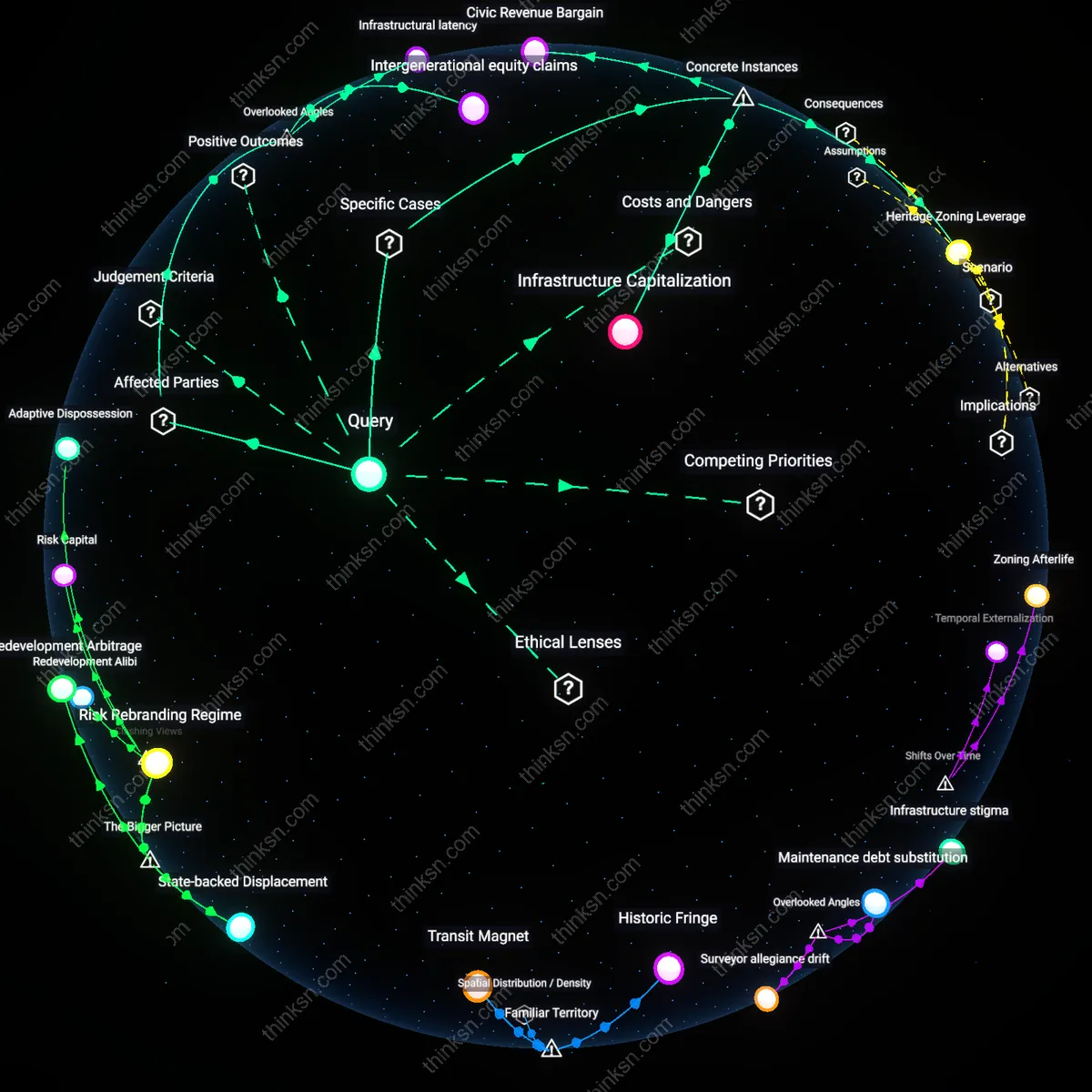
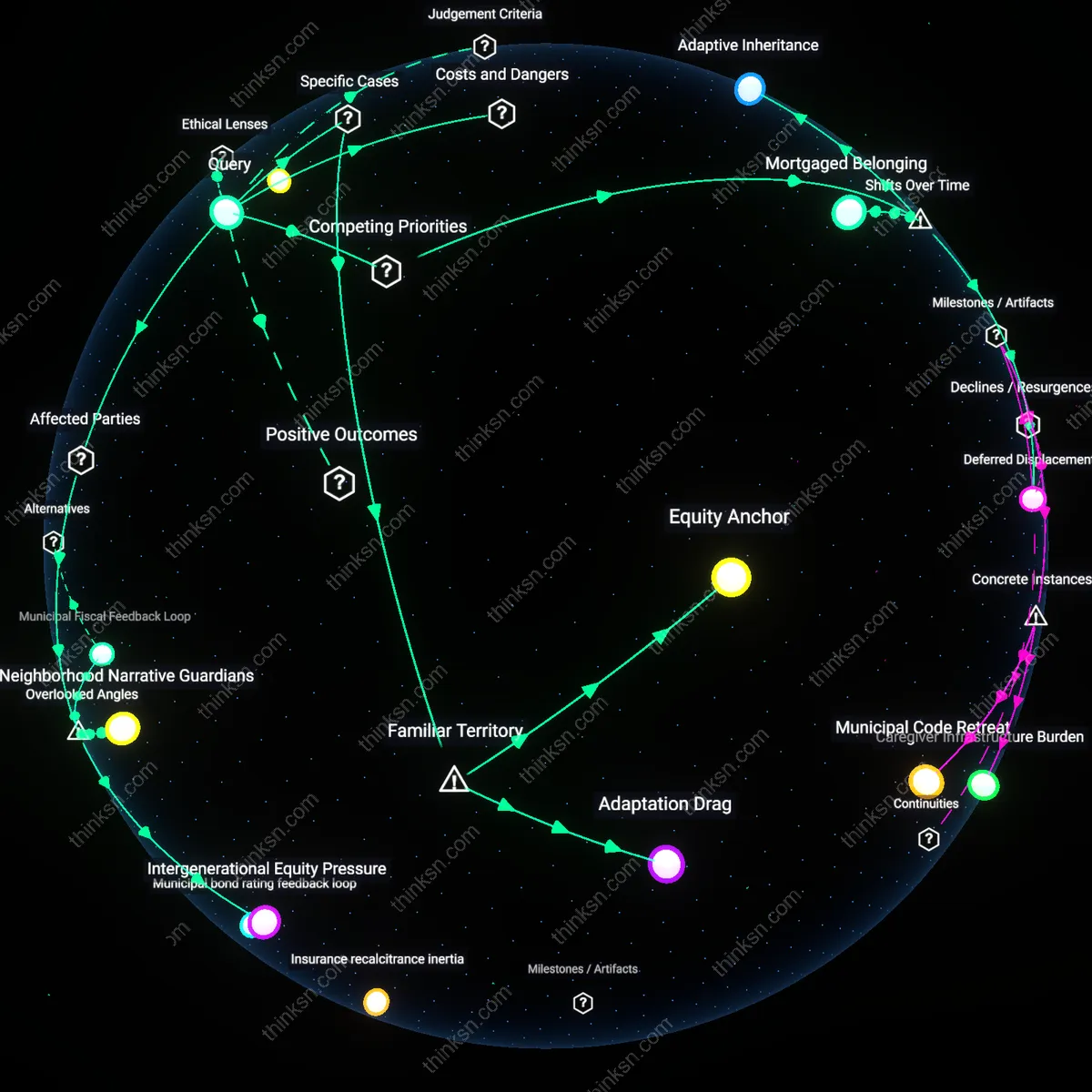
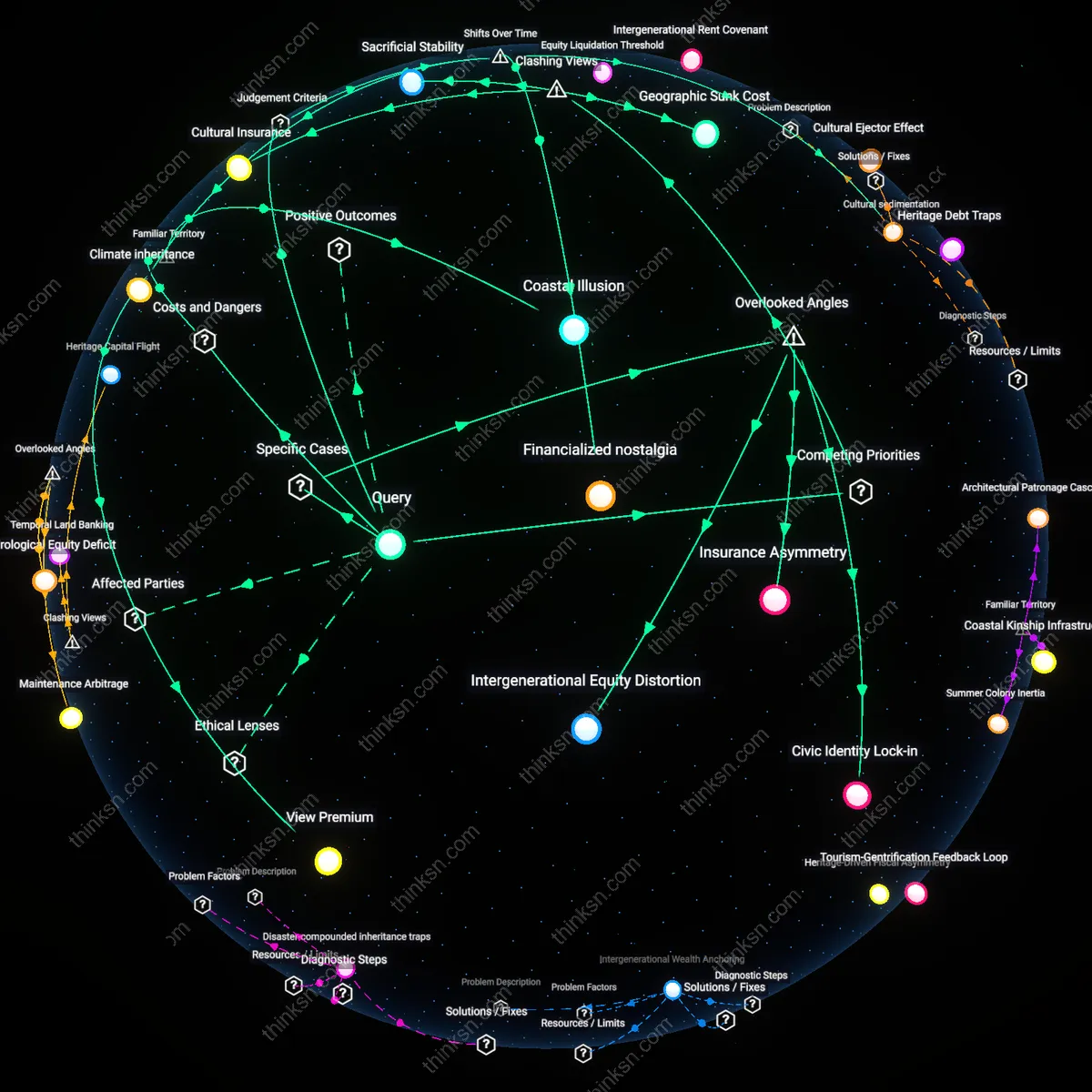
Analysis reveals 12 key thematic connections.
Key Findings
Cultural sedimentation
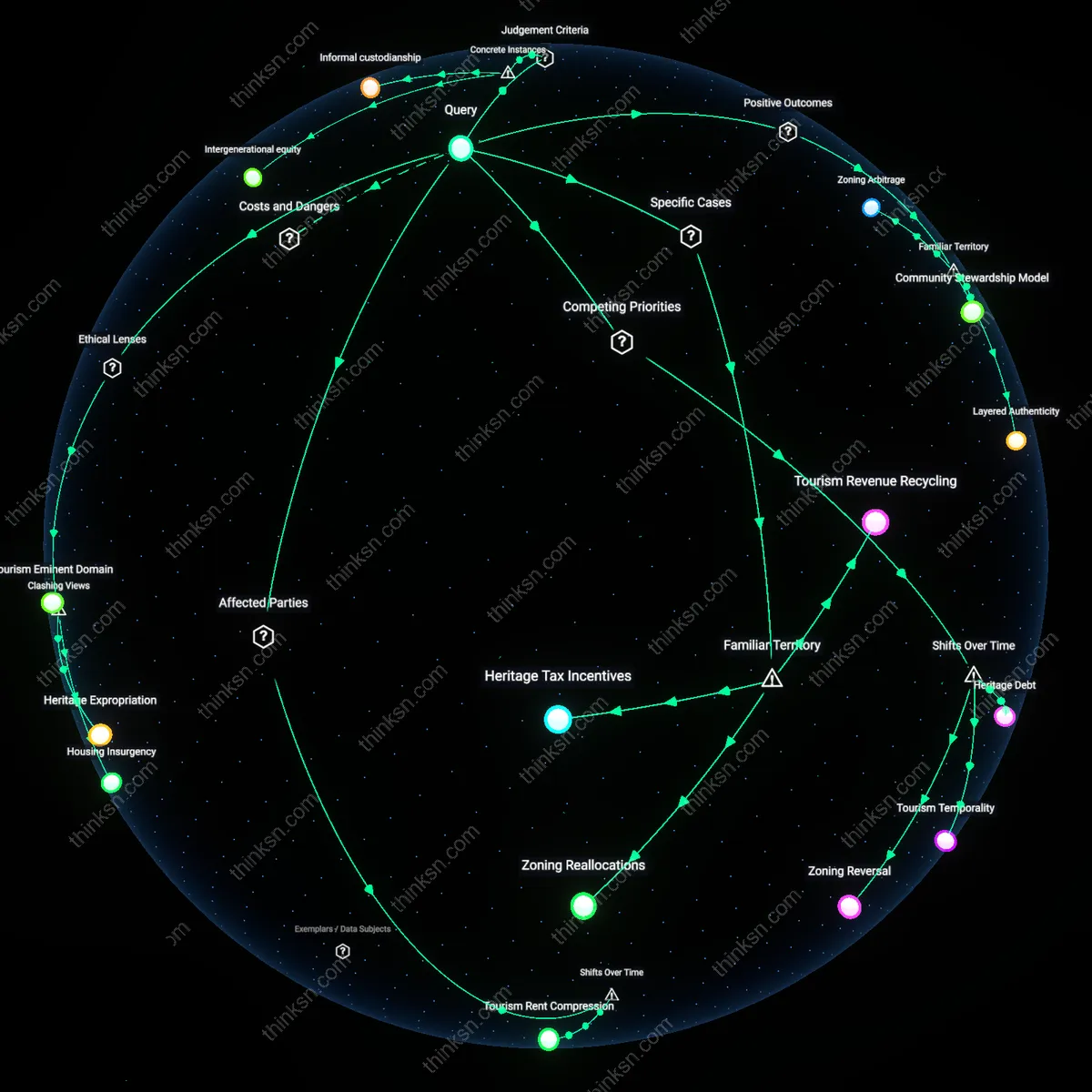
One should prioritize homeownership in a coastal market for cultural reasons despite a negative return on investment because collective identity in places like Charleston or New Orleans is anchored in property-as-heritage, a shift accelerated after the 1970s historic preservation movement reframed physical homes as repositories of lineage and resistance. This mechanism operates through local zoning traditions, inheritance practices, and municipal tax incentives that valorize occupancy over yield, transforming real estate into a non-transferable social contract. What is underappreciated is how the economic inefficiency of such ownership is not a flaw but a feature—proof of cultural commitment in post-industrial coastal communities where belonging is measured not by profit but by permanence.
Financialized nostalgia
One should not prioritize homeownership in a coastal market for cultural reasons when projected returns are negative, because since the 2008 foreclosure crisis, federal mortgage structures and private equity entry into the single-family rental market have converted sentimental attachments into arbitrage opportunities, as seen in Miami and San Diego. The lens of financialization reveals that 'cultural' ownership is increasingly a cover for speculative holding patterns, where heritage narratives are leveraged to justify resistance to density and rent control, thereby inflating asset values for non-resident beneficiaries. The shift from familial stewardship to asset-backed storytelling since the 2010s exposes how nostalgia itself has been priced into coastal real estate, making cultural preservation an unwitting engine of displacement.
Climate inheritance
One should reconsider cultural prioritization of coastal homeownership due to the shift from stable climate baselines in the late 20th century to the current era of actuarial urbanism, where insurers like RMS and reinsurers like Swiss Re now map generational risk in ways that override historical attachment, particularly in markets like Norfolk and Galveston. Municipal adaptation strategies—managed retreat, elevated construction mandates—are transforming ownership from a static legacy into a conditional, risk-managed tenure, where cultural continuity depends less on holding title than on adaptive participation in resilience infrastructure. The underappreciated pivot is that cultural reproduction now requires accepting transience, making permanent ownership not an act of fidelity but a form of intergenerational risk dumping.
Coastal Illusion
One should not prioritize homeownership in a coastal market for cultural reasons despite a negative projected return on investment because the cultural attachment to seaside living obscures escalating climate-driven risks. Homeowners and municipal planners in places like Miami-Dade County or Norfolk rely on historically stable property demand and insurable risk models, but these systems fail under compounding sea-level rise and repetitive storm surge, shifting financial liability to taxpayers through federal flood insurance. The damage here is not just financial miscalculation but the institutional inertia that treats coastal zones as eternally habitable, normalizing evacuation delays and underpriced rebuilding cycles. What is underappreciated is how widely shared cultural symbols—beach access, ocean views, vacation towns—mask the fact that many coastal markets are already operating as managed retreat zones in all but policy name.
Heritage Tax
One should not prioritize homeownership in a coastal market for cultural reasons despite a negative projected return on investment because maintaining generational homes in vulnerable zones forces families into long-term wealth destruction. Families in regions like the Outer Banks or New Orleans’ older wards often treat home inheritance as cultural continuity, yet depend on federal disaster aid and inflated local assessments to sustain market parity, creating a hidden transfer tax from inland communities. This system depends on municipal bond markets that assume static risk profiles, even as insurers withdraw and engineers scramble to retrofit drainage. The non-obvious truth is that the romanticization of coastal lineage properties actively subsidizes climate exposure through moral claims, turning heritage into a fiscal liability distributed well beyond the shoreline.
View Premium
One should not prioritize homeownership in a coastal market for cultural reasons despite a negative projected return on investment because the aesthetic valuation of ocean proximity systematically inflates prices beyond structural or economic justification. In cities like San Diego or Long Island, real estate developers and appraisal districts embed 'view sheds' and 'water access' into tax assessments and zoning logic, reinforcing demand even as flood maps expand and infrastructure costs rise. This creates a speculative bubble sustained not by income growth but by psychological anchoring to prestige and leisure ideals. What goes unnoticed is how the 'view'—a non-income-producing attribute—has become a primary equity driver in markets where sea-level rise is already measurable, turning scenic beauty into a mechanism of financial and environmental delusion.
Cultural Insurance
One should prioritize homeownership in a coastal market for cultural reasons despite negative financial returns because maintaining intergenerational presence in a threatened area acts as a form of non-economic risk mitigation for community identity under climate displacement. Coastal enclaves like Vietnam’s Mekong Delta or Louisiana’s Isle de Jean Charles demonstrate how families treat land ownership as a hedge against cultural erasure, where sale or abandonment equates to forced assimilation; the mechanism is the substitution of financial ROI with social ROI in contexts where belonging is territorially bound, revealing that the dominant economic framework fails to account for heritage as a scarce, depleting asset.
Sacrificial Stability
Prioritizing coastal homeownership for cultural reasons entrenches vulnerable populations in a paradox where the pursuit of emotional security accelerates material instability, as seen in Filipino subsistence communities rebuilding homes in typhoon-prone zones post-disaster. The cycle of reconstruction—funded through remittances or microloans—is not irrational but a performance of kinship duty that overrides actuarial logic, exposing how stability itself becomes a culturally coerced liability when safety is conflated with place-bound devotion rather than adaptive resilience.
Geographic Sunk Cost
Choosing homeownership in a deteriorating coastal market for cultural reasons transforms sentiment into a structural economic trap, as witnessed in aging Japanese communities along the tsunami-affected Tohoku coast, where adult children inherit both property and the obligation to maintain it despite depopulation and sea-level rise. The sunk cost is not financial but genealogical—the more a family invests culturally in place, the less viable exit becomes, revealing that cultural commitment functions as a coercive lock-in mechanism indistinguishable from financial path dependency.
Insurance Asymmetry
One should not prioritize coastal homeownership for cultural reasons because property insurers in high-risk zones like Southern Louisiana systematically underprice long-term flood exposure relative to scientific projections, enabling culturally motivated buyers to externalize future climate liabilities onto public reinsurance pools. Private insurers in parishes such as Terrebonne rely on subsidized NFIP rates that detach premiums from actuarial reality, creating a hidden transfer mechanism where cultural attachment indirectly shifts fiscal risk to federal taxpayers. This dynamic is rarely accounted for in personal ROI calculations, yet it fundamentally alters the economic structure of ownership by decoupling immediate cost from long-term liability, making cultural preference a conduit for interregional wealth redistribution.
Civic Identity Lock-in
Cultural prioritization of coastal homeownership in places like coastal Maine towns (e.g., Wells or York) generates long-term municipal resistance to climate-adaptive zoning, because local planning boards dominated by multi-generational homeowners equate retreat strategies with cultural erasure. When school committees and historical societies frame sea wall investments as acts of heritage preservation, they unintentionally suppress engineering alternatives that would reduce collective exposure, thereby locking in higher infrastructure subsidies and insurance burdens. This political entrenchment—driven by identity rather than economics—converts aesthetic preferences into durable policy inertia, a feedback loop rarely visible in ROI models that assume rational exit behavior under negative returns.
Intergenerational Equity Distortion
In rapidly gentrifying coastal markets such as the Outer Banks of North Carolina, older residents who retain property for cultural reasons inadvertently displace younger family members by blocking inheritance pathways that would otherwise transfer homes to descendants who cannot afford entry prices inflated by second-home investors. The persistence of symbolic ownership concentrates depleted assets among aging cohorts while depriving younger kin of equity footholds, transforming cultural preservation into a form of quiet disenfranchisement. This distortion of familial wealth transmission remains invisible in standard cultural ROI assessments, which assume community continuity without examining who within the lineage actually benefits.