Why Do Workers Shy Away from FMLA Retaliation Claims?
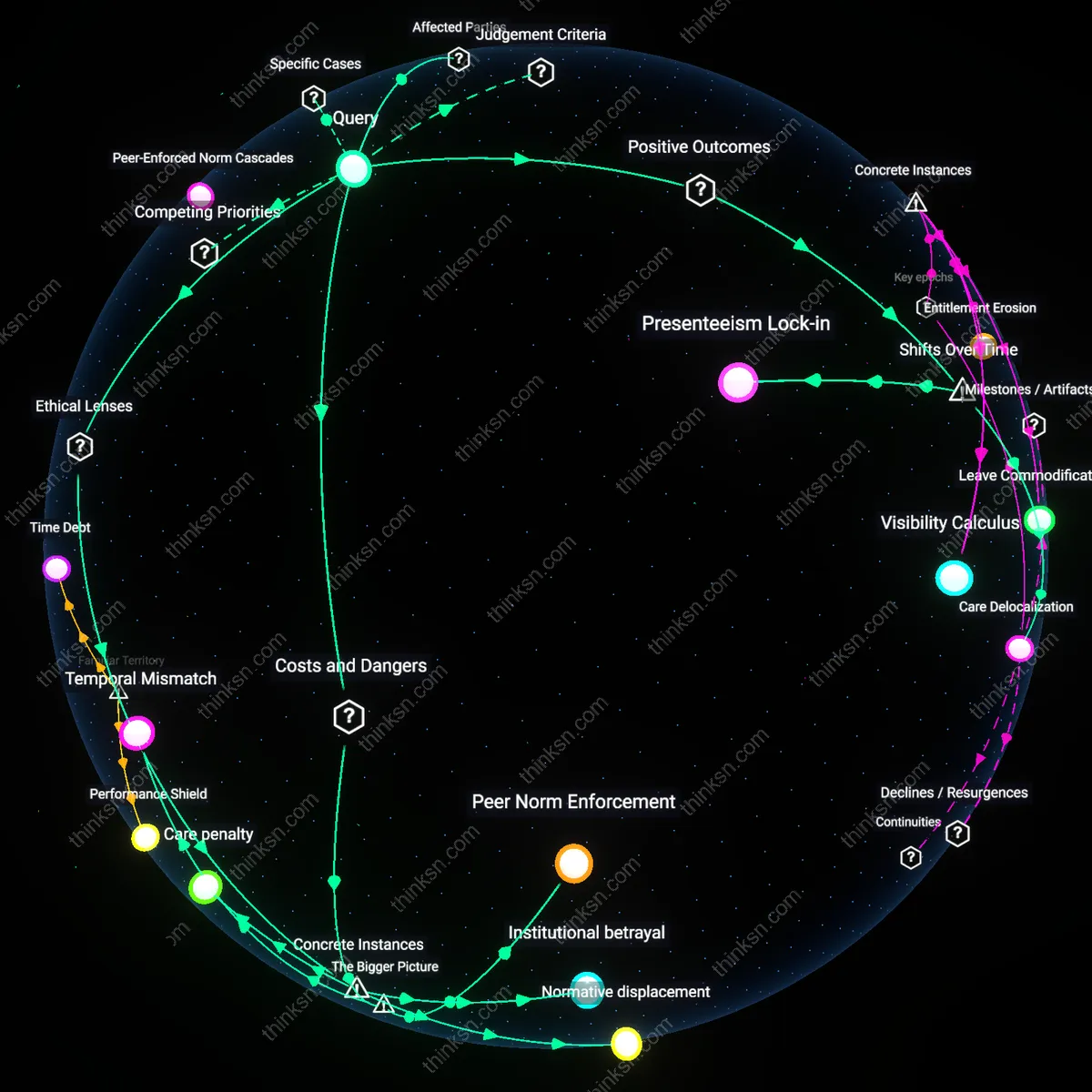
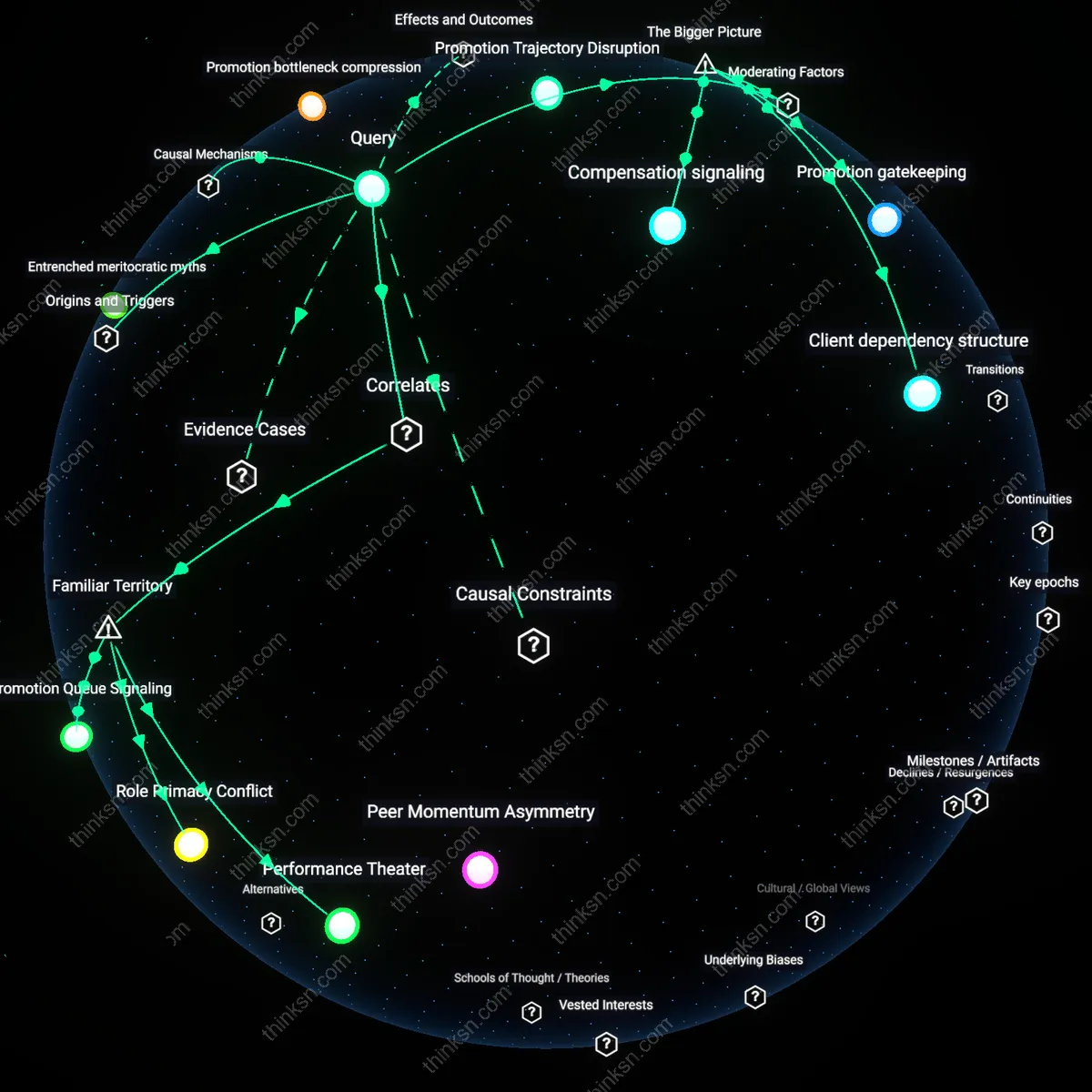
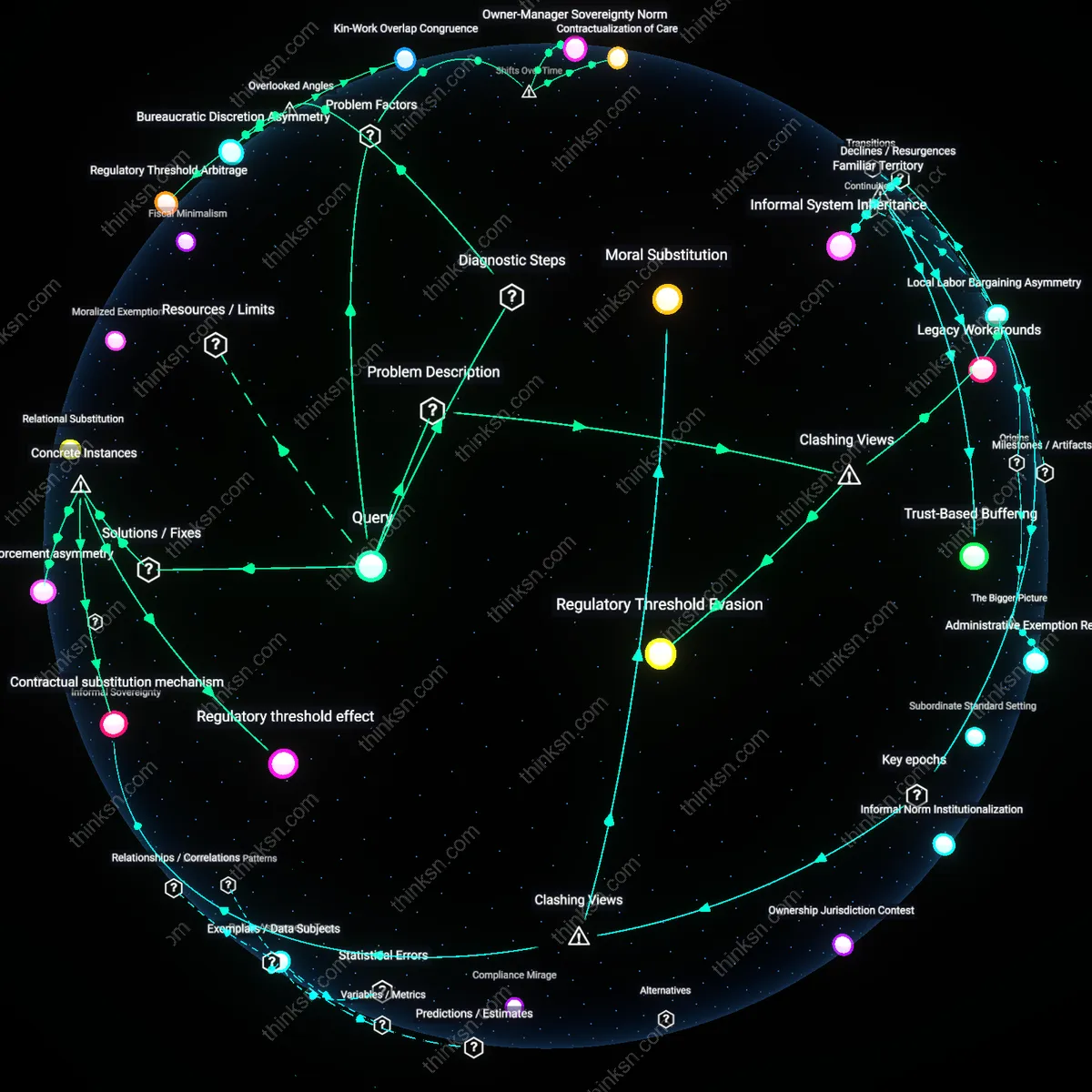
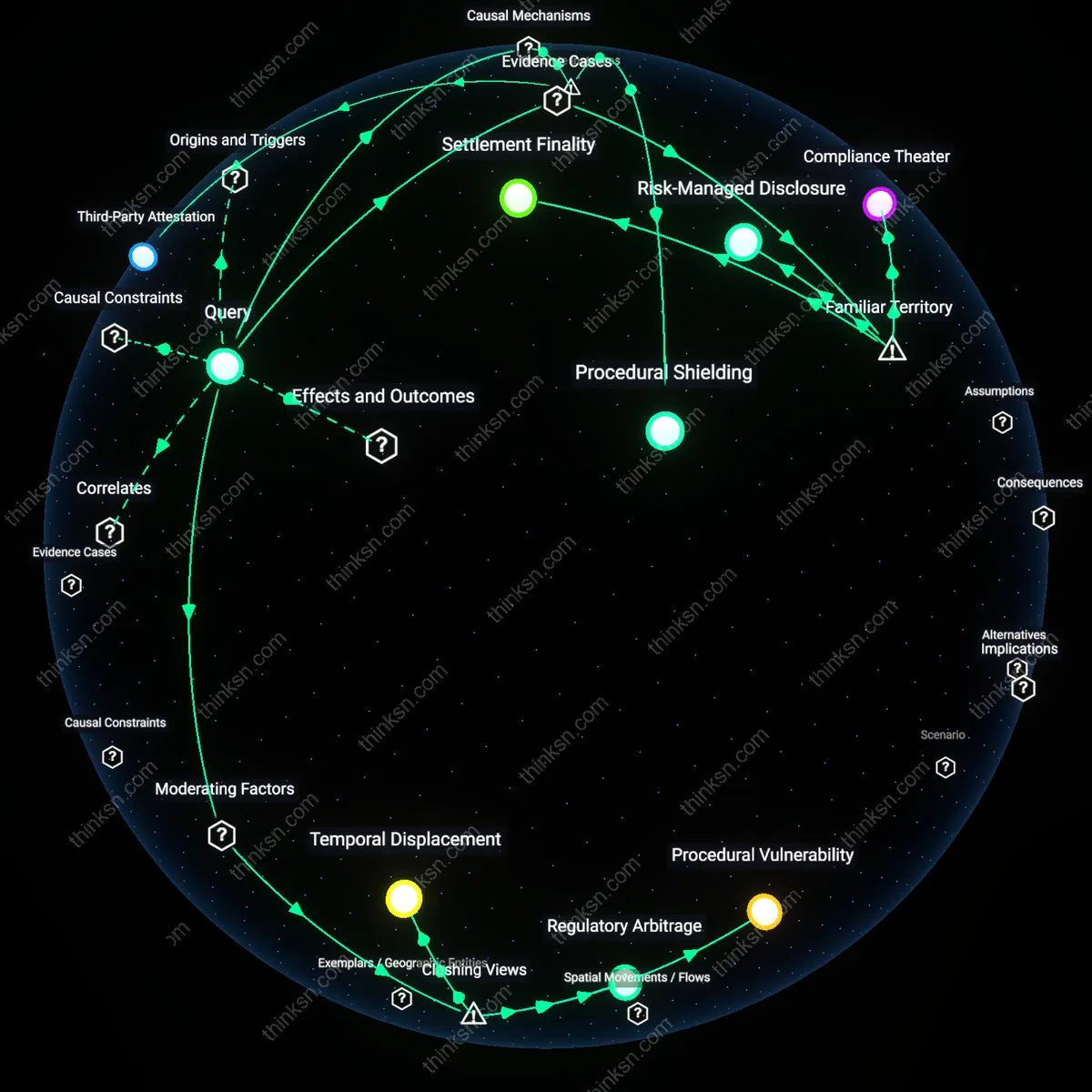
Analysis reveals 12 key thematic connections.
Key Findings
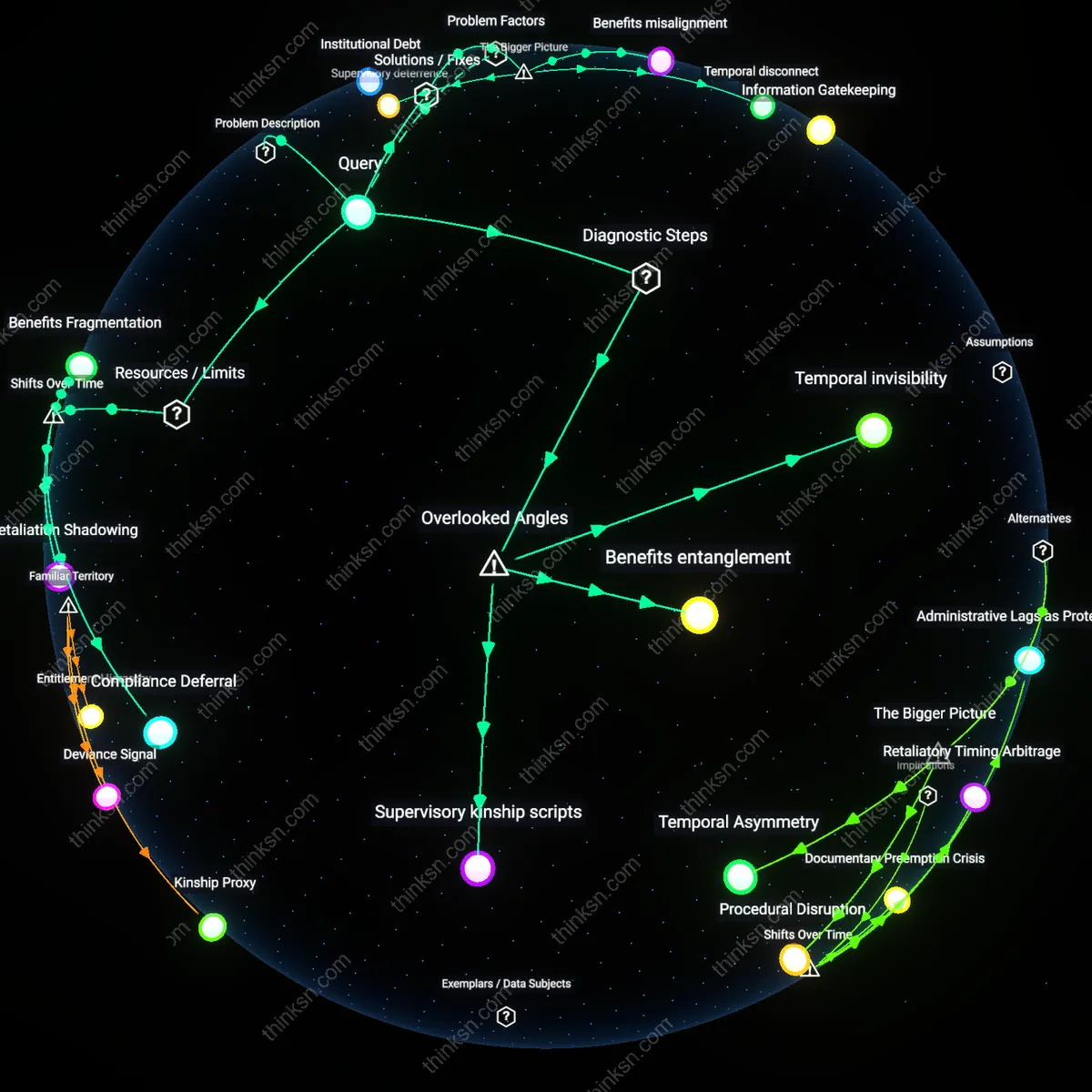
Information Gatekeeping
Employers strategically control access to FMLA claim procedures by withholding or distorting procedural knowledge, leaving workers unaware of filing deadlines, documentation requirements, or retaliation protections despite statutory mandates. This operates through decentralized HR practices in sectors like retail and agriculture, where managers are incentivized to minimize leave utilization, thereby converting legal rights into de facto discretionary benefits. The non-obvious mechanism here is not worker ignorance per se, but the institutionalized opacity that makes compliance unknowable, challenging the dominant view that access is primarily limited by individual awareness or motivation.
Temporal Displacement
Workers delay or refrain from filing FMLA retaliation claims because the injury—the loss of employment or shift demotion—often manifests weeks or months after the initial leave request, breaking the perceived causal link required for legal action. This temporal fragmentation, embedded in the staggered enforcement timeline of the DOL and employer countermeasures like reassignment or incremental schedule cuts, makes retaliation appear as routine management rather than unlawful reprisal. This reframes the gap not as under-enforcement but as strategic temporal decoupling, undermining the intuitive assumption that retaliation is immediately visible and legally actionable.
Institutional Debt
Eligible workers forego FMLA claims not due to fear of job loss alone, but because they rely on continued employer goodwill for future accommodations such as flexible scheduling or informal leave extensions, creating a debt-like dependency that outweighs abstract legal rights. This dynamic prevails in healthcare and education jobs, where formal policies are supplemented by unwritten arrangements that workers fear nullifying through legal assertion. The friction lies in recognizing that compliance is not suppressed by overt retaliation but sustained by reciprocal informal economies, contradicting the standard model of rights as self-contained and enforceable without social cost.
Temporal invisibility
Eligible workers fail to file FMLA retaliation claims because adverse employment actions are temporally decoupled from leave events, obscuring causal linkage. Managers delay negative evaluations, reassignments, or layoffs until weeks or months after FMLA use, exploiting the lack of a legally recognized 'window of vulnerability' tied to leave; this temporal dispersion prevents employees from connecting retaliation to protected activity, especially when HR systems do not track post-leave personnel actions. The non-obvious aspect is that retaliation functions not through immediacy but through strategic latency—rendering harm invisible to both victims and investigators who expect discrete, proximate incidents.
Benefits entanglement
Workers avoid filing FMLA retaliation claims because doing so risks triggering audits or recoupment of related benefits that are administratively bundled with the leave, such as short-term disability or state-paid family leave. Employers or third-party administrators may frame disputes as benefit eligibility reviews rather than employment retaliation, forcing employees to weigh losing income support against pursuing legal redress. This creates a hidden dependency between FMLA enforcement and ancillary benefit security—a dynamic overlooked because most analyses treat leave rights as legally isolated, when in practice they are enmeshed in benefit systems that penalize contestation.
Supervisory kinship scripts
Eligible workers refrain from filing claims when their supervisors frame workplace loyalty as familial or personal obligation, particularly in female-dominated, care-oriented sectors like nursing or childcare. In these settings, supervisors invoke norms of mutual care and emotional reciprocity to discourage formal complaints, positioning legal action as a betrayal of trust rather than an assertion of rights. The underappreciated mechanism is that retaliation need not be coercive—it can operate through moralized relational scripts that redefine non-compliance as disloyalty, effectively privatizing what should be a legal grievance.
Supervisory deterrence
Strengthening third-party reporting channels reduces the fear of managerial retaliation that prevents employees from filing FMLA claims. Supervisors often control workplace conditions and information flows, subtly discouraging leave use through implicit threats or social stigmatization—mechanisms that are rarely documented but acutely felt by workers; this dynamic persists because HR departments rely on managers for performance evaluations and operational continuity, creating institutional tolerance for coercive supervision. The non-obvious insight is that legal protections fail not due to ignorance of rights but because the enforcement architecture leaves employees vulnerable to localized power exercised by immediate superiors.
Temporal disconnect
Aligning FMLA claim filing cycles with payroll intervals closes the timing gap that undermines workers’ ability to recognize and respond to retaliation. Many eligible employees fail to act because adverse actions—such as reduced hours or denied promotions—emerge weeks or months after leave, diluting causal perception and exceeding administrative deadlines; this lag is structurally reinforced by the separation between human resources recordkeeping and frontline operational decision-making, which obscures retaliation patterns. The underappreciated factor is that the law assumes timely detection of harm, while workplace power operates on delayed, cumulative tactics that evade legal notice.
Benefits misalignment
Integrating FMLA eligibility status into automated benefits platforms ensures that leave rights are codified in systems managers use for scheduling and assignments, reducing discretionary override. In most mid-sized firms, leave status remains a paper-based or siloed HR record, making it invisible to daily operational software where decisions about shifts, overtime, and projects are made; this technical fragmentation allows retaliation to occur not through explicit policy violations but via routine digital omissions. The overlooked issue is that statutory compliance is treated as a legal checklist rather than a data integrity problem embedded in enterprise information systems.
Compliance Deferral
Eligible workers delay or abandon FMLA retaliation claims because the time-limited administrative procedures—such as the 45-day window to file with the Department of Labor—coincide with periods of acute personal crisis, such as childbirth recovery or acute illness management, leaving no practical bandwidth for navigating complex bureaucratic processes. Health crises compress workers’ temporal agency, forcing them to prioritize medical needs over legal documentation, while employer-provided forms and internal HR timelines further displace responsibility onto already-overloaded claimants. This shift from informal workplace accommodations (common before the 1993 FMLA enactment) to a rights-based but procedurally rigid system has transformed eligibility into a de facto eligibility gap. The non-obvious outcome is not lack of awareness but procedural suffocation under time-bound formalism that emerged with the statute itself.
Retaliation Shadowing
Workers refrain from filing FMLA claims because post-2008 recession workplace surveillance intensified, making informal retaliation—such as exclusion from promotions or undesirable schedule shifts—diffuse, deniable, and institutionally insulated from legal attribution. Unlike earlier industrial eras when retaliation was overt (e.g., immediate termination), current managerial practices use incremental, documentable-performance pretexts that emerged with the proliferation of HR compliance software and performance metrics after 2010. This temporal shift toward subtle, data-mediated workplace control makes retaliation appear neutral on record, even as it deters claim filing through anticipatory discipline. The underappreciated dynamic is that statutory protection expanded just as retaliatory mechanisms evolved to operate beneath evidentiary thresholds.
Benefits Fragmentation
Eligible workers avoid FMLA claims because the post-2010 rise of decentralized gig platforms and nonstandard employment has fragmented benefits eligibility across overlapping, often contradictory systems—such as state-level family leave programs, employer-specific short-term disability, and ERISA-regulated sick leave—creating a cognitive and logistical maze. Prior to the late 2000s, most covered workers operated under unified, union-negotiated or large-firm policies that bundled medical and job-protection rights transparently; today’s regulatory layering produces decision paralysis, especially among low-wage service workers managing multiple jobs. The non-obvious result is not ignorance but overexposure to incompatible procedural regimes, each with distinct triggers and documentation demands, which emerged as a byproduct of piecemeal policy innovation in the absence of federal paid leave.