Who Really Wins When Flexible Work is Just an Option?
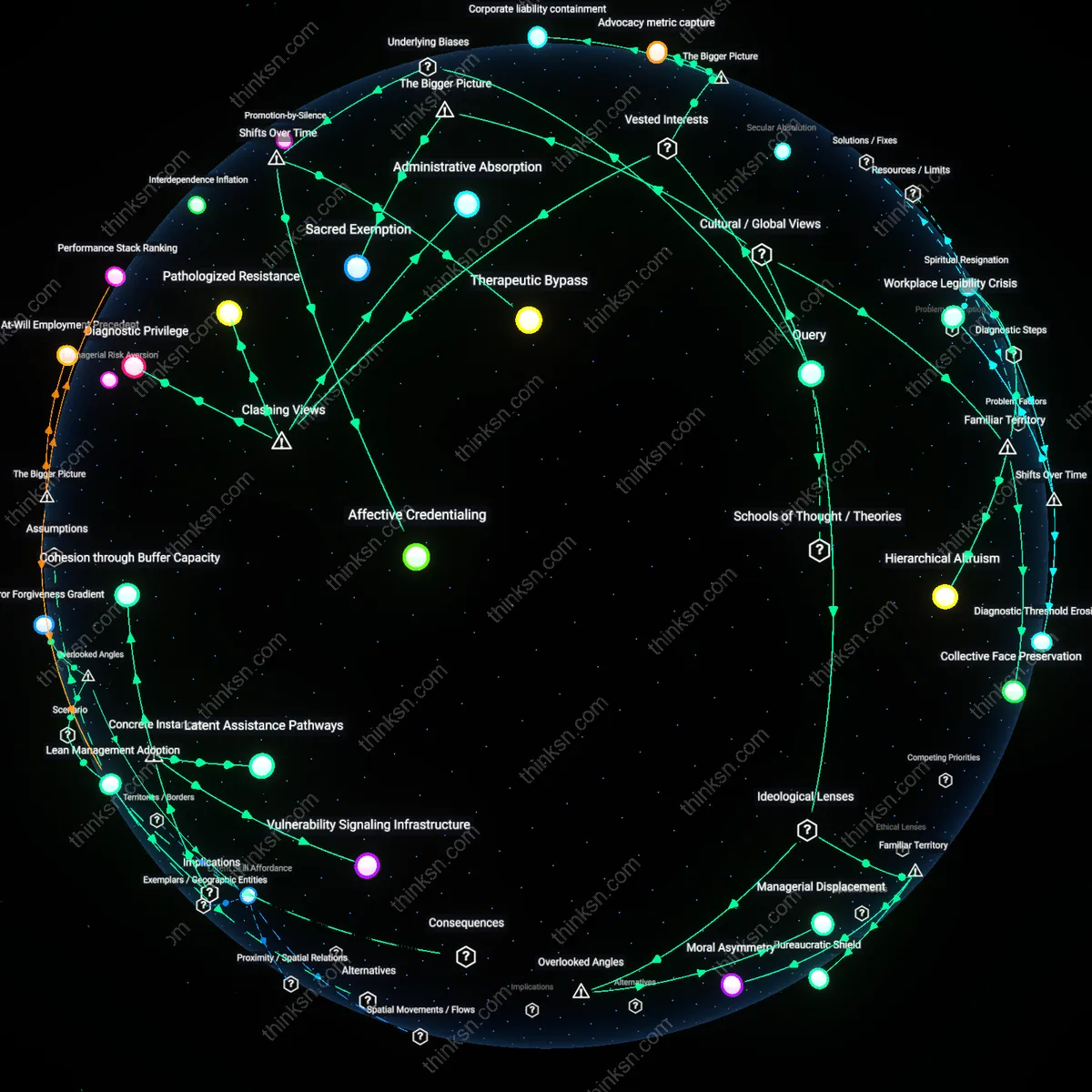
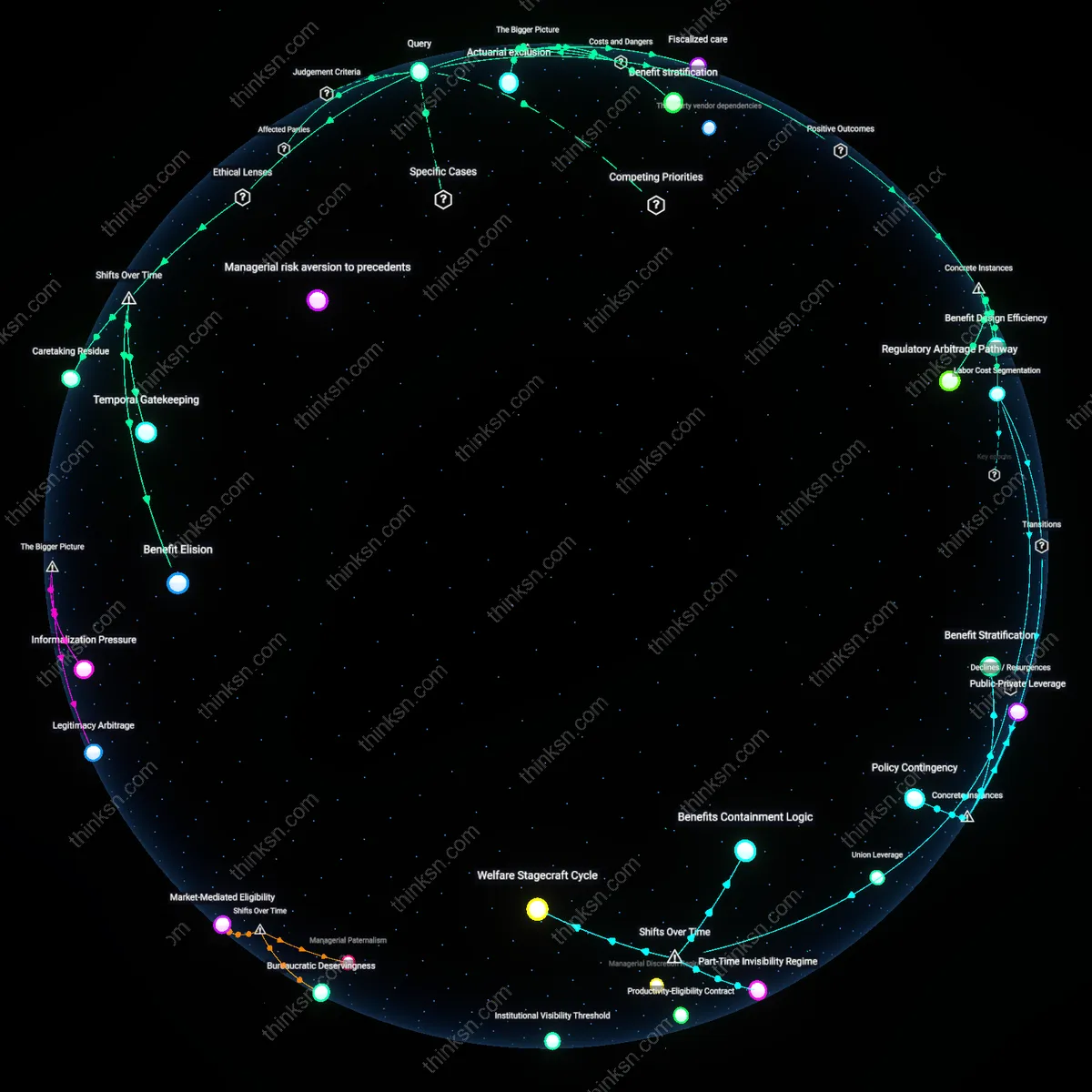
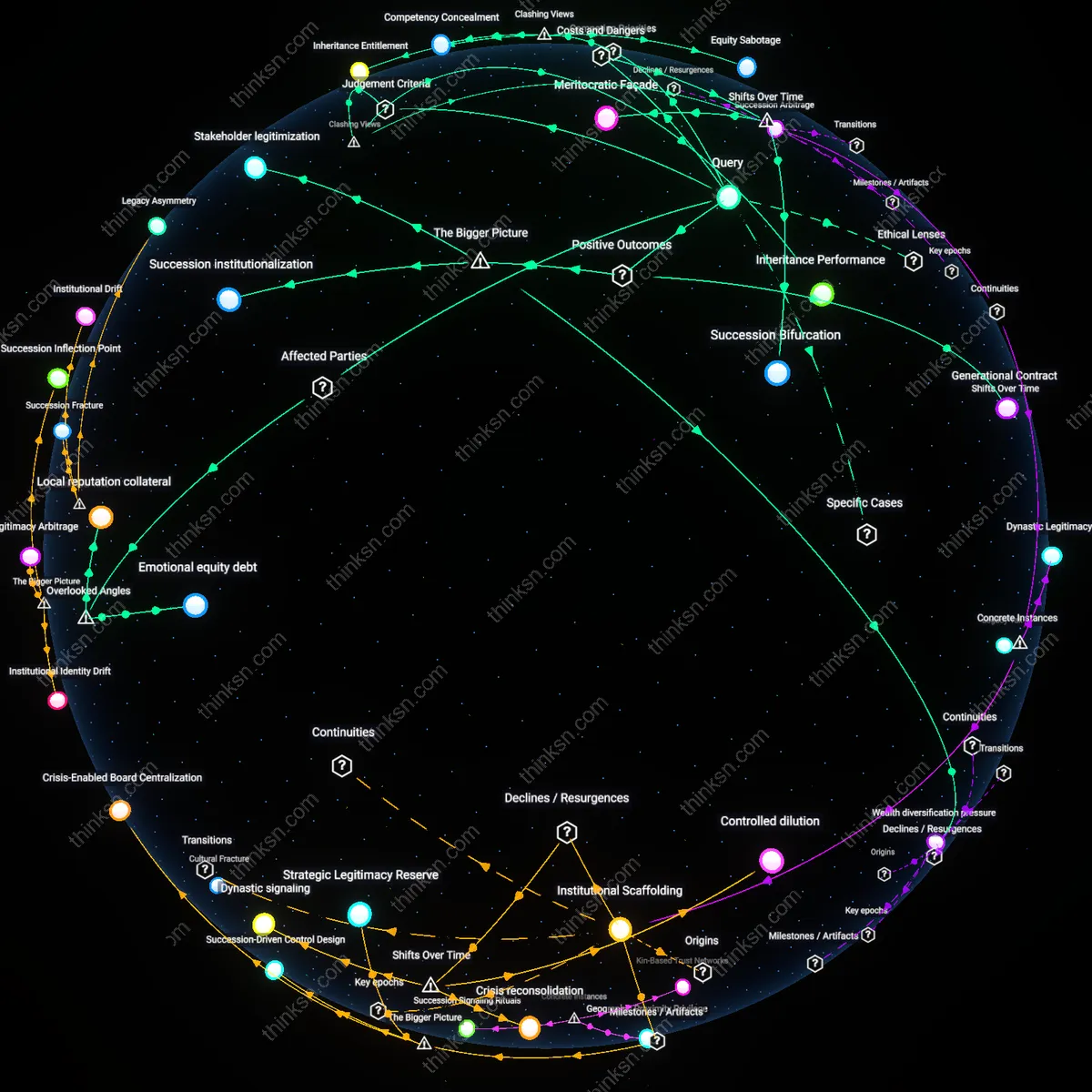
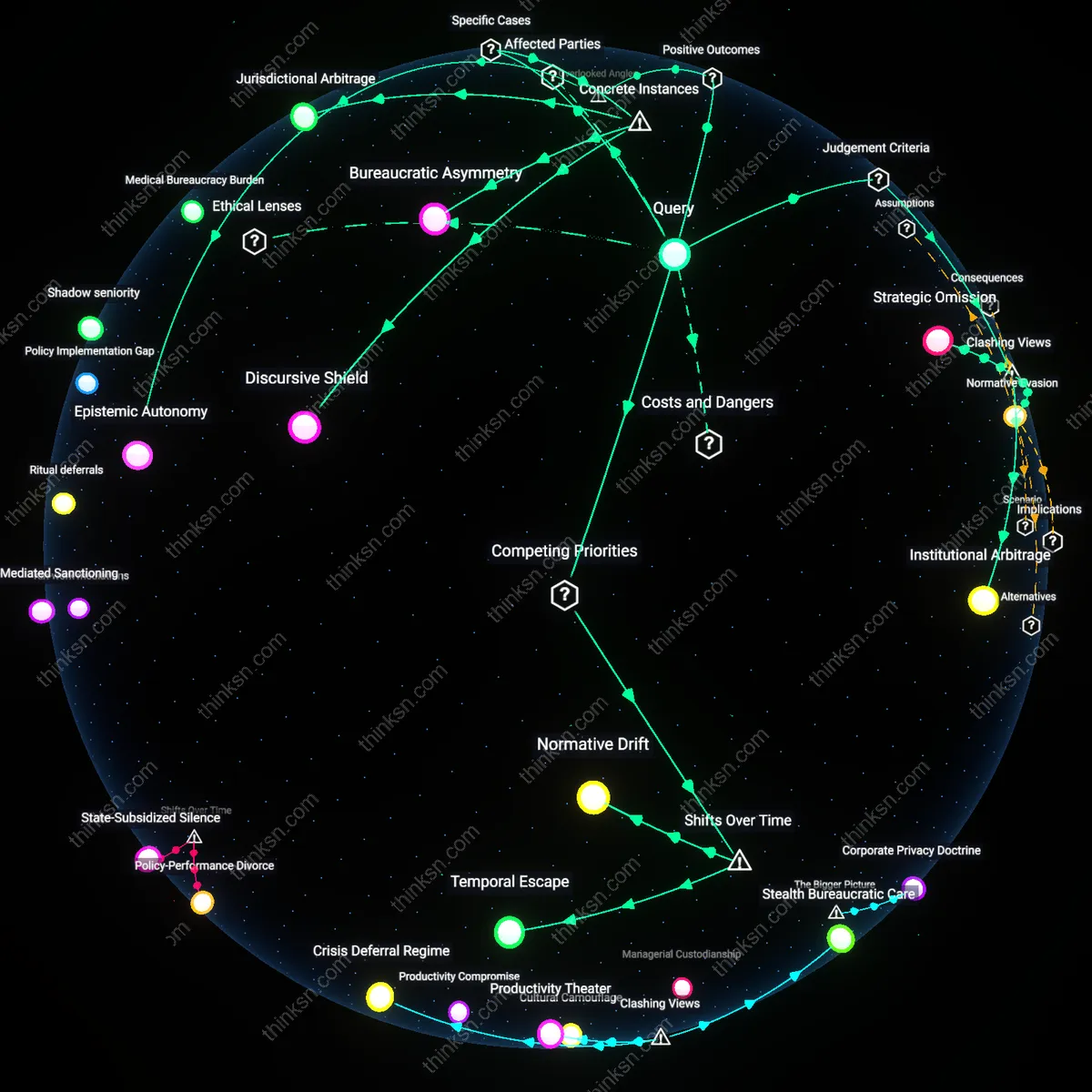
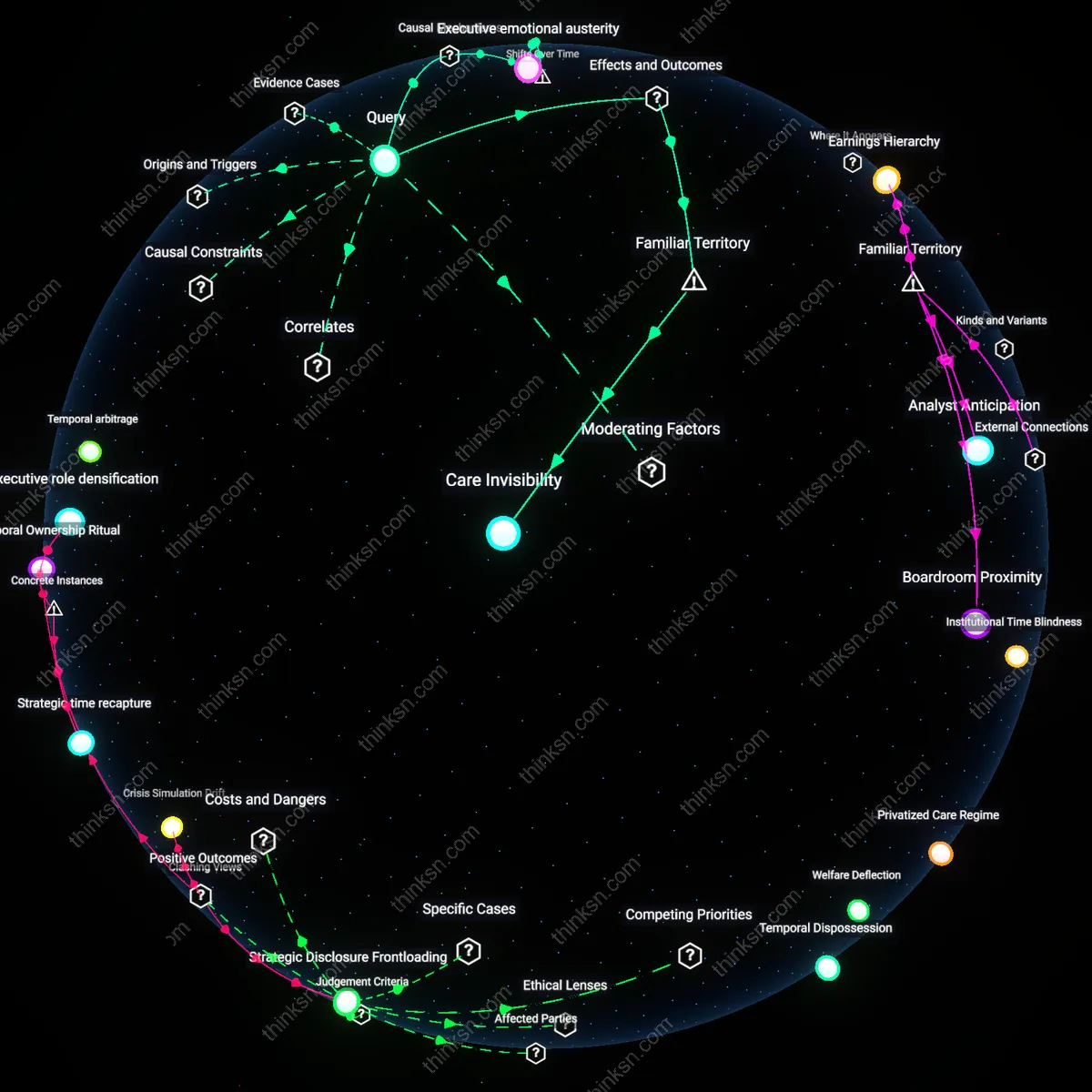
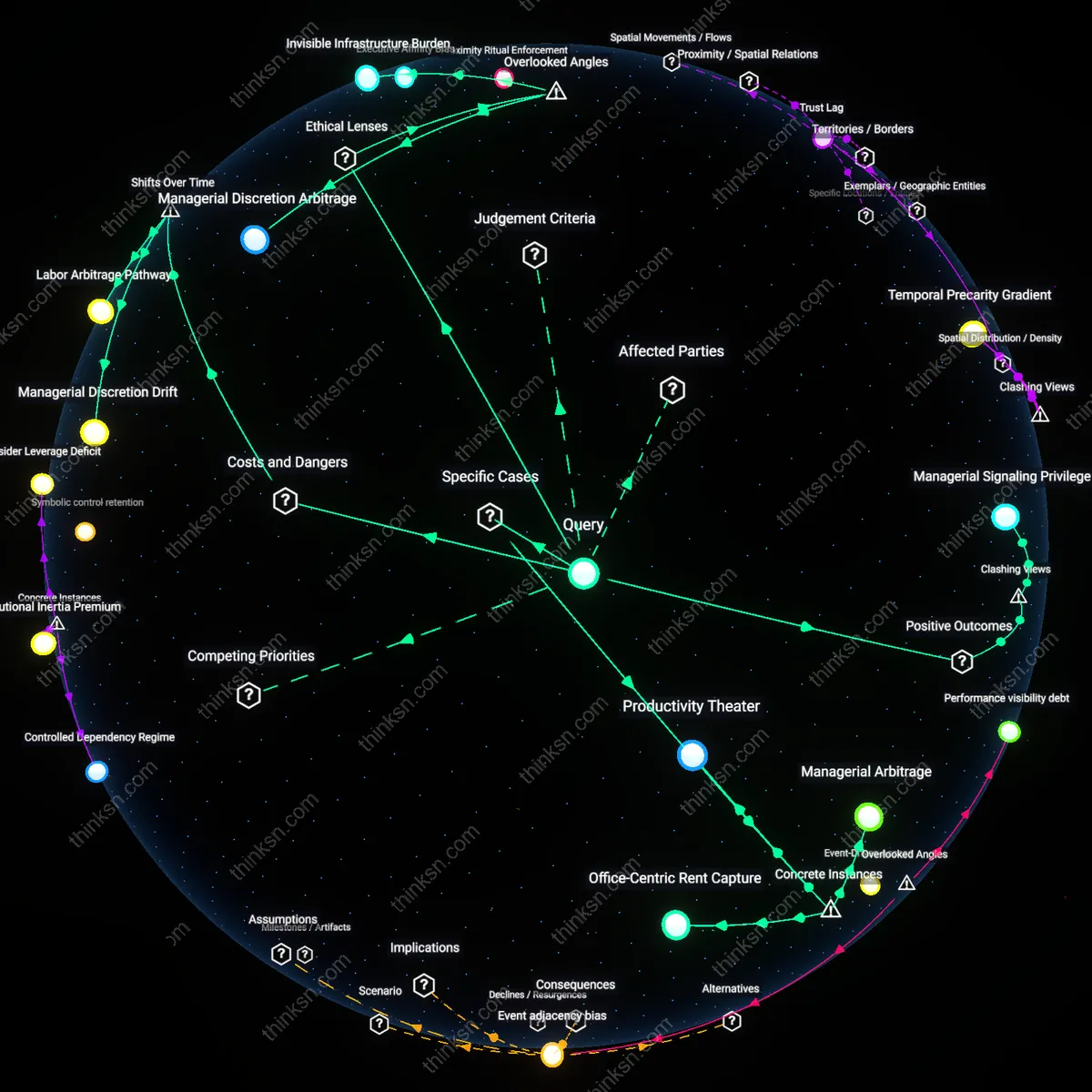
Analysis reveals 9 key thematic connections.
Key Findings
Managerial Signaling Privilege
Managers who selectively deny remote work benefit most by reinforcing their positional authority and extracting compliance through the strategic allocation of flexibility. This mechanism transforms flexible work policy into a tool of performance-based trust, where remote access is granted not uniformly but as a reward for loyalty or overperformance, thereby deepening hierarchical control within flat organizational structures. The non-obvious outcome is that flexibility becomes a disciplinary mechanism rather than an emancipatory one, privileging managerial discretion under the guise of individualized assessment.
Proximity Capital Accumulation
Employees who remain physically present in offices gain invisible career advantages through sustained visibility, access to impromptu decision-making, and stronger social ties with leadership—benefits amplified when remote work is inconsistently denied. This selective denial creates a two-tier system where proximity becomes a form of social capital that accrues to those already culturally aligned with managerial norms, often favoring majority-group employees. The dissonance lies in viewing flexible work policies not as egalitarian tools but as systems that reify existing workplace hierarchies by making access to visibility a covert performance currency.
Managerial Discretion Drift
Managers benefit most from flexible work policies when they can selectively deny remote work, as this consolidates discretionary power over visibility-based evaluation. Since the shift to post-pandemic hybrid models (2021–2023), workplace proximity has re-emerged as an informal performance proxy, enabling managers to reward physical presence with career advancement while framing denials as operational necessity. This mechanism entrenches proximity bias within promotion systems, transforming flexibility into a privilege dispensed selectively—particularly in sectors like finance and tech where in-person rituals were historically tied to seniority. The non-obvious risk is that formal flexibility amplifies informal control, converting policy into a tool of surveillance rather than autonomy.
Labor Arbitrage Pathway
Headquarters-based corporate executives benefit from decentralized remote work denials by enabling spatial segmentation of labor costs, a shift that accelerated after 2021 when geographic pay differentials became codified in tech and consulting sectors. As companies adopted 'location-aware' compensation models, the ability to deny remote status allowed firms to retain employees in high-cost cities while paying lower wages justified by 'remote' classification—exploiting the gap between policy intent and geographic anchoring. This creates a systemic risk where workers are locked into physical offices without corresponding pay equity, turning flexibility denials into a quiet mechanism for wage suppression. The non-obvious consequence is that managerial discretion masks structural arbitrage, making exploitation appear as local operational choice rather than centralized financial strategy.
Managerial Discretion Arbitrage
Managers who can selectively deny remote work benefit most from flexible work policies because they accumulate informal power through discretionary control over a scarce and valued resource—proximity exemptions. This mechanism operates within bureaucratic systems where formal policy grants flexibility but informal authority determines access, enabling supervisors to trade remote approvals for loyalty, visibility, or compliance, a dynamic legitimized under procedural liberalism that emphasizes process over equity. What is overlooked is that flexibility becomes not a shared benefit but a tool of micro-patronage, transforming HR policy into a vehicle for supervisory influence that evades scrutiny because it replicates within ostensibly neutral frameworks of managerial judgment.
Invisible Infrastructure Burden
On-site employees benefit structurally from selective remote denials because they inherit unacknowledged advantages tied to physical presence, such as proximity-based performance signaling, spontaneous mentorship, and access to impromptu decision-making loops—gains that are rarely codified but systematically shape career trajectories. Rooted in organizational theories of shadow hierarchies, this dynamic reveals how ‘flexibility’ can deepen inequity by framing remote denial as personal failure while masking the invisible infrastructure that on-site work automatically provides. The overlooked dimension is that presence itself becomes a subsidized privilege, reconstituting spatial access as a hidden determinant of opportunity despite ostensibly location-agnostic policies.
Managerial Arbitrage
Tech managers at Google in 2022 selectively denied remote work to junior engineers while approving it for senior staff, creating a tiered access system where proximity to power determines flexibility. This was not due to job function but to implicit trust and visibility, revealing that flexibility functions as a reward for established influence rather than an equitable resource. The mechanism operates through discretionary approval processes that lack transparency, allowing gatekeepers to reinforce internal hierarchies. The non-obvious insight is that remote work policies can become tools of managerial control rather than employee empowerment when access is unstandardized.
Office-Centric Rent Capture
Salesforce executives in San Francisco maintained in-office attendance requirements for mid-level employees even after public commitments to flexibility, while leadership operated remotely, preserving symbolic presence in leased downtown towers to sustain commercial real estate valuations. This dynamic reveals how corporate space commitments create a structural incentive to keep bodies present, not for productivity but to justify sunk costs and landlord obligations. The non-obvious effect is that physical office infrastructure becomes a hidden veto power over policy implementation, privileging financial stakeholders over employee autonomy.
Productivity Theater
Amazon warehouse supervisors in Phoenix denied remote accommodations to HR coordinators performing fully digital tasks, requiring them to clock in at facilities despite zero operational need, to maintain a culture of observable effort. This enforcement of physical presence for roles that could be remote normalizes surveillance as a proxy for performance, disproportionately affecting support staff. The underappreciated mechanism is that performative attendance becomes a disciplinary ritual, where visibility substitutes for output in evaluation, entrenching presenteeism as a criterion for career advancement.