Is Distributed Management Erasing Hierarchys Role in Business?
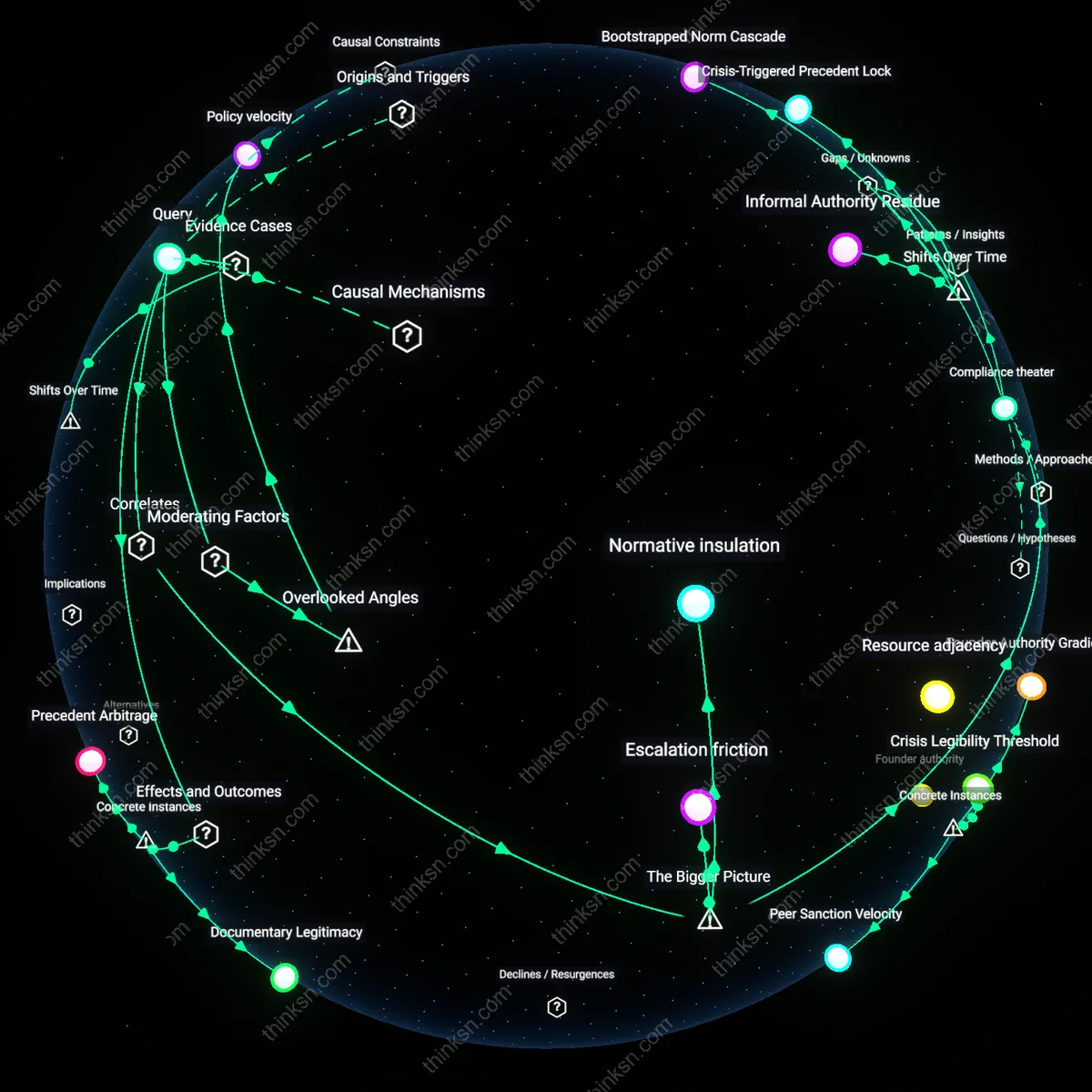
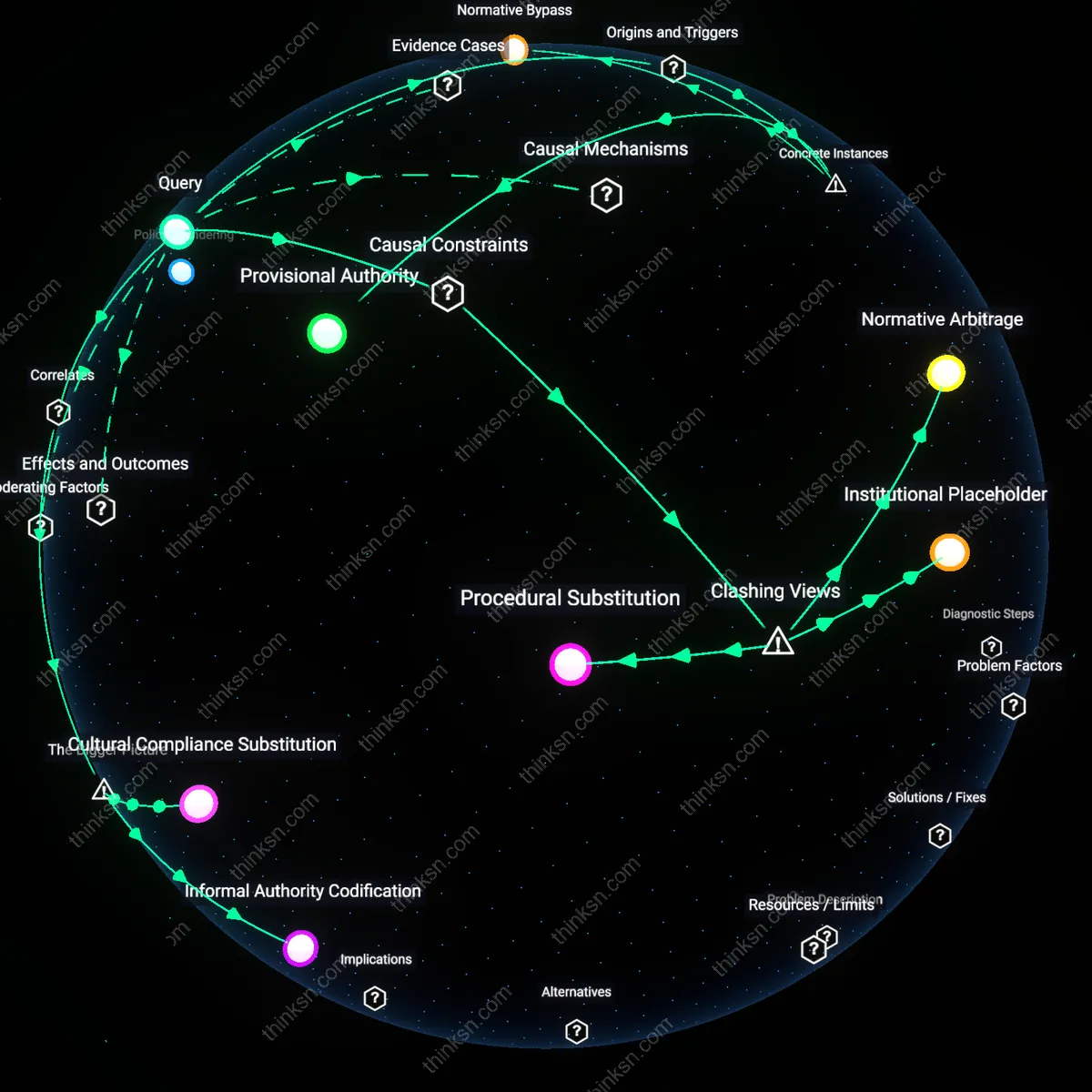
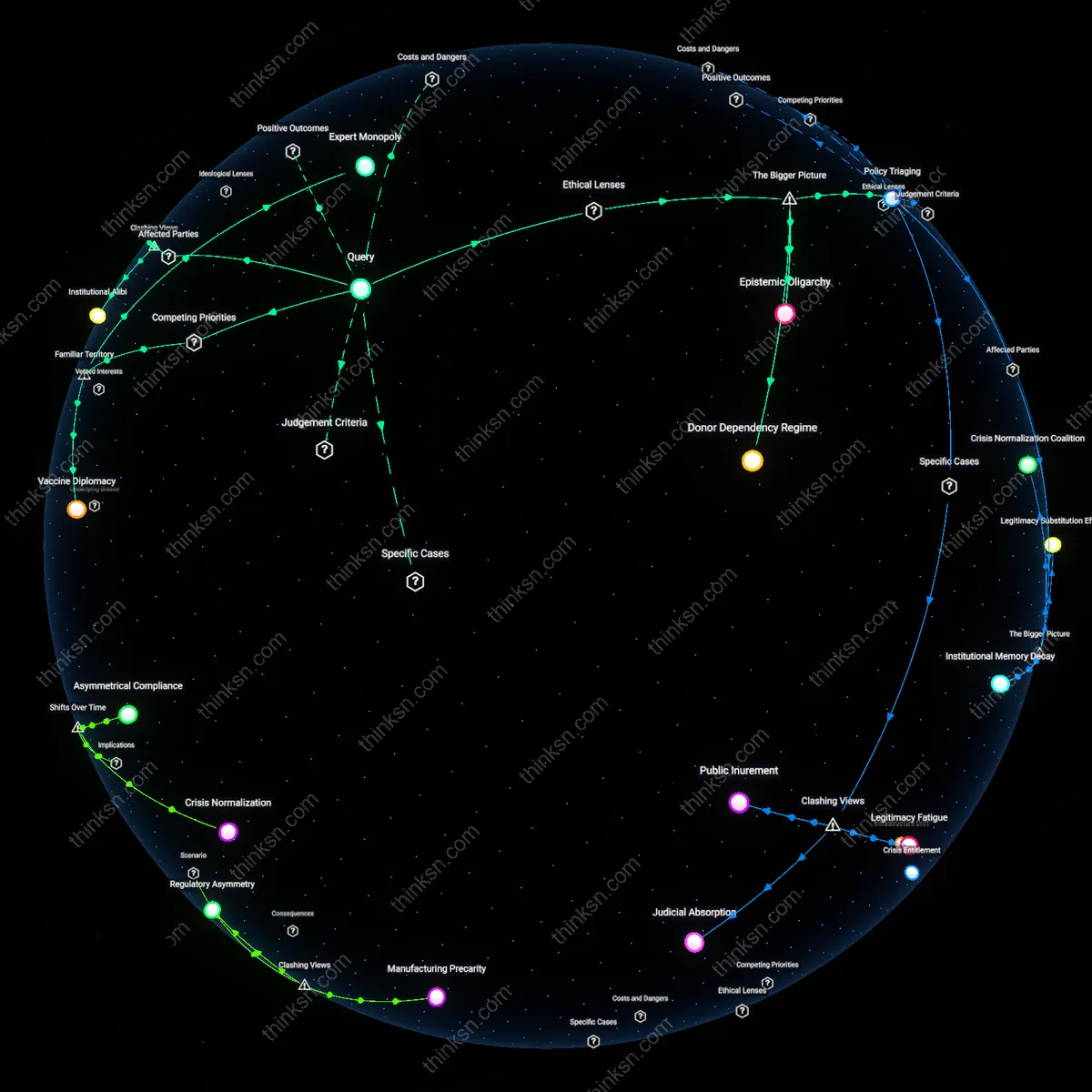
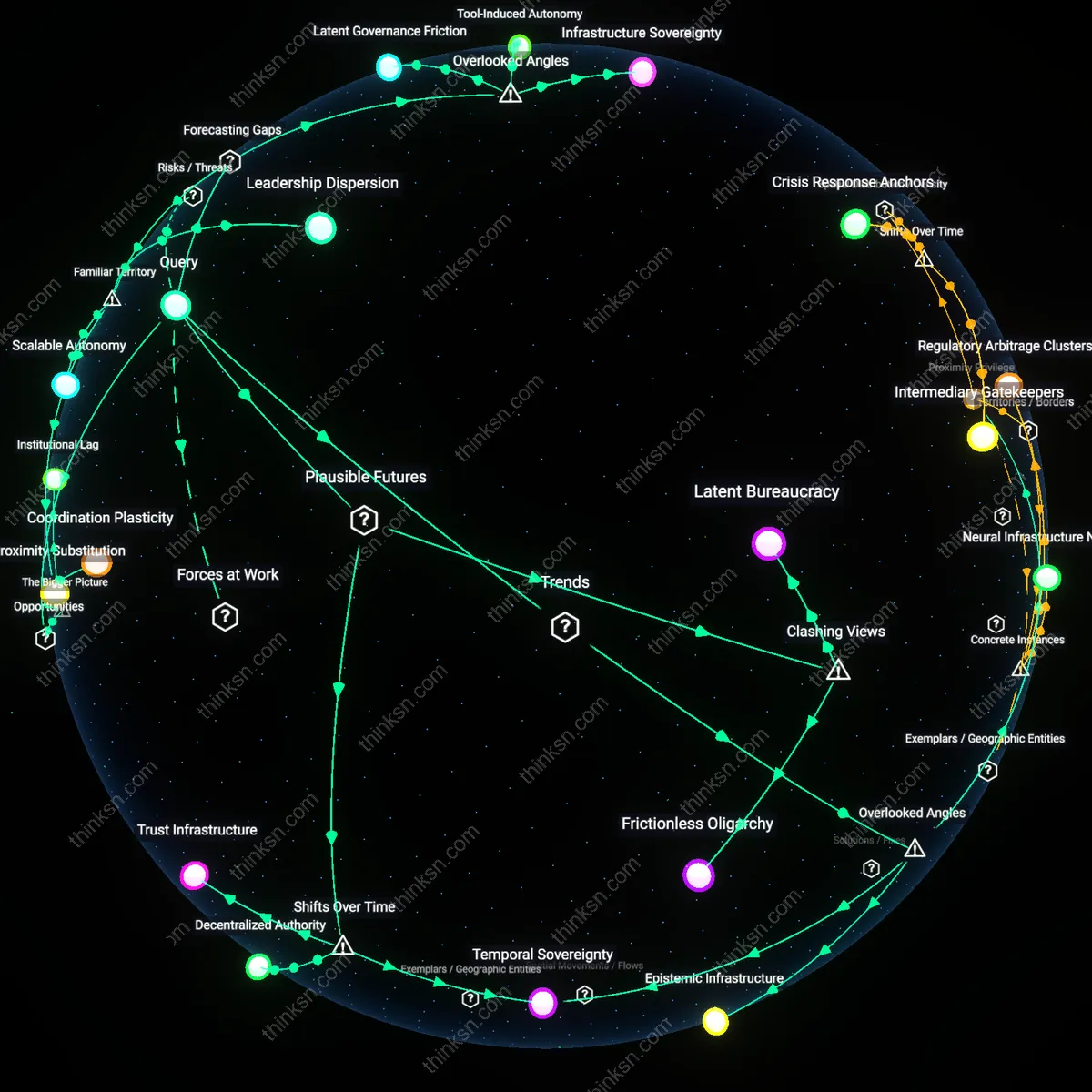
Analysis reveals 16 key thematic connections.
Key Findings
Temporal Sovereignty
The rise of distributed team management will erode hierarchical time imposition, as asynchronous coordination enables workers in decentralized nodes to reclaim control over their temporal rhythms. Global software teams using tools like GitHub and Slack operate across time zones not as a constraint but as a feature, decoupling work from synchronized corporate calendars and weakening the manager’s authority to dictate when labor occurs. This shift undermines a foundational mechanism of hierarchy—not just decision rights, but temporal command—which is rarely analyzed as a structural pillar of organizational control, revealing time sovereignty as a latent dimension of power displacement.
Epistemic Infrastructure
Distributed team management accelerates the shift from authority-based knowledge validation to infrastructure-mediated verification, where trust is anchored in shared digital artifacts rather than positional rank. In remote engineering collectives, architectural decision records, automated testing logs, and version-controlled documentation become the real arbiters of technical truth, bypassing traditional gatekeepers like senior managers. This dynamic reveals that the decline of hierarchy is less about communication flexibility and more about the material displacement of epistemic authority—how knowledge is verified now depends on the design of shared technical systems, a dependency almost entirely absent in mainstream discussions of organizational form.
Proximity Privilege
As distributed management becomes standard, residual co-located teams will wield unacknowledged influence by exploiting physical adjacency to shape agenda, tone, and access—what emerging hybrid firms call 'stealth salience.' In multinational consultancies like those in the Professional Services Sphere, teams sharing office space inadvertently set meeting rhythms, dominate brainstorming modalities, and control access to leadership through impromptu interactions, creating a new elite based not on formal rank but on spatiotemporal availability. This hidden re-stratification demonstrates that networked structures do not inherently flatten power—they merely relocate it to overlooked proximity-based affordances, which current models of distributed equity systematically ignore.
Institutional Lag
Distributed team management exposes and amplifies institutional lag, where formal governance structures fail to keep pace with operational networkization, creating fertile ground for emergent bottom-up coordination to redefine organizational power. As multinational tech firms like GitLab and Automattic operate without physical headquarters, their reliance on transparent documentation, open contribution models, and reputation-based influence erodes traditional promotion ladders and approval chains. The systemic pressure arises because legal, fiscal, and HR frameworks remain nationally bounded and hierarchy-dependent, while day-to-day work is increasingly coordinated through real-time, permissionless collaboration across time zones. This misalignment generates a gap in which decentralized teams accumulate de facto authority outside sanctioned channels—highlighting that the most significant shift isn’t in tools or locations, but in how legitimacy is recalibrated through sustained, observable contribution rather than positional power.
Coordination Plasticity
The scalability of distributed team management signals a rise in coordination plasticity, where organizations can dynamically reconfigure between hierarchical and networked modes depending on task complexity, speed, and uncertainty. Firms like SpaceX and Upwork demonstrate this by nesting fluid project teams within otherwise vertical structures, using data-rich collaboration tools (e.g., Notion, ClickUp) to toggle between centralized oversight and decentralized execution as needed. This shift is enabled by modular work design and real-time performance visibility, which allow leaders to delegate authority contextually without losing coherence. The underappreciated systemic effect is that organizational structure is no longer a fixed trade-off between control and agility, but a responsive, adaptive function—turning the balance between hierarchy and networks into a tunable parameter rather than a binary choice, with profound implications for resilience in volatile markets.
Latent Bureaucracy
The rise of distributed team management will entrench hierarchical control by re-inscribing managerial authority through algorithmic surveillance and performance tracking systems, not dismantle it. As companies like GitLab and Doist scale remote workforces, they deploy granular productivity analytics and asynchronous approval workflows that replicate — and intensify — top-down oversight, replacing physical proximity with digital panopticism; this reveals that the apparent decentralization of location masks a deeper centralization of decision logic, exposing a non-obvious continuity between industrial-era hierarchy and post-COVID digital management regimes.
Frictionless Oligarchy
Distributed teams will accelerate the dominance of networked models, but not in the egalitarian way enthusiasts imagine — instead, power consolidates into a mobile techno-managerial elite who exploit jurisdictional arbitrage and time-zone asymmetries to decouple from collective accountability. Platforms like GitHub and Figma enable real-time collaboration across borders, yet decision rights concentrate within U.S.-based product leads who use rapid A/B testing and data-driven narratives to override local input, demonstrating that the erosion of hierarchy does not lead to democratization but to a less visible, more adaptive form of centralized control masked as fluid collaboration.
Operational Doppelgängers
The spread of distributed management does not favor hierarchy or network models outright, but produces structurally identical organizational forms regardless of declared structure, where self-proclaimed 'flat' collectives like DAOs or remote co-ops inevitably generate shadow hierarchies through crisis response and implicit trust networks. When outages hit, volunteer-driven communities such as retroDAO or Mozilla’s remote bug bounty teams default to improvised command chains led by individuals with proven incident resolution records, revealing that distributed coordination does not eliminate hierarchy but reconstitutes it organically under pressure — making formal models less significant than latent operational templates.
Decentralized Authority
The rise of distributed team management accelerates the erosion of centralized command by enabling autonomous decision-making clusters across geographies, particularly as cloud-based collaboration tools and asynchronous workflows reduce reliance on physical headquarters. This shift—exemplified by post-2020 transitions in tech firms like GitLab and Automattic—reveals a systemic migration from scalar, top-down control to distributed coordination based on real-time data access and role-based permissions. What is underappreciated is that this is not merely logistical adaptation but a structural displacement of authority, where middle management’s gatekeeping function diminishes as frontline teams self-synchronize. The pivotal transition occurred between 2010–2020, when broadband penetration and platform maturity enabled coordination-at-a-distance to become more efficient than hierarchical oversight in knowledge-intensive sectors.
Trust Infrastructure
The viability of distributed teams hinges on the replacement of surveillance-based oversight with systems of mutual accountability and transparent output tracking, as seen in the adoption of OKRs and digital dashboards in companies like Spotify and Zappos post-2015. This marks a turning point from industrial-era management that equated visibility with control to a post-industrial logic where trust is institutionalized through shared visibility into progress rather than proximity to authority. The underappreciated shift is that networked structures do not simply flatten hierarchies—they require new technical and cultural substrates to sustain cohesion without proximity, making trust itself a codified, infrastructural component rather than an interpersonal byproduct. This infrastructure—built on continuous performance signaling and peer-observable workflows—emerged as a necessity when physical dispersion exposed the fragility of command-based compliance.
Latent Governance Friction
The rise of distributed team management will favor networked organizational models not because of efficiency but because of accumulating latency in hierarchical decision loops across time zones. Remote coordination exacerbates delays in approval chains, especially when core leadership operates in a single geographic hub, causing field teams in Asia-Pacific or South America to wait hours or days for go/no-go signals—delays that erode operational responsiveness. This friction is rarely measured in productivity metrics but systematically shifts de facto authority to distributed nodes, enabling informal networks to override formal hierarchies. The non-obvious mechanism is temporal misalignment as a governance disruptor, not cultural or technological factors, undermining hierarchy from within by making it too slow to sustain control.
Tool-Induced Autonomy
Distributed team management platforms like Asana, Notion, and Slack are quietly transferring strategic oversight from managers to algorithms by standardizing task visibility and progress tracking across levels, reducing the need for supervisory gatekeeping. These tools embed networked logics—decentralized input, real-time updates, peer accountability—into daily workflows, allowing frontline contributors to coordinate laterally without escalation. Most analyses treat collaboration tools as neutral conduits, but they are actually institutionalizing autonomy by design, privileging fluid information flows over chain-of-command protocols. The overlooked shift is that software architectures, not leadership philosophy, are becoming the dominant force shaping organizational topology.
Infrastructure Sovereignty
The future dominance of networked models hinges not on corporate adoption trends but on unequal access to reliable digital infrastructure, particularly in emerging economies where distributed teams depend on unstable broadband, intermittent power, and localized cloud hosting. As firms outsource to regions with low labor costs but patchy connectivity, hierarchies persist not by choice but by necessity—centralized control compensates for unreliable participation in networked systems. This dependency reverses the assumed link between distribution and decentralization, revealing that networked models are geographically selective, thriving only where infrastructure sovereignty is assured. The hidden variable is that digital public goods, not management theory, gatekeep the transition to flat organizations.
Leadership Dispersion
The rise of distributed team management accelerates the shift from top-down control to localized decision-making, as remote teams require managers to delegate authority to regional leads who operate across time zones and regulatory environments. This decentralization is driven not by ideology but by operational necessity—real-time responsiveness in globally dispersed teams weakens centralized command structures, especially in tech and digital services firms like GitLab or Automattic. What’s underappreciated in the familiar narrative of ‘flatter organizations’ is that this dispersion doesn’t eliminate hierarchy so much as fragment it into semi-autonomous nodes, creating a new layer of informal influence where coordination depends on trust and visibility rather than formal rank.
Proximity Substitution
Distributed team management reveals that digital tools are increasingly trusted to replace the implicit coordination once achieved through physical co-location, as companies like Amazon and Microsoft now use AI-driven project dashboards and asynchronous video updates to simulate office-like awareness. This shift assumes that transparency of process can compensate for lack of spontaneous interaction, embedding networked communication into standard operating procedure across knowledge sectors. The unnoticed consequence is that these tools don’t just reflect organizational structure—they actively reshape it by privileging employees who master digital self-presentation, thereby creating a new axis of power within ostensibly flat systems.
Scalable Autonomy
As distributed teams become the norm, organizations are institutionalizing autonomy at scale, codifying practices like OKRs and agile sprints to align independent contributors without constant oversight, as seen in remote-first firms such as Zapier and Doist. This model presumes that clear goals and modular tasks reduce the need for hierarchical mediation, making networked collaboration appear more efficient than layered approval chains. Yet the unspoken dependency is on cultural homogeneity—high autonomy functions only when employees share implicit norms about communication rhythm, urgency, and initiative—making cultural fit a hidden gatekeeper in the so-called democratization of work.