Does Delaying Medicare Hurt Finances More Than Help?
Analysis reveals 7 key thematic connections.
Key Findings
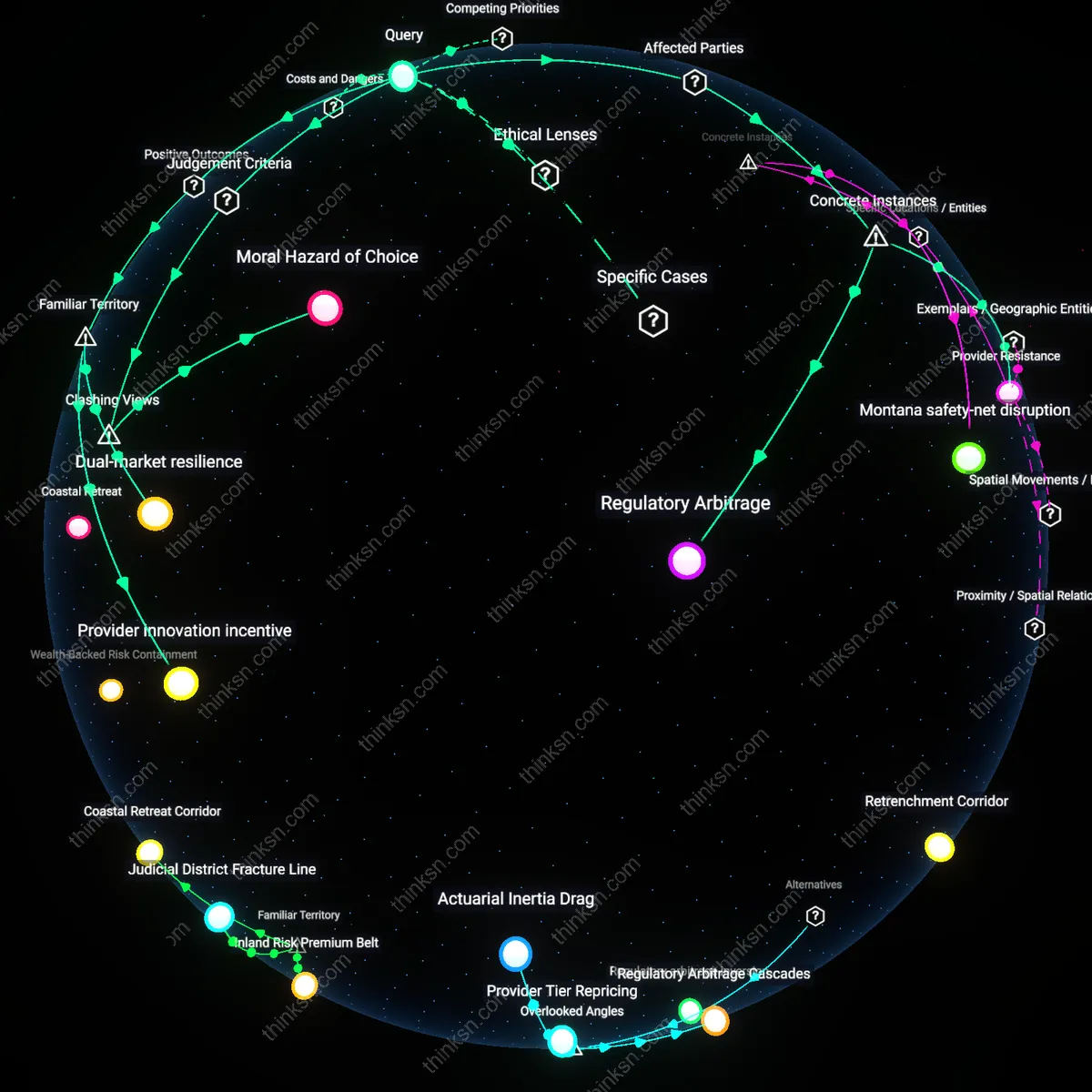
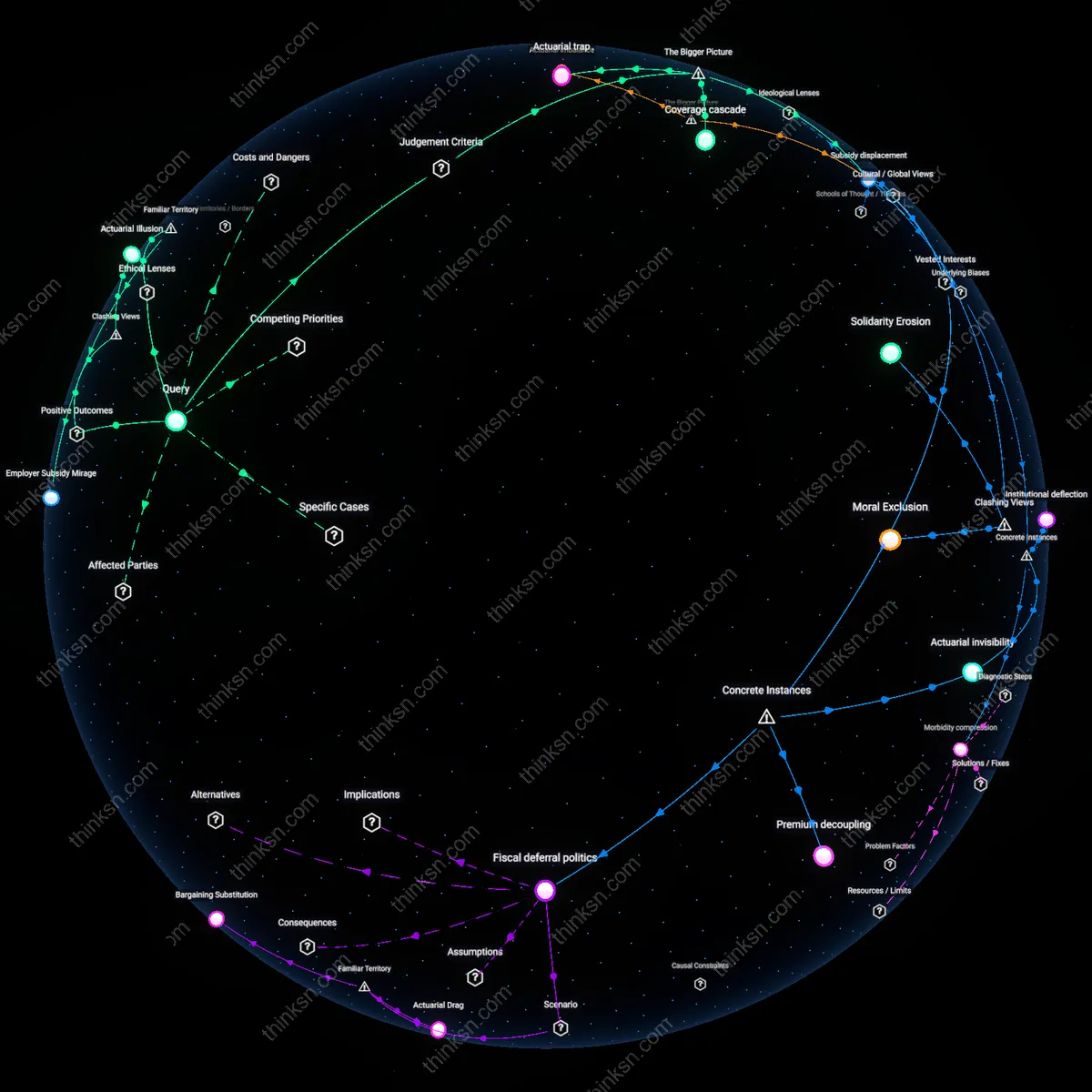
Actuarial trap
Yes, delaying Medicare enrollment to stay on a private plan risks severe long-term cost exposure because employer-sponsored plans often lack the risk-pooling stability of public insurance, leaving healthier enrollees vulnerable to future premium spikes once they age into Medicare with late enrollment penalties; this occurs when plan sponsors—especially mid-sized firms reliant on predictable claims—adjust premiums annually based on narrow risk pools, amplifying exposure for individuals who assumed sustained health would insulate them from cost growth. This dynamic is non-obvious because the immediate savings appear rational under private market logic, but the systemic instability of actuarial balancing in voluntary private pools creates a delayed penalty mechanism that interacts explosively with Medicare’s lifetime premium adjustments, particularly for those who later face health decline.
Subsidy displacement
Yes, opting out of Medicare Part B while remaining on a private plan forfeits indirect federal cost-sharing that alters the true price signal of private premiums, creating a false economy for healthy enrollees who unknowingly absorb medically cross-subsidized care through their employer plan; this occurs because hospitals and providers, reimbursed below cost by Medicare, shift residual cost burdens to commercially insured patients, and when high-volume Medicare patients are excluded from a firm’s insurance pool, private enrollees—including those delaying Medicare—effectively subsidize the broader healthcare financing gap. This mechanism is systemically significant yet opaque because employers do not itemize cost-shifting in premium statements, making the individual perceive savings while unknowingly financing a structural imbalance in public-private reimbursement asymmetry.
Coverage cascade
Yes, staying on a private plan past Medicare eligibility risks triggering a destabilizing sequence in spousal or dependent coverage that can force premature market exits or uninsurance, particularly when family policies automatically reclassify upon one member’s eligibility for public insurance; this happens because private insurers, facing contractual risk exposure when one enrollee qualifies for Medicare, often recalculate family risk tiers or impose cost-sharing adjustments that ripple through household coverage, pressuring even healthy individuals to exit before intended. The non-obvious consequence is that individual enrollment timing becomes a household-level financial pivot point, as insurance algorithms treat Medicare eligibility as a systemic signal to re-price or restructure existing contracts, regardless of the enrollee’s current health status.
Actuarial Illusion
Delaying Medicare to stay on a private plan actually improves long-term risk pooling for employers and insurers by retaining healthier enrollees, thereby suppressing premium growth for younger employees and creating a deferral benefit that outweighs individual penalties. This dynamic persists because group plans spread the cost of high utilizers across a broader, healthier base—one that Medicare-eligible individuals sustain when they opt out, and which market signals fail to price accurately. The non-obvious insight is that individual financial risk is socially subsidized through unseen actuarial advantages that benefit organizations, not just healthy deferrers.
Intergenerational Transfer
Healthy individuals who delay Medicare enrollment inadvertently subsidize younger workers’ health stability by maintaining lower per-member medical costs in employer-sponsored plans, particularly in union-negotiated or self-insured arrangements where risk is shared across age cohorts. Their continued presence reduces the need for premium hikes or benefit cuts, effectively transferring financial resilience across generations within the plan. This reframes delay not as personal financial risk but as a tacit form of cohort-level support that stabilizes access for others—contrary to the individualistic risk narrative dominant in policy discourse.
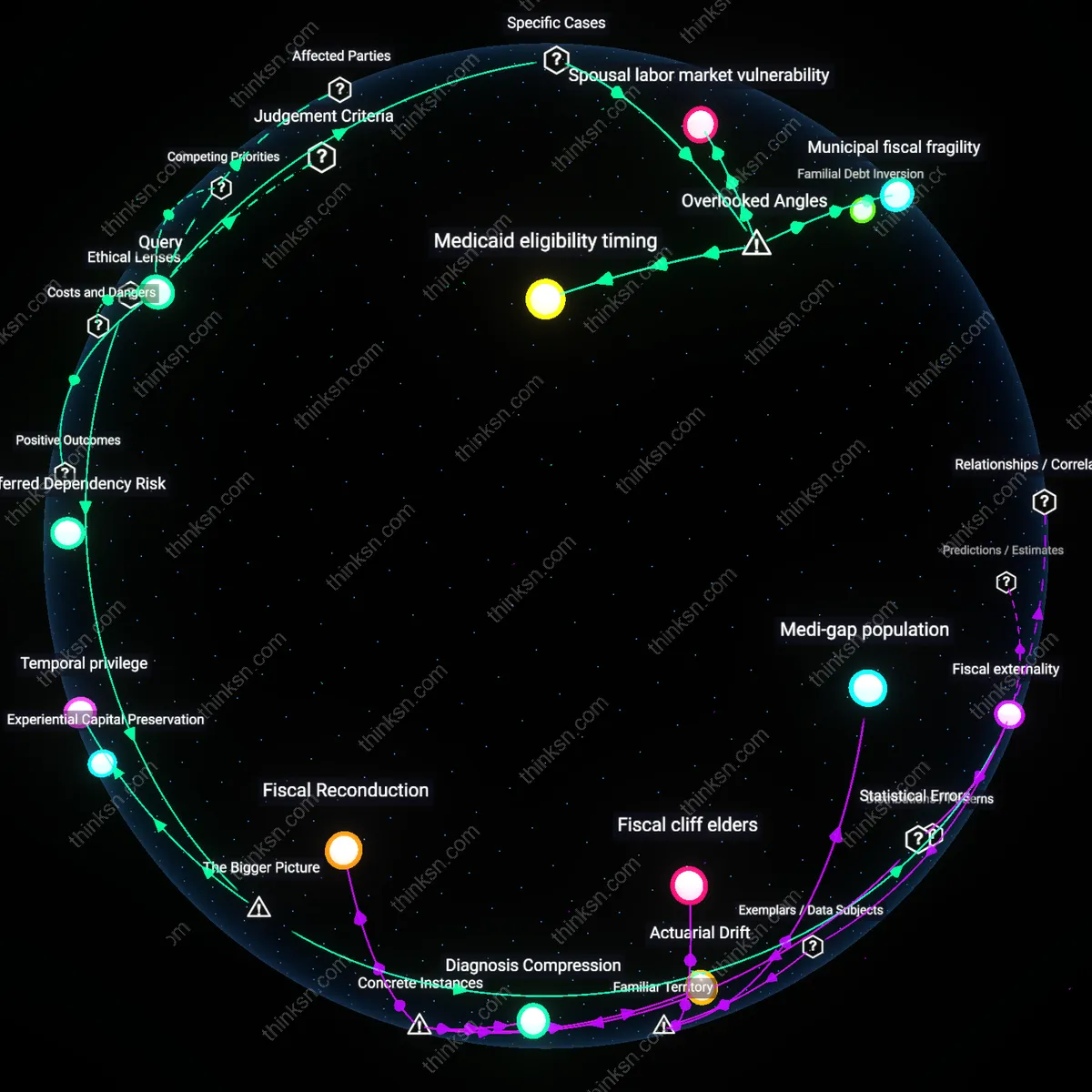
Medicare Penalty Shock
Delaying Medicare enrollment to stay on a private plan risks triggering irreversible financial penalties under the Medicare Part B and Part D late enrollment penalties, which are administered by the Centers for Medicare & Medicaid Services and compound annually for the duration of enrollment. These penalties are recalculated each year based on income and time lapsed, meaning even healthy individuals who anticipate low usage face permanently inflated premiums upon entry to Medicare—costs that are rarely anticipated during employer-sponsored plan comparisons. While most people associate staying on a private plan with immediate premium savings and continuity of care, the systemic design of Medicare’s enrollment penalties introduces a hidden back-end cost surge that operates invisibly during working years, making 'Medicare Penalty Shock' a structurally obscured consequence under utilitarian cost-benefit assessments.
Employer Subsidy Mirage
Continuing on an employer-sponsored plan past Medicare eligibility often relies on an unsustainable illusion of subsidy stability, particularly in medium-sized firms where retiree health benefits are not protected under ERISA’s fiduciary standards and can be altered unilaterally by the plan sponsor. While employees nearing 65 commonly interpret employer contributions as a reliable financial advantage, these arrangements operate within a neoliberal employment framework that treats health benefits as discretionary compensation, not guaranteed entitlements—unlike Medicare, which is grounded in a social contract ideology rooted in dignity and universality. The moment the employer reduces or terminates contributions, the individual confronts not only higher premiums but also potential gaps in creditable coverage, triggering both Medicare penalties and exclusion periods; this sudden collapse of assumed security crystallizes what the 'Employer Subsidy Mirage' names.