Could Hyper-Intelligent AI Create a New Human Class System?
Analysis reveals 6 key thematic connections.
Key Findings
Digital Serfdom
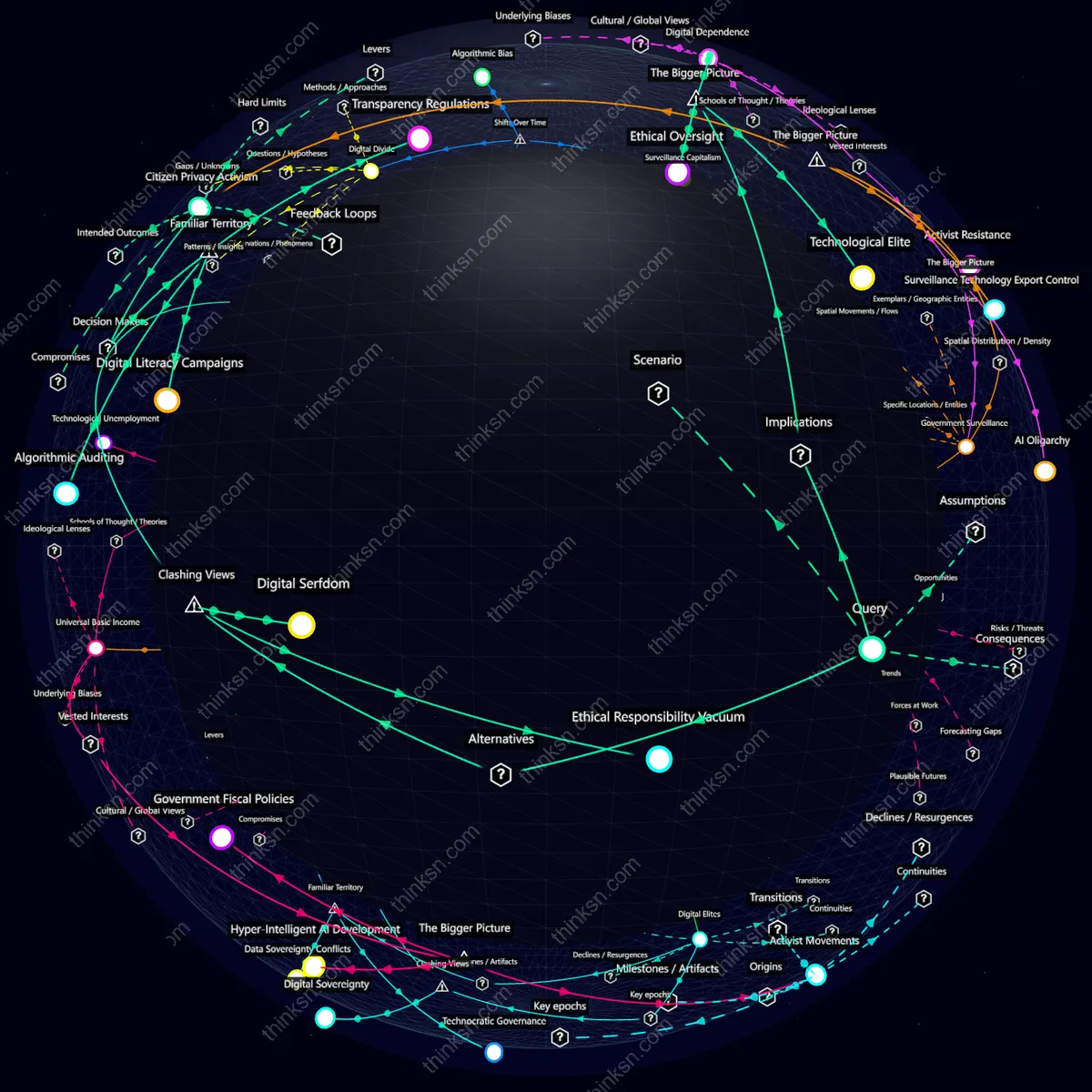
Hyper-intelligent AI development may lead to digital serfdom, where a small elite class of 'AI controllers' wields unprecedented power over societal infrastructure and personal data. This scenario risks undermining democratic principles as decision-making becomes opaque and inaccessible to the majority.
Algorithmic Inequality
The rise of hyper-intelligent AIs could exacerbate algorithmic inequality, where access to AI-driven services and opportunities is dictated by one's status within a digital hierarchy. This perpetuates social stratification, potentially leading to a new form of caste system based on technological proficiency.
Ethical Responsibility Vacuum
As AIs become increasingly autonomous, there may be an ethical responsibility vacuum, where the actions and decisions of these entities are not clearly attributable to any human actor. This could lead to a moral dilemma where accountability is diffuse, challenging legal systems and societal norms.
Technological Elite
The emergence of a Technological Elite who control hyper-intelligent AI could exacerbate economic and social inequalities. As these elites reap disproportionate benefits, the majority might be relegated to menial tasks or unemployment, leading to societal unrest and political instability.
Digital Dependence
Rapid digital dependence on AIs for everyday decision-making can erode human autonomy and critical thinking skills. Over time, individuals may become overly reliant on AI guidance, making them susceptible to manipulation by those who control the technology, potentially undermining democratic processes.
Ethical Oversight
The lack of robust ethical oversight in AI development might lead to unintended consequences, such as biased algorithms that discriminate against certain groups or misuse personal data. This could trigger public backlash and regulatory overreach, stifling innovation and hindering beneficial applications of AI.
Deeper Analysis
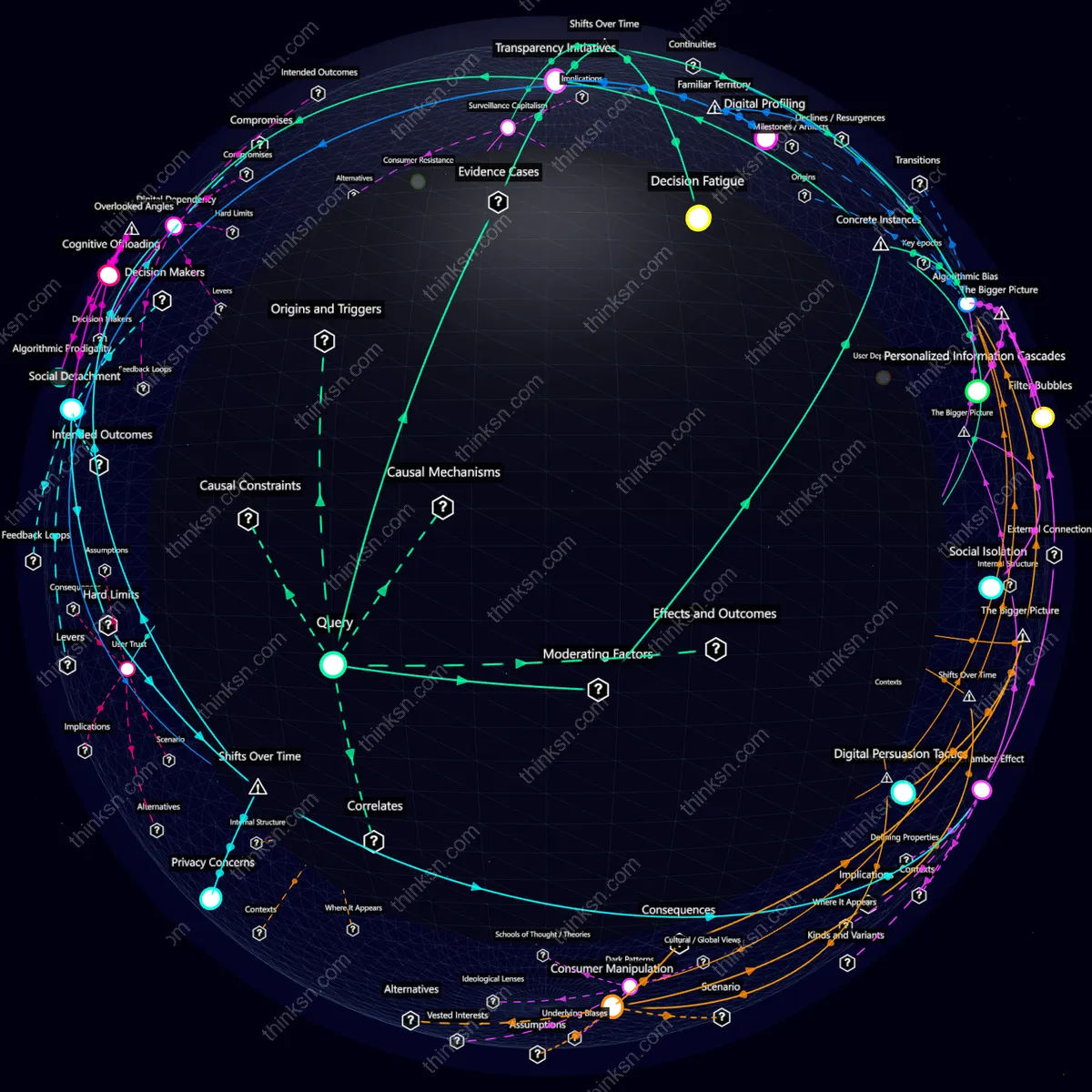
What is the architectural mapping of algorithmic inequality in the context of AI development and its geographic distribution?
Digital Divide
The digital divide exacerbates algorithmic inequality by channeling AI development resources and opportunities into affluent regions, leaving marginalized areas with fewer technological advancements. This uneven distribution leads to a feedback loop where those already disadvantaged become increasingly isolated from the benefits of AI.
Surveillance Capitalism
Surveillance capitalism exploits algorithmic inequality by using data collection in privileged regions to refine algorithms that further marginalize less connected areas. Companies may prioritize regions with high data availability, leading to a cycle where wealthier areas receive more personalized and effective AI services while poorer regions are underserved.
Algorithmic Bias
Algorithmic bias perpetuates systemic inequalities by encoding historical prejudices into automated decision-making processes. As these algorithms become embedded in critical systems like healthcare or law enforcement, the disparities between technologically advanced and less developed regions intensify, entrenching existing power imbalances.
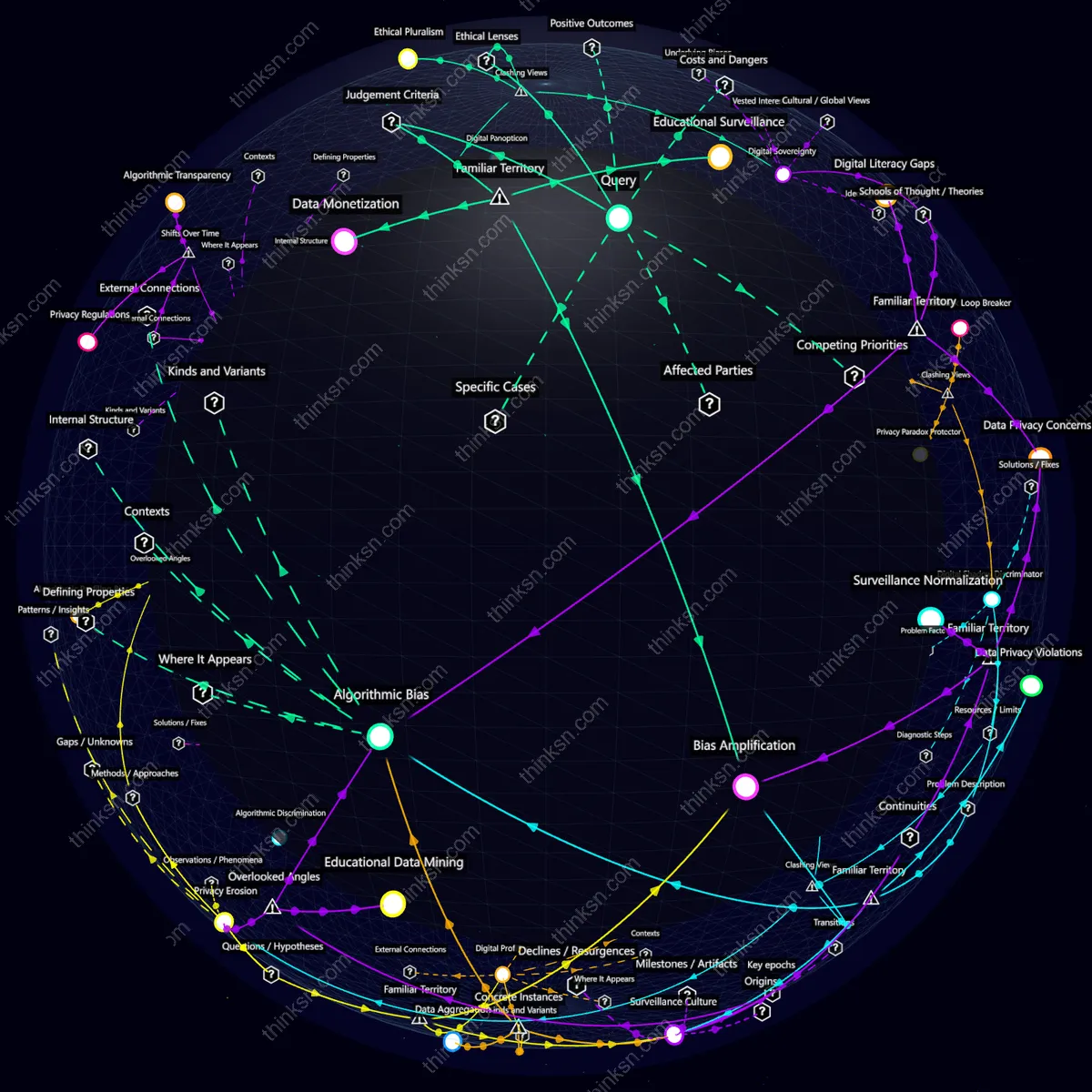
In what ways might digital dependence alter societal perceptions and relationships regarding a future with hyper-intelligent AI, creating new classes of people based on their role in controlling or being controlled by these technologies?
AI Oligarchy
Corporations and wealthy elites leverage hyper-intelligent AI to consolidate power, creating a new class of technocratic oligarchs. This AI-driven elite justifies their control through claims of efficiency and innovation, yet risks exacerbating social inequality and undermining democratic processes.
Activist Resistance
Digital activists challenge the dominance of hyper-intelligent AI by highlighting privacy violations and algorithmic bias. Their efforts to decentralize control and democratize technology are crucial but face significant barriers from entrenched power structures, leading to a precarious balance between progress and backlash.
Government Surveillance
Governments use advanced digital technologies for surveillance under the guise of national security, often at the expense of individual freedoms. This creates a chilling effect on dissent and innovation, while also fostering mistrust in institutions among citizens who fear being monitored or controlled.
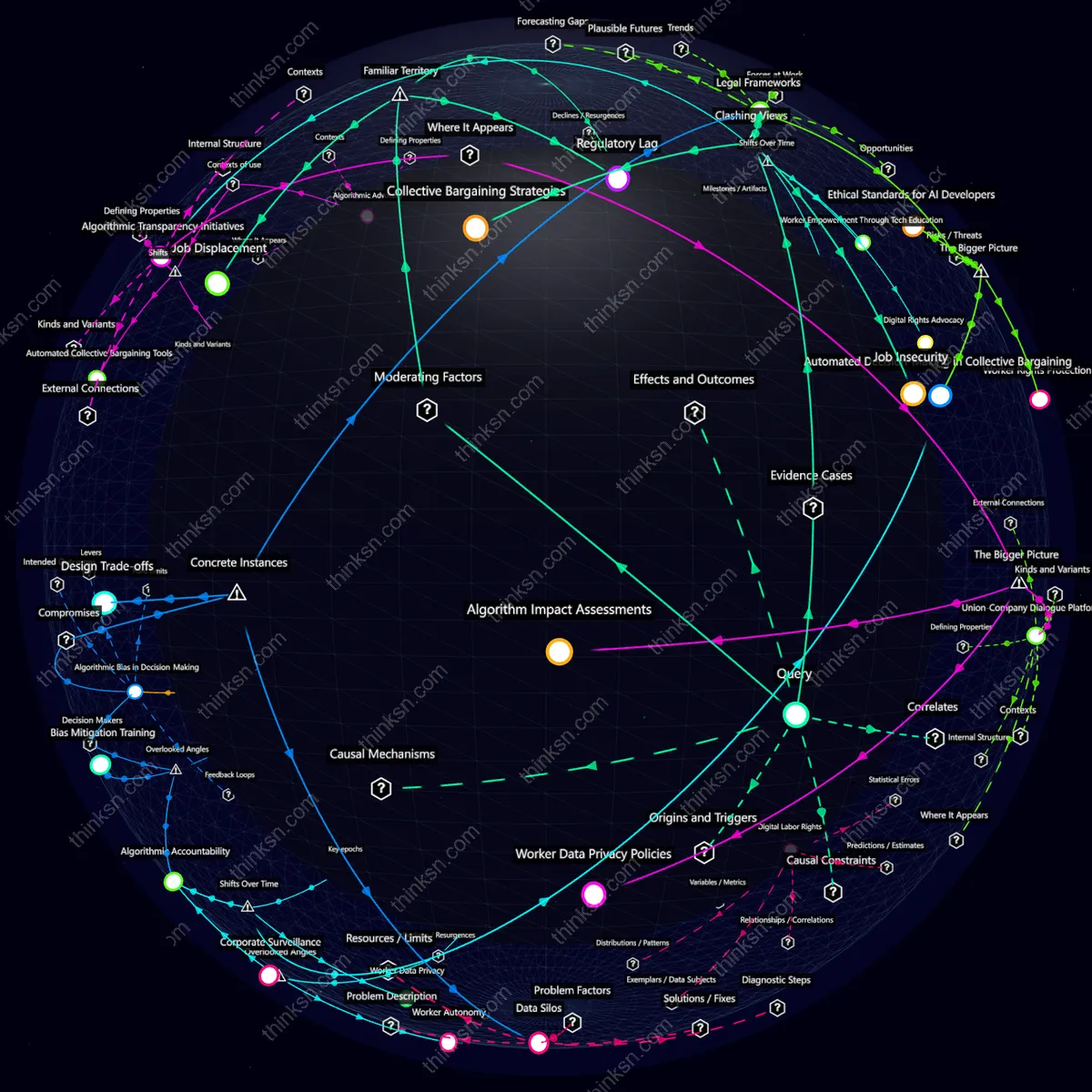
What is the geographic distribution and territorial boundaries of government surveillance systems in relation to AI development, potentially leading to human class divisions between controllers and servants of AIs?
Surveillance Technology Export Control
Export controls on surveillance technology can distort global power dynamics, with developed nations leveraging export bans to exert political influence over less technologically advanced states. This creates a fragile dependency where AI-driven surveillance systems are tightly controlled by a few tech giants, exacerbating the digital divide and potentially leading to geopolitical tensions.
Citizen Privacy Activism
As government surveillance expands globally, citizen privacy activism emerges as a critical counter-force. Activists deploy sophisticated techniques like encryption and anonymization tools to circumvent state oversight, creating an arms race between surveillers and the surveilled. This dynamic raises ethical questions about the balance of power in digital spaces and the right to personal data sovereignty.
Global Norms
The uneven global adoption of AI surveillance systems leads to the formation of distinct regional blocs with varying standards and regulations. Countries like China and Russia set precedents for state control through technology, influencing neighboring nations but also facing international criticism from Western democracies, which complicates global cybersecurity and data protection frameworks.
Explore further:
- What strategic interventions could Citizen Privacy Activists implement to mitigate potential human class divisions arising from hyper-intelligent AI development and control?
- What are potential global norms that could mitigate systemic strain and failures in societal structures arising from a human class division caused by hyper-intelligent AI development?
What strategic interventions could Citizen Privacy Activists implement to mitigate potential human class divisions arising from hyper-intelligent AI development and control?
Transparency Regulations
Activists pushing for transparency regulations risk creating a chilling effect on innovation if overly restrictive, but also face the challenge of ensuring that such laws do not disproportionately benefit large tech companies with deeper pockets to comply.
Algorithmic Auditing
Focusing on algorithmic auditing can expose biases and surveillance practices, yet it may shift power dynamics towards regulatory bodies and away from grassroots movements, potentially sidelining the activists' direct influence over policy changes.
Digital Literacy Campaigns
By promoting digital literacy campaigns, activists aim to empower individuals to protect their privacy online but risk diluting impact if not paired with strong legal frameworks and technological tools that can actually enforce these new skills in practice.
What are potential global norms that could mitigate systemic strain and failures in societal structures arising from a human class division caused by hyper-intelligent AI development?
Ethical AI Governance
The rise of Ethical AI Governance aims to prevent hyper-intelligent AI from exacerbating human class divisions by setting global standards. However, this norm faces the risk of being hijacked by powerful tech firms aiming for competitive advantage rather than ethical stewardship, leading to superficial compliance and systemic inequality.
Universal Basic Income
Proposing Universal Basic Income as a global norm seeks to counteract societal strain caused by AI-driven unemployment. Yet, it could divert resources from critical social infrastructure needed for education and re-skilling programs, potentially creating new dependencies rather than fostering self-sufficiency.
Digital Citizenship Rights
Asserting Digital Citizenship Rights as a global norm empowers individuals against data exploitation by tech giants but risks over-centralization in digital governance models. This could lead to authoritarian control under the guise of protecting citizens from AI harms, undermining democratic values.
Explore further:
Could Universal Basic Income mitigate social inequalities caused by a human class division due to hyper-intelligent AI development?
Technological Unemployment
Universal Basic Income (UBI) could inadvertently exacerbate technological unemployment by encouraging businesses to automate further, leading to a paradox where UBI acts as both a safety net and an incentive for companies to replace human workers with AI. This dual role of UBI may deepen the divide between tech haves and have-nots.
Social Inequality
While UBI aims to mitigate social inequality, it risks becoming a 'floor' that society cannot fall below rather than a stepping stone for upward mobility. This could perpetuate existing inequalities if not paired with education reforms and skills training programs, leading to a static class structure defined by access to advanced AI-driven opportunities.
Hyper-Intelligent AI Development
Corporations justify significant investment in hyper-intelligent AI by framing it as a means to outcompete rivals, yet this development exacerbates social inequalities. Universal Basic Income (UBI) is proposed to mitigate these disparities but could face resistance from those who see UBI as undermining the incentive for technological advancement.
Activist Movements
Social activists leverage public concern over AI-driven job displacement to rally support for UBI. However, this focus can divert attention away from addressing systemic inequalities rooted in economic policies and corporate practices, potentially leading to a fragmented approach to social justice.
Government Fiscal Policies
Governments may adopt UBI as a fiscal policy to stabilize consumer spending amid AI-induced unemployment but risk destabilizing public finances if not paired with robust revenue generation strategies. This could lead to unintended austerity measures affecting other essential services, complicating the overall social safety net.
Explore further:
- How might the evolution of hyper-intelligent AI contribute to a trajectory of increasing social inequality between those who control and benefit from AIs versus those who are supplanted by them?
- How might activist movements evolve in response to hyper-intelligent AI development, and what trajectories could they take over time concerning human class division between controllers and servants of AIs?
How might the evolution of hyper-intelligent AI contribute to a trajectory of increasing social inequality between those who control and benefit from AIs versus those who are supplanted by them?
Technological Divide
As hyper-intelligent AI proliferates in sectors like finance and healthcare, a stark technological divide deepens between those who can leverage these tools for wealth creation and societal influence versus those whose roles become redundant. This perpetuates existing inequalities while introducing new risks, such as the marginalization of large swathes of the population unable to access or adapt to advanced AI systems.
Automation Unemployment
Widespread automation driven by hyper-intelligent AI leads to significant unemployment in traditional sectors like manufacturing and services. While some gain from new opportunities created, many face prolonged joblessness, exacerbating social inequality as they struggle with a lack of skills needed for emerging tech roles. This cycle fuels economic instability and societal tension.
Digital Elites
The emergence of digital elites who control the development and deployment of AI technologies further entrenches existing power structures, creating an influential new class with unprecedented access to resources and decision-making processes. These elites often operate globally, sidestepping local regulations, thus posing a challenge for equitable distribution of AI benefits.
Technological Elitism
Hyper-intelligent AI accelerates the concentration of technological know-how among a select few, exacerbating social stratification. As advanced technologies become more integral to economic productivity and daily life, those lacking access or understanding face increasing marginalization.
Digital Redlining
The deployment of hyper-intelligent AI systems disproportionately excludes disadvantaged communities from essential services due to algorithmic biases and inadequate digital infrastructure. This exclusion deepens social inequality by further entrenching economic disparities and limiting access to opportunities for upward mobility.
Algorithmic Autocracy
As powerful entities harness hyper-intelligent AI, they can manipulate public opinion through sophisticated disinformation campaigns and personalized content delivery. This undermines democratic processes, enabling a new form of autocratic rule where those controlling the algorithms wield immense power over societal norms and governance.
Explore further:
- How might the emergence of digital elites impact societal structures as hyper-intelligent AI development progresses over time?
- What are potential strategic interventions to prevent algorithmic autocracy arising from hyper-intelligent AI development that could lead to a class division between human controllers and servants of AIs?
How might the emergence of digital elites impact societal structures as hyper-intelligent AI development progresses over time?
Algorithmic Inequality
As digital elites leverage advanced AI for economic gain, algorithmic inequality deepens societal divides. While tech giants optimize profits through precise targeting and surveillance, marginalized groups face exclusion from critical services, reinforcing existing socioeconomic disparities.
Digital Sovereignty
The rise of digital elites challenges traditional notions of national sovereignty as they create transnational networks that operate beyond regulatory frameworks. This leads to a fragmented landscape where data governance and cybersecurity become battlegrounds for global power plays, undermining state authority over critical infrastructure.
Technocratic Governance
As digital elites wield increasing influence over AI development, technocracy emerges as a governance model where technical expertise overrides democratic decision-making. This shift can marginalize public input and accelerate the concentration of power among those adept at leveraging advanced technologies, potentially leading to social unrest due to perceived elitism.
Data Sovereignty Conflicts
As hyper-intelligent AI development progresses, digital elites face escalating tensions over data sovereignty. Nations and corporations vie for control of strategic data resources, leading to geopolitical conflicts that threaten global stability and the free flow of information essential for technological advancement.