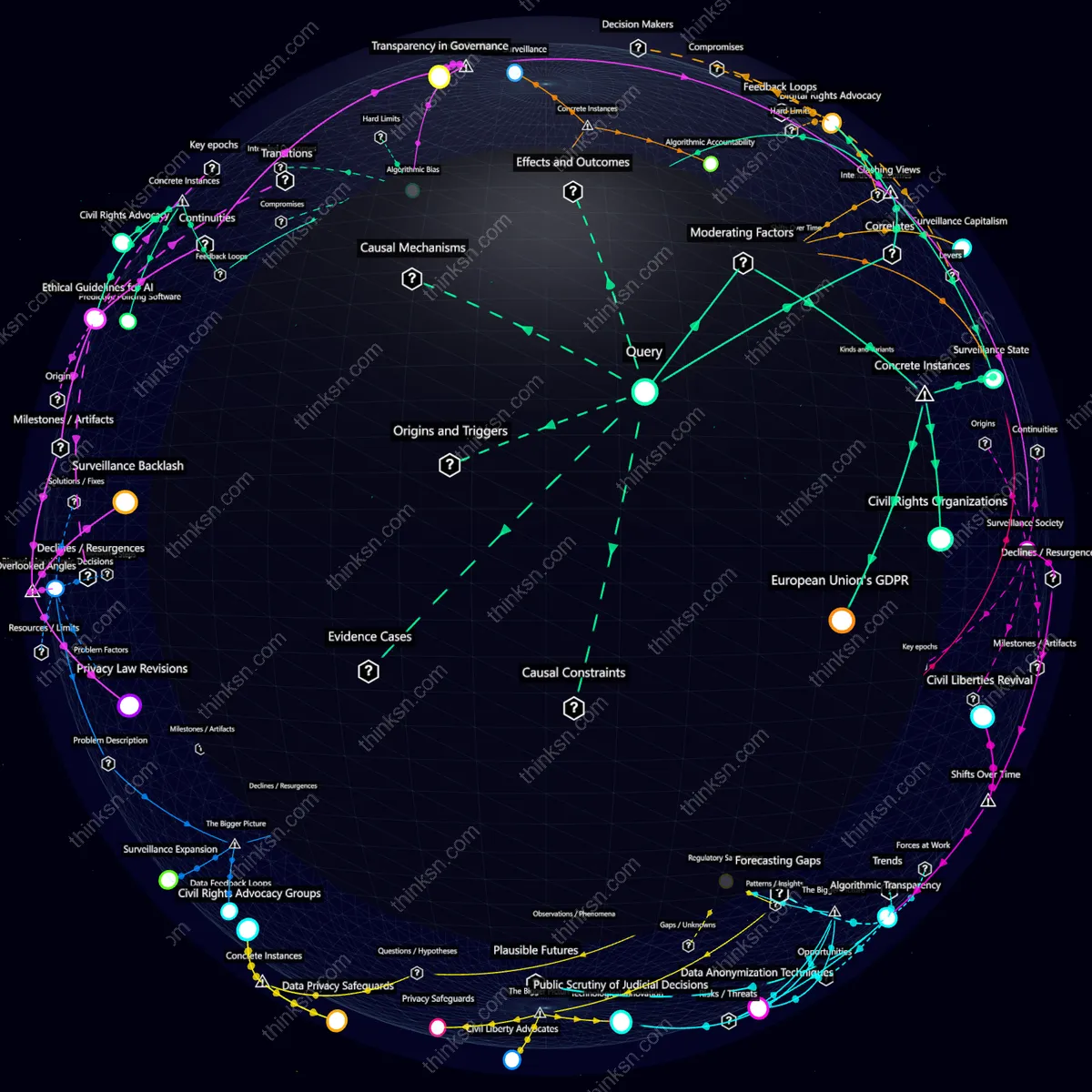
Personalized Medical Treatment vs Data Privacy Policies
Analysis reveals 5 key thematic connections.
Key Findings
Data Privacy Risks
As personalized medical treatments increasingly rely on predictive analytics, the volume of sensitive patient data required for these systems surges. This shift exposes healthcare providers to significant data privacy risks, as breaches could compromise not only individual health records but also aggregated datasets used in predictive models, leading to systemic vulnerabilities and potential legal repercussions.
Patient Autonomy Challenges
The integration of personalized medical treatments using predictive analytics complicates the notion of informed consent. Patients may struggle to fully comprehend how their data is being utilized across various algorithms, raising ethical concerns about patient autonomy. This ambiguity can lead to a lack of trust in healthcare systems and undermine patient engagement in treatment decisions.
Regulatory Lag
The rapid advancement of personalized medical treatments with predictive analytics often outpaces existing regulatory frameworks designed for traditional healthcare practices. This regulatory lag creates a fragile dependency, where innovative technologies face delays or restrictions due to outdated policies, potentially stifling progress and innovation in patient care.
Data Ownership
As personalized medical treatments increasingly rely on predictive analytics, the challenge of data ownership becomes acute. Patients are often unclear about their rights and how their data is used, leading to mistrust and reluctance in sharing necessary health information for advanced care.
Technological Bias
The reliance on predictive analytics in healthcare introduces biases inherent in data collection and algorithm design. These biases can disproportionately affect certain demographic groups, leading to unfair or harmful medical recommendations despite the best intentions of personalized treatment approaches.
Deeper Analysis
What strategies can be formulated to ensure patient autonomy while implementing personalized medical treatments that rely on predictive analytics and require continuous data collection and analysis?
Data Ownership Models
Shifts towards patient-centric data ownership models can empower individuals by allowing them to control their health information. However, this approach faces practical challenges such as ensuring secure data exchange and potential disparities in digital literacy among patients.
Algorithmic Transparency Standards
Implementing transparent standards for predictive analytics algorithms could reduce patient distrust but may also lead to increased complexity in medical decision-making processes, complicating informed consent procedures and potentially discouraging some clinicians from adopting advanced technologies.
Regulatory Compliance Burden
Stringent regulatory frameworks aimed at protecting patient autonomy might inadvertently impose a heavy compliance burden on healthcare providers, slowing down innovation and personalization efforts while also increasing operational costs for smaller medical practices or start-ups.
Explore further:
- What are the potential trade-offs and systemic strains when applying different data ownership models to personalized medical treatments using predictive analytics, particularly in relation to healthcare policies on data privacy and patient consent?
- What are the key components and categories involved in establishing algorithmic transparency standards to ensure data privacy and patient consent in personalized medical treatments using predictive analytics?
What are the emerging insights and hidden assumptions about data ownership in personalized medical treatments using predictive analytics, particularly concerning healthcare policies and patient consent?
Patient Consent Forms
The shift towards digital patient consent forms complicates data ownership by introducing new vulnerabilities. Patients often rush through lengthy, technical documents, leading to a superficial understanding of how their data will be used in predictive analytics for personalized treatments. This lack of informed consent can undermine trust and compliance with healthcare policies.
Healthcare Provider Networks
Provider networks may exploit patient data ownership ambiguities by sharing or selling information across multiple institutions, often without explicit patient knowledge. This practice not only raises ethical concerns but also increases the risk of data breaches and misuse, potentially leading to legal liabilities for providers.
Regulatory Compliance
The fragmented nature of global healthcare regulations complicates data ownership in personalized medical treatments. Inconsistent rules across countries can lead to loopholes where patient data is transferred internationally without adequate safeguards, exposing patients to privacy violations and compromising the integrity of predictive analytics systems.
What are the potential trade-offs and systemic strains when applying different data ownership models to personalized medical treatments using predictive analytics, particularly in relation to healthcare policies on data privacy and patient consent?
Patient Autonomy
In personalized medical treatments leveraging predictive analytics, data ownership models that overly centralize control can undermine patient autonomy. When patients feel they have no say over their own health data, it may reduce compliance and trust in healthcare systems, leading to adverse outcomes or misuse of sensitive information.
Regulatory Compliance
Healthcare policies on data privacy often conflict with innovative but riskier data ownership models. As predictive analytics demands more flexible data sharing, overly strict regulations can stifle innovation, while too lenient ones might expose patient data to security risks and ethical dilemmas.
Data Monetization
The potential for monetizing health data through various ownership models introduces complex trade-offs. While it could fund cutting-edge research and improve services, it also raises concerns about the exploitation of vulnerable patient groups and exacerbates disparities in access to advanced treatments.
What are the key components and categories involved in establishing algorithmic transparency standards to ensure data privacy and patient consent in personalized medical treatments using predictive analytics?
Data Anonymization Techniques
As data anonymization techniques evolve to protect patient privacy in personalized medical treatments, they inadvertently introduce new vulnerabilities such as re-identification risks. Hospitals may struggle to balance the need for transparent algorithms with stringent legal requirements, leading to a delicate dance between innovation and compliance.
Ethical Review Boards
The involvement of ethical review boards in scrutinizing algorithmic transparency standards can sometimes delay critical research or clinical applications due to bureaucratic processes. This tension highlights the need for agile yet rigorous oversight mechanisms that maintain ethical integrity without stifling progress.
Patient Consent Mechanisms
Incorporating robust patient consent mechanisms into algorithmic transparency standards can empower individuals but also poses challenges in ensuring informed decisions, particularly when dealing with complex predictive analytics. The lack of clarity or accessibility may lead to misunderstandings and non-compliance, underscoring the necessity for clear communication strategies.
How might data monetization evolve in personalized medical treatments, and what are its implications for healthcare policies concerning data privacy and patient consent over time?
Patient-Centric Healthcare Models
As data monetization advances in personalized medical treatments, patient-centric healthcare models become a double-edged sword. While they promise tailored therapies and better outcomes, these models also raise concerns about patients becoming commodified as data sources, potentially leading to unequal access based on willingness or ability to share personal health information.
Regulatory Frameworks
The evolution of regulatory frameworks around data monetization in healthcare has been a slow and often reactive process. While necessary to protect patient consent and privacy, these regulations can also inadvertently stifle innovation by imposing overly restrictive conditions that limit the flow of valuable health data for research and treatment development.
Data Ownership Rights
As data monetization gains traction in personalized medical treatments, debates over who owns patient-generated health data intensify. This ambiguity can lead to ethical dilemmas where patients feel exploited by institutions or technology companies that profit from their personal information without adequate compensation or control.
Explore further:
- In patient-centric healthcare models, how are the components and categories structured to address challenges in data privacy and patient consent when implementing personalized medical treatments using predictive analytics?
- What are the emerging perspectives on data ownership rights as they relate to personalized medical treatments and predictive analytics in healthcare, particularly concerning patient consent and privacy challenges?
What are emerging data anonymization techniques and their potential impact on balancing personalized medical treatments with patient consent and data privacy in healthcare policies?
Differential Privacy
Implementing differential privacy in medical data anonymization can offer a robust balance between personalized treatment insights and patient consent. However, the complexity of setting appropriate noise levels to ensure both utility and privacy poses significant challenges for healthcare IT teams.
Patient Trust and Compliance
Emerging anonymization techniques have the potential to enhance patient trust by ensuring data privacy, but overly aggressive anonymization can lead to a trade-off in the quality of personalized medical treatments. This dilemma requires careful policy formulation that considers both patient needs and technological capabilities.
Regulatory Compliance
As healthcare policies evolve to incorporate advanced anonymization techniques like federated learning, regulatory bodies face the challenge of updating compliance frameworks to ensure data protection without stifling innovation. The pace at which regulations can adapt may be a critical bottleneck in leveraging these technologies.
In patient-centric healthcare models, how are the components and categories structured to address challenges in data privacy and patient consent when implementing personalized medical treatments using predictive analytics?
Data Privacy Regulations
As patient-centric healthcare models rely heavily on predictive analytics, stringent data privacy regulations can paradoxically hinder the adoption of personalized medical treatments by imposing cumbersome compliance burdens and stifling innovation. Clinicians often struggle to balance regulatory adherence with the need for rapid access to patient data.
Patient Consent Management Systems
While critical in ensuring ethical practices, complex patient consent management systems can inadvertently become barriers to efficient care delivery. Patients may find it challenging to understand and manage their consent preferences across multiple platforms, leading to delays and potential breaches of data integrity.
Interoperability Standards
The lack of universal interoperability standards among healthcare providers hinders the seamless exchange of patient information required for effective predictive analytics. This fragmentation can result in redundant data collection efforts and missed opportunities for comprehensive care, thereby undermining the core principle of patient-centricity.
What are the emerging perspectives on data ownership rights as they relate to personalized medical treatments and predictive analytics in healthcare, particularly concerning patient consent and privacy challenges?
Patient Consent Models
The shift towards dynamic consent models in personalized medical treatments has sparked a reevaluation of data ownership rights. As patients become more involved in decision-making, there's a risk that overly complex or opaque consent processes could undermine trust and compliance, leading to fragmented healthcare data management.
Privacy Law Evolution
Emerging privacy laws are increasingly recognizing the dual nature of health data as both personal information and critical medical evidence. This nuanced approach complicates traditional notions of data ownership rights, creating a delicate balance between protecting individual privacy and facilitating innovative healthcare solutions.
Healthcare Analytics Ecosystem
The expanding role of predictive analytics in healthcare is pushing the boundaries of data ownership rights, particularly regarding secondary uses of patient data. While this ecosystem promises significant advancements, it also introduces challenges around consent management and potential conflicts over who has the right to monetize or benefit from shared health insights.
How have interoperability standards evolved over time to address challenges in healthcare policies regarding data privacy and patient consent for personalized medical treatments using predictive analytics?
Data Privacy Laws
As healthcare interoperability standards evolve, stricter data privacy laws such as HIPAA in the U.S. force organizations to balance patient consent and treatment personalization with stringent compliance requirements, often leading to delays and increased operational costs.
Predictive Analytics Tools
The integration of predictive analytics tools into healthcare systems hinges on interoperability standards, but these tools can inadvertently expose sensitive health data if not properly secured, highlighting the tension between leveraging advanced technologies for better care and maintaining patient confidentiality.
Electronic Health Records (EHR)
Interoperable EHR systems enhance medical decision-making by enabling seamless access to patient records across different facilities. However, this also raises concerns about data breaches and unauthorized access, necessitating robust security measures that can protect sensitive information while maintaining system usability.
What are the different patient consent models and how do they impact healthcare policies regarding data privacy in personalized medical treatments using predictive analytics?
Opt-Out Model
In the opt-out model, patients are automatically enrolled in data sharing unless they explicitly choose to withdraw. This shifts the burden of consent management onto healthcare providers and can lead to a decline in patient trust if they feel their autonomy is compromised by default settings.
Dynamic Consent
Dynamic consent allows patients to modify their data usage permissions over time, responding to new treatments or research opportunities. This flexible approach can empower patients but also introduces complexity and potential confusion as individuals must continuously update their preferences and understand evolving uses of their data.
Blockchain-Enabled Consent
Using blockchain for patient consent ensures that all transactions are immutable, transparent, and secure. While this enhances data integrity and trust, it also requires robust technical infrastructure and could be a barrier to adoption in regions with limited technological resources or regulatory frameworks.
What are the structural components and categories of predictive analytics tools that impact healthcare policies regarding data privacy and patient consent in personalized medical treatments?
Data Privacy Regulations
Predictive analytics tools often strain existing data privacy regulations, forcing healthcare providers to navigate complex legal landscapes that lag behind technological advancements. This can lead to delayed implementation of potentially beneficial personalized treatments and increased risk of patient data breaches.
Patient Consent Frameworks
The evolution of predictive analytics tools complicates traditional patient consent frameworks, necessitating new approaches like dynamic consent models that allow patients to update their preferences as technology progresses. This shift can empower patients but also introduce challenges in ensuring informed decisions and maintaining trust.
Personalized Medicine Efficacy
While predictive analytics tools promise tailored medical treatments, overreliance on these technologies without thorough validation can lead to false confidence in treatment efficacy. This fragility is exacerbated by the rapid pace of innovation, where new tools may be adopted before robust evidence supports their use.
What are potential strategies for integrating blockchain-enabled consent mechanisms into personalized medical treatments to enhance data privacy and patient control in healthcare policies?
Patient-Centric Data Ownership
Blockchain-Enabled Consent empowers patients to control their medical data through secure, transparent transactions. However, it introduces a complex legal landscape where jurisdictional inconsistencies and varying interpretations of patient rights can undermine the intended benefits.
Interoperable Health Records Systems
The integration of Blockchain-Enabled Consent within interoperable health records systems enhances data privacy but also poses technical challenges. Ensuring seamless interaction between diverse systems while maintaining security and user-friendliness is crucial, yet often compromised by legacy infrastructure.
Regulatory Compliance in International Settings
As healthcare becomes more globalized, regulatory compliance with Blockchain-Enabled Consent mechanisms varies widely across countries. This can lead to fragmented data practices and legal uncertainties that restrict the potential for cross-border patient care coordination.